Curricle Crashes and Dennet Disasters – The Dangers of the Regency Road

On the road 1

In April 1811 Jane Austen was staying with her brother Henry and his wife Eliza at their home 64, Sloane Street and working on the proofs of Sense and Sensibility. Not that this prevented her from getting out and about in London and occasionally borrowing Henry’s carriage: ‘The Driving about, the Carriage being open, was very pleasant. I liked my solitary elegance very much, & was ready to laugh all the time, at my being where I was – I could not but feel that I had naturally small right to be parading about London in a Barouche,’ she wrote on a later visit.
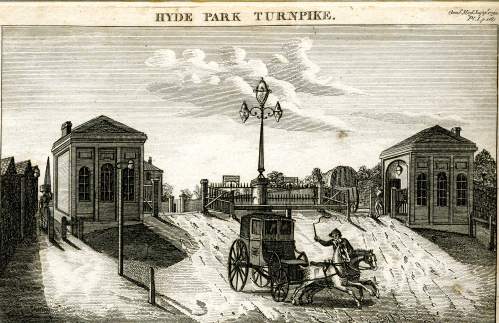
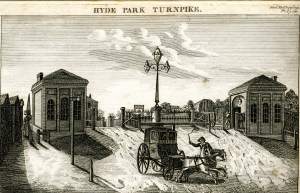
But delightful as travel by coach might be, horse-drawn vehicles were dangerous and accidents were numerous, even if most were minor. In a letter home on 25 April 1811 Jane blames an inciHyde Park pike0001dent at the gates for giving her sister-in-law Eliza a chest cold. ‘The Horses actually gibbed on this side of Hyde Park Gate – a load of fresh gravel made it a formidable Hill to them, & they refused the collar; I believe there was a sore shoulder to irritate. Eliza was frightened, & we got out & were detained in the Eveng. air several minutes.’ You can follow Jane’s London travels in Walking Jane Austen’s London.
The wonderful Henry Alken snr. excelled at drawing horses, but he had a mischievous side and produced numerous prints of carriage accidents. [His Return From the Races is at the top of this post]. These are light-hearted, often mocking the young sporting gentlemen of his day and their ‘boy-racer’ equipages, but the potential for an accident to cause death or serious injury was very real. In one hideous stage coach crash in 1833 the Quicksilver coach overturned as it was leaving Brighton. Passengers were flung out into the gardens along the Steine and impaled on the spiked railings. Alken’s third plate in his Trip to Brighton series shows a stagecoach crash as a result of young bucks bribing the coachmen to let them take the reins and race. Discover more of the dangers of travel by stage or mail coach in Stagecoach Travel.accident
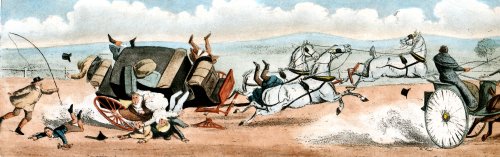
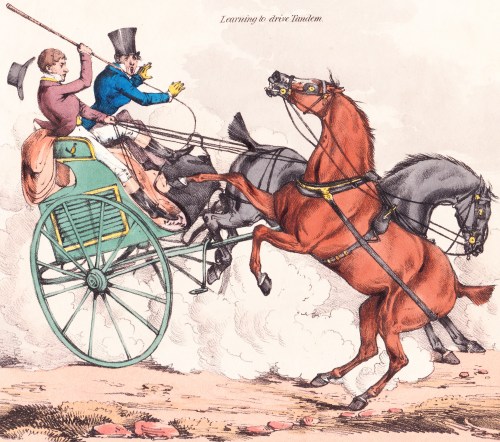
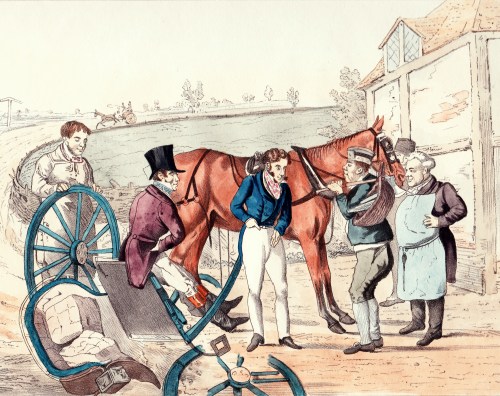
Alken’s ‘comic’ drawings show people thrown onto the rough stones of the road, against milestones or walls, at risk of trampling by the horses or of being injured by the splintering wood and sharp metal fittings of their carriages. One has to assume that like cartoon characters walking off a cliff they all bounce back safely with only their dignity ruffled. Real life would not have been so forgiving.  In this post I am sharing some of the Alken carriage disasters from my own collection.

In  Learning to Drive Tandem (1825) learning to driveAlken shows a young gentleman who has got one of his pair turned around and one wheel off the road. The vehicle is a cocking cart used to transport fighting cocks and below the seat is a compartment ventilated by slats and a small image of a fighting cock on the armrest. In The Remains of a Stanhope (1827) the crash has already occurred, showing just how fragile these vehicles could be. A carpenter has been summoned and the owner is drawling somewhat optimistically, “I say my clever feller, have you an idea you can make this thing capable of progression?”
Stanhope

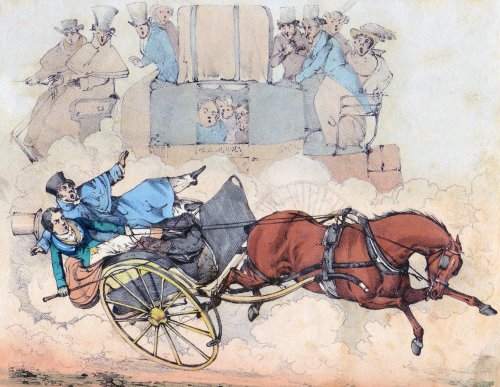
One of my favourite images is this one of a Dennet gig with the horses spooked by a passing stagecoach. The passengers’ faces as they watch the driver struggling with his team are priceless. Dennet accident sat
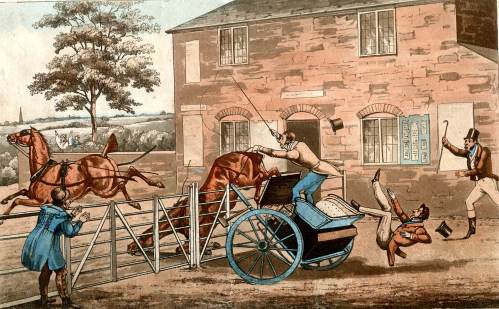
Several prints of the time show accidents at toll gates. Either the horses bolted or the driver wasn’t paying attention or perhaps they thought the gate keeper would fling the gate wide as they approached. This one is captioned “I wonder whether he is a good jumper!”
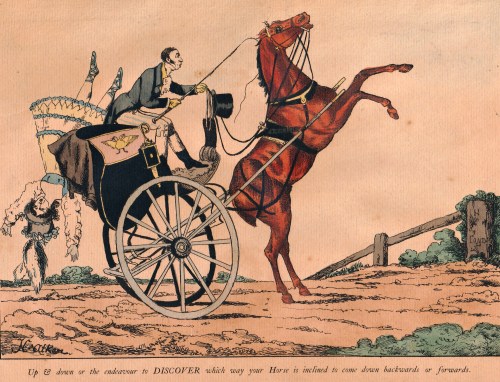
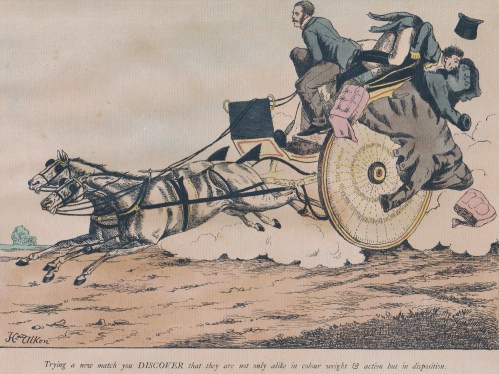
accident at toll gate Young men crashing their vehicles was obviously commonplace, and then as now, showing off to the ladies was also part of the joy of owning a sporting vehicle. Alken was not above titillating his audience with a glimpse of petticoat or a shapely leg, even when the owner of the leg was about to get seriously hurt. In “Up and down or the endeavour to discover which way your Horse is inclined to come down backwards or forwards” (1817) the driver takes no notice at all of his fair passenger vanishing over the back of his fancy carriage. There are some nice details in this print – the two-headed goose on the side panel is presumably a reference to the driver not knowing which way he is going and the luxurious sheepskin foot rug is clearly visible. backwardsIn the same series is an awful warning about the dangers of not choosing your horses with care. Captioned “Trying a new match you discover that they are not only alike in colour weight & action but in disposition.” One young man is heading out over the back of the carriage while his companion is poised to leap for safety amidst flying greatcoats, hats and seat cushions.
Bolting


11 Comments

Filed under Accidents & emergencies, Gentlemen, Regency caricatures, Transport and travel, Travel

A Most Scandalous Lady

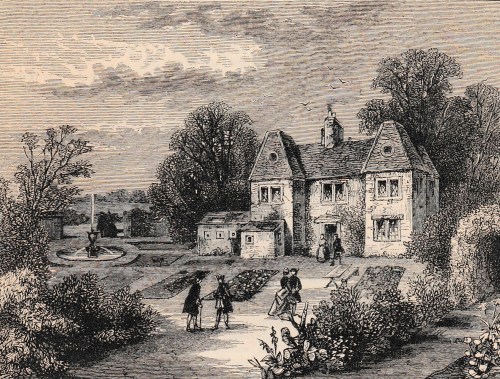
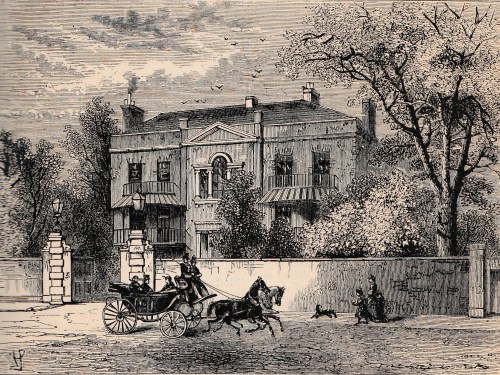
When I was researching Knightsbridge for my last post I came to Kingston House (shown below in a Victorian print) and read about its extraordinary first owner, Elizabeth Chudleigh. I write historical romances, but I would never dare attempt a plot with anything like the story of her romantic life – no-one would believe it for a moment!

Kingston House

Elizabeth (c1720-1788) was the daughter of Colonel Sir Thomas Chudleigh who had a number of influential friends, including the Prime Minister, Sir Robert Walpole. Perhaps it was due to his good offices that she became a maid of honour to the Princess of Wales, wife of Frederick, Prince of Wales and mother to George III.

At court she met and became engaged to the Duke of Hamilton who promptly departed on the Grand Tour. While he was away Elizabeth met Captain Augustus John Hervey, a son of the Earl of Bristol who fell passionately in love with her. At first Elizabeth did not return his feelings,  but her aunt who favoured the match intercepted the duke’s letters from the continent and eventually Elizabeth, piqued at his apparent neglect, secretly married Hervey in 1744.

Incredibly the couple managed to keep their marriage a secret from the court and their families, even though it soon became apparent that it was not a success. Elizabeth was unfaithful to Hervey, and he probably was to her, and they effectively parted in 1749.

The Duke of Hamilton returned to England from his Grand Tour, still assuming they were engaged and pressed for a marriage date, only to be astounded by Elizabeth’s refusal. However much she might have wanted to marry a duke, she was not, at this point, ready to commit bigamy. Hamilton finally gave up and married one of the beautiful Gunnings sisters.

NPG D1106; Elizabeth Chudleigh, Countess of Bristol after Unknown artist

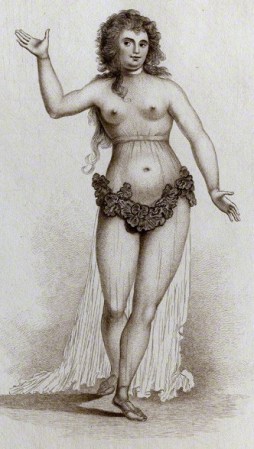
Elizabeth’s family were furious with her for apparently refusing a duke on a whim, and she left the country for to the court of Frederick the Great where she was very popular. On her return to London the vivacious “Miss Chudleigh” was equally in demand, and enjoyed a very lively social life as the portrait of her in the role of Iphegeia at a masque suggests! (Unknown artist 1749)

“… it has been asserted this lady appeared [at a masquerade] in a shape of flesh-coloured silk so nicely and closely fitted to her body as to produce a perfect review of the unadorned mother of mankind, and that this fair representative of frailty, … had contrived a method of giving as evident tokens of modesty, by binding her loins with a partial covering, or zone, of fig-leaves.” (The Life and Memoirs of Elizabeth Chudleigh. 1788)

But Elizabeth was still stuck with her secret husband and it is said that she eventually tore the leaf out of the church register where the marriage was recorded and bribed the clerk to say nothing. At which point her husband unexpectedly became Earl of Bristol so she bribed the clerk again and returned the page to the register!
At this crucial point she fell in love with the Duke of Kingston and became his mistress. Kingston and Bristol agreed between them that Bristol would relinquish all claims to Elizabeth and a marriage was performed on March 6th 1769 between the Duke of Kingston and Elizabeth – despite her first husband being very much alive and no divorce having taken place.
For years they lived as man and wife at Kingston House. Elizabeth became a leader of fashion, but in 1773 the duke died and she travelled to Italy. While she was away a Mrs Craddock, a witness to the true marriage, turned up at her solicitors and proceeded to blackmail the “Duchess”. When no money was forthcoming Mrs Craddock went to the Duke of Kingston’s family and all hell broke loose.

L0023717 Elizabeth Chudleigh, Duchess of Kingston, attending her tria

[Elizabeth Chudleigh, Duchess of Kingston, attending her trial. Credit: Wellcome Library, London. Wellcome Images images@wellcome.ac.uk http://wellcomeimages.org. Etching 1776 by John Hamilton Mortimer. Creative Commons Attribution only licence CC BY 4.0 http://creativecommons.org/licenses/by/4.0/ ]

Proceedings were brought and Elizabeth returned home to face trial for bigamy. The case began on April 15th 1776 and she was, unsurprisingly, found guilty. At the time the penalty for bigamy was transportation or imprisonment, but Elizabeth claimed the privileges of a peeress and was discharged without sentence.
But her “in-laws” were still in hot pursuit of the property she had acquired from the duke on his death and she knew she had to leave the country. She kept her planned flight a secret, even going to the lengths of inviting a large number of people to a dinner party on the night in question. They arrived to find Kingston House empty.
Elizabeth lived in Calais for a while, then moved to Paris under the protection of the king’s brother. She was residing there when her lawyers told her that a suit concerning an estate she had bought with the duke’s money had been found against her. She flew into such a furious fit of temper that she burst a blood vessel and died on August 26th, 1796. Perhaps a fitting end to such a tumultuous life!

8 Comments

Filed under courtship & marriage, Crime, High Society, Love and Marriage, Sex & scandal, Women

Crossing the Knight’s Bridge

Today if you want to travel from the middle of London to visit the smart shops of Kensington and Chelsea, or the museums of South Kensington, or go to a concert at the Albert Hall, you will travel along Knightsbridge, the road that stretches for a mile from Hyde Park Corner to the east to the Royal Albert Hall in the west (becoming, these days, Kensington Road and the beginnings of Kensington Gore in the process). Are you in London? Of course you are.

When Jane Austen was staying with her brother Henry in his homes in Sloane Street and Hans Place, she was just as clear that Knightsbridge (or Knights Bridge, as it was known almost until the 19th century), was not London. ‘If the Weather permits, Eliza & I walk into London this morng.’ she wrote in April 1809 from 64, Sloane Street.

Roque 1741

(Above: Detail of Roque’s map of London 1741 showing Knight’s Bridge and the beginning of Kensington)

Although the tentacles of development were reaching out from the new Sloane Street, down the Brompton Road and along towards Kensington, London still began at the Hyde Park Turnpike, situated until 1825 just about where Grosvenor Place meets Knightsbridge today. Apsley House, which became the home of the Duke of Wellington, was the first dwelling you came to entering through the gates – Number One, London, in fact.

Knights Bridge was never a parish or a manor, only a locality, known from Saxon times as Kyngesburig, or Knightsbrigg. There are many legends about the origins of the name, but none appear to have any basis in fact. The bridge in question crossed the Westbourne River, one of London’s “lost rivers”, as it left Hyde Park, where it had been turned into the Serpentine. The Westbourne ran on south along a meandering course which marks the boundary of Chelsea and St George’s parishes to meet the Thames in the grounds of Chelsea Hospital. It was finally covered over in 1856/7 and became the unromantically-named Ranelagh Sewer and its outfall can still be seen at low tide. The Albert Gate of Hyde Park marks the point where it went under the road and William Street follows its line southwards.Hyde Park pike0001

If you had ventured this far in the time of the Tudors you would have encountered an appalling road, the “Waye to Reading”, mired so deep in mud that it contributed to the defeat of Sir Thomas Wyatt’s rebel army. They marched against Queen Mary, but arrived so exhausted by the state of the ‘road’ that they were easy prey for the royal troops. Things did not greatly improve for hundreds of years and even as late as 1842 reports were made of pavements ankle-deep in mud.

Worse than the mud were the highwaymen and footpads who infested this road. The last highway robbery on Knightsbridge was as late as 1799, after which a light horse patrol was sent out from the barracks to patrol the road and it was one of the earliest to have street lighting. Mr Davis in his “History of Knightsbridge” (1854) records that even after the armed patrols were instituted, “pedestrians walked to and from Kensington in bands sufficient to ensure mutual protection, starting their journey only at known intervals, of which a bell gave due warning.”

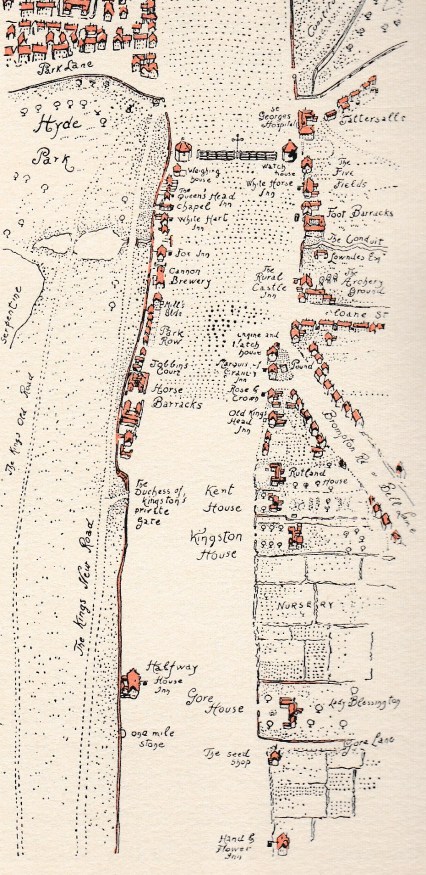
If we are feeling brave we can set out along this perilous mile, guided by the charming little map from Cecil Aldin’s The Romance of the Road (1928). East is at the top and we begin with the Hyde Park Corner tollgate and just before it, at the junction with Grosvenor Place, is St George’s Hospital. That is still there, but is now the Lanesborough Hotel. Behind it was Tattersall’s sale ring until it moved in 1865.

Aldin map 1

Going east we would have passed the White Hart Inn on the north side and a barracks for foot soldiers (demolished 1836) on the south. The narrow entrance to Old Barrack Yard still marks the spot. We cross the Westbourne as we pass William Street and can see today the unlovely round tower of the Sheraton Hotel. Once this was the site of a house owned by a Mr Lowndes and behind it, where Lowndes Square is now, was a rural pleasure garden, Spring Garden (not to be confused with the one of the same name next to what is now Trafalgar Square) at the sign of the “World’s End”. It is referred to in Pepys’s diaries several times, including in the final entry, May 31st 1669: “To the Park, Mary Botelier and a Dutch gentleman, a friend of hers being with us. Thence to the ‘World’s End’ a drinking house by the Park, and there merry, and so home late.”

(Below: Spring Gardens from a Victorian engraving of an earlier drawing.)

Spring Gardens

More or less opposite was Trinity Chapel which was probably medieval in origin and functioned as a hospital, or lazar house, for the poor. Traditionally it was said to have taken in plague victims in 1665 and the dead were buried opposite under Knightsbridge Green at the present junction of Knightsbridge, Sloane Street and Brompton Road. Eventually the chapel fell into total disrepair and was rebuilt. Its present incarnation is further along the road in Kensington.
For a long time before the passing of Lord Hardwicke’s Marriage Act in 1753 it was the location for irregular, clandestine or runaway marriages and the registers for the chapel contain entries with notes such as “secrecy for life” or “secret for fourteen years” added to them. Possibly the most famous person married there was Sir Robert Walpole who wed a daughter of the Lord Mayor of London. (The chapel is shown below in a view of part of the north side of Knightsbridge in 1820)

cahpel

Now we reach the Albert Gate into Hyde Park, the point where the Westbourne still runs under our feet. On the park side of the bridge was the Fox and Bull Inn (shown as the Fox on Aldin’s map), patronised by artists such as George Morland and Sir Joshua Reynolds, who painted its sign. Less pleasantly it was a receiving house for the Humane Society, founded to assist drowning persons, or deal with their bodies. It was to this inn that the body of Harriet Shelley, the poet’s first wife, was brought after she drowned herself in the Serpentine in 1816. Immediately after the Fox and Bull was the Cannon Brewery, so called from the cannon mounted on its roof. That was surrounded by “low and filthy courts with open cellars” – a far cry from the elegant Kuwaiti and French Embassy buildings which occupy the site now.

Almost opposite is the junction with Sloane Street, developed after 1780 along the old track from the King’s Road in Chelsea. Another old road, the Brompton Road, comes in at an angle at the same point and led to the village of Brompton and on to Fulham. At this junction was Knightsbridge Green with a watch house for the constable, a pound for straying livestock, and possibly the site of Trinity Chapel’s plague pit. This was the point where the granite sets that made up the road surface ceased and the mud really began. It is also close to this point that Tattersall’s moved in 1865.

Just past the brewery were the barracks for the Horse Guards, giving them direct access into Hyde Park, just as they have today. Originally built in 1794/5 the barracks were rebuilt in 1878/9 and then again in the 20th century, slightly further west on Knightsbridge. From here on there were virtually no buildings on the north side, only the brick wall of Hyde Park. The road now becomes Kensington Road.

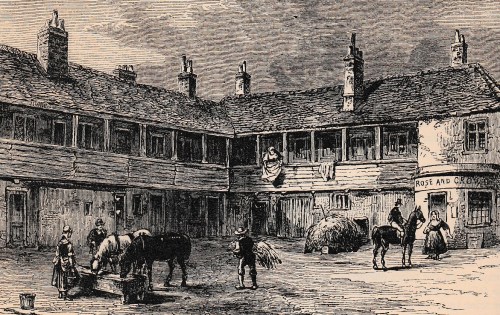
On the south side of Knightsbridge, following the Brompton Road turning, were the Rose and Crown (the oldest of Knightsbridge’s inns, shown below) and the Old King’s Head and then the floor-cloth manufactory of Messrs. Smith and Barber. It had been established in 1754 and lasted well into the Victorian era.

Rose and Crown
Then came three mansions that were, when they were built, true “country houses”. The first was Rutland House, the next Kent House, home for a while of the Duke of Kent, Queen Victoria’s father, and then Kingston House. Kingston House was built in 1769 for the scandalous Elizabeth Chudleigh whose story is so amazing that I will save it for another post. She died in 1796 and it later became the home of the Marquis of Wellesley who died there in 1842. He was the elder brother of the Duke of Wellington.

Half Way House

An area of nursery gardens followed on the south side of the road, part of the great expanse of fruit and vegetable-producing land that surrounded London. Somewhere along this stretch we enter what is now known as Kensington Gore – nothing to do with blood, but named after Gore House which stood on the site of the Royal Albert Hall. It was built in the 1750s, decorated by Robert Adam and was the home in the 1780s of Admiral Lord Rodney. It was acquired in 1808 by William Wilberforce, the great campaigner for the abolition of the slave trade, who lived there until 1821.
Opposite Gore House, a most insalubrious neighbour for a fine mansion, was the Halfway House Inn (shown above). This was where the spies for the highwaymen of Hounslow Heath would congregate to see who was travelling and pass the word on to alert the highwaymen about fine carriages or vulnerable riders. Just beyond it on the park side was the first milestone from the Hyde Park turnpike, the point where we can leave the dangers of Knightsbridge behind us and enter the village of Kensington with a sigh of relief for our arrival safe from the mud and the footpads.

5 Comments

Filed under Buildings, Crime, High Society, London Parks

Londoners Take to Their Skates

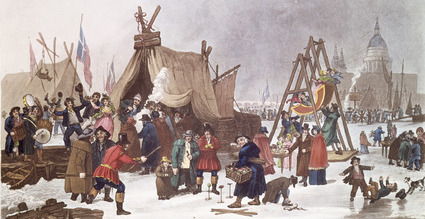
Everyone has heard of the Thames Frost Fairs where the river froze solid and Londoners could walk across, drive across – and on one notable occasion in 1814, lead an elephant across. The first recorded frost fair was in 1608, the last in 1814, after which warmer winters changes in the river’s flow because of  alterations to the bridges prevented it ever being possible again. Below is a detail from Luke Clennel’s picture of that last fair.

Frost Fair

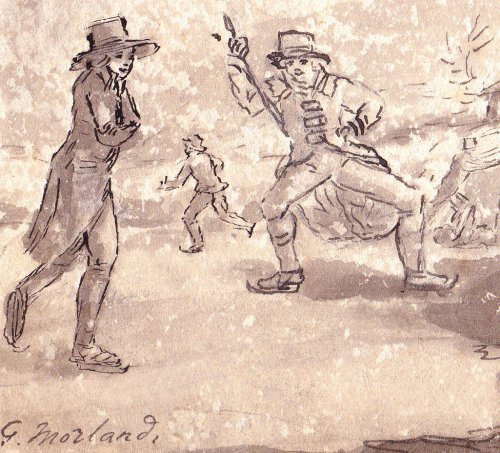
But the Thames did not freeze every year, even before 1814, and when it did the ice was covered in booths and stalls. More reliably Londoners could take to the frozen ponds and lakes in their parks and skate. Below is a detail from an original pen and ink sketch by George Morland in my own collection and you can see the simple skates laced onto the boots or shoes of the skaters.

Morland skaters crop

The Serpentine, the lake in Hyde Park formed from the Westbourne River, provided a particularly popular venue. The Picture of London for 1807, my favourite London guidebook describes it:

‘In severe winters, when the Serpentine River is frozen over, the ice is almost covered with people. One winter there were counted more than 6000 people at one time on the ice. A number of booths were pitched for the refreshment of the populace; and here and there was a group of six, eight or more, fashionable young men, skating, and describing very difficult figures, in the manner of a country dance, with particular neatness and facility of execution. In general, however, the English do not excel in this very exhilarating and wholesome exercise.
From the number of accidents which happen annually on this river when frozen over, his majesty gave the Humane Society a spot of ground on its banks on which they have erected a most convenient receiving-house for the recovery of the apparently drowned; it cost upwards of £500 and is worthy the inspection of the curious. The society, during the time of frost, keep men on the river to guard the unwary from danger, and to relieve those who may require their aid.’

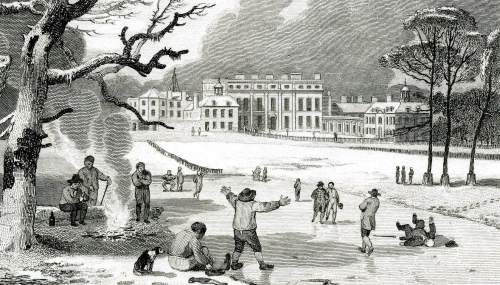
The lake in St James’s Park was also a good size for skaters as this detail from an undated print shows. Some skaters are obviously far better than others!

St James Park

The building on the far bank is the Queen’s House – Buckingham House – which eventually became Buckingham Palace.

Finally here is the image I am using for my Christmas card this year. The lady in her gorgeously warm-looking crimson pelisse seems very snug as she watches the skaters, especially the gentleman with his frozen fingers tucked into his armpits! Her rather bizarre hat is decorated with holly and there is a full description of her outfit at the end of this post.

Walking dress crop

A Very Merry Christmas and Happy 2016 to all my readers!

A Winter Walking Dress from La Belle Assemblée Feb 1812

A scarlet Merino cloth pelisse, lined with straw coloured sarsnet, trimmed with light coloured spotted fur, and attached with loops of black silk cordon and rich frog tassels; the broad fur in front, forming a tippet, pointed at the back. A narrow fur passes from the top of the sleeve,
is brought down the side seams, and relieved by fastenings of black silk cordon; four loops with frog ornament the shoulders and cuffs; plain standing up collar tied with cordon: a fine cashmire (sic) shawl, with brown ground, and richly variegated border, is generally thrown over the dress, in which is united both comfort and elegance. A Swedish hat of the same materials as the pelisse, lined with straw colour, and fastened up on one side; the crown trimmed with two rows of narrow spotted fur, and one still narrower at the edge of the hat; a bunch of the Christmas holly in front, and two tassels falling from the summit of the crown, of black, to answer the pelisse, which is worn over a white round dress, either plain or corded cambric. Beaver gloves, and demi-broquins of scarlet Morocco,
laced with black, and lined with fur, complete the dress.

7 Comments

Filed under Christmas, Entertainment, Fashions, London Parks, St James's Park

A Sea Journey, Regency Style

I don’t usually host guest blogs, but I couldn’t resist sharing the research fellow historical novelist Joanna Maitland has done on travel by packet boat. There’s more about Joanna at the end of her post . Over to you, Joanna –
It’s 1811, it’s wartime (pesky Bonaparte), and you have to go on a sea voyage. To Buenos Aires. Perhaps you’ve been sent there, like Sir Horace in Georgette Heyer’s wonderful story The Grand Sophy, but, unlike Sir Horace, you don’t have the luxury of travelling in peacetime).
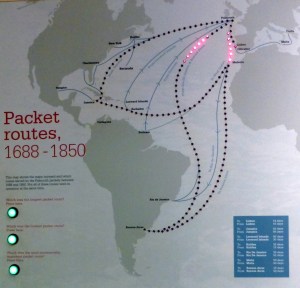
How do you go about it?packet routes
First you get yourself all the way down to Cornwall, probably by mail coach, unless you’re so rich you can afford to travel post. By mail coach, it will take you 18 hours from London to Exeter plus another 14 or so to Falmouth. Quite a trip and that’s only the start!
Packet ships carry the mail, and passengers, from Falmouth to all sorts of places. Buenos Aires is one of the routes they are offering.
Your trip to Buenos Aires is expected to take 35 days out (and 52 days back, assuming you make it there in the first place). Your passage will not be cheap. You can travel steerage for £46 but you probably won’t enjoy it. If you want the “luxury” of a private cabin, the price is £86 one way (and £107 to come back).
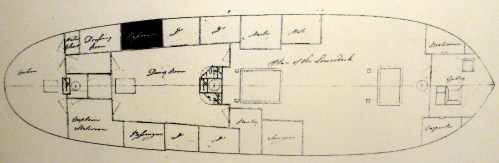
The ship is very small and the passenger cabins aren’t exactly spacious. That blacked-in space on the plan will be yours!packet shp plan
Cabins have no portholes and they open onto a communal dining room. You’ll need to open your door to the dining room if you want any natural light. If you prefer privacy, you’ll need to light your candle or feel your way around in the dark.
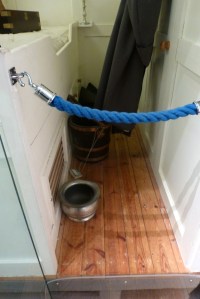
Facilities are somewhat basic, too (see below right), but at least you won’t have to provide your own food and you’ll even get to eat with the officers! You will have to provide your own bedding, though, part of your 400 lb baggage allowance. And on the way back, in spite of that hefty price hike, you will have to provide your own food as well.facilities
During your 35-day voyage, you might have a run ashore at Madeira, but probably nowhere else, and you’ll have to take your exercise on the deck, trying to thread your way through the guns, and the ship’s boats, and the livestock (which you’ll be eating later). Remember, there’s to be absolutely no fraternising with the crew while you’re on deck. No climbing the rigging, either.
But, hang on, it’s wartime. What if your ship is attacked? What happens to you then? Just in case you’re wondering, these are your captain’s orders (and – sorry – they don’t mention you, the passenger, at all):
“You must run where you can.You must fight when you can no longer run and when you can fight no more you must sink the mails before you strike [your colours].”
So your ship will run from the enemy and you’ll get away, will you?
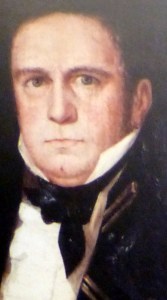
Well, you might. During the French wars, from 1793-1815, 68 packet ships were captured by enemy ships or by privateers. Three or four a year, on average. Since the total packet fleet in 1808 was only 39 ships, that’s OK-but-not-brilliant odds for your forthcoming trip. Still, some packet captains are stout fellows who are prepared to fight. Like Captain John Bull, shown here.
capt john bullCaptain Bull’s packet ship, the Duke of Malborough (see below), did fight in 1814 off Cape Finistere against a privateer. Sadly, one passenger was a casualty. Even more sadly, it transpired that the attacking ship was not a privateer at all, but a ship of the Royal Navy! They do indeed call it the fog of war.ship D of Marl
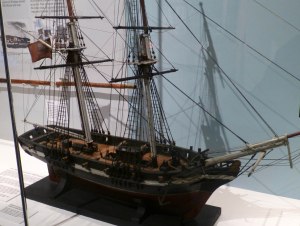
Bon voyage, intrepid traveller!
All information and exhibits from the splendid displays at the The National Maritime Museum, 

Joanna Maitland’s latest Regency ebook novella, His Silken Seduction , does not include a packet voyage but it does take readers as far as war-torn France and the excitement of Napoleon’s Hundred Days. It’s available for preorder at a special price until publication day.

joannapic6After many years publishing Regencies with Harlequin Mills & Boon, Joanna is very excited about branching out into new fields as an independent author with His Silken Seduction: His Silken Seduction Cover MEDIUM WEBher second book will be a timeslip, Lady In Lace. Details of all her books are at Liberta Books the site that Joanna and fellow author Sophie Weston, Joanna have just set up. Here readers and writers can meet and share enthusiasms and Joanna hopes to welcome fans, old and new, and readers of all sorts of fiction to the website.

 

6 Comments

Filed under Transport and travel, Travel

Electrical Sparks, Icy Draughts and Pendulous Parts – Dr James Graham and the Celestial Bed

Catherine MacauleyPopular science has always attracted the gullible and those who prey on them and a combination of sex and science is an almost infallible recipe for making money. Or so the notorious Dr James Graham thought – and for a few years he was proved right.
Graham studied medicine in Edinburgh where he was born in 1745 and, although he does not appear to have taken the examinations, began to style himself Doctor. He sailed to Baltimore in 1769 where he encountered the new craze for electricity – Philadelphia was full of Benjamin Franklin’s lightning rods – and began to form his theories for the prolongation of life and vigour.catherine-macauley
On his return to England in 1774 the “doctor” set up a practice in Bristol promoting health, long life and happiness through a regime of healthy living involving eating plenty of fruit and vegetables, taking exercise and ensuring bodily hygiene by the application of quantities of cold water. The basic routine would doubtless be approved by modern doctors and there is no evidence that it did not genuinely help his patients. But Dr Graham’s money-making twist was to add electricity, promoting it as a miraculous aid to long life and health.
He was so successful that he moved to Bath, by which time his approach was gaining a reputation for increasing vigour and especially for improving patients’ sex lives, helping cases of infertility and curing impotence by applying “Effluvia, Vapours and Applications ætherial, magnetic or electric.”
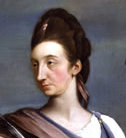
While in Bath he met Mrs Catherine Macauley, a 46 year old widow who was feted for her intellectual activities and egalitarian views. This meeting provided him with a fortuitous piece of PR when his brother, a 21 year old surgeon’s mate, was introduced to the lady and they married almost immediately. The resulting gossip and scandal was a wonderful advert for the older brother’s treatments – here was a middle aged woman who, rejuvenated, could satisfy her lusty young husband. The lady shown in the portrait (above right) would not appear to be someone much amused by such talk.
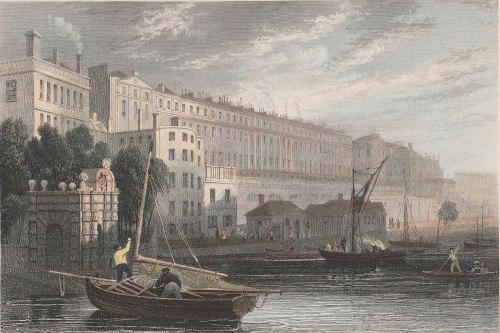
In July 1780, on the wave of celebrity that the Macauley scandal produced, Graham moved to London and opened the Temple of Health (or Temple of Hymen) in Adelphi Terrace, the hugely fashionable new development by the Adam brothers. (Shown below) Adelphi
The Temple’s centrepiece was a suggestively phallic electrical conductor with a pair of semi-globes attached. The whole place was scented, cunningly lit, luxurious and mysteriously erotic. Electricity was generated by a series of Leyden jars to produce sparks, flashes of lightning and spectacular effects and soon the Temple was hung about, as one visitor observed, with “walking sticks, ear trumpets, visual glasses etc left and placed as most honourable trophies by deaf, weak, paralytic and emaciated persons, cripples etc. who being cured had no longer need of such assistance.”
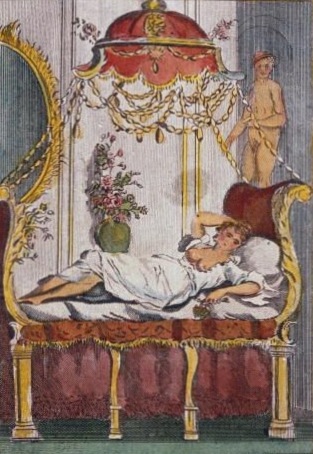
It proved so successful that Graham opened a second Temple at Schomberg House in Pall Mall with the infamous Celestial Bed, stuffed with wild oats and hair from the tails of, naturally, stallions. Draperies, lights, mirrors, organ music and perfume and the enticements of Vestina, Goddess of Health created an exotic sexual playground. Rumour has it that Emma Hart, later Lady Hamilton, played the role of Vestina, but this is now disputed.
Graham claimed that the bed, surrounded by lodestones or magnets, was an aid to pleasurable sex and the creation of healthy offspring. Charges to use it are said to range from 50 guineas to £100 a night.Celestial Bed
To quote one of his pamphlets, “The venereal act itself, at all times, and under every circumstance, is in fact no other than an electrical operation…those heart-piercing and irresistible glances shooting at critical moments from soul to soul are no other than electrical strokes or emanations.”
Nor was it all luxury. Dr Graham had not lost his enthusiasm for very cold water and recommended washing the genitals in it frequently, especially “…certain parts which next morning after a laborious night would be relaxed, lank, and pendulous, like the two eyes of a dead sheep dangling in a wet empty calf’s bladder, by the frequent and judicious use of the icy cold water, would be[come] like a couple of steel balls, of a pound apiece, inclosed in a firm purse of uncut Manchester velvet.”
For many people these claims fed into popular beliefs about Animal Magnetism and a new interest in the workings of the body. But more critical observers saw through his claims from the start – Horace Walpole remarked it was “the most impudent puppet-show of imposition I ever saw.”
By the 1780s debts and scepticism overcame Graham and he had to sell up. He fled to Edinburgh where he was gaoled for “publishing lascivious and indecent Advertisements & delivering wanton & Improper lectures.”
He gave up his electrical therapies and developed new theories on the virtues of mud baths which he claimed were the secret to immortality. Perhaps influenced by popular tracts on the virtues of sea bathing, which maintained that valuable mineral salts could be absorbed through the skin by immersion, he argued that soaking in mud would allow all the nutrients essential for life to be obtained. He claimed that he himself had lived for two weeks immersed in mud with only a little water to drink. The fact that this would be a miserable existence did not appear to have occurred to him.

SONY DSC
Somehow, by 1786, he was back in London in Panton Street, Soho, with an establishment promoting mud-bathing – demonstrated by semi-naked women.
He became steadily stranger and, in the grip of religious mania, founded “the New Jerusalem Church” which attracted no followers at all. His extreme behaviour escalated and eventually he was arrested in 1793 for persistently stripping off his clothes as he walked and handing the garments to the poor. The unfortunate Dr Graham died soon afterwards at the age of 49.
The connection of electricity, magnetism and sex did not however die out with the disappearance of the Celestial Bed. Harris’s List of Covent Garden Ladies, for example, included Miss Harriet Jones who practised the “Grahamitic method”. She was, apparently, a “desirable bed-fellow who after every stroke gives fresh tone and vigour to the lately distended parts.”
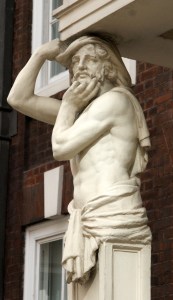
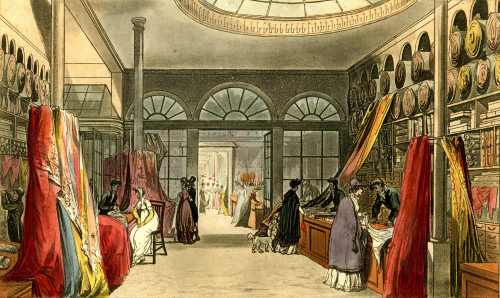
The red brick Schomberg House – without the Bed, unfortunately – can still be seen in Piccadilly on the South side, just past St James’s Palace. (Detail of the front shown right) Later it housed the upmarket and fashionable draper Harding, Howell and Co. (shown below. Ackermann’s Repository 1809)) but there are no reports of any beneficial electrical impulses lingering and the ladies shopping in the fabrics department appear decidedly calm.

Harding, Howel0001


7 Comments

Filed under Love and Marriage, Medicine & health, Science & technology, Sex & scandal

Pray Remember Guy Fawkes!


Pyne Guy Fawkes


The 5th November is the anniversary of the Gunpowder Plot in 1605 when a group attempted to blow up the House of Lords, along with King James I, during the State Opening of Parliament. The aim was to install James’s nine year old daughter Elizabeth as a Catholic head of state, but the conspirators were betrayed and Guy Fawkes, who had been guarding the thirty six barrels of gunpowder stacked in the cellars under the Lords’ Chamber, was captured.

Most of the conspirators managed to get out of London but were found and, after a fight, some were killed and the others captured. At their trial in January 1606 the eight survivors, including Guy Fawkes, were sentenced to be hanged, drawn and quartered. With the popular feeling so strong against Roman Catholics at the time, celebrations on the  anniversary of the discovery of the plot rapidly became a fixed part of the calendar and persisted nationally. Bishop Robert Sanderson (d.1663) preached, “God grant that we nor ours ever live to see November 5th forgotten, or the solemnity of it silenced.” By 1677 Poor Robin’s Almanac had the verse:

“Now boys with

Squibs and crackers play.

And bonfires blaze

Turns night to day.”

By the early 19th century the visible elements of the celebration – the bonfire, the effigy of the “guy” with small boys parading their own homemade versions and begging for “A penny for the guy” and the setting-off of fire crackers – were still as popular as ever. The idea of a bonfire, fireworks and the opportunity for a party was doubtless as appealing then as it is now and perhaps few people thought about what was being represented and the horrors of either the planned explosion or the hideous end of the conspirators.

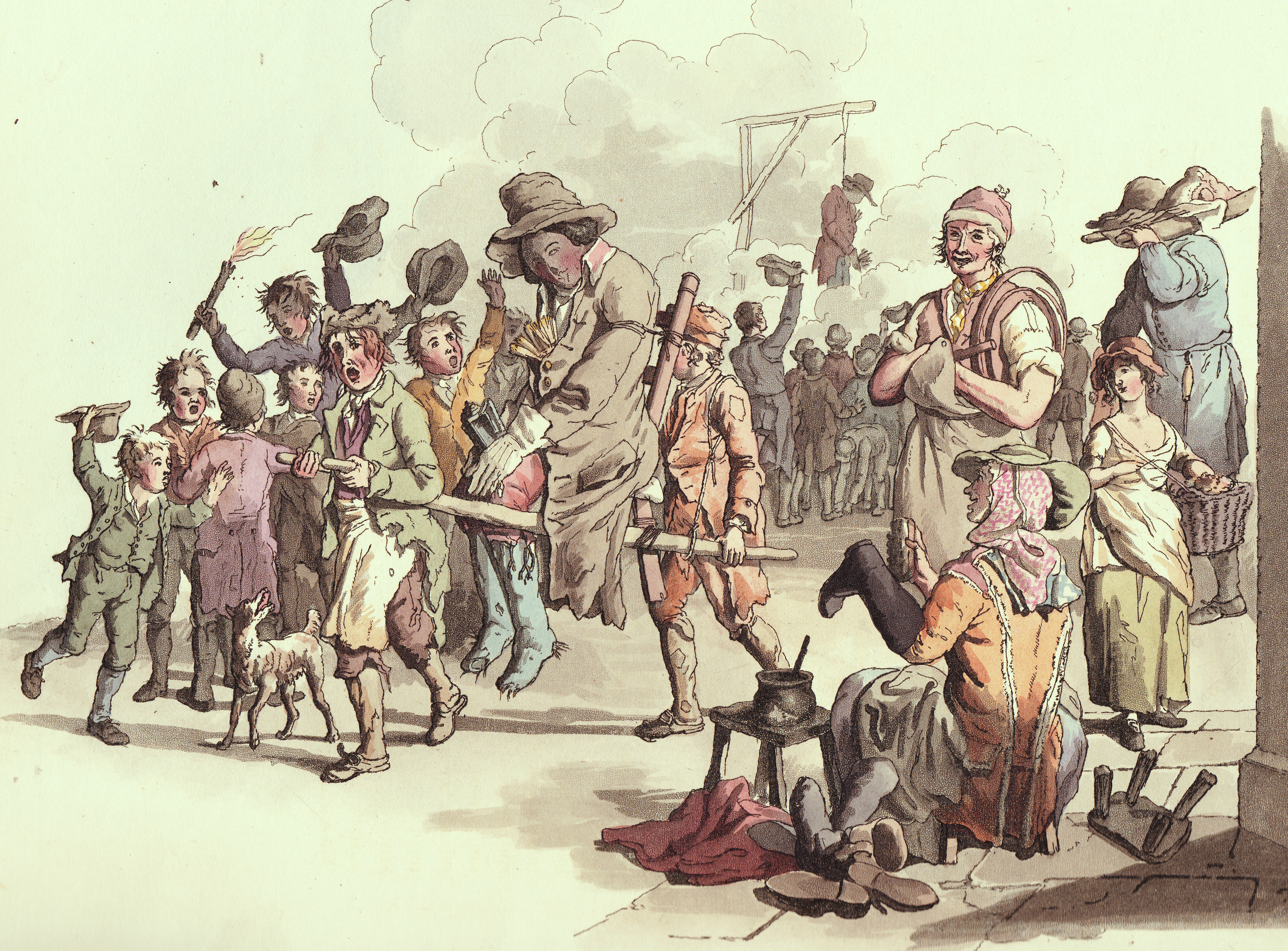
I love the detail in the picture at the top of this post. It is from Pyne’s The Costumes of Great Britain, 1805 and shows urchins parading their guy. He is dressed in old clothes with a handful of firecrackers pushed into his coat front. in the background another guy has been hung over the bonfire with his hands full of firecrackers. In the right foreground are a group of tradespeople. A man carries a joint of meat in a wooden hod on his shoulder, too preoccupied to look up, but a girl selling something from her basket, a cooper with barrel hoops over his shoulder and his tools tucked into the front of his apron and a woman blacking boots look on in amusement. The shoe-black is wearing a soldier’s uniform jacket, two scarves over a white cap and a voluminous black skirt. Her pot of blacking is on the stool beside her and she is rubbing it into a boot with a small brush.

My copy of Observations on Popular Antiquities: chiefly illustrating the origin of our Vulgar Customs, Ceremonies and Superstitions by John Brand has the following for November 5th: “It is still customary in London and its vicinity for the boys to dress up an image of the infamous conspirator Guy Fawkes, holding in one hand a dark lanthorn, and in the other a bundle of matches, and to carry it about the streets begging money in these words, “Pray remember Guy Fawkes!” In the evening there are bon-fires , and these frightful figures are burnt in the midst of them.” The original edition was 1795, but the editor of the 1813 edition has added “Mr Brand was mistaken in supposing the celebration of the fifth of November to have been confined to London and its neighbourhood. The celebration of it was general.”

Cruickshank guy

Almost thirty years after the print by Pyne was published Cruickshank’s little image for November in London shows a very similar guy, although this one has a clay pipe in his mouth. Another guy is being carried in the distance on the right and he is wearing a tall white dunce’s cap which may be intended to represent the hats worn by heretics burnt at the stake by the Spanish Inquisition.

It is obviously November – fog is swirling in the street, the figure in the centre has his nose and mouth muffled and the advertisements pasted to the boarded-up window are for cloaks, greatcoats and furs. There is also an advert for fireworks.


4 Comments

Filed under Entertainment, Street life, Traditions, working life

A Flutter of Fans – A Very British Romance?

mid 18thcWatching the first episode of Lucy Worsley’s fascinating A Very British Romance last night I was inspired to look at my collection of 18th and early 19th century fans to see how they treat romantic love.

Fans were not only a practical necessity at hot and over-crowded balls and receptions, but they were also items of high fashion, conversation pieces and even sources of satire. And, of course, what better aid to romance for a strictly-chaperoned young lady who could deploy an entire range of flirtatious gestures with her fan – peeping over the top of it; hiding, then revealing her face; gesturing an invitation or snapping it shut sharply in rejection.

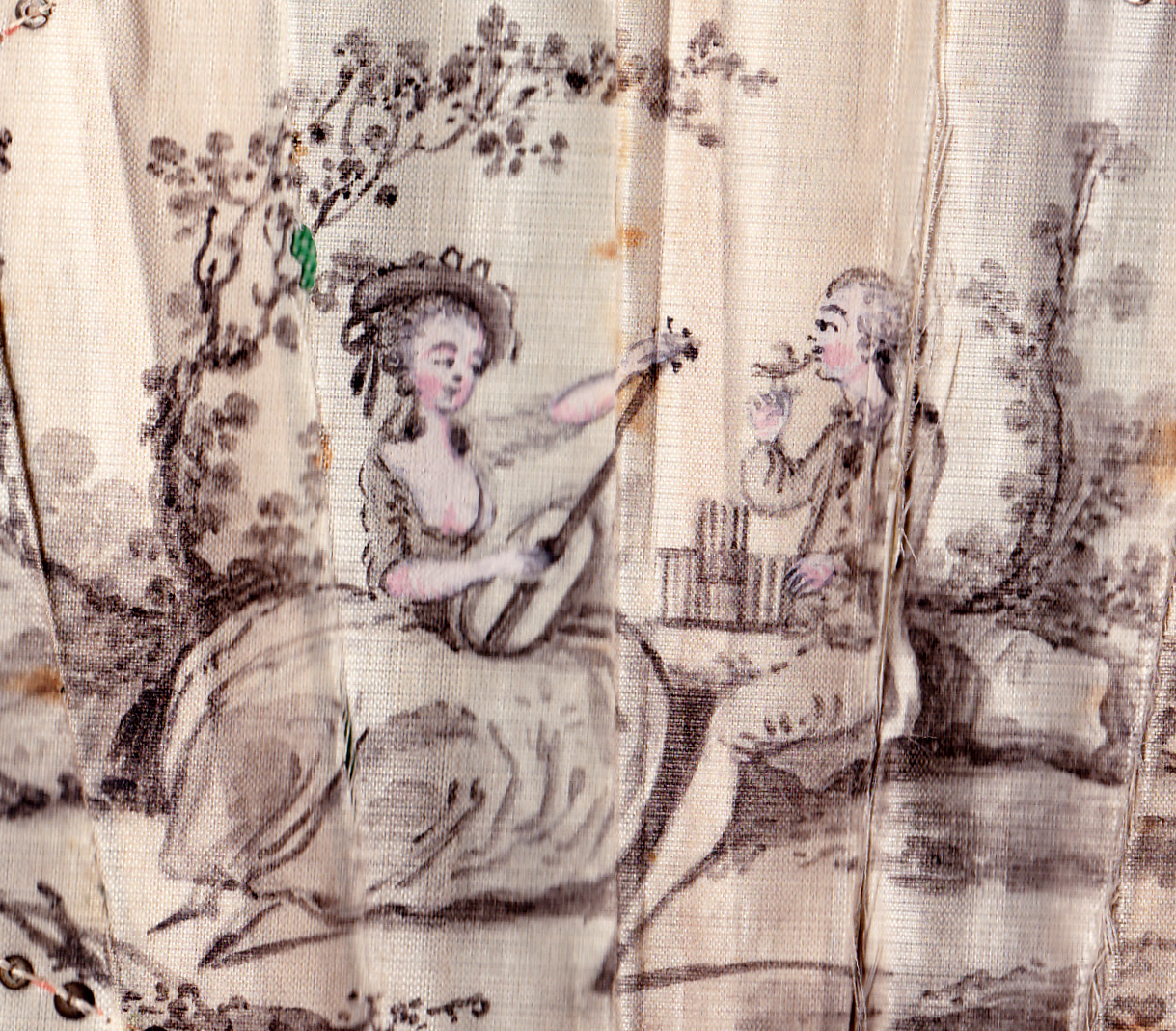
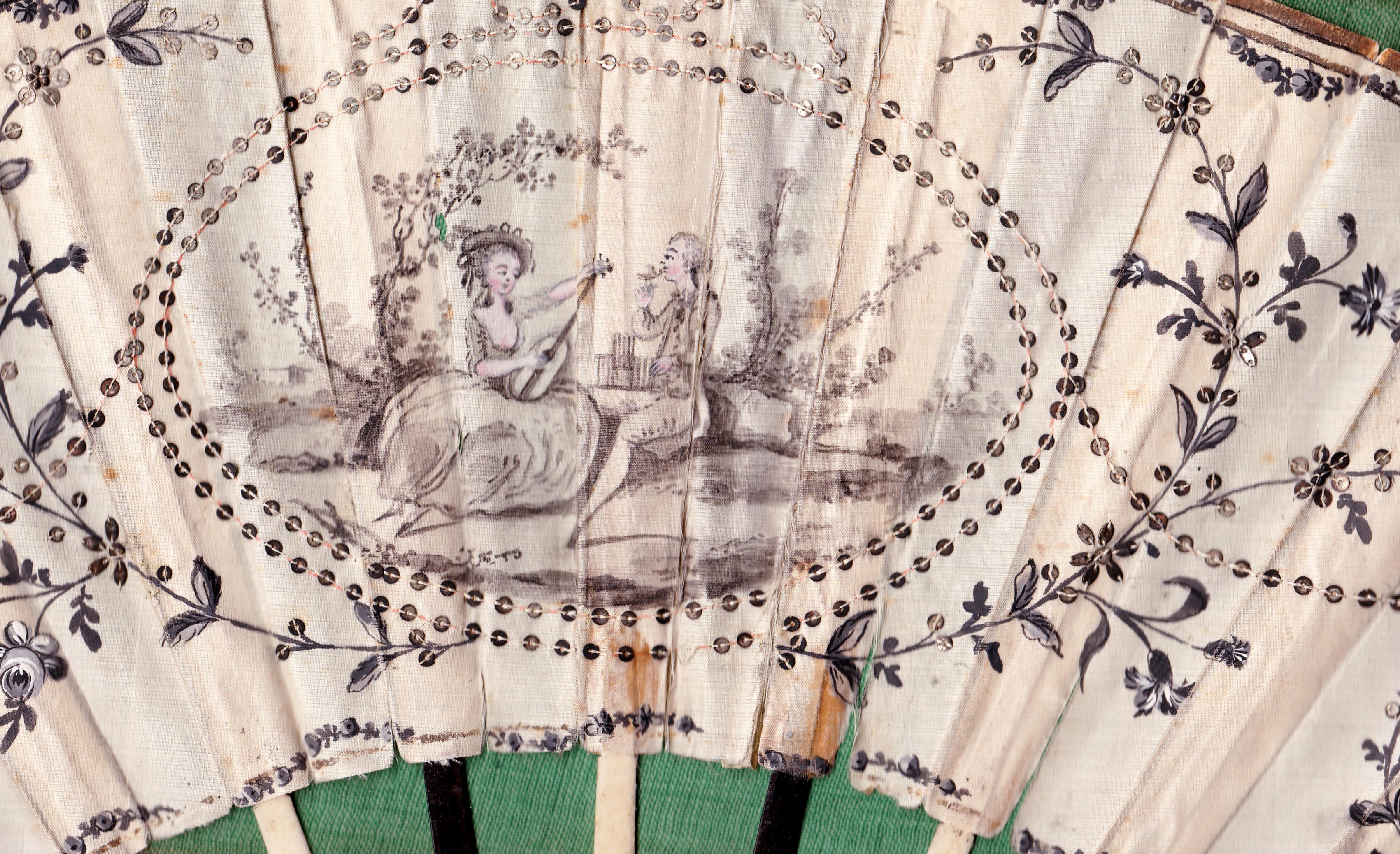
mid 18thcThe earliest – perhaps 1770s – is a simple fan with widely spaced black and white sticks. The leaf is painted on one side only in black, white and grey, with tiny silver sequins sewn through the pattern. The man and woman in the centre have delicate touches of pink on their cheeks, hands and on her bosom. This is a very informal outdoor scene. She is playing a guitar and perhaps singing a romantic song. He is sitting with his legs astride the bank, and raising a small bird to his lips, apparently to kiss its beak. A love bird? From their intense exchange of looks it is quite clear that hers are the lips they would both wish he was kissing.

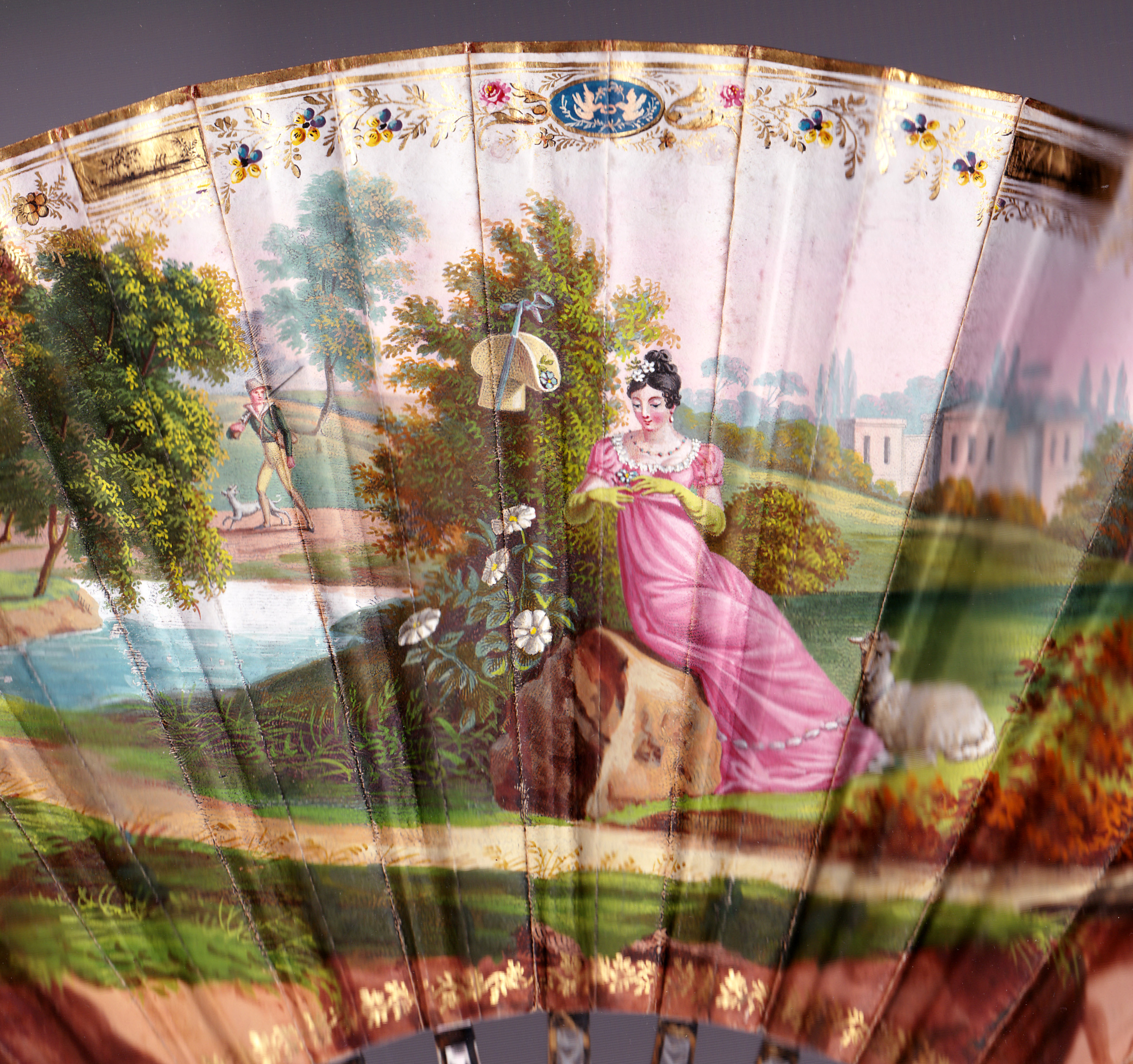
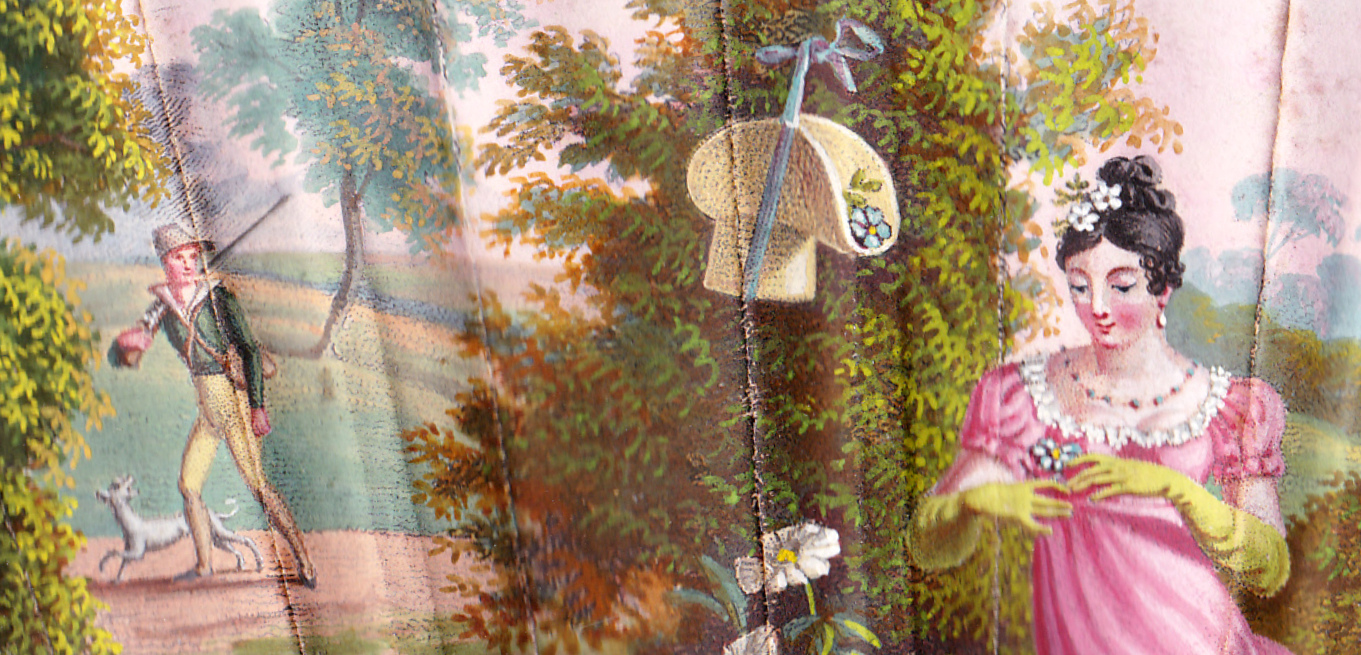
parkThe most modern (c1818?) is also outdoors. It is a detailed hand-painted and gilded scene set in the parkland surrounding a large country house. The young lady in the centre is gathering flowers which she is collecting in the bonnet which she has casually hung from a bush – perhaps an indication that she would like to shed a few more items of clothing if the right circumstances arose. parkOn the other hand, a lamb, a symbol of innocence, is sitting by her side. A young man, his gun over his shoulder and his ammunition pouch at his side, strides off on the other side of the lake with his dog at his heels. He is off hunting – but what or who? He is certainly very aware of the young lady and I would hazard a guess that she is just as aware of him. No doubt she set out early to compose herself into just this charming and innocent pose for his benefit.

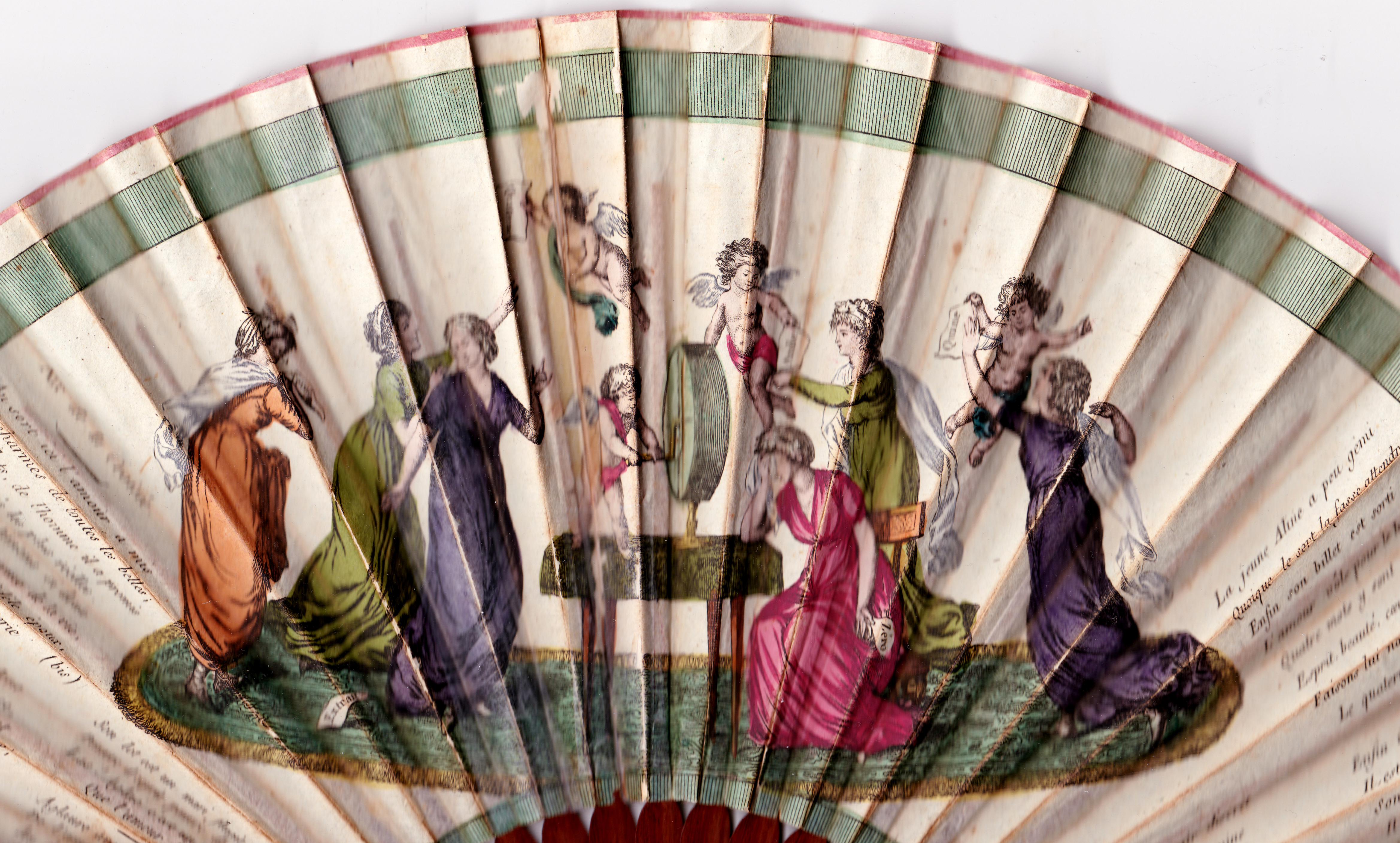
lotteryNow for a fan which I found in circumstances which I can only call romantic, if not downright spooky. I was writing The Piratical Miss Ravenhurst, the last of my Scandalous Ravenhurst series. My heroine was called Clemence – not the most common of English names. I was halfway through the book when I visited an antiques auction and spotted the handle of a fan poking out of a mixed lot of odds and ends. It had no loop on it – an almost infallible sign of an early fan – so I took a quick look and put it back before anyone else saw me taking an interest! In the event I got the whole lot for under £20 and when I had a good look at the fan I could tell it was not only late 18th century, but also French. The scene shows six young women in a lottery for love. The cupids draw a description of the virtues the lover of each will possess, described in very difficult old French in verses around the edge. (I have to thank fellow author Joanna Maitland for the translations!)  Poor Isis is in a hurry to receive her prediction – but her lover will have no virtues whatsoever. The next girl, “Aglaé, le coeur palpitant” – “her heart beating” – is destined for a lover who is articulate, but weak in spirit. Each girl in turn is told of a lover with two, then three, then four virtues. The final young woman is Clémence – my heroine’s name! And not only is her lover going to be handsome but he will surpass her hopes in every way.

Enfin il n’en reste plus qu’en
Il est pour la belle Clémence
Son sort est beau, mais peu commun
Il surpasse son espérence
Dons du Coeur, et dons l’esprit
Vertu, courage et bonne mine
Son amant les a réunit
Elle a gagné le quine.

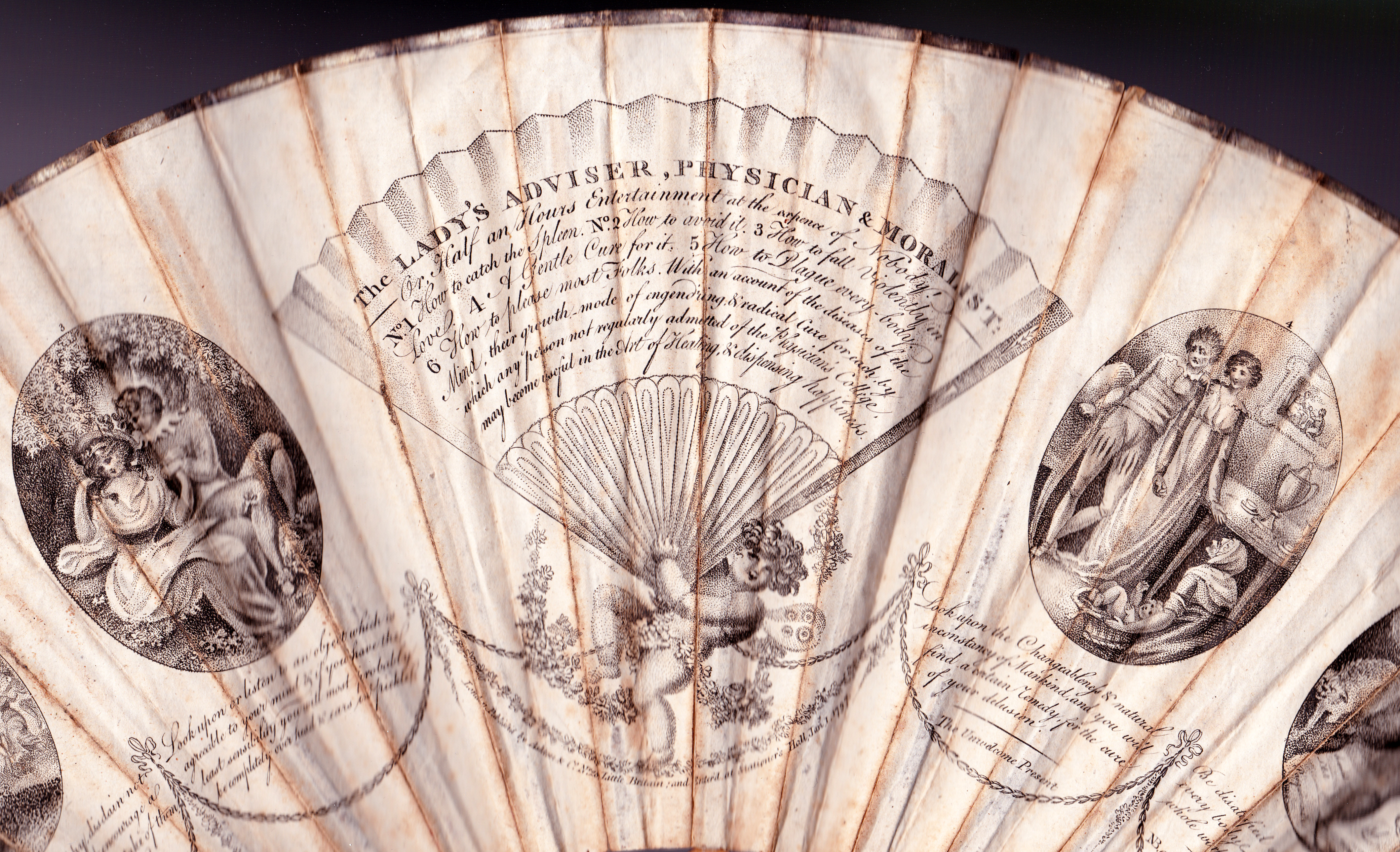
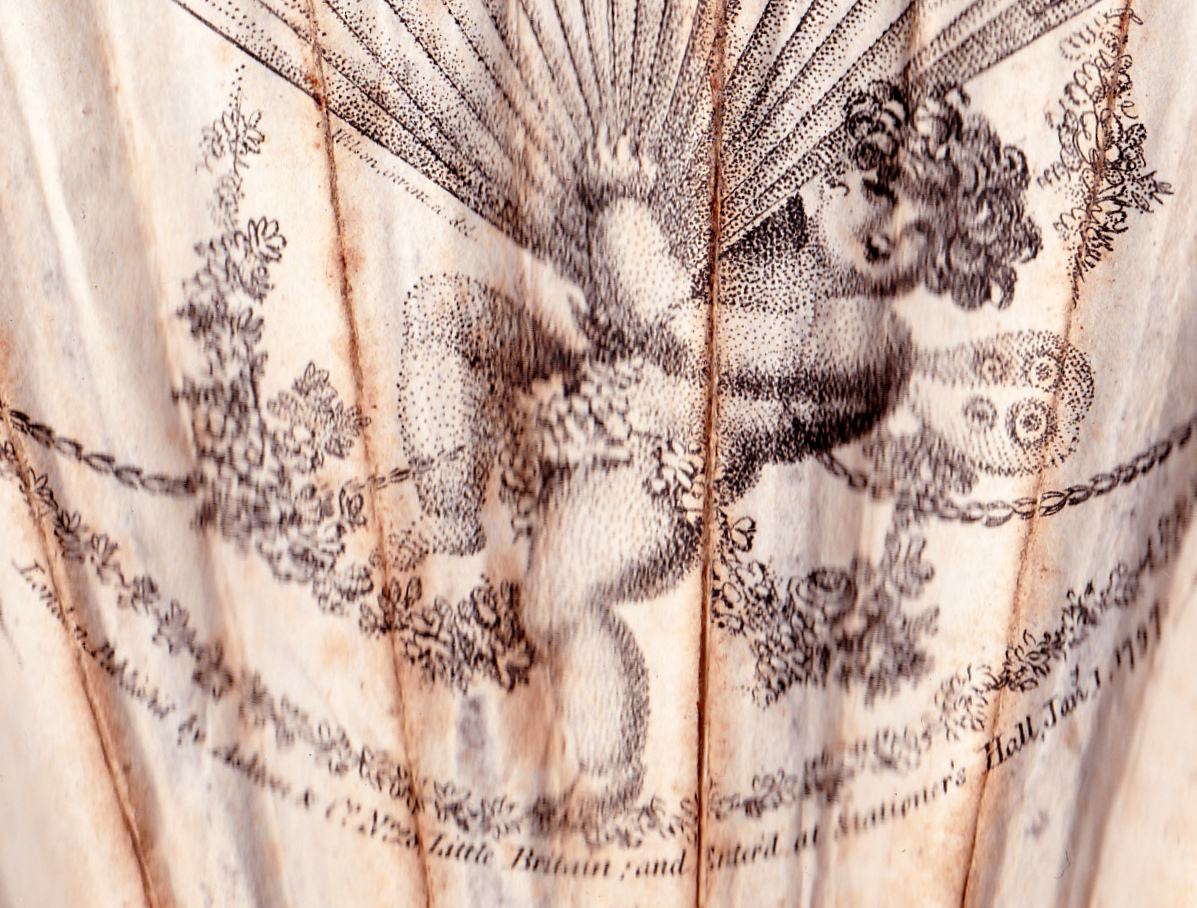
maximsTo counter all that intense romance I’ll end with a rather more cynical view of life and love with a fan produced in 1797. It was doubtless intended to be a conversation piece. The central text, shown on a fan held up by a fat little Cupid, explains that this is:

“The LADY’S ADVISER, PHYSICIAN & MORALIST: Or, Half an Hours Entertainment at the Expense of Nobody”

It has six scenes around the edge. The four not visible in this view show how to “Catch The Spleen” – devote yourself to cats rather than people and seek out unpleasantness; “How to Avoid It” – enjoy life with a virtuous disposition, honour and moderation; “How to Plague Every-Body” – be dissatisfied with everything, declare war against the whole world and finally “How to Please Most Folks” – “Be just to your Enemy, Sincere to Your Friend, Constant to Your Mistress.”

On the left above is “How To Fall Violently In Love”: “Look upon or listen to an object which is agreeable to your mind & if you have the least sensibility you will most probably be completely over head and ears in pickle.”

On the right is “A Gentle Cure For It”. The young couple are  married now and have been interrupted at the breakfast table by a woman with a child in a basket. The scene has the caption “The Unwelcome Present” and from the expression on the man’s face, and his body language, one assumes this child is a bye-blow of his. The text reads:

“Look upon the Changeableness & natural inconstancy of Mankind, and you will find a Certain remedy, for the cure of your delusion.” Really rather a scandalous scene for a lady’s fan!

maxims

6 Comments

Filed under courtship & marriage, Entertainment, Fashions, High Society, Historical Romance, Love, Love and Marriage

October In London

Return homeThe Cruickshank print for October shows the end of the summer for Londoners – the return home from their holidays, probably at the seaside. One party are disembarking from a mail coach on the left while on the other side a family are getting out of a hired post chaise. The new season is indicated by the man selling a pheasant in the centre and the poster for the start of the Theatre Royal’s winter programme.

These travellers are very much of the ‘middling sort’, respectable tradespeople or perhaps lawyers or merchants. A decade or so before and they would not have dreamed of taking a holiday – that was reserved for the upper classes and aristocracy, people with an income they did not have to work for, and ample time on their hands. But times were changing and improvements in transport, as well as changes in society, meant that the middle classes could manage to get away to perhaps Margate or Folkestone or one of the other growing resorts along the South and South East coasts.

The other print is from over twenty years earlier and shows the journey back to Town from the other end – The Departure is the final print in Political Sketches of Scarborough by J Green, illustrated by Thomas Rowlandson. The lady in her fashionable travelling outfit is sheltering from the rain while her luggage is loaded onto a hired chaise – Departureone of the “yellow bounders” famous for both colour and the wild swaying of their springs. She seems to be of a  higher rank than the unsophisticated travellers in the Crucikshank image and the verse indicated that she is following the lead of the most elevated visitor to Scarborough that season:

The chilling winds and rain combine,

That all should Scarbro’s sweets resign;

First one by one – then four by four,

And then they’re off by half a score;

Her GRACE is gone – with her a host

Of charms to captivate, are lost:

When she withdraws her genial ray,

The sun has set of Scarbro’s day.

3 Comments

Filed under Entertainment, High Society, Seaside resorts, Transport and travel

Discovering Sir Walter Scott – Or, Confessions of an Historical Author

I had better start this post with a confession – I have never read anything by Sir Walter Scott, the Regency’s favourite author and the man who almost single-handed created the historical novel genre as we understand it today. And that is bad of me, because for someone who writes historical novels and who specialises in the Regency, I should have done. And I will read some, just as soon as I’ve met my current deadline.

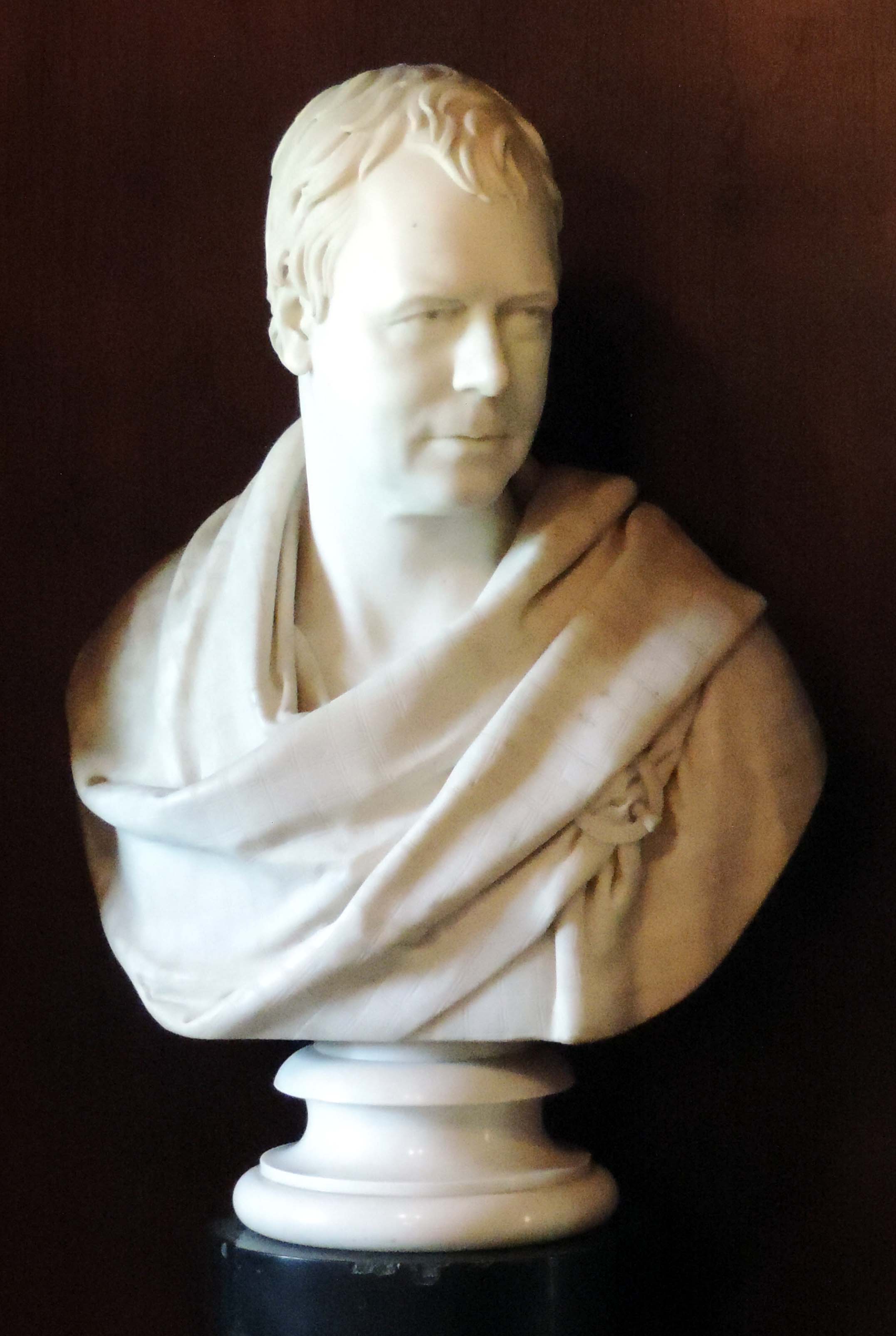
bust
We were driving back from a touring holiday in Scotland in August when I looked at the map and saw Abbotsford marked, dredged in my memory, came up with Scott and suggested we visit.
My husband grumbled that he knew nothing about Scott (he’s a zoologist, so he has an excuse), so I had better fill him in while we were driving there. All I could come up with was that Scott was blamed for the excesses of the “tartan and shortbread” Scottish tourist industry, had been hugely prolific, wildly popular with the reading public and had got himself into vast debt. We had encountered him on numerous occasions when researching for Following the Great North Road (available for Kindle) because he was a constant traveller between Scotland and London, considering the Swan at Ferrybridge to be the best inn on the Great North Road.
He was also kicked in the head by his horse while drilling with the Edinburgh Light Horse at Portobello just outside Edinburgh (and also on the GNR) and finished The Lay of the Last Minstrel while confined to bed recovering.
None of this amounted to much of an introduction, let alone an explanation of why Scott was so popular at the time and still has such a grip that Abbotsford has become a literary shrine.

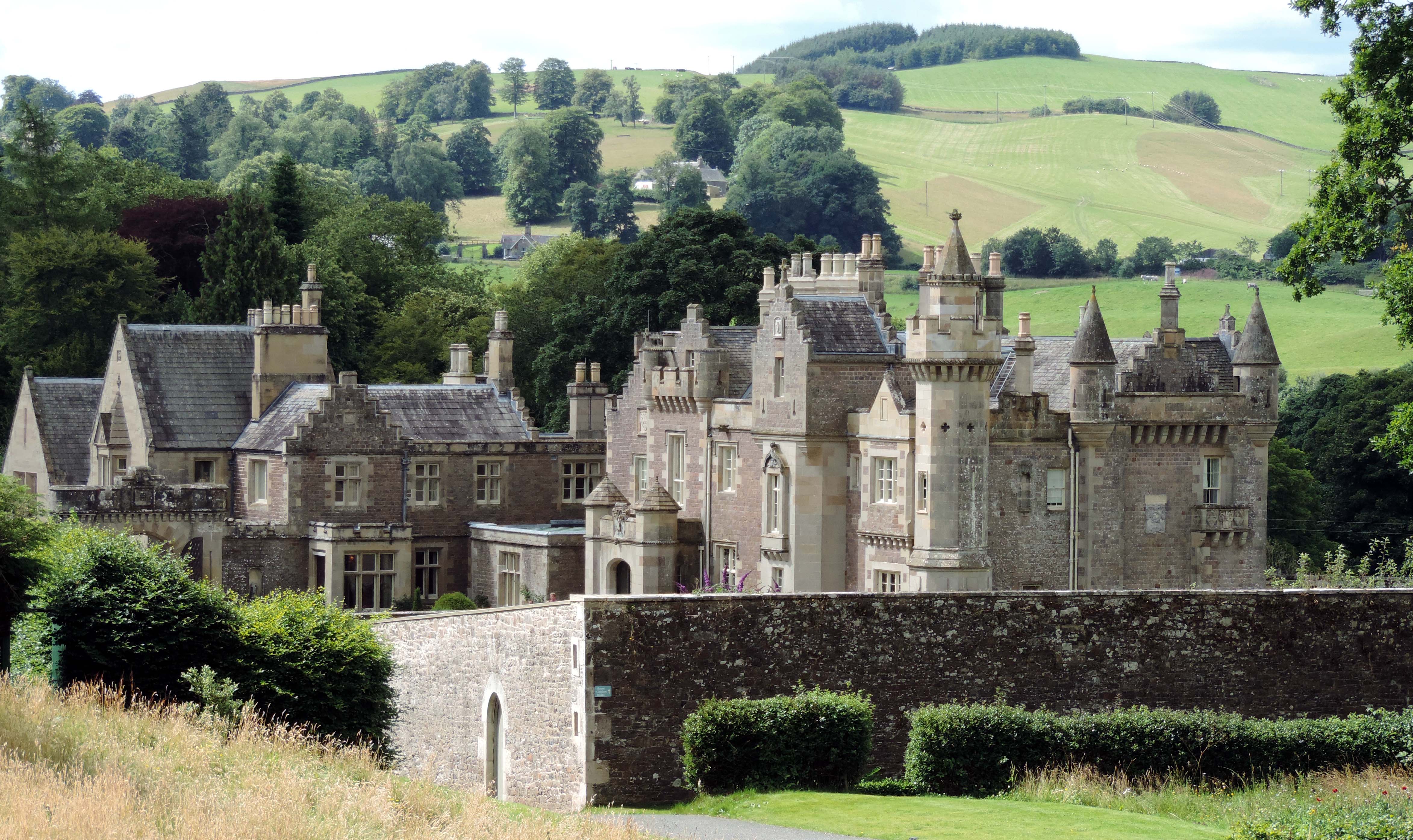
AbbotsfordThe visit to the house was preceded by an excellent exhibition in the visitor centre, so we studied that and got the basic facts straight. Scott was born in 1771 in Edinburgh to a very respectable professional family. (Lawyers, medics, professors). He spent his first four years in Roxburghshire while recovering from the polio that left his left leg permanently affected and this encounter with Borders history apparently fired his precocious imagination.
He returned to Edinburgh for his education, became a rather unsuccessful Advocate and then was appointed Sherriff-Depute of Selkirkshire in 1799. He was already writing poetry and was obsessed with Scottish history and legends, so this new post was ideal, giving him the opportunity to travel widely.
He wrote his vast Minstrelsy of the Scottish Borders (1802), followed by epic poems The Lay of the Last Minstrel (1805), Marmion (1808) and The Lady of the Lake (1810) which proved hugely popular with a reading public whose tastes were embracing the romantic and who were fascinated by wild and rugged landscapes. But poetry was not enough for him, and besides, Byron was beginning to encroach on his territory. He turned to fiction with Waverley (1814), Guy Mannering (1815), The Antiquary (1816), The Heart of Mid-Lothian (1818), The Bride of Lammermoor (1819) and Ivanhoe (1820). He was also writing essays, lyrics, short stories, historical and biographical work and highly-regarded critiques of contemporary fiction – he reviewed both Emma and Frankenstein, for example.
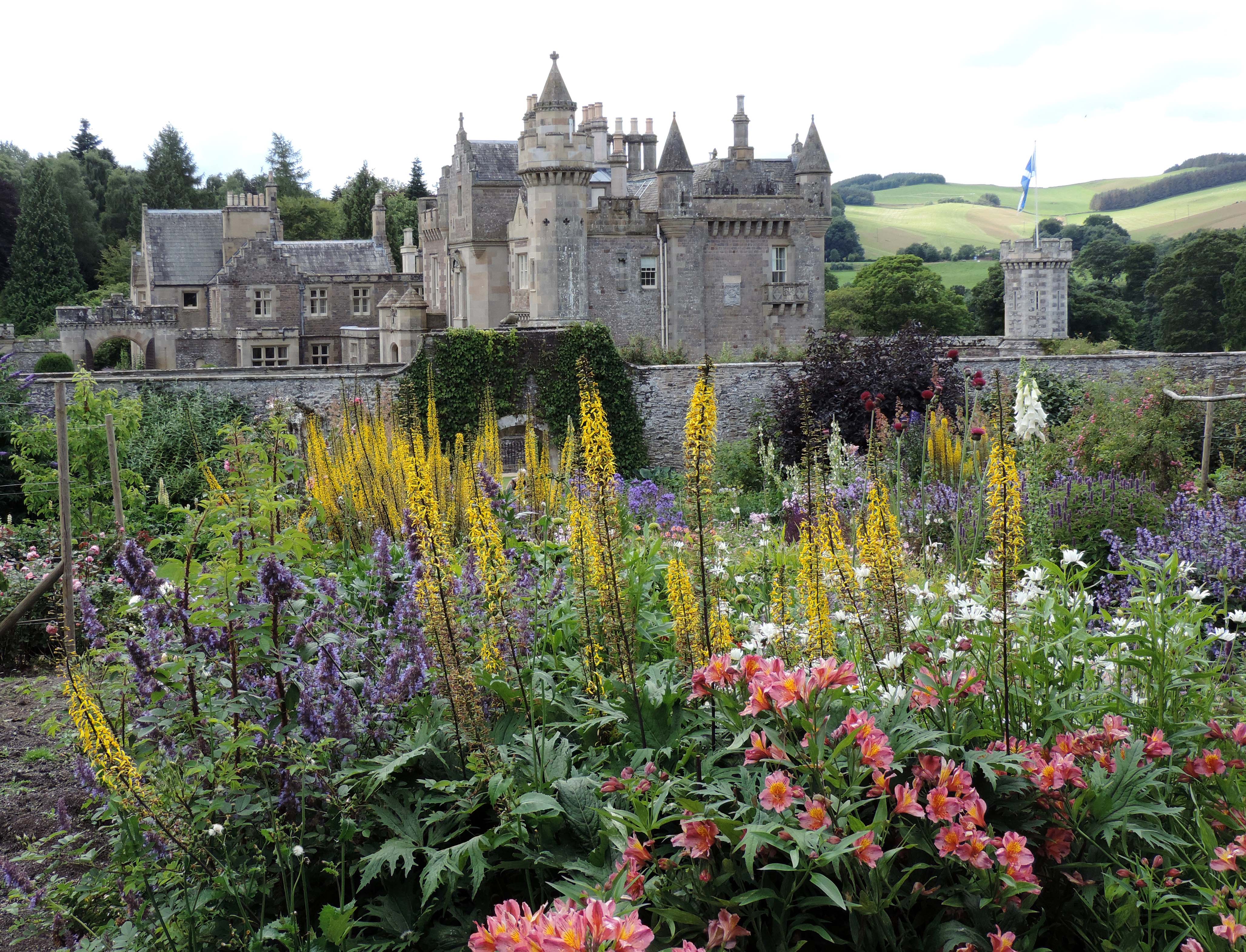
Despite being staggeringly prolific in his writing, Scott was still holding the Sherriff-Depute post and needed a base for his travels that would also accommodate his family. In 1812 he bought Newarthaugh, a farmhouse “on a bare haugh and bleak bank by the side of the Tweed.” It was small for a man with a wife and four childrgardensen, but he started by making only small changes to the house, which he renamed Abbotsford, instead buying land to increase the estate from 110 acres to 1,400.

The house grew in stages almost haphazardly. “I have always had a private dislike to a regular shape of a house…when the cottage enlarges itself and grows out of circumstance, which is the case at Abbotsford, the outs and the inns [sic] afford, without, so much variety and depth of shade, and, within, give such an odd variety of snug accommodation that they far exceed in my estimation the cut-lugged bandbox with four rooms on a floor and two stories rising regularly above the other!”
Money was no object – it was pouring in from his writing – and Scott could afford architects and builders, artists and craftsmen.

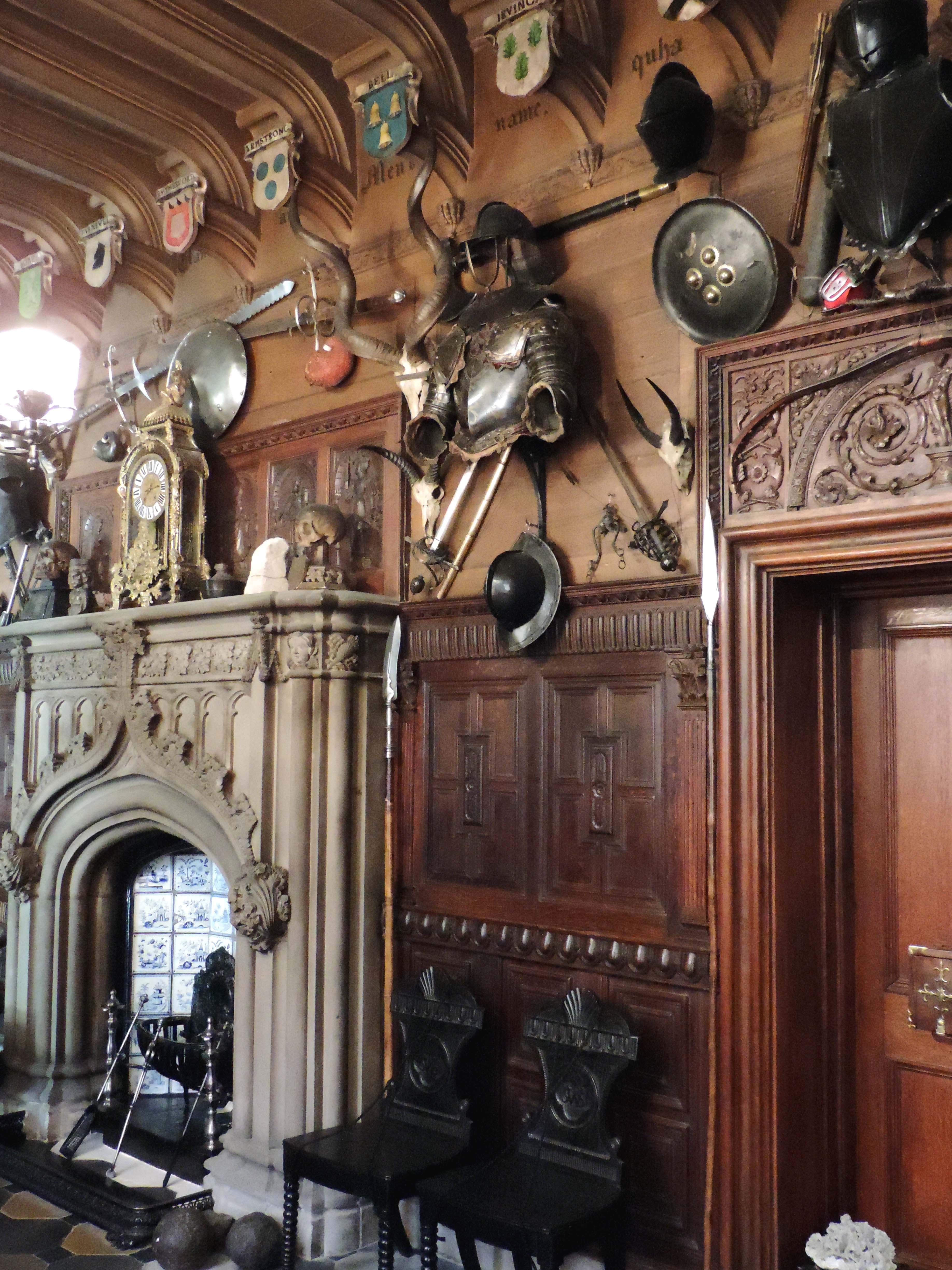
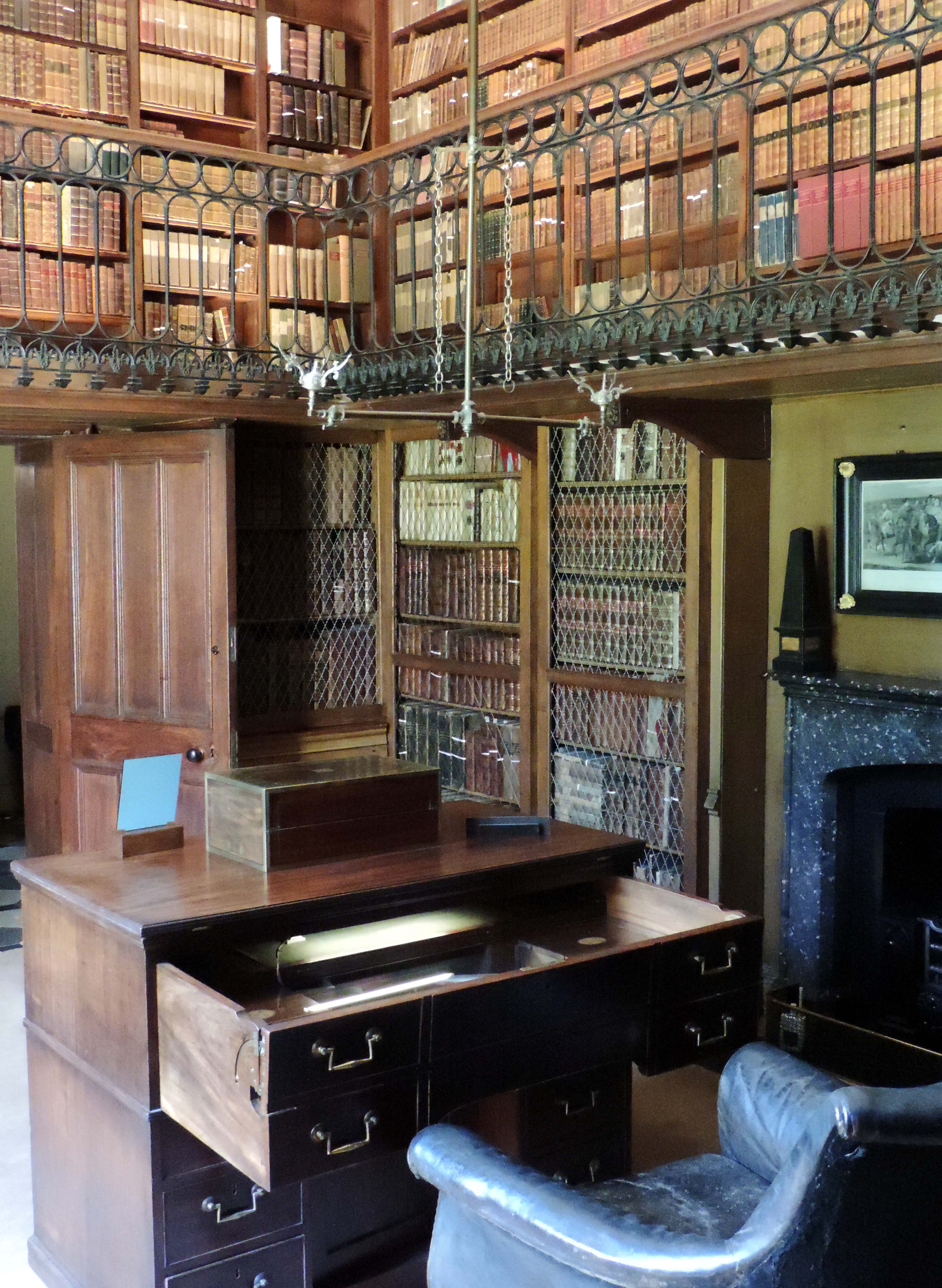
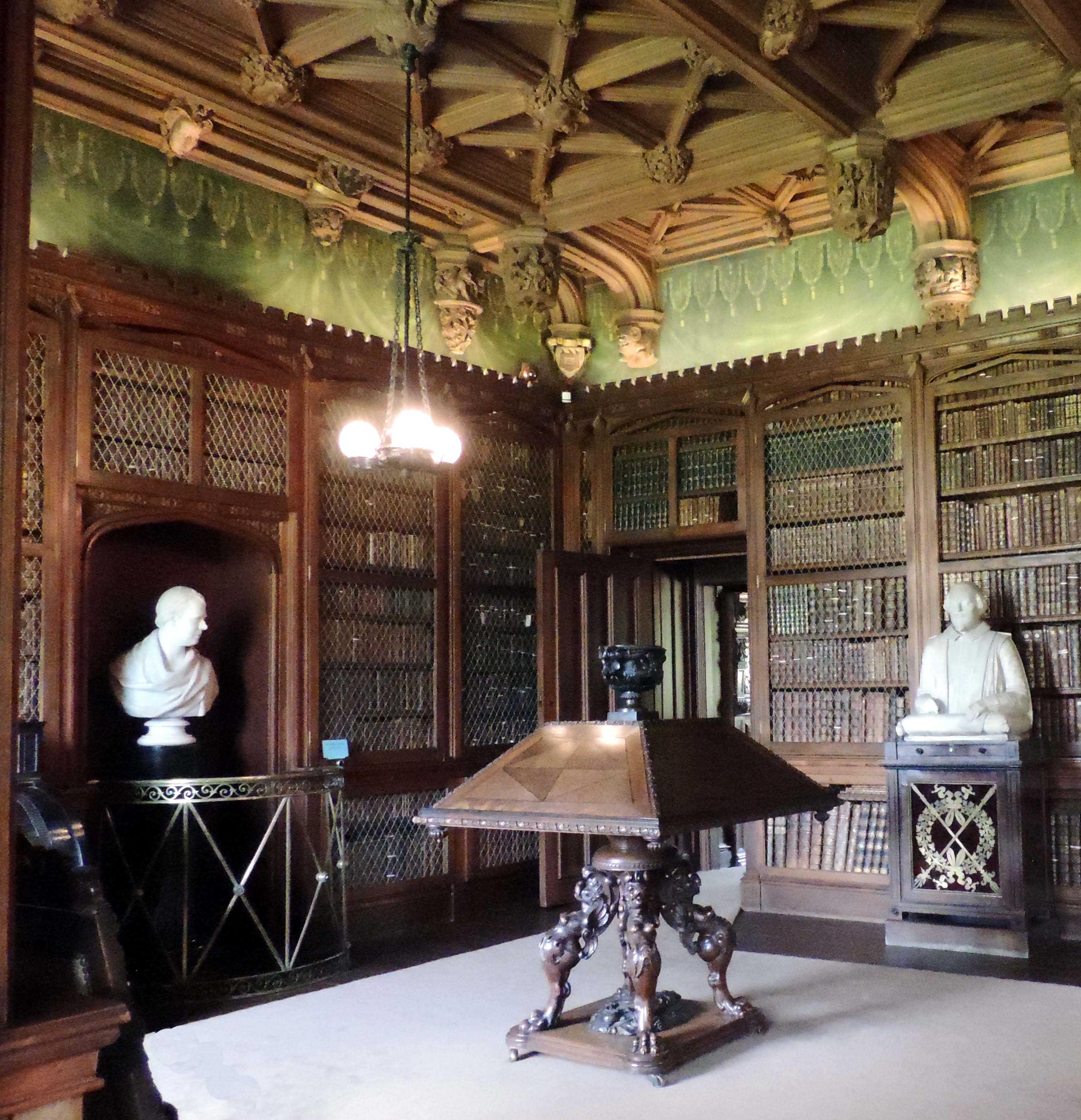
Hall He also collected voraciously, acquiring books for his wonderful working library, which survives intact, and curios and historical pieces. There are too many to do more than just mention a few – a cast of the skull of Robert the Bruce, the original keys to Edinburgh’s Old Tolbooth prison, the gaol door and some of its stonework, oak panelling from Dunfermline Abbey and a piece of oatcake from Culloden battlefield are amongst the wealth of historic, curious and just plain odd items. The great hall, is shown left, Scott’s study is  below, right, and the library, below left.
Scott could afford to indulge himself with his building and collecting until disaster struck in 1826. His publishers, Archibald Constable of Edinburgh, went bankrupt and Scottstudy2 was financially involved through a partnership. There was no limited liability in those days and Scott himself was bankrupted. But in an extraordinary move the creditors allowed him to write himself out of debt. Abbotsford was put in trust and the Scott family permitted to remain there while he worked – “My own right hand shall pay the debt.” From then on he worked relentlessly, despite the death of his wife and his own failing health. By the time he died in September 1832 the debt was virtually cleared.

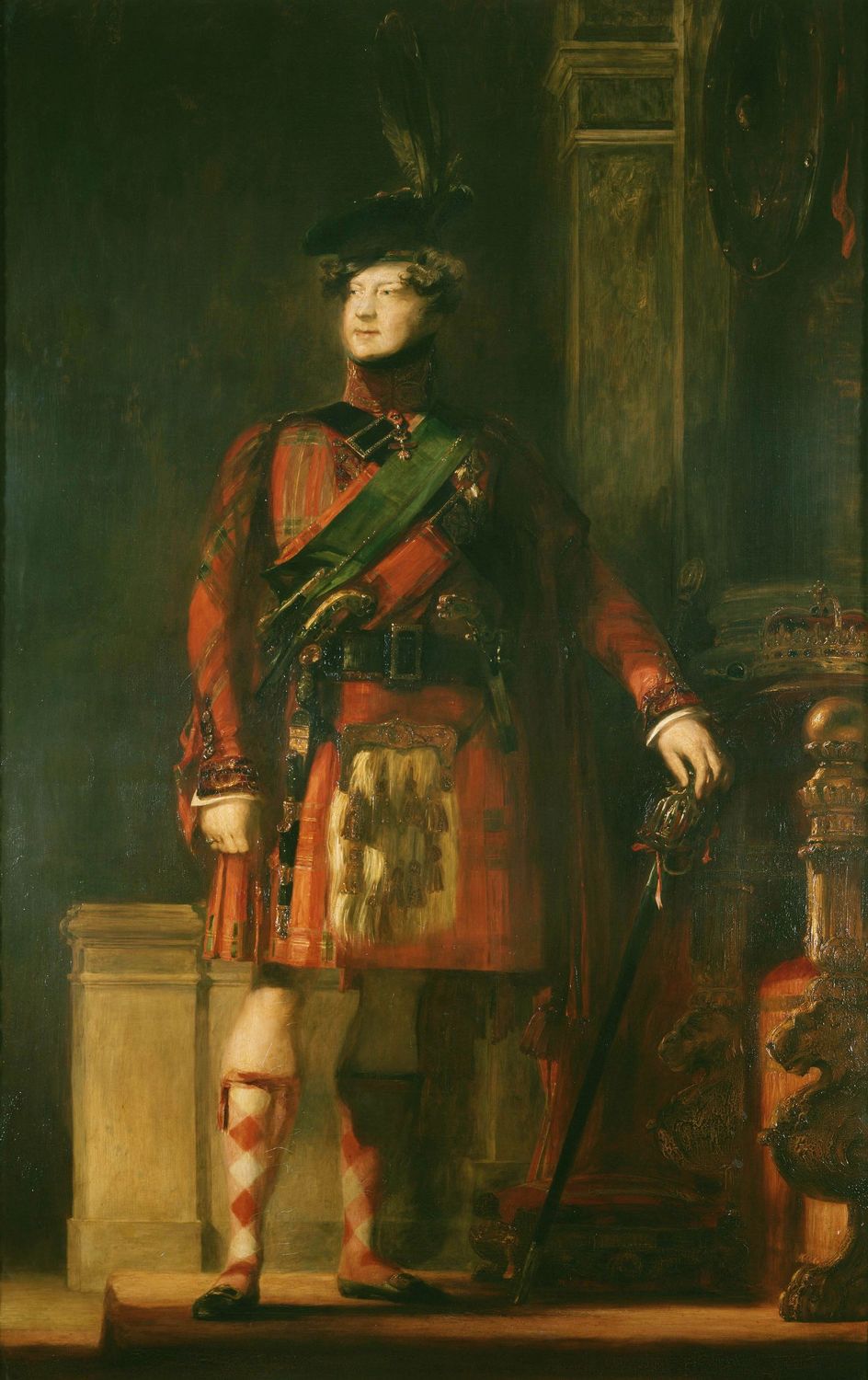
libraryScott is often “blamed” for the outbreak of tartan-itis that culminated in Queen Victoria’s obsessive use of the pattern at Balmoral and the proliferation of tartan tourist goods today, but this stemmed from his efforts to help George IV. George, who was not such a fool as he is often portrayed, wanted to heal the rifts between England and Scotland that led to the Jacobite rebellions. He wanted to throw himself into Scottish history and completely bought into Scott’s romantic vision of the Scottish past. When he visited in 1822 the Edinburgh city council commissioned Scott to stage manage the event and he created a wonderful show, including assisting the king to dress in tartan, which had been outlawed since the 1745 rebellion.
Despite the fact that George managed to create the most ludicrous version of Highland dress that a portly middle-aged man could ever have worn (shown here in a detail of the portrait by Wilkie), this was an important gesture and enthusiasm for tartan as a potent symbol of national identity surged.GIVWilkie
Four years before the royal visit, in 1818, Scott had used the then Prince Regent’s enthusiasm for his work to petition him to allow a search for the “Honours of Scotland” – the Scottish crown jewels.
In 1707, the Act of Union between England and Scotland decreed that they must always remain in Scotland. But there were fears that they might become a symbol of Scottish independence, so they were put into a strongbox in the Crown Room of Edinburgh Castle which was then locked, barred with double doors, and the key conveniently ‘lost’.
George agreed to Scott’s request and the room was broken into, the chest opened and the crown, sword of state and sceptre – the oldest surviving crown jewels in Europe – were found safely inside. They still remain in Scotland today, on display in Edinburgh Castle.
Abbotsford House remains essentially as Scott left it, although with some 1850s extensions at the side. But his study, the library and the wildly eccentric great hall feel as though he has only just walked out to stroll beside his beloved River Tweed for some more inspiration.

6 Comments

Filed under Buildings, Literature