Tag Archives: Georgian London

The Perils of the Pavement – Winter in Georgian London

February always seems to bring muddier, messier weather than January, perhaps because the ground is already so sodden. Negotiating the slushy snow, puddles and potholes as I crossed the street in my local market town this morning made me think about what London streets were like at this time of year in the early 19th century.Snowfall
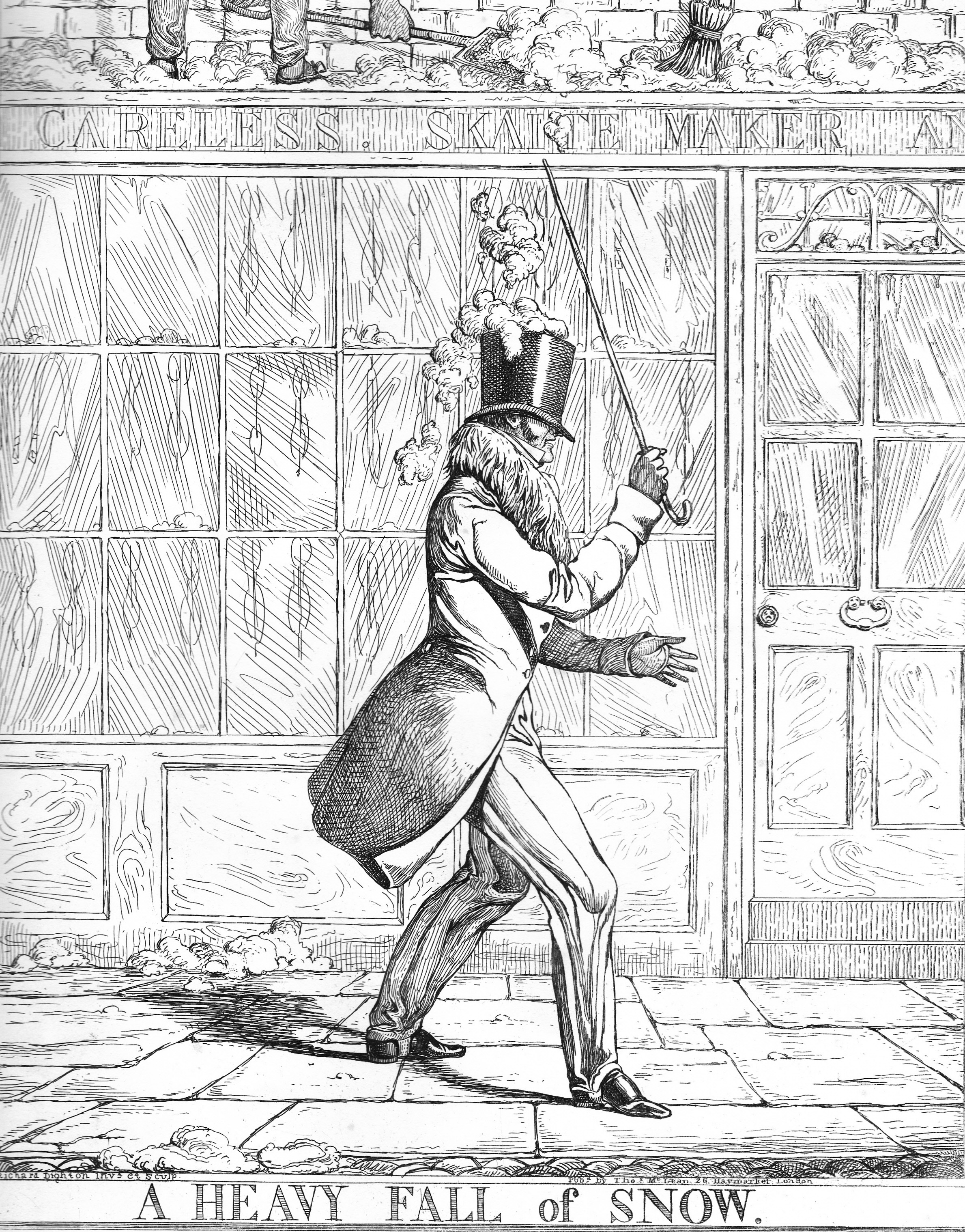
The first print is from Richard Deighton’s London Nuisances series – A Heavy Fall of Snow – with the unfortunate gentleman getting a load of snow on his hat from the men clearing the ledge above the shop he is passing.
Rather appropriately the establishment belongs to Mr Careless, a skate maker, and pairs of skates are hanging in the window. The engraving shows very clearly the flagstones of the pavement, as opposed to the much rougher cobbled street surface which is just visible above the caption.
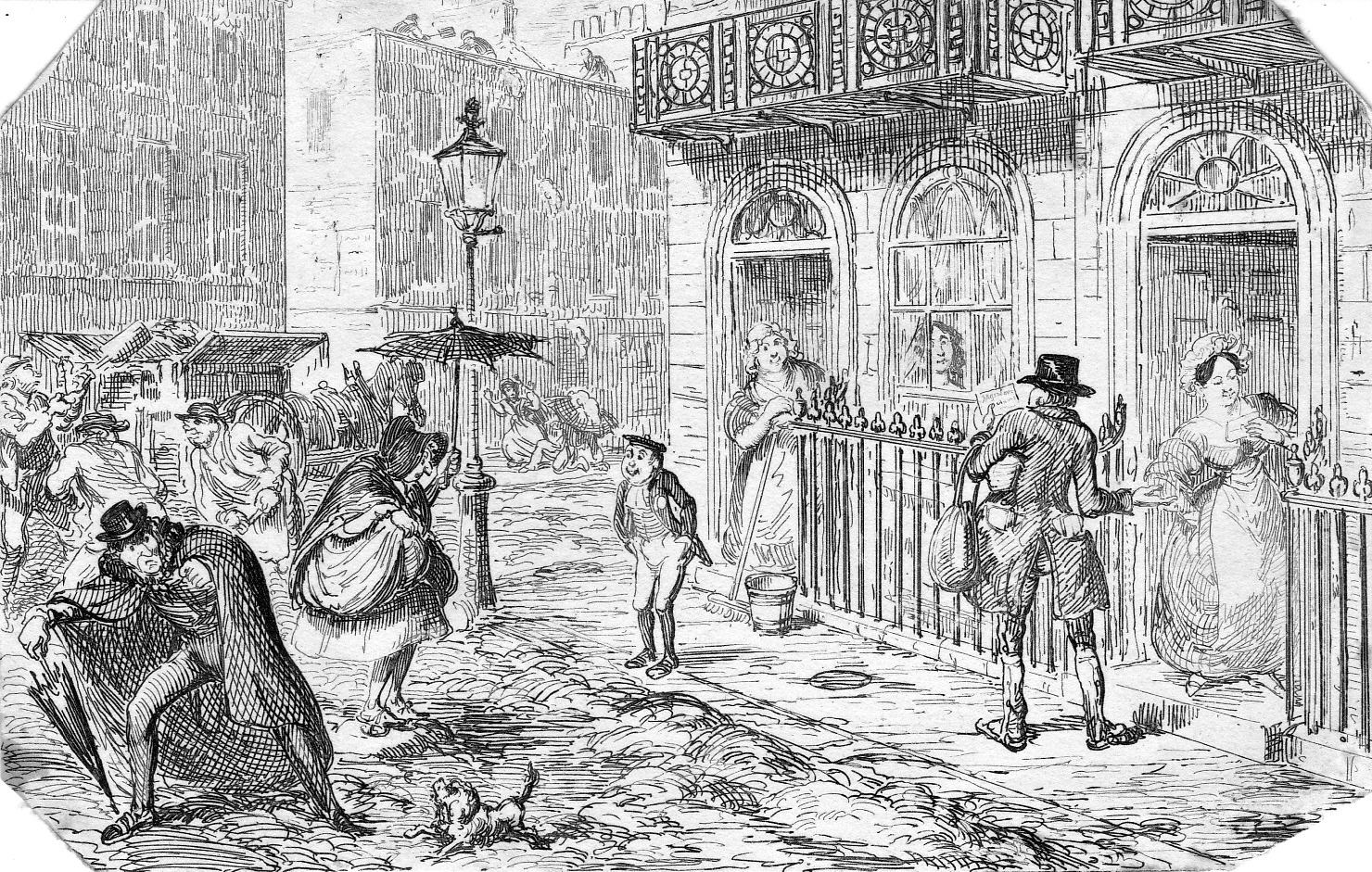
For all the accident with the snow, this seems a very clean and tidy street. For a rather more likely pair of images I’ve copied two of a monthly series of prints of London street scenes by George Cruikshank (thanks to Stephen Barker for the identification!). They were cut out and pasted in an album, hence the clipped corners. Except for the style of the women’s dresses and the gas lamp they could be any time from about 1800.

Street JanIn the first, January, the town is experiencing a hard frost. The men in the carts are breaking up ice and taking it away, while three chilly individuals are marching under a placard reading “Poor Froze Out Gardeners” – presumably with no work because the ground is frozen solid. Behind their placard is the ship of W. Winter, Furrier and the shop window on the left is advertising “Soups”. A gang of boys seems to have fallen to the ground while sliding on the ice.Street Feb
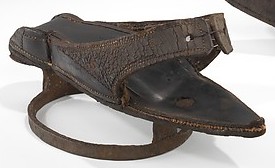
The second scene is February and shows the effects of the thaw. Men are shoveling snow off the high roofs in the background onto unwary passers-by and the cobbled street surface is a potholed mess. The lady in the middle with her skirts lifted almost to her knees is wearing iron pattens on her shoes to raise her out of the mire and street cleaners are shoveling mud into a cart behind her. The housewife on the corner is obviously doing her bit to sweep at least a section of the pavement clean. On the right the postman is doing his rounds. Here is one of a pair of late 18th century pattens like the ones being worn.

54.61.127a-b 0004

6 Comments

Filed under Accidents & emergencies, Street life, working life

Walking the Dog in Georgian London

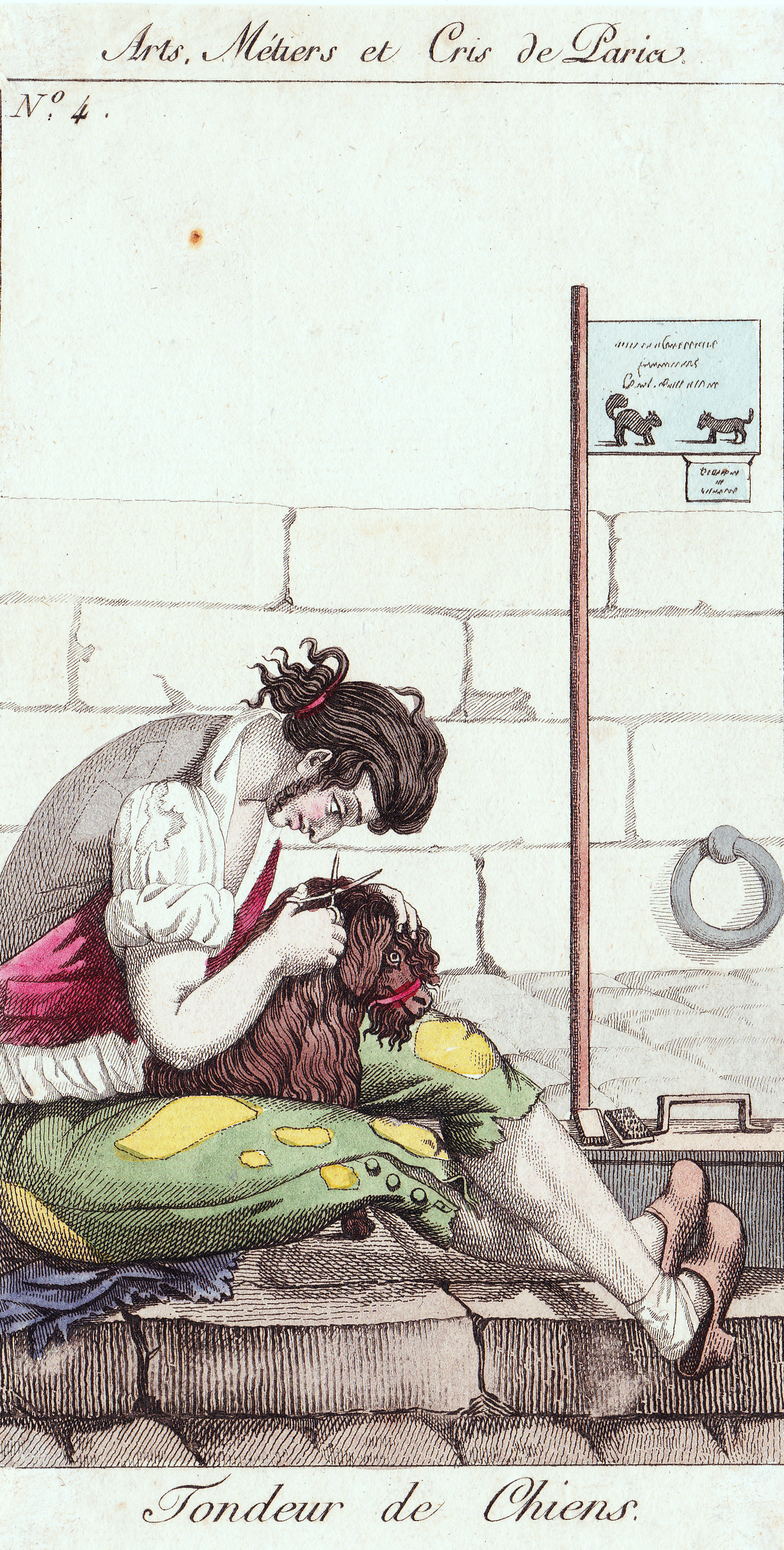
groomingIt was this delightful French print of a dog groomer that started me wondering about Georgian Londoners and their pet dogs and looking through my print collection to see what I could find. The Tondeur des Chiens – or dog shearer – is from a set of about sixty prints by Adrien Joly (1772-1839) entitled Arts, Métiers et Cris de Paris par Joly d’après nature. They were published in c.1813.  The groomer has his little box of tools with an attached advertising sign and wears clogs. Wisely he had tied up the muzzle of the shaggy hound who looks seriously displeased with the process.

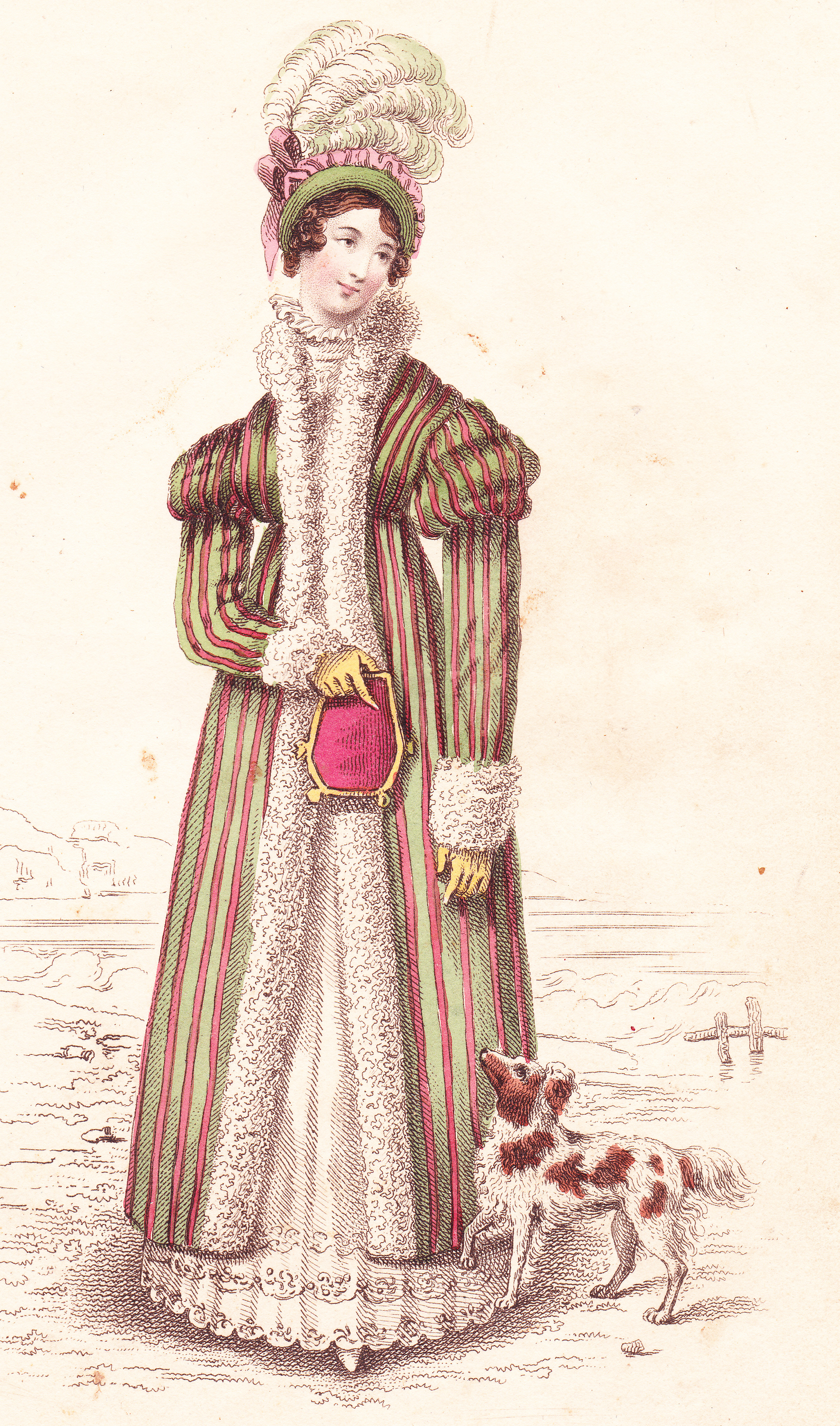
I decided not to look for working dogs – hounds, ratting terriers and so forth, but for animals that seemed to be pets.  This lady, wearing Winter Carriage Dress (La Belle Assemblee 1818) is accompanied on a ratherspaniel2 muddy foreshore by what I think is a miniature spaniel (or is it?).

The two ladies below on the right are from the Ladies’ Monthly Museum for 1801 and their dog1803 appears to be a poodle wearing some sort of band on its front leg. Ornament or identification, I wonder?

Street scenes I can find with dogs in do not show them on leads and in some cases they are running about looking quite out of control.

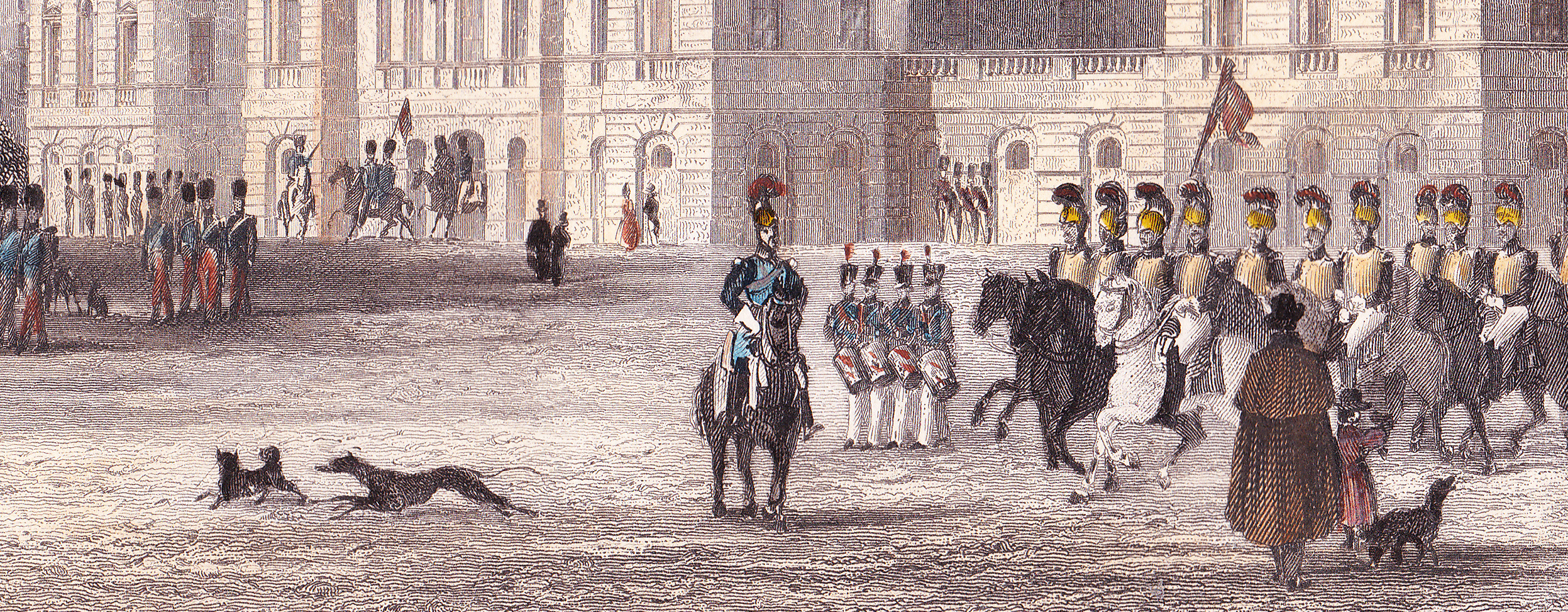
The scene below is a detail of a print of Horse Guards Parade. The gentleman on the right has his dog – some sort of collie, possibly, under control, but in the centre a greyhound is chasing a smaller dog with a curly tail – right under the hooves of the advancing troopers.  there also seem to be several dogs between the marching troops on the extreme left.


Horse Guards

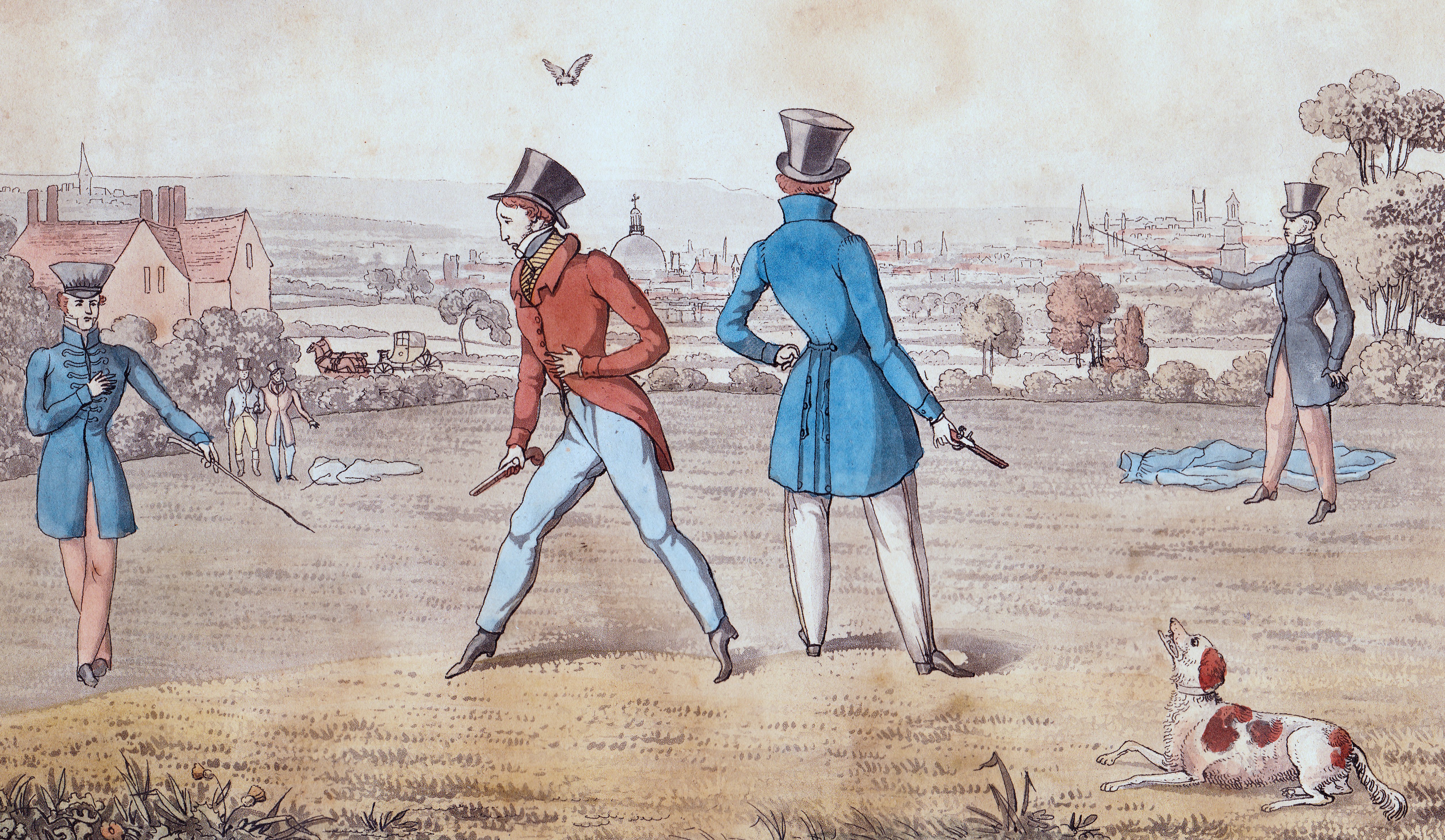
duel  I have several of D T Egerton’s wonderful ‘Bores’ series of prints, published by Thomas McLean in 1824. in all of them the hero is subjected to some ‘boring’ occurrence – in this case, being shot in a duel!  I am not certain whether the brown and white spaniel is with the nervous gentleman on the left or the cool one on the right.

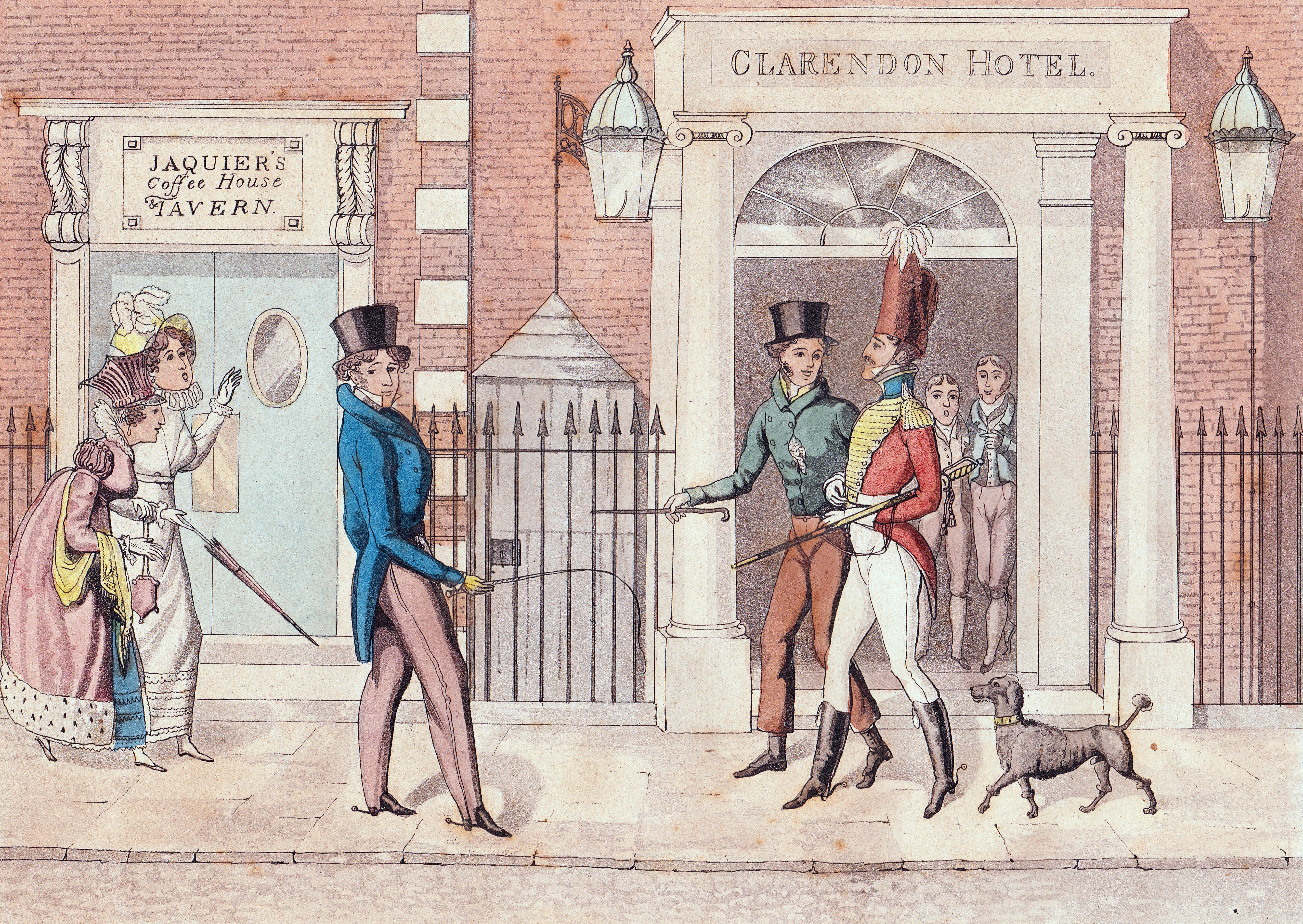
The detail below right is from the same series and shows the elegant officer being ‘bored’ by some unfashionable young man who is claiming acquaintance. The scene is outside the Clarendon Hotel in Bond Street and the officer is followed by his elegantly-clipped poodle.

hotel


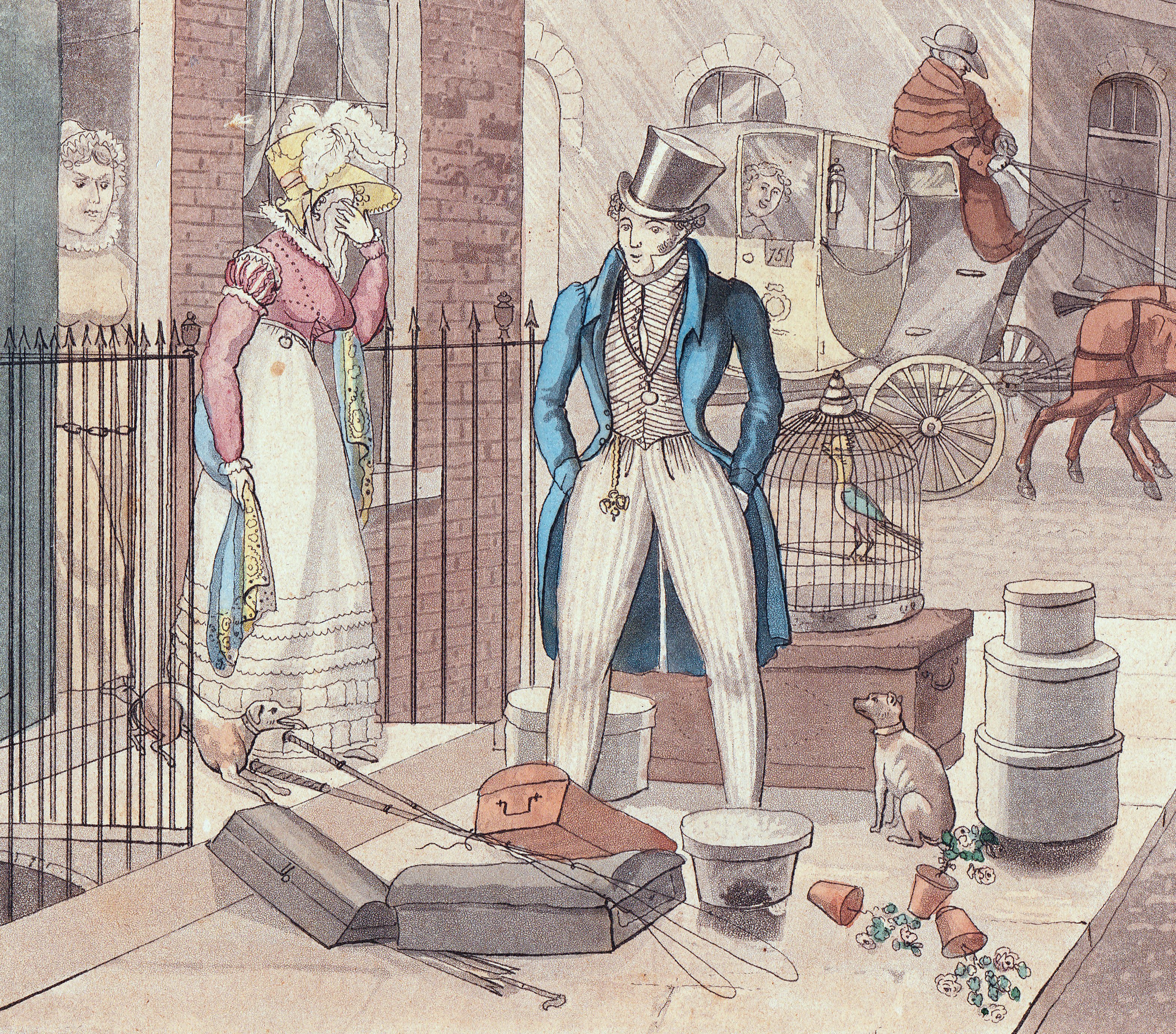
And finally my favourite of the ‘Bores’ – how boring it is when the landlady discovers that you are not married to your pretty companion and throws you out on the pavement with all your possessions – including her parrot in a cage, pot plants and two little dogs. One looks like a miniature greyhound, the other is rather pug-like.

eviction

12 Comments

Filed under Animals, Gentlemen, Horse Guard's Parade, Love and Marriage

Books For Christmas

Is Christmas present money or a book token burning a hole in your pocket? Here are four of the non-fiction books I enjoyed most in 2014 and which I’d recommend to anyone interested in London’s history or the Georgian era. They aren’t all 2014 publications, but they were new to me last year.

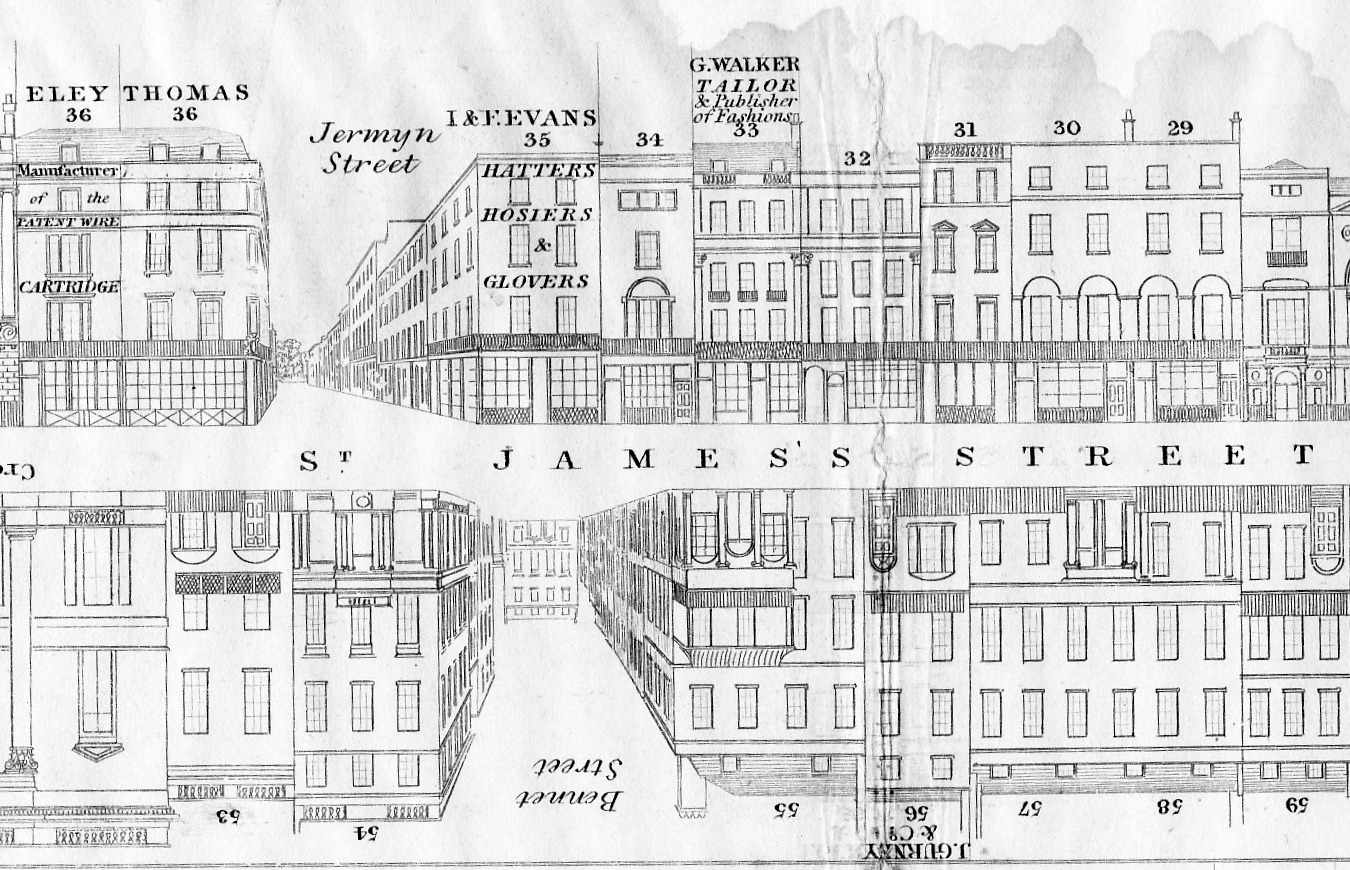
Firstly, and probably my favouriStreet viewte – the London Topographical Society’s reprint of John Tallis’s London Street Views 1838-1840. It has an index, introductory essay and a searchable index on CDRom. The views are a little later than my usual period of interest, but Tallis caught London just before the major Victorian rebuilding and redevelopments got under way and these strips maps showing the elevations of the buildings along each side, plus the names of the businesses in each are incredibly detailed. I own four of the original maps, but it was a lucky chance that I found them at a price I could afford – they are expensive collector’s pieces – so this volume is a real treat.street view actual The example above is a detail from one of my originals and shows part of St James’s Street.

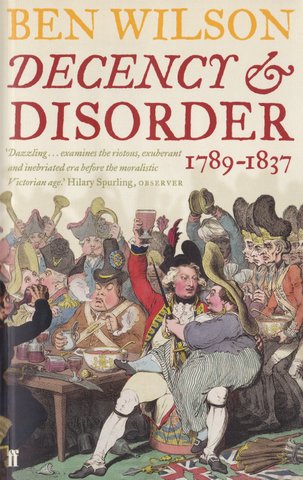
Disorder2 My next choice is Ben Wilson’s Decency & Disorder: 1789-1837, a scholarly, but very readable account of how the boisterous Georgians, valuing liberty and personal freedom above civil order and ‘decency’ and shunning the idea of a police force as foreign and oppressive, changed to adopt ‘Victorian values’ and an organized police force.

I particularly enjoyed the story of the Georgian gentleman who, such was his sensibility, was so overcome by the beauty of the scene that he was lost for words and could only cast himself, face-down, into a flowerbed in Bath. And then there was the member of the Society for the Suppression of Vice who forced himself to buy hand-carved sex toys at a prisoner of war market and then found himself at a loss to send them to the London headquarters. They were, he complained, too bulky to be enclosed in a letter.

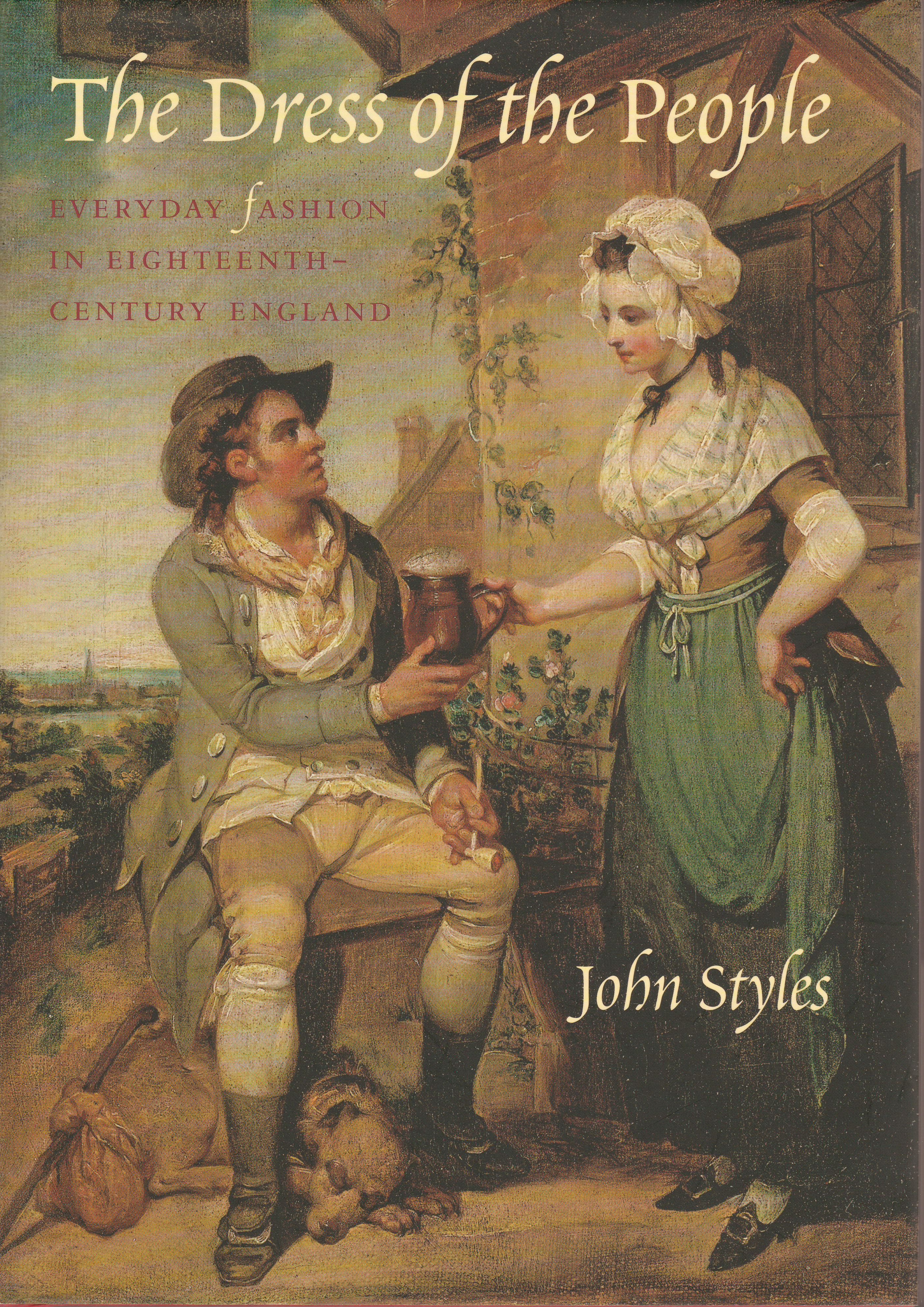
Thirdly there is John Styles The Dress of the Common People: everyday fashion in eighteenth century England. Despite the title this lavishly illustrated and very scholarly work covers the Georgian era rather than the 18th century exactly. I found it in, of all places, the National Park bookstore in Salem, Massachusetts, but it is available in the UK.costume2

It is a refreshing change from books of high-end fashion plates and includes information about fabrics and the cost of clothing, where people bought their clothing and a host of other details.

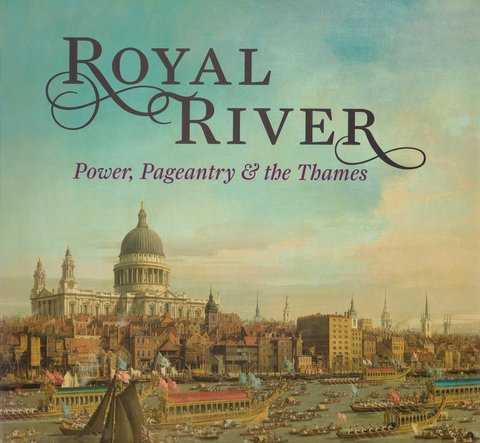
My final choice was too large to go on my scanner, so here is part of the cover of Royal River: power, pageantry and the Thames published for a major exhibition at the National Maritime Museum, Greenwich. (Guest curator, David Starkey).

River The illustrations are gorgeous and the book ranges from topics as diverse as the lord Mayor’s Procession, Lord Nelson’s funeral procession, royal yachts and the transformation of the Thames in the Victorian era.

Best wishes for Christmas and the new year to all my readers!


Louise

2 Comments

Filed under Books, Buildings, Christmas, Fashions, Transport and travel

Cordwainer, Shoemaker, Cobbler? Where would Georgian Londoners Buy Their Shoes?

I have shoemakers in my ancestry through the 15th to 19th century. Sometimes they are described as cordwainers, sometimes shoemakers. So what is the difference, and where would you have gone to buy your shoes if you were a Georgian Londoner – from a cordwainer, a shoemaker or a cobbler?
(Greetings, by the way, if you have Hurst ancestors in Hertfordshire, Buckinghamshire or Oxfordshire we are probably cousins!)
10
The term cordwainer, according to the Honourable Cordwainer’s Company’s website, “is an Anglicization of the French word cordonnier, which means shoemaker, introduced into the English language after the Norman invasion in 1066. The word was derived from the city of Cordoba in the south of Spain… Moorish Cordoba was celebrated in the early Middle Ages for silversmithing and the production of cordouan leather, called “cordwain” in England… Crusaders brought home much plunder and loot, including the finest leather the English shoemakers had seen. Gradually cordouan, or cordovan leather became the material most in demand for the finest footwear in all of Europe.”
Shoemakers who chose to call themselves cordwainers were implying that they used only the finest materials, and therefore produced only the finest footwear. Cobblers, on the other hand, were not working with new leather. They were repairing shoes, or “cobbling together” new shoes from old.

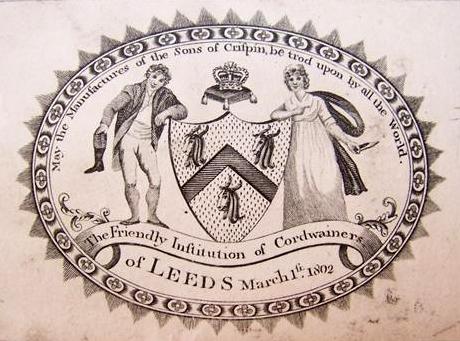
tradecard 1802This trade card was produced by “The Friendly Institution of Cordwainers of Leeds” in 1802. The reference to “the Sons of Crispin” is to St Crispin, the patron saint of shoemakers.
If you were a Georgian in London looking for footwear you had a choice ranging from the finest made-to measure products of a high-end cordwainer to the reworked product of the cobbler on the corner – or even simply second-hand from a market stall.

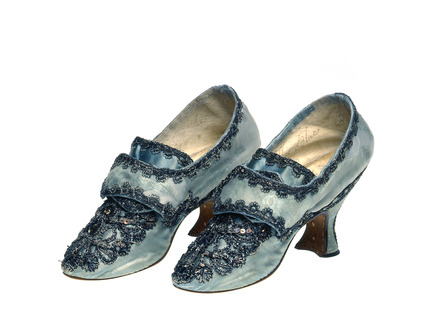
blue shoesThese exquisite blue satin shoes are in the Museum of London and date from the 1760s. The label inside reads ‘Fras Poole, Woman’s Shoemaker in the Old Change, near Cheapside London’. They show the high level of craftsmanship required for top-end footwear – and the range of craftspeople who would have been employed. Much simpler, and closer to Jane Austen’s day, are these delicate pink silk-satin ankle boots with their thin soles and fragile silk laces in my collection (below). They had absolutely no internal support for the sole of the foot.

SONY DSCFor the well-to-do, shoes were purchased from a shop which might display the products of one maker, or several. The trade card at the top of this post shows a fashionable lady being served. In the background are display cabinets containing a range of styles. As the card says, “Large Assortment of Ladies fashionable Shoes always on Sale.” For such a tiny scrap of cardboard the detail is considerable. The lady is seated with a mat in front of her to protect her unshod feet (or the new shoes?). She is being served by a man – the norm in high-class retail establishments – and he is carrying shoes over his arm in a way that shows that pairs were tied together. The assistant is smartly dressed, but wearing a long apron, which makes me wonder whether he would kneel down for the lady to place her foot on his knee.
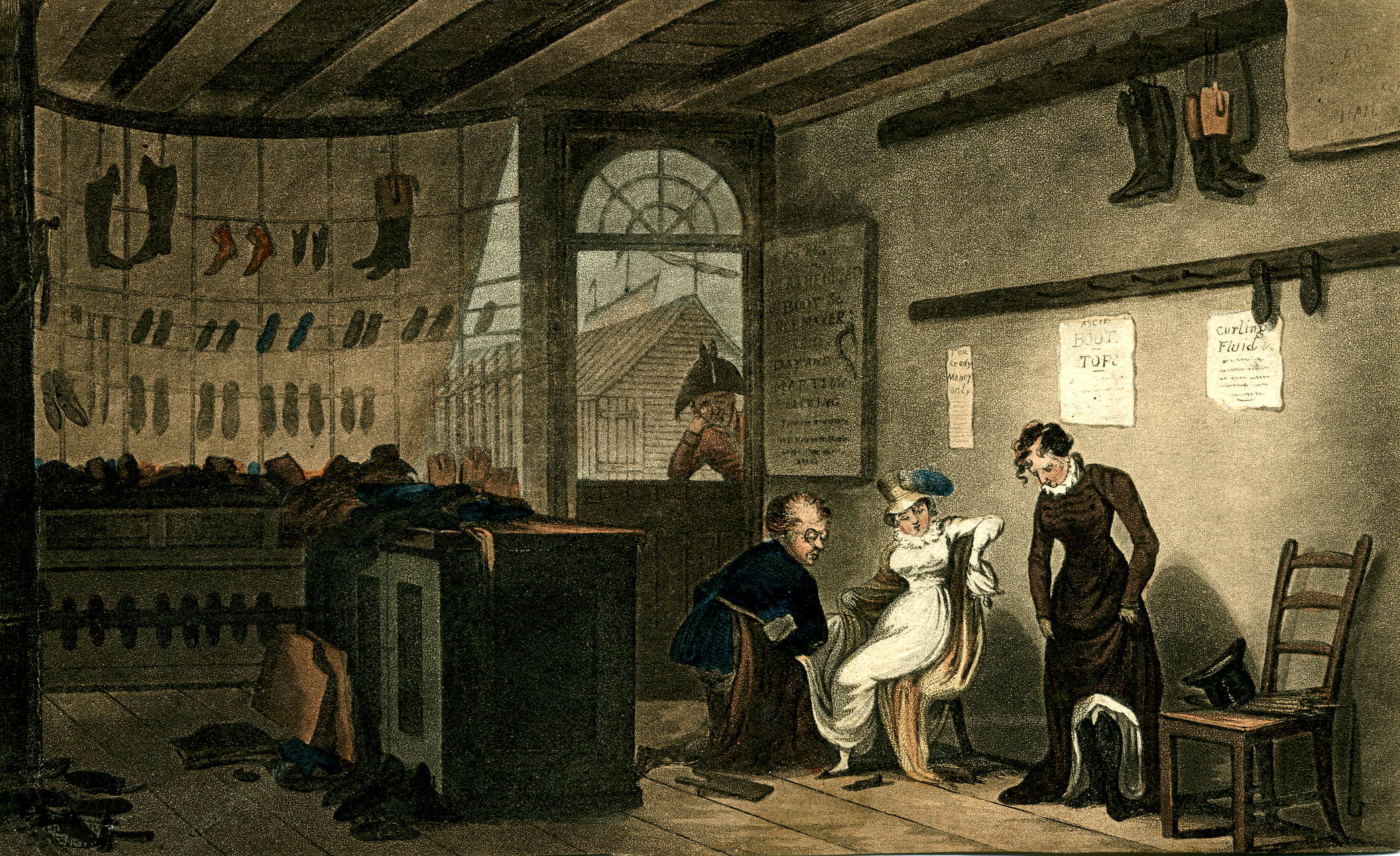
This is certainly the case lower down the social scale. The print below shows a shoe shop which appears to be selling only products made on the premises – both men’s and women’s boots and shoes. One lady has her foot on the knee of the salesman while her friend, wearing a riding habit, tries on a boot. In this much less refined setting a passerby ogles the ladies.

shoe makers

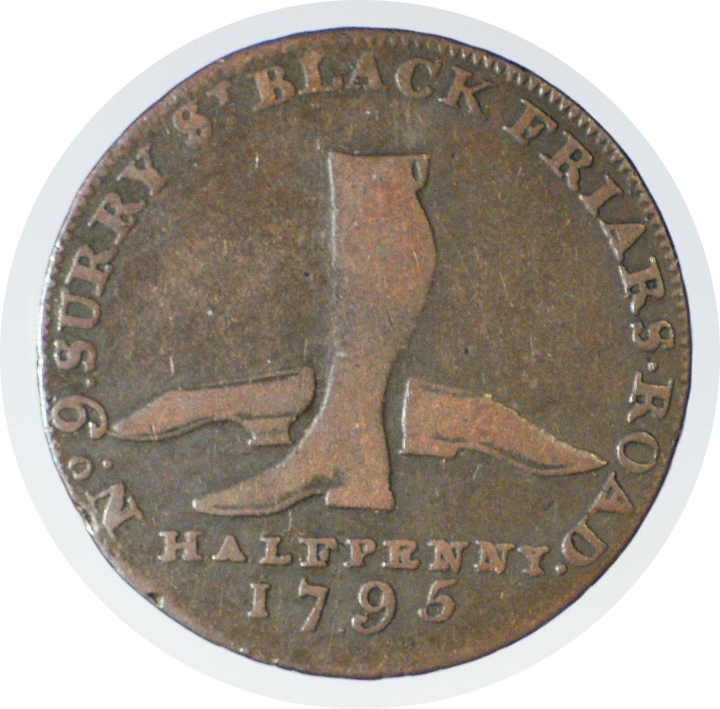
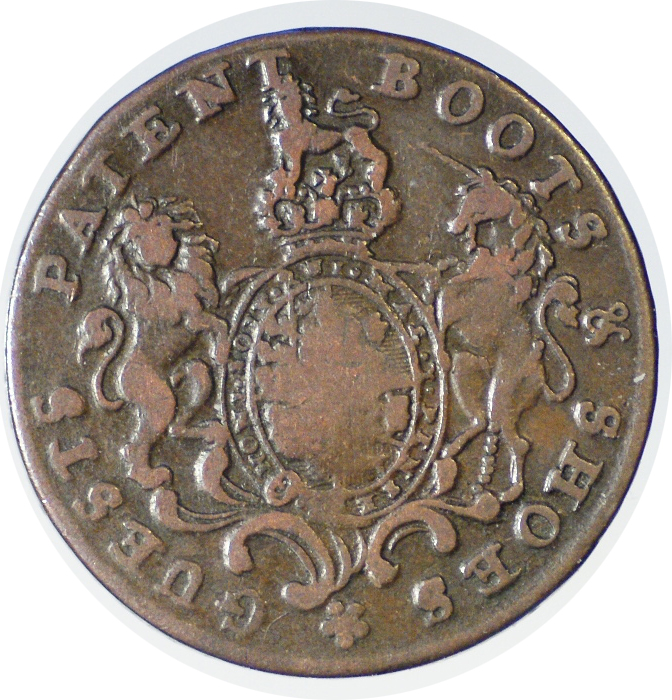
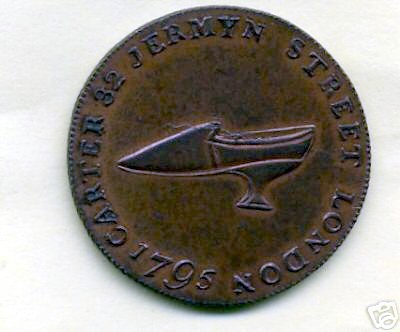
At the end of the 18th century small change was scarce and many businesses produced copper tokens which took the place of low denomination coins. I have two from shoemakers. One is for Carter of Jermyn Street. Dated 1792 it shows an elegant lady’s shoe with heel. The other is for Guests Patent Boots & Shoes of No.9, Surry Street, Blackfriars Road (1795) and shows a lady’s slipper, a man’s shoe and a boot.

Boots 2 copyboots token obv09


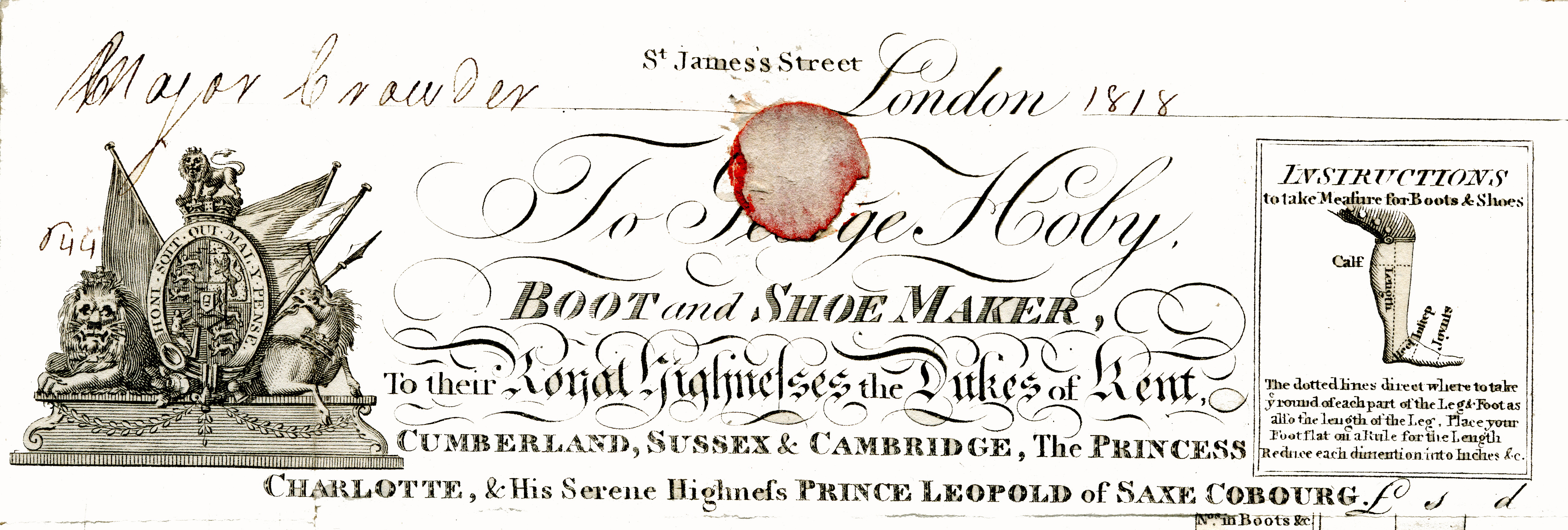
Fashionable gentlemen took great pride in their boots and perhaps the most famous of all the London bootmakers was George Hoby whose shop was at the top of St James’s Street. Hoby was arrogant, and far from subservient to his aristocratic patrons, but he died a very rich man, famous for producing the iconic Wellington Boot to the duke’s special requirements.
This billhead is from an account sent by Hoby to Major Crowder (who, incidentally, was the officer who intercepted the coach carrying Napoleon’s secret codes in the Peninsula). The billhead shows the royal coat of arms and names Hoby’s royal patrons. It also includes a do it yourself guide for measuring for boots –  presumably this was for the convenience of officers serving abroad, or country gentlemen.

LA44
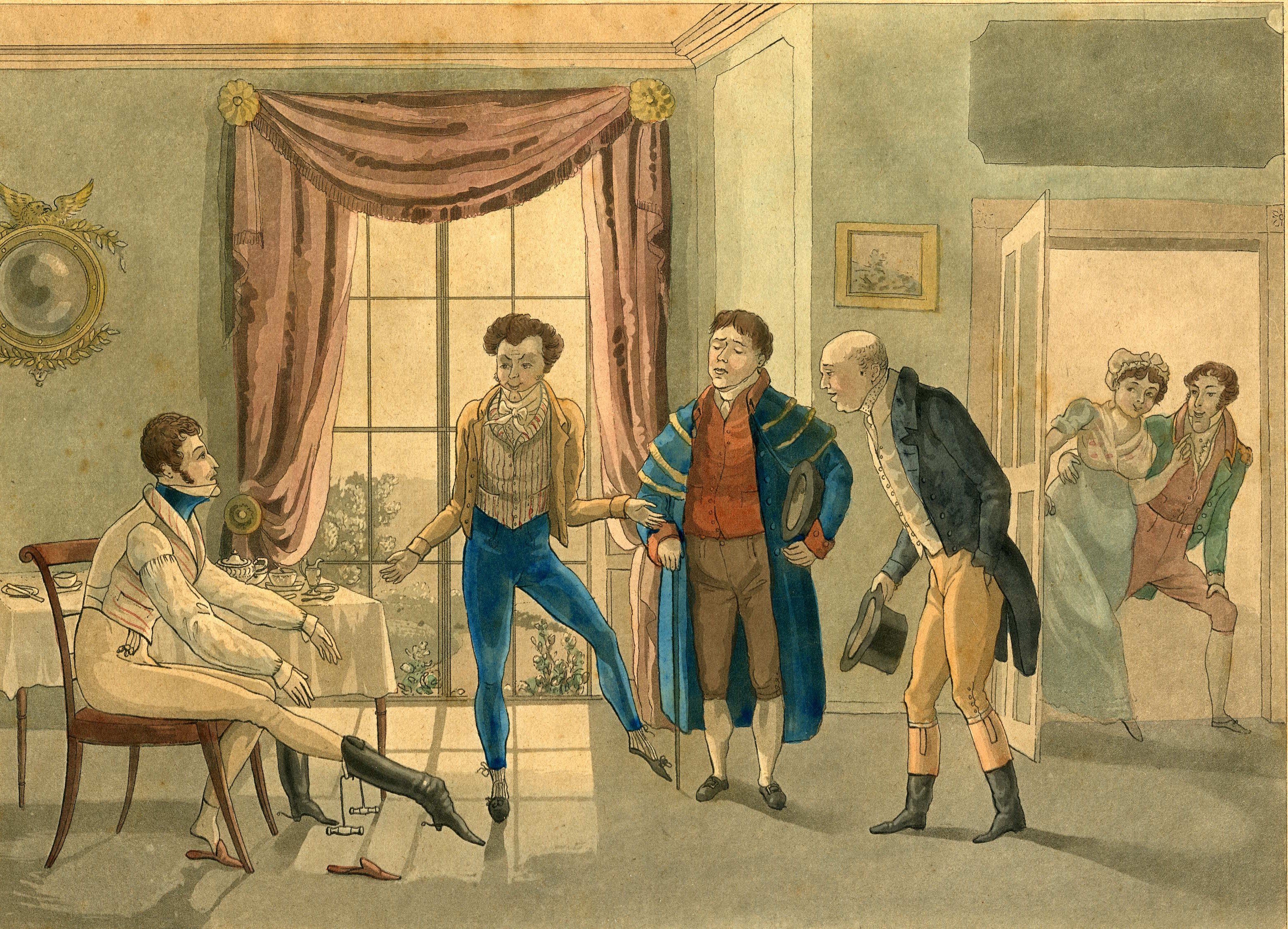
To see a range of men’s footwear across the classes, this print by Thomas Edgerton from the ‘Bores’ series of 1828 is ideal. The gentleman has been interrupted as he pulls on his boots after breakfast. A beadle accompanies an aggrieved father who is complaining about the seduction of his daughter by the valet. These boots are elegant items in very soft leather with the spurs already attached, and they are pulled on using special boot-pullers and loops in the top of the boot. The gentleman’s backless bedroom slippers are by his chair. His valet wears black pumps with natty striped stockings, contrasting to the solid and old-fashioned respectability of the beadle’s buckled shoes. Finally the father wears practical riding boots with tan tops.

valet no text
At the lower end of the market, shoemakers would produce a range of sizes and the customer would come in and buy ‘off the peg.’ For made to measure shoes a wooden last would be made to the customer’s exact measurements, kept in store and modified by cutting away wood, or adding leather patches, as the foot shape changed over time. To see a last-maker in action you can go into Lobb’s in St James’s Street. Although established a little later than the Regency they still produce hand-made shoes in the traditional manner and their display cases have some fascinating old examples.

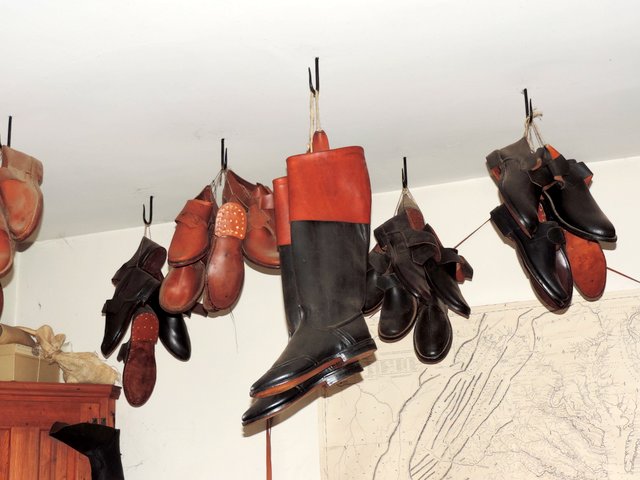
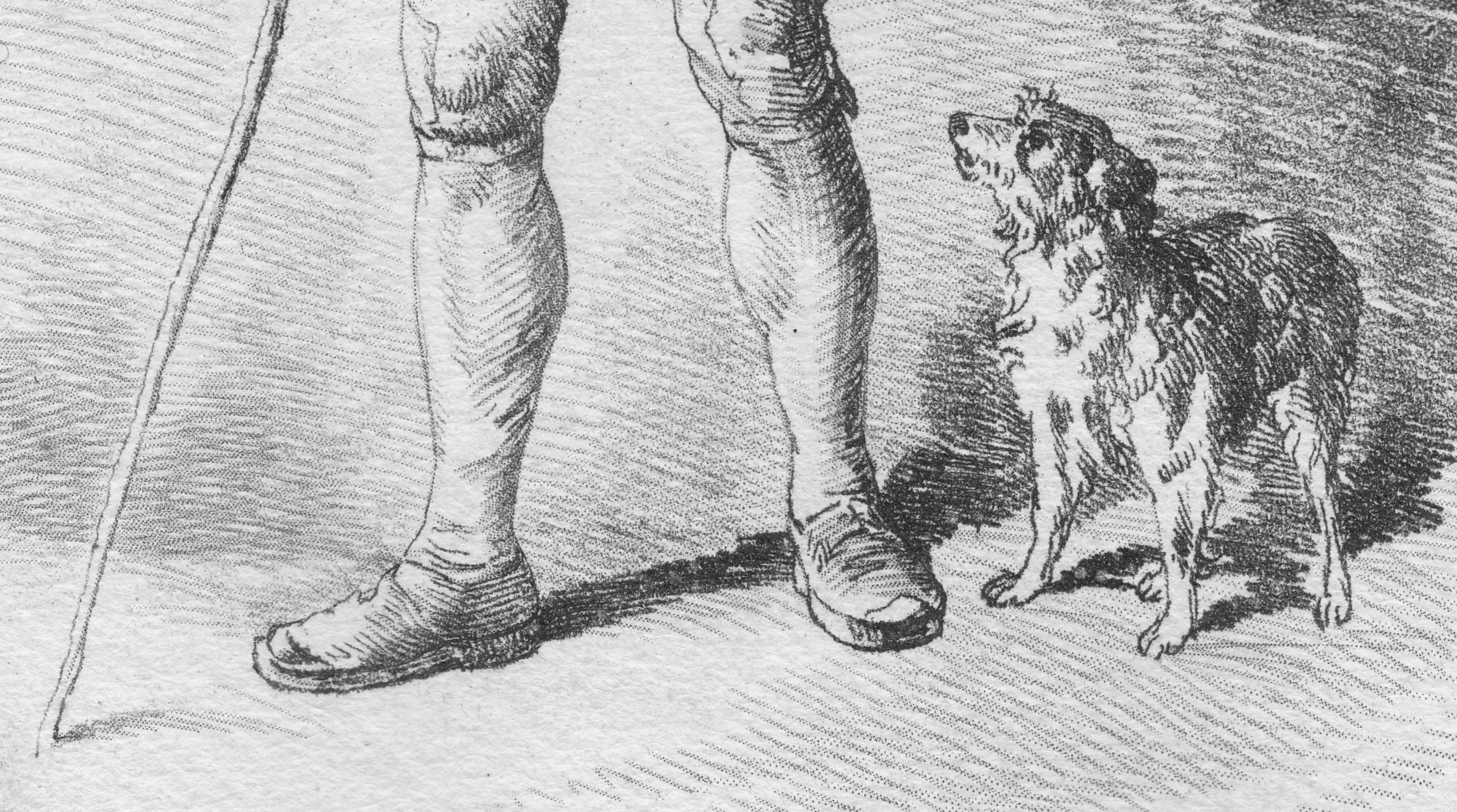
1-DSCN53041-DSCN5305 I was in Colonial Williamsburg, Virginia, recently  and visited the shoemaker’s shop there. The photo is of him working to produce the everyday leather shoes that the re-enactors use on the site. These are sturdy, off the peg styles, and are very similar to the shoes and boots illustrated by W H Pyne in his “Rustic Figures”, a series of sketches to guide amateur artists.

shoes

30 Comments

Filed under Fashions, Gentlemen, Shopping

Writing Historical Fiction – The Westminster Way: a free all day event

On  Saturday 11th October I’ll be at the City of Westminster Archives Centre, 10 St Ann’s Street, London SW1P 2DE for a *free* all day event –

Writing Historical Fiction…
…the Westminster Way!

  10:00am- 4:00pm

10:00am- 10:45pm Tour: Westminster Archives search room

11:15am- 1:00pm Walk: A walk around Georgian Westminster

2:00pm- 4:00pm Talk: Resources for Writing Historical Fiction


Piccadilly

To get your free ticket simply call the Archives Centre on 020 7641 5180

Archive staff will talk you through how to explore the wealth of riches in their collection and will have fascinating items on display for you to take a close-up look. On my walk we will pass from some of the worst slums in London to the centre of power and privilege, join Wordsworth on Westminster Bridge, see where the semaphore towers sending signals to Nelson’s fleet have been replaced by modern wireless aerials, view the Prince of Wales’ Bomb and locate the site of Astley’s Ampitheatre before returning past where Charles II’s ostriches lived, down Cockpit Steps incockpit the wake of Hogarth and back to the Archives Centre.

In the afternoon I’ll be giving an illustrated talk about how the Archives can help you dig deep into the past for your historical writing.

Illustrations:

Top of the page: one of the vivid prints from the Archive Centre collection

Above: The Royal Cockpit by Hogarth


Leave a comment

Filed under Books, London Parks, Walks

The Funeral of Mr Edward Comely 1811

On April 11th 1811 a funeral procession made its way up Gray’s Inn Lane (now Road) to the New Burial Ground of the parish of St Andrew’s, Holborn. The burial ground is still there and is St Andrew’s Gardens now.
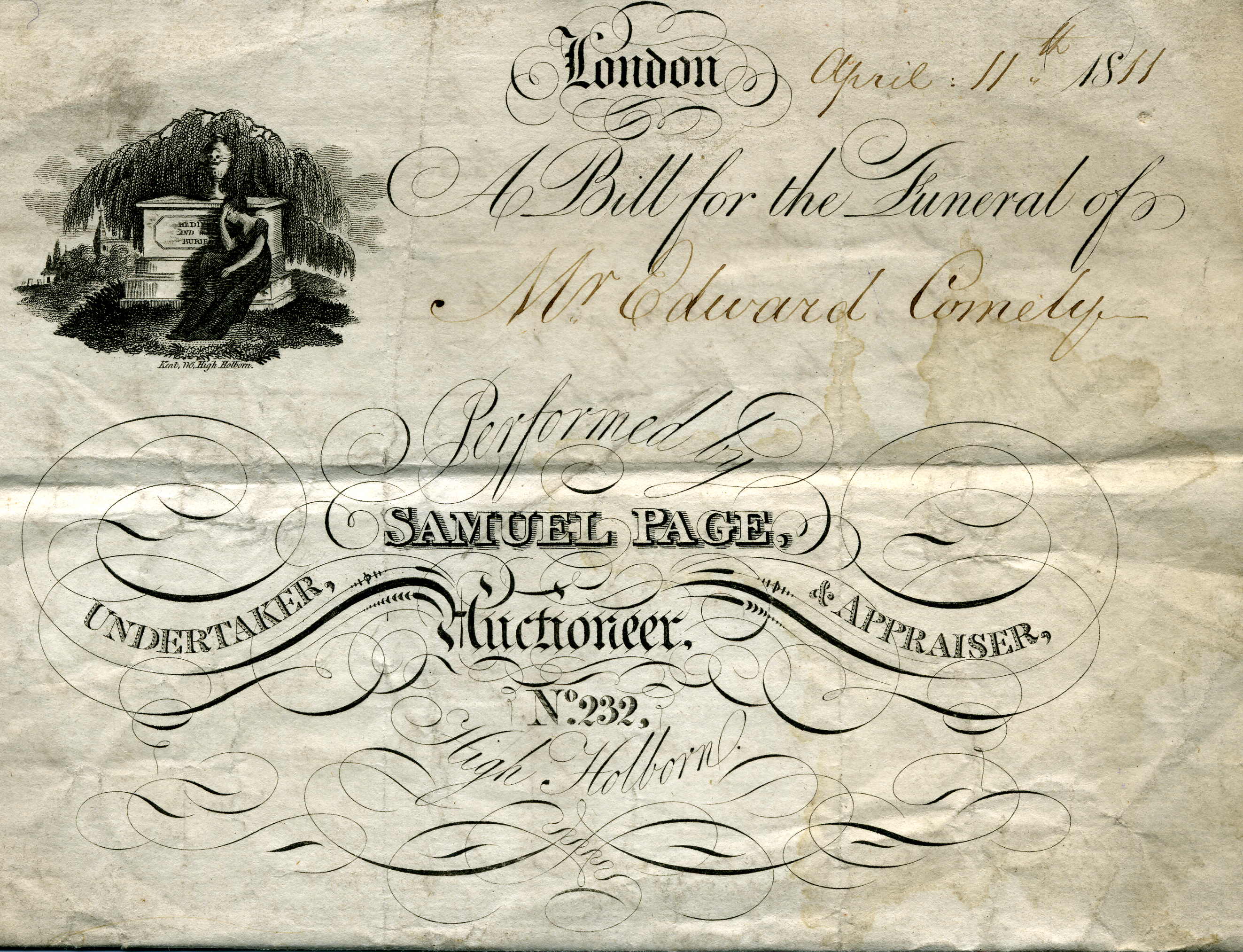
The funeral was that of Mr Edward Comely who had died five days earlier on the 11th April and it was “performed” by Samuel Page, Undertaker, Auctioneer and Appraiser of 232, High Holborn.
005 funeral
I have not been able to find out anything about Edward Comely, other than to deduce that the scale of his funeral and the fact that he lived in a City parish make it likely that he was in trade, probably a as merchant or shopkeeper. His executor who paid the bill, very promptly, on 18th April, was James Meycock, who was probably the same man who appeared as a plaintiff in a burglary case at the Old Bailey in 1809. He was a haberdasher in Broad Street in the adjacent parish of St Giles.
Under the handsome billhead with its picture of a black-clad woman mourning next to a tomb in a churchyard is the detailed account which paints a vivid picture of the details of an early 19th century funeral. Spelling and capitalization are as given in the invoice.
A Strong Elm Coffin covered with fine Black Serge close drove with double Rows of the best Japanned Nails on a Double Flowered Plate & Urn. 6 large Cherubim Escutcheons with wrought handles sett off and decorated with enriched ornaments chas’d and Blk Japanned in the best manner. Lined and furnished. £5 10s
A fine crape Mattress 12s
A fine Crape Shroud Cap and Pillow 18s
3 [?] with the Ditto 6s
Strong screws making up the Body [of the coffin] 3s
The use of a Handsome velvet Pall 7s
A Hearse and Mourning Coach with Pairs [of horses] each 12s
2 Coachmens Cloaks 2s
2 Hatbands and gloves for Ditto 10s
2 Porters in proper dresses to stand at the door and walk in procession 12s
2 Hatbands and gloves for Ditto 10s
4 men to Bear the Corpse 10s
2 Mourners Cloaks 3s
2 Hatbands for use of Ditto 2s
2 hoods and scarves 4s
A man attending the funeral 5s
A hatband and gloves for Ditto 5s
Gravedigger 5s

This totalled £13 16s but a discount of 13s 6d (for prompt payment perhaps?) was given.
Church service etc £4 7s
Paid to Mr Peckring (the clergyman?) £1 9s
The total bill came to £18 18s 6d

Price comparisons are notoriously difficult to make, but at this time a footman in a great house would expect to earn between £25 and £35 a year.
Catherine Arnold in Necropolis: London and Its Dead notes that undertaking as a specific trade developed in the 18th century, probably as a reflection of changing attitudes towards death by the middle classes who both wanted to show a refined sensibility by displays of mourning and meditation on death and also to reflect their growing wealth and confidence by a fine display.
The coachmen, coffin bearers, porters and the ‘man attending the funeral’ – presumably the funeral director’s representative – must all be correctly attired in black cloaks and gloves, with black bands on their hats and with long black scarves, the hearse would move at walking pace and passers-by would have ample opportunity to admire the coffin, draped in its hired velvet pall.
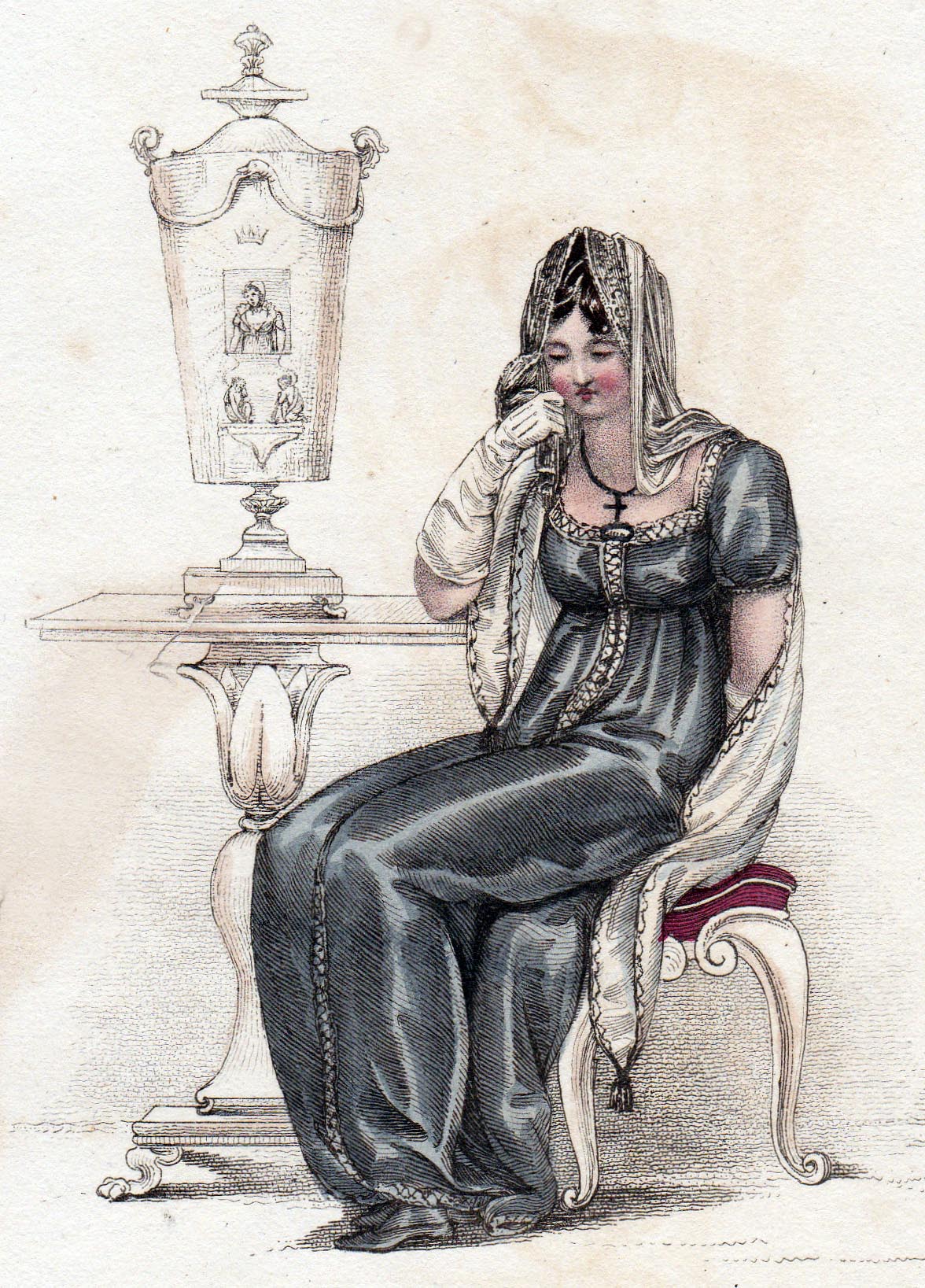
Mourning for the family and relatives would be another major cost to be considered, although that merits a post of its own. However, until I manage to collect all my images and scan them, here is “Evening Mourning Dress” from Ackermann’s Repository December 1810. The afflicted lady sits all in black and white, mopping her eyes next to a suitably funereal urn. Her jewellery is black jet. Although she has dressed formally for the evening she does not seem to be looking forward to socialising, poor thing.

Mourning 1810 crop

3 Comments

Filed under Fashions, Medicine & health

Banns or Licence? Ways To Marry in Georgian England

After Lord Hardwicke’s Marriage Act of 1753 the Georgian couple in England and Wales had three ways of getting married: by banns, by common licence or by special licence. (There was actually a fourth option – to get themselves over the border to Scotland and be married under Scottish law, but I’m leaving the elopements out of this post!)

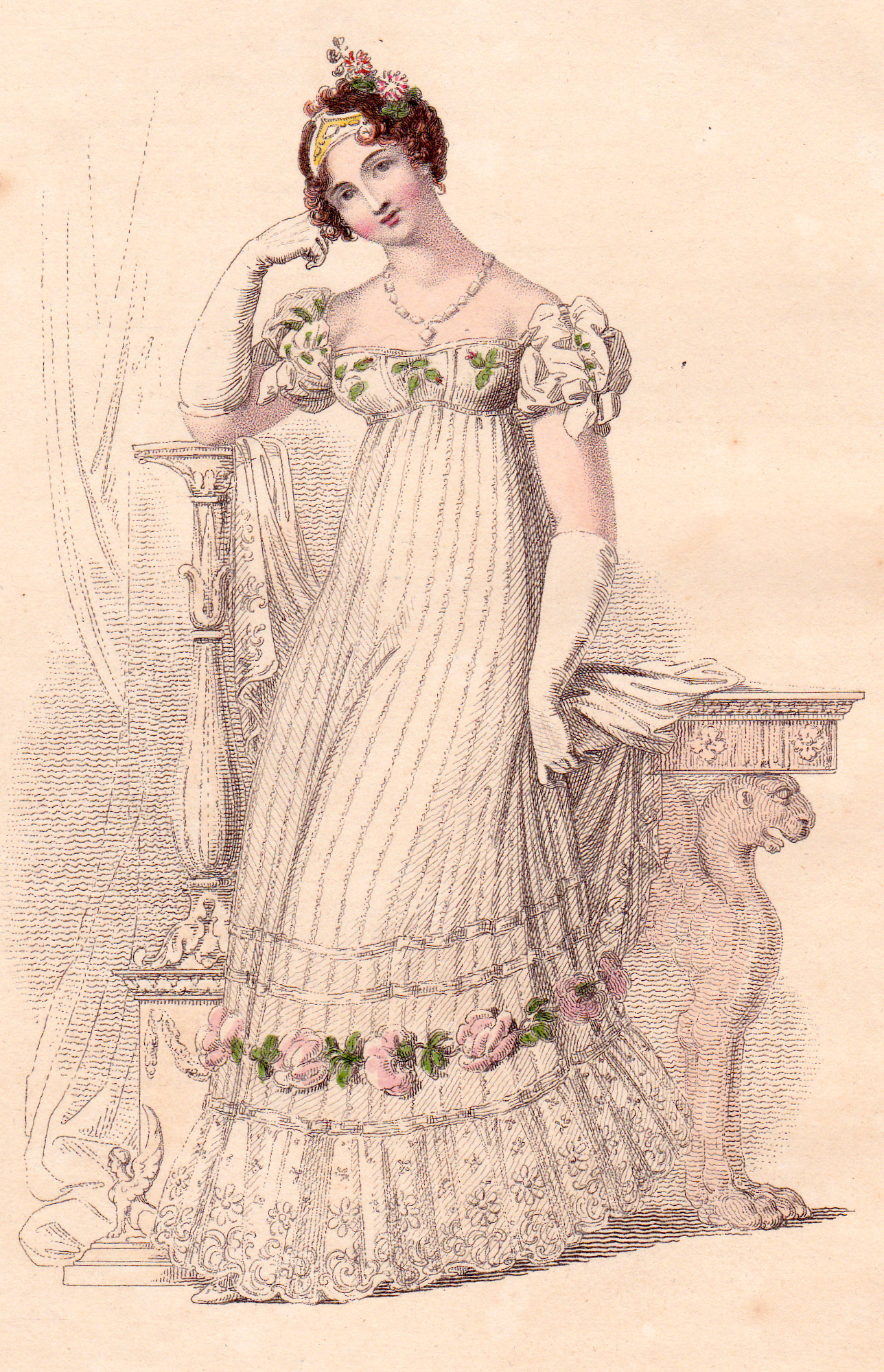
Bridal Dress. Ackermann’s Repository June 1816

Banns are intended to give anyone an opportunity to declare reasons why a marriage may not go ahead and the requirement for banns goes back to 1215. They must be called on three Sundays before the wedding date in the church of the parish where the couple intend to marry. Since 1823 it has been a requirement to call them in the parish or parishes where the bride and groom are resident if that is not the parish where the wedding will take place.

Banns are fine if you have no objection to the whole parish knowing your business, but you might want more privacy or you might wish to marry in a hurry. The alternative was a common licence, which cost more than banns and this was the option chosen by many people with pretensions to gentility and by anyone who could afford it and who wanted a hasty marriage – for whatever reason.

A common licence could be issued by archbishops, bishops, some archdeacons and ministers in parishes which were ‘peculiars’ (eg St Paul’s cathedral). The 1753 Act required a marriage by licence to take place in a parish where one of the spouses had been resident for at least four weeks, but this was often ignored.

To obtain a licence someone, usually the bridegroom, had to apply at the registry for the appropriate jurisdiction and submit an allegation which was a statement, under oath, that there were no impediments to the marriage. Usually the document included the names, ages, occupations and marital status (single or widowed) of the parties and, if one of them was a minor, it had to name the parent or guardian giving their consent. Sometimes a money bond was provided to back up the allegation.

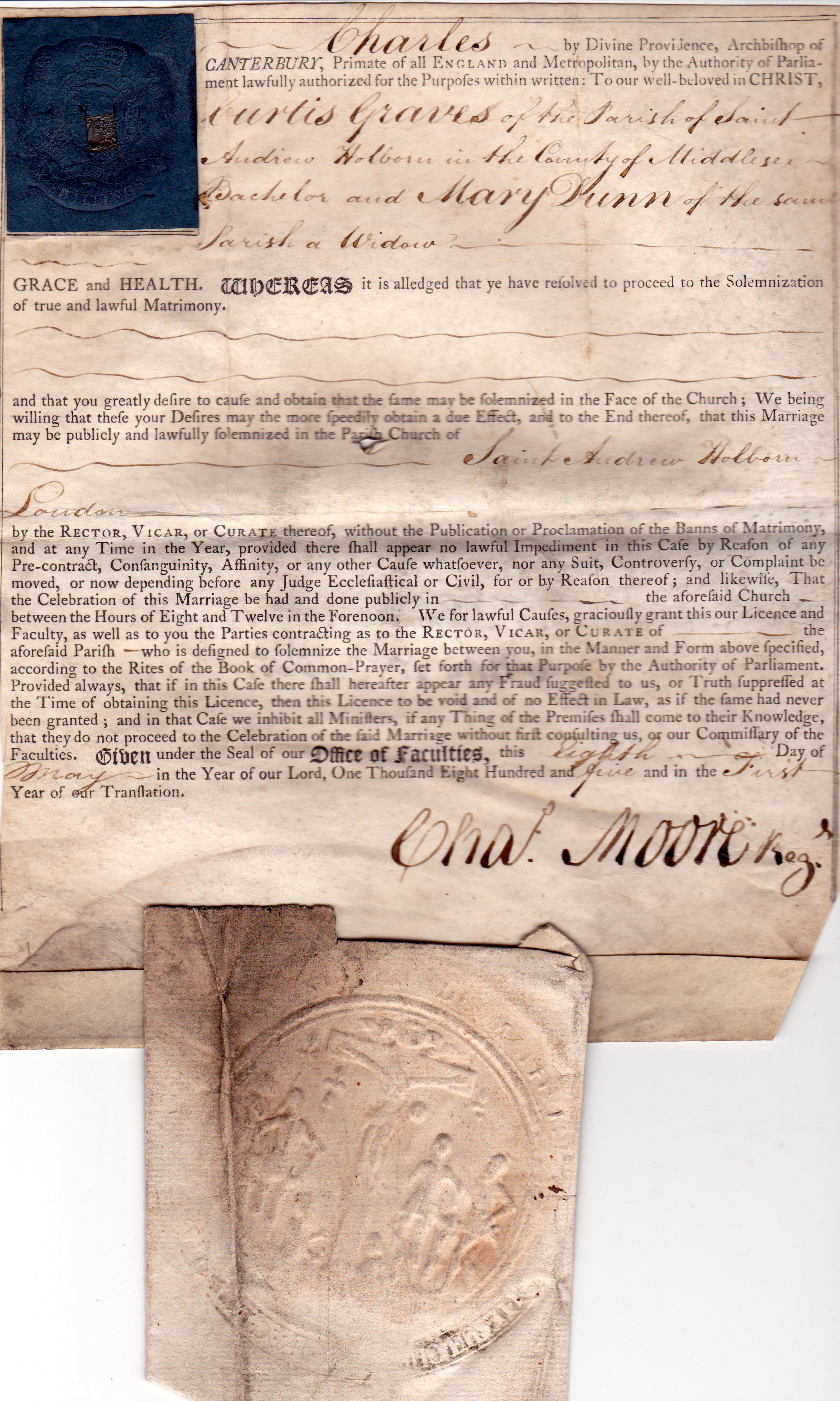
Allegations, bonds and the licences themselves survive quite rarely. The licence was given to the couple to hand to the clergyman who would perform the marriage and, presumably, they often did not give them back, so I was delighted to find the one shown below.


Marriage Licence 3
It has a tax stamp in the top left corner for ten shillings (on top of the cost of the licence) and the Archbishop’s seal is suspended in a paper envelope at the bottom. It reads:
Charles, by Divine Providence, Archbishop of CANTERBURY, Primate of all ENGLAND and Metropolitan, by the Authority of Parliament lawfully authorized for the Purposes within written: To our well-beloved in CHRIST,
Curtis Graves of the Parish of Saint Andrew Holborn in the County of Middlesex, Bachelor and Mary Dunn of the same parish a Widow
GRACE and HEALTH. WHEREAS it is alledged [sic] that ye have resolved to proceed to the Solemnization of true and lawful Matrimony and that you greatly desire to cause and obtain that the same may be solemnized in the Face of the Church; We being willing that these your Desires may be the more speedily obtain a due Effect, and to the End thereof, that this Marriage may be publicly and lawfully solemnized in the Parish Church of Saint Andrew Holborn, London by the RECTOR, VICAR or CURATE thereof, without the Publication or Proclamation of the Banns of Matrimony, and at any Time in the Year, provided there shall appear no lawful Impediment in this Case by Reason of any Pre-contract, Consanguinity, Affinity, or any other Cause whatsoever, nor any Suit, Controversy, or Complaint be moved, or now depending before any Judge Ecclesiastical or Civil, for or by Reason thereof; and likewise, That the Celebration of this Marriage be had and done publicly in the aforesaid Church between the Hours of Eight and Twelve in the Forenoon. We for lawful Causes, graciously grant this our Licence and Faculty, as well as to you the Parties contracting as to the RECTOR, VICAR or CURATE of the aforesaid Parish who is designed to solemnize the Marriage between you, in the Manner and Form above specified, according to the Rites of the Book of Common Prayer, set forth for that Purpose by the Authority of Parliament. Provided always, that if in this Case there shall hereafter appear any Fraud suggested to us, or Truth suppressed at the Time of obtaining this Licence, then this Licence to be void and of no Effect in Law, as if the same had never been granted; and in that Case we inhibit all Ministers, if any Thing of the Premises shall come to their Knowledge, that they do not proceed to the Celebration of the said Marriage without first consulting us, or our Commissary of the Faculties. GIVEN under the Seal of our OFFICE OF FACULTIES, this Eighth Day of May in the Year of our Lord, One Thousand Eight Hundred and Five and in the First Year of our Translation.
[Signed] Chas. Moore Regr.
The back has been signed by Chas. Pryce, St Andrews. May 10th 1805 – the day Curtis and Mary were married.

The Archbishop was Charles Manners-Sutton who was Archbishop 1805-28. Charles Moore Esq. who signed it was one of the Principal Registrers [sic] of the Prerogative Court of Canterbury and the Revd. Charles Pryce who performed the ceremony was elevated to a Prebendal Chair at Hereford Cathedral in 1814.

Bridal Dress Ackermann's Repository April 1818

Bridal Dress Ackermann’s Repository April 1818

There was also the possibility of marriage with a Special Licence which was very rare. These could only be obtained from the Archbishop of Canterbury and allowed a marriage to take place anywhere, not just within a place of worship licenced for marriages. A handful were granted each year, usually to members of the upper reaches of the aristocracy.

Ralph Rylance in his Epicure’s Almanac (1815) describes the scene in the Horn Tavern, Godliman Street. This lay between St Paul’s Cathedral and Doctor’s Commons, which was where the lawyers practicing civil and ecclesiastical law were based and was the easiest place to get a licence for those living in London.
‘…the fond expectant bridegroom sips his soup or savoury jelly, waiting for his licence, which is to be obtained from the Prerogative Court. This soup, jelly, and licence, form the prelude to his occupancy of his (perhaps) equally important bride. Good easy man! He little thinks that the licence aforesaid is to rob him of his liberty for and during the remainder of his, the aforesaid bride-groom’s life.’

Parisian Evening Bridal Dress La Belle Assemblee October 1819

Parisian Evening Bridal Dress La Belle Assemblee October 1819

26 Comments

Filed under Fashions, Love and Marriage

Eating Out In Georgian London 2 – Some Recipes

In my last post I wrote about the world of Regency London eating places described by Ralph Rylance in his Epicure’s Almanac, so this time I thought I’d track down some typical recipes of the period.
These are all taken from original cookery books in my collection, but I haven’t tried them all myself, so experiment at your own risk!

Oysters were one of the most easily obtainable cheap fast foods and could be bought for home consumption in oyster warehouses, eaten in speciality oyster shops or from itinerant oyster-sellers in taverns such as the Cock in Fleet Street. ‘Marsh, the oyster-man, attends here the whole season with his Native’s, Milton’s, and Pyfleet’s…he has the dexterity of the squirrel in opening them.’
The Cock Inn is not the same as the building of that name today which is a heavily restored building of the 1880s, close to, but not on the same site as the original.
Cook & Albany

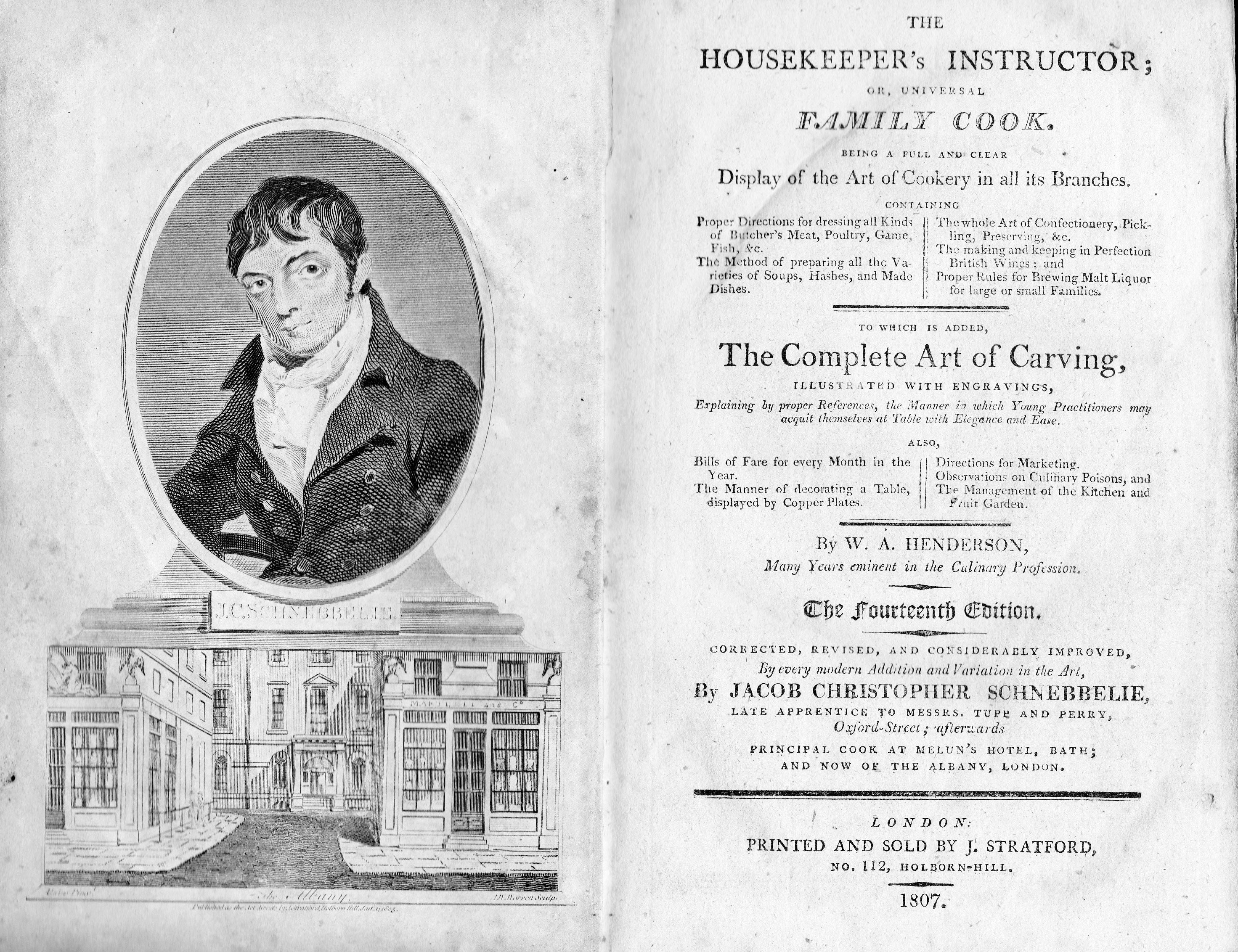
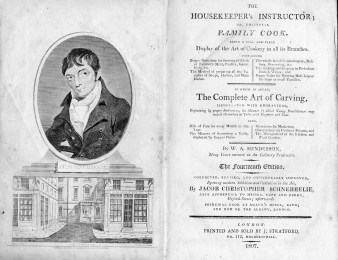
The title page from The Housekeeper’s Instructor by Jacob C Schnebbelie (1807) with his portrait above the front of the Albany where he was head cook.

March the oyster-man’s oysters would have been eaten raw, but The Housekeeper’s Instructor by Jacob C Schnebbelie, principal cook at the Albany (1807) has ten oyster recipes: fried; in Bechemel sauce; stewed; scalloped; fricassee; in a ragoo; sauce; loaves; pickled and soup. Here is the one for oyster sauce:

When the oysters are opened, preserve the liquor, and strain it through a fine sieve. Wash the oysters very clean, and take off the beards. Put them into a stew-pan, and pour the liquor over them. Then add a large spoonful of anchovy liquor, half a lemon, two blades of mace, and thicken it with butter rolled in flour. Put in half a pound of butter, and boil it up till the butter is melted. Then take out the mace and lemon, and squeeze the lemon juice into the sauce. Give it a boil, stirring it all the time, and put it into your sauce boat.

Oyster sauce seems to have been a relatively quick and cheap way of adding interest to boiled meat. Boiled fowl and beefsteaks in oyster sauce were two staples of club and chop house fare and it was to avoid both that the Prince Regent suggested to his chef, Jean-Baptise Watier, that he establish a gentlemen’s club with fine dining. As a result Watier’s, the “dandy club”, opened in 1807 on the corner of Bolton Street and Piccadilly. Brummell was perpetual president and fortunes were won and lost at the high-stakes macao tables.

To Fry Beef-Steaks from The Female Economist by ‘Mrs Smith’ (1810).
Take rump-steaks; beat them well with a roller; fry them in as much butter as will moisten the pan. For sauce, put to the gravy that comes out of them a glass of red wine, half an anchovy, a little nutmeg, pepper, salt and a shallot, cut small; give it a boil; pour it over the steaks, and send them hot to table.
If you like them done in a plainer way, you may put a little flour and water into the pan, with the gravy, when you have taken the steaks out; and a spoonful of ketchup and walnut-pickle, and use onion, or shallot, as you like, and omit the wine and anchovy.
Recipes0001

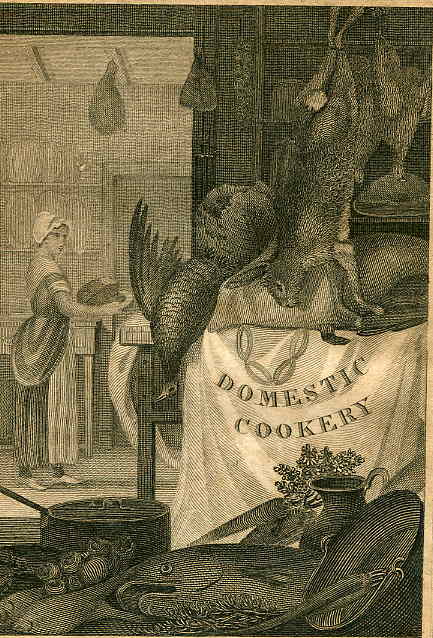
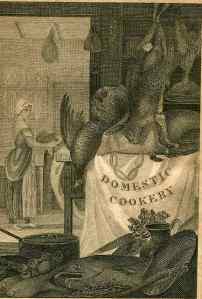
Frontispiece from A New System of Domestic Cookery (1817) showing a servant surrounded by ingredients

To Boil Chicken, from The Housekeeper’s Instructor

After you have drawn them, lay them in skimmed milk for two hours, and trus [sic] them. When you have properly singed, and dusted them with flour, cover them close in cold water, and set them over a slow fire. Having taken off the scum, and boiled them slowly five or six minutes, take them off the fire, and keep them close covered for half an hour in the water, which will do them sufficiently, and make them plump and white. Before you dish them, set them on the fire to heat; then drain them and pour over them white sauce, which you must have made ready in the following manner:
Take the heads and necks of the chickens, with a small bit of scrag of veal, or any scraps of mutton you may have by you, and put them into a saucepan, with a blade or two of mace, and a few black peppercorns, an anchovy, a head of celery, a slice of the end of a lemon, and a bunch of sweet herbs. Put to these a quart of water, cover it close, and let it boil till it is reduced to half a pint. Then strain it, and thicken it with a quarter of a pound of butter mixed with flour, and boil it five or six minutes. Then put in two spoonful of mushrooms, and mix the yolk of two eggs with a tea cup full of cream, and a little nutmeg grated. Put in your sauce, and keep shaking it over the fire, till it is near boiling; then pour it into your boats and serve it with your chickens.

Turtles were a luxury food and so popular that mock turtle soup features in most family cook books. The unfortunate turtles were shipped into the country alive from the West Indies towards the end of May and then kept in vast tanks to be sent to caterers, taverns or private buyers. One of the main suppliers was Mr Bleaden at the King’s Head in Poultry – very conveniently situated for supplying elaborate City banquets. He kept large tanks in his yard and had scores of turtles at any one time.
When I was researching for my new book Travelling By Stagecoach in Britain (Shire, July 2014) I came across a mail coach superintendent who declared that, ‘such a thing as a turtle tied to the roof directed to any gentleman once or twice a year might pass unnoticed, but for a constancy cannot be suffered.’ The guard would have received a sizable tip for accepting the turtle and the mail coach companies tried to stamp out such private enterprise.

Schnebbelie gives detailed and complex instructions on how to kill, prepare and cook your turtles, but this is something no-one would want to do these days so here is a recipe for Mock Turtle Soup from Mrs Smith.
Scald a calf’s head with the skin on; saw it in two, take out the brains; tie the head up in a cloth, and let it boil for one hour; then take the meat from the bones, cut it into small square pieces, and wash them clean in cold water; then put the meat into a stew-pan, with as much good broth as will cover the meat; let it boil gently for an hour, or until tender; then take it off the fire; put a piece of butter into a stew-pan, and half a pound of lean ham, or gammon, cut very fine; some chopped parsley, sweet marjoram, basil, three onions, chopped mushrooms, and a few shallots; put a pint of broth or gravy to the herbs and butter; put them on a stove or slow fire, and let them simmer for two hours; put as much flour as will dry up the butter; add good broth or gravy, so as to make two tureens; also add a pint of Madeira, or sherry; let it boil a few minutes, rub it through a sieve, and put it to the calf’s head; put force-meat balls and egg-balls; season it with Cayenne pepper, and a little salt, if wanted; squeeze two Seville oranges and one lemon; add a little fine spice and sugar to make it palatable. You may add oysters if you like.
Pineapple0001

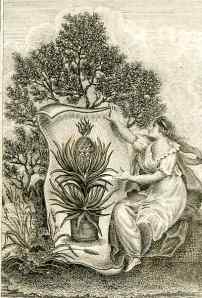
The ultimate luxury ingredient, a pineapple, from one of the leading confectionery cookbooks of the day – Fred Nutt’s The Complete Confectioner (1815)

This is obviously very time-consuming, and not very cheap either, with its spices and wine. Finally, to take our mind off the poor turtles, we can follow Rylance on a country walk to Chalk Farm tavern where there was ‘a large room for public tea-drinking, an oven for baking hot rolls, and a stock of milch cows for the supply of milk for syllabubs.’
Here is Schnebbelie’s recipe for Common Syllabub which does require that you have a cow to hand so that it could be milked directly into the bowl, thus creating a thick foam.
Put a pint of cyder and a bottle of strong beer into a large bowl, grate in a small nutmeg, and sweeten it to your taste. Then milk from the cow as much milk as will make a strong froth. Let it stand an hour, and then strew over it a few currants, well washed, picked and plumbed before the fire and it will be fit for use.

First, catch your cow!

4 Comments

Filed under Books, Food & drink

Eating Out In Georgian London – A Regency Good Food Guide

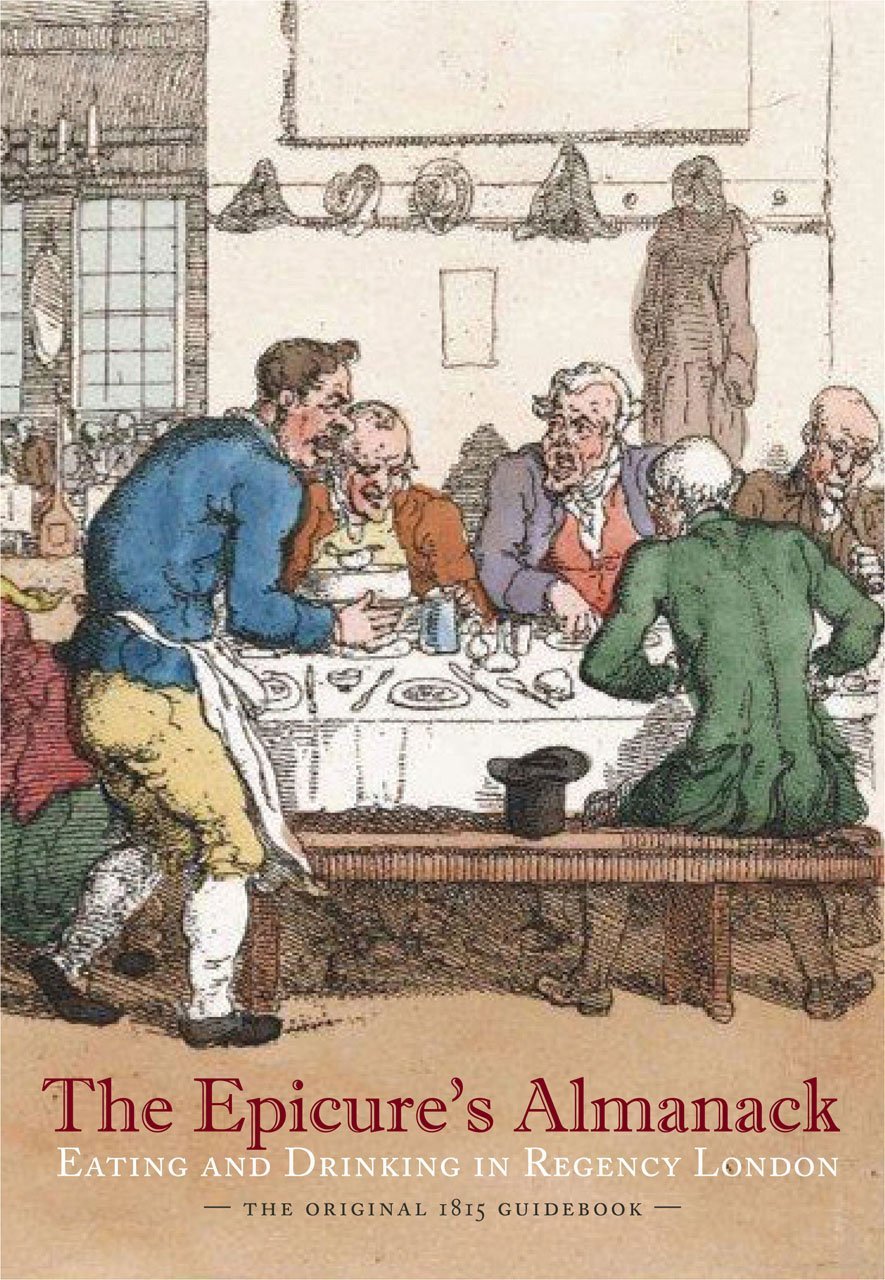
My starrylanceting point for this post is a book that will fascinate anyone interested in Georgian London  – The Epicure’s Almanac: Eating and Drinking in Regency London by Ralph Rylance, edited by Janet Ing Freeman (British Library 2012).

In 1815 Rylance published the first guide to London eating, with, as he put it, the intention of guiding his readers to those establishments where they might ‘dine well and to the best advantage.’  Incredibly, Rylance claimed to have investigated all the locations himself, over 600 of them. His recommendations range from smart Mayfair hotels, inns, chop houses, markets, tea gardens and cake shops. Poor Rylance must have hoped his work would go into many editions, but it survived only the one and the publisher, Longmans, did not reprint.

Janet Ing Freeman has taken Rylance’s original text and investigated all the establishments he mentions, giving us notes on location and lots of interesting snippets about how they developed, who ate there and quotes from other sources. There are original maps to assist. Her detailed scholarly work turns Rylance’s book from a curiosity into a useable guide for the modern reader.

In addition to the places where one might eat there is a ‘Review of Artists Who Administer to the Wants and Conveniences of the Table’ ie shops for kitchen equipment and ingredients. These include Deakin’s Philosophical Kitchen Range which may be obtained from the inventor at 47, Ludgate Hill.  We are told it ‘combines economy with simplicity. It contains an improved oven for bread or pies; a capacious boiler, a place for several stewpans and saucepans with the addition of a moveable steaming apparatus…’ The boiler can also be used for distilling. The editor explains that ‘philosophical’ is used in the sense of ‘scientific’  and in 1817 prices ranged from 11 to 20 guineas.

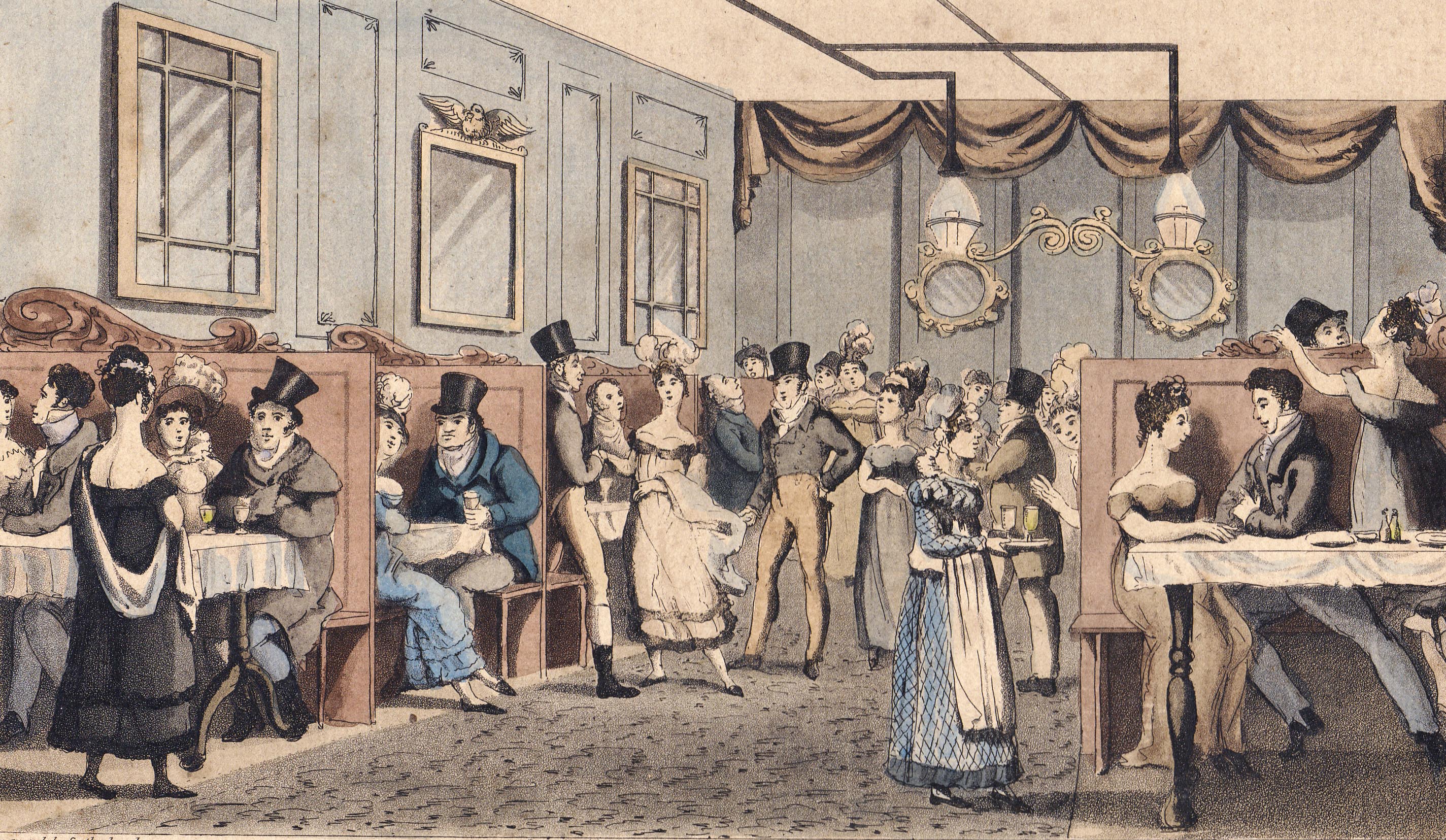
One of the most frequently mentioned type of eating place is the oyster room. Oysters were cheap fast food and could be eaten at various shellfish warehouses and in most other eateries. Rylance mentions many oyster rooms such as Lynn’s at 145 Fleet Street where ‘the best accommodations are upstairs’, and Sawyer’s, St Martin’s Lane noting that it is, ‘One of the largest concerns of the kind in London, for the sale not only of shell-fish, but also of pickled and dried salmon, spruce beer and other beverages.’

In my collection I have this print, ‘A noted Oyster Room near the theatres -Time 3 o’Clock in the Morning’. (Drawn by Samuel AlOyster rooms_0001ken, published 1823). A very good time is being had by everyone and I strongly suspect that the gentlemen are not accompanied by their wives!

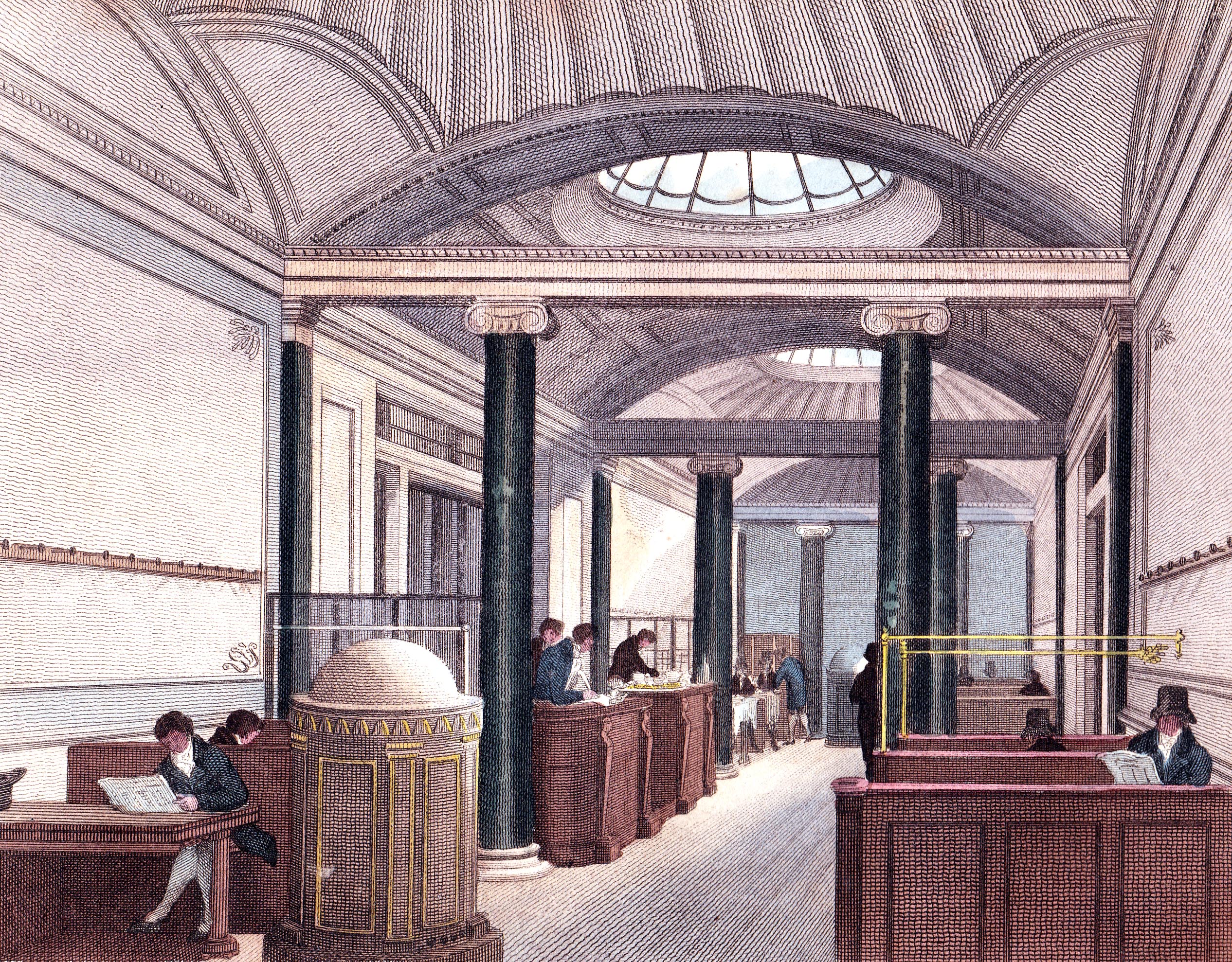
Another popular type of eating place was the coffee house, a very masculine preserve, where coffee was drunk, newspapers read and matters of business and politics discussed. Food was also served in many of them, for example the Piazza Coffee House in Covent Garden, founded by actor Charles Macklin, where ‘dinners for large and small parties are served up in the most consummate style of elegance.’

This illustration from Ackermann’s Repository of October 1811 shows the Auction Mart Coffee Room in Throgmorton Street. Auctions were often held in coffee houses and the Auction Mart was an attempt to move some of them into a purpose-built venue, although of course it still had to have its coffee room.  RylanAuction martce observes that it was ‘fitted up in very neat style. Here soups, and the usual coffee-house refreshments, are served up.’ The notes in the Repository are only concerned with the architecture, not the refreshments unfortunately, and the illustration shows an unconvincingly  quiet and uncrowded space.
Finally, for another type of establishment, we have the confectioners. As I have an invoice from Parmentier’s in my collection I’ve chosen that one from the many that Rylance describes. Parmentiers was located in Edwards Street (now part of Wigmore Street). ‘Here every article is perfected in the true Parisian style of excellence. You find eau de Cologne, pâte de guimauve [marshmallow confections], cachou à la rose, cachou à l’orange et à la violette [lozenge-shaped sweetmeats], papillottes avec devises [small candies wrapped in paper containing jokes or mottoes]. Here are to be had preserves and conserves, wet and dry, jellies, jams, coloured transparent pastes, fruits dried or preserved in French brandies, comfits, lozenges, drops of every colour and flavour, superior macaroons, and rout cakes of the most fanciful forms, with ices and creams.’ My invoice is for lemon and orange syrups.
Parmentier0001It is still possible to eat in some of the establishments that Rylance mentions. For example The Cheshire Cheese is still in Wine Office Court off Fleet Street, and close to the Bank of England you can eat at Simpson’s Tavern in Ball’s Court and the nearby George and Vulture in George Yard.

For my next post I’ll be discovering some recipes for popular foods in Georgian London.


25 Comments

Filed under Food & drink

Recycling Georgian Style

I was sorting out the recycling the other day and began to wonder just how the average Georgian dealt with their waste and rubbish.

To get the most unpleasant waste out of the way first – a privy and cess pit serving a home where a well-built facility was regularly emptied was one thing, the shared privies in a back slum, quite another. At least in Jane Austen’s day most human waste was dealt with via a cess pit and was not flushed straight into the drains that had been designed only to take the rainwater to the rivers.  The privies were emptied by the ‘night-men’ or ‘night-soil men’ who carried out their smelly task after dark, tipping the contents into great vats on the back of carts that then trundled off to the market gardens that surrounded London where raw waste was used to fertilise the crops.

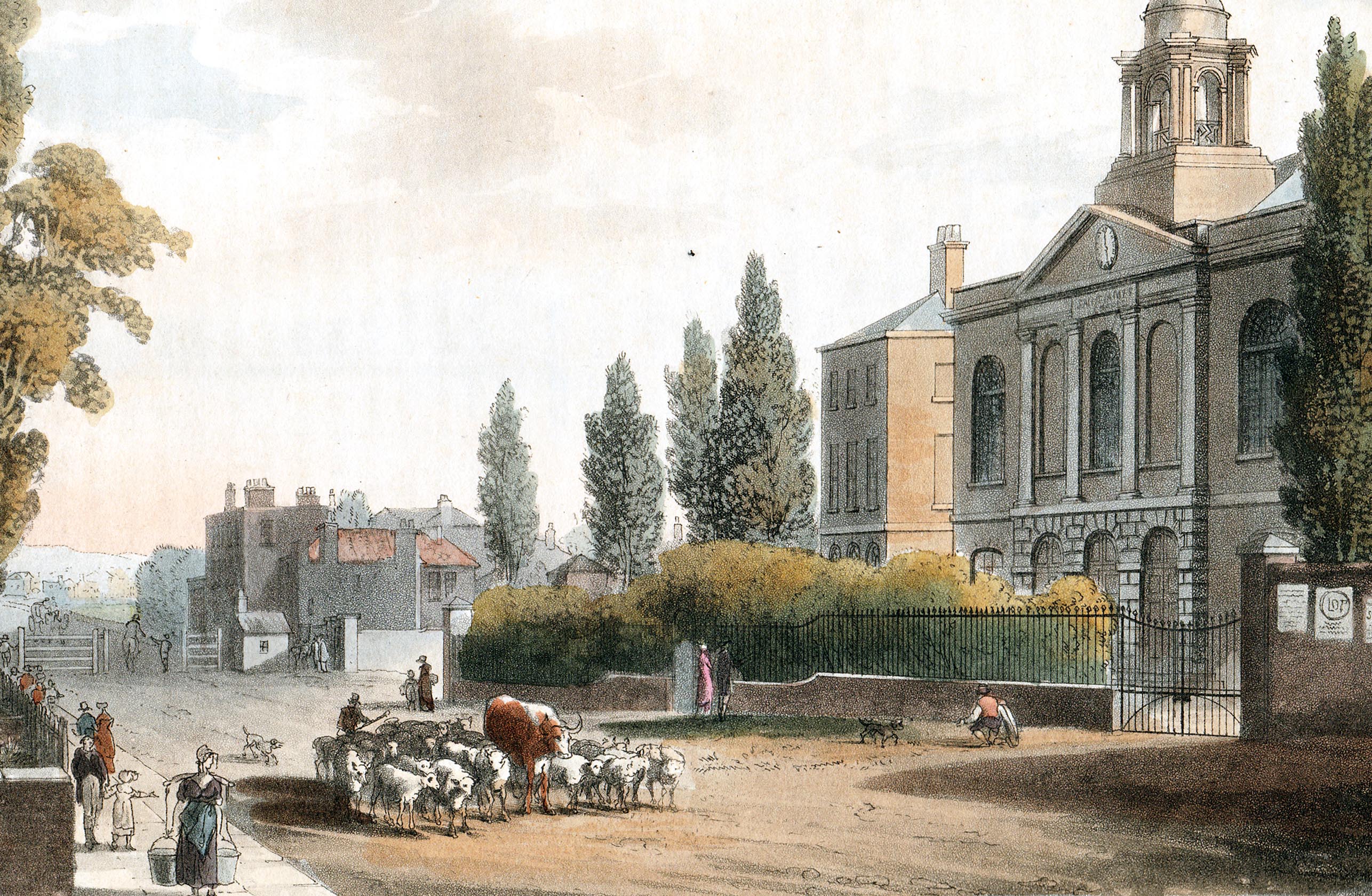
Tottenham Court RoadAnimal waste was another vast problem. There were thousands of horses in London and added to that were the great herds of animals driven right into the centre of town daily to small local slaughterhouses. The print is from Ackermann’s Repository March 1812 and shows the Tottenham Court Road turnpike with St James’s chapel on the right. Today the burying ground behind the chapel is lost under Euston station. A flock of sheep and a cow are herded past on their way to London, a routine part of the day.

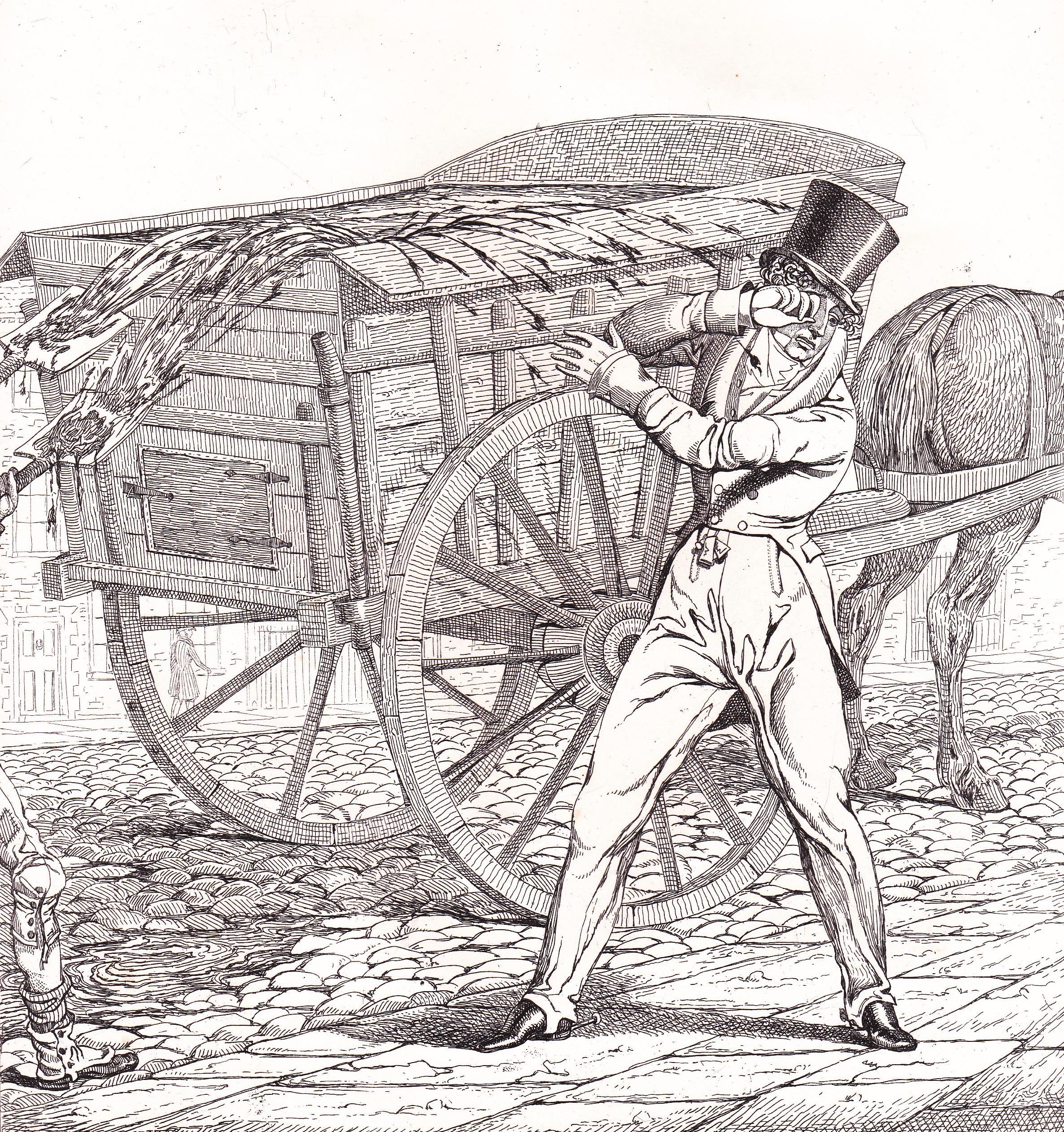
All the animal waste ended up on the streets to mix with dust, household sweepings and rainwater to create a disgusting muddy slurry. At least within central London the roads were cobbled – being ‘on the stones’ marked the limits of the hackney carriages – and the pavements were, as their name suggests, paved. In the better areas the parish officials would employ road sweepers to clear the worst of the mud and muck. This print by Richard Deighton is from his London Nuisances series and is entitled Passing a Mud Cart. The smartly-dressed gentleman is dry-shod on the pavement, but that does not save him.

Mud cart

Crossing sweepers, often young boys or elderly men, made their living by clearing a path through the worst of the muck whenever someone wanted to cross the road.

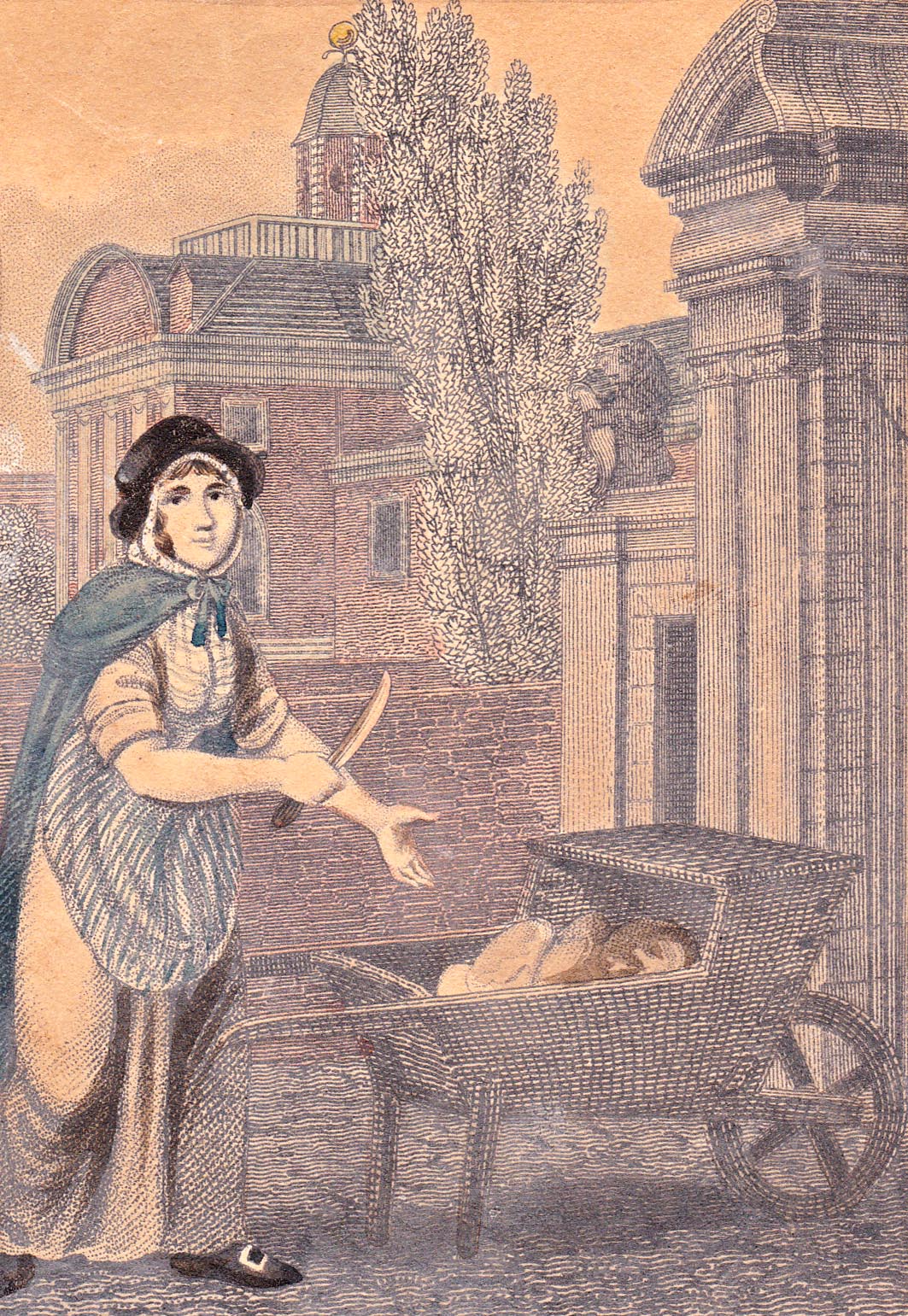
Adding to the mess on the streets were industries and markets. Tanneries, breweries, metal working all created foul waste water to be flushed away to the river. Beggars, scavengers and stray animals dealt with much of what fell to the ground in markets. Very little was wasted – even the most unpromising meat scraps could be sold to feed pets, guard dogs and the kitchen mouser. This print shows a cat and dog meat seller outside Bethlem Hospital.Cat meat

In the home recycling was a way of life. The mistress drank expensive tea but the used tea leaves were a perk of the housekeeper who would dry them and resell them. The left-overs from the family table were eaten by the servants or given to the poor. Carcasses and scraps were boiled for stock and soup, bones could be resold for various industrial purposes.

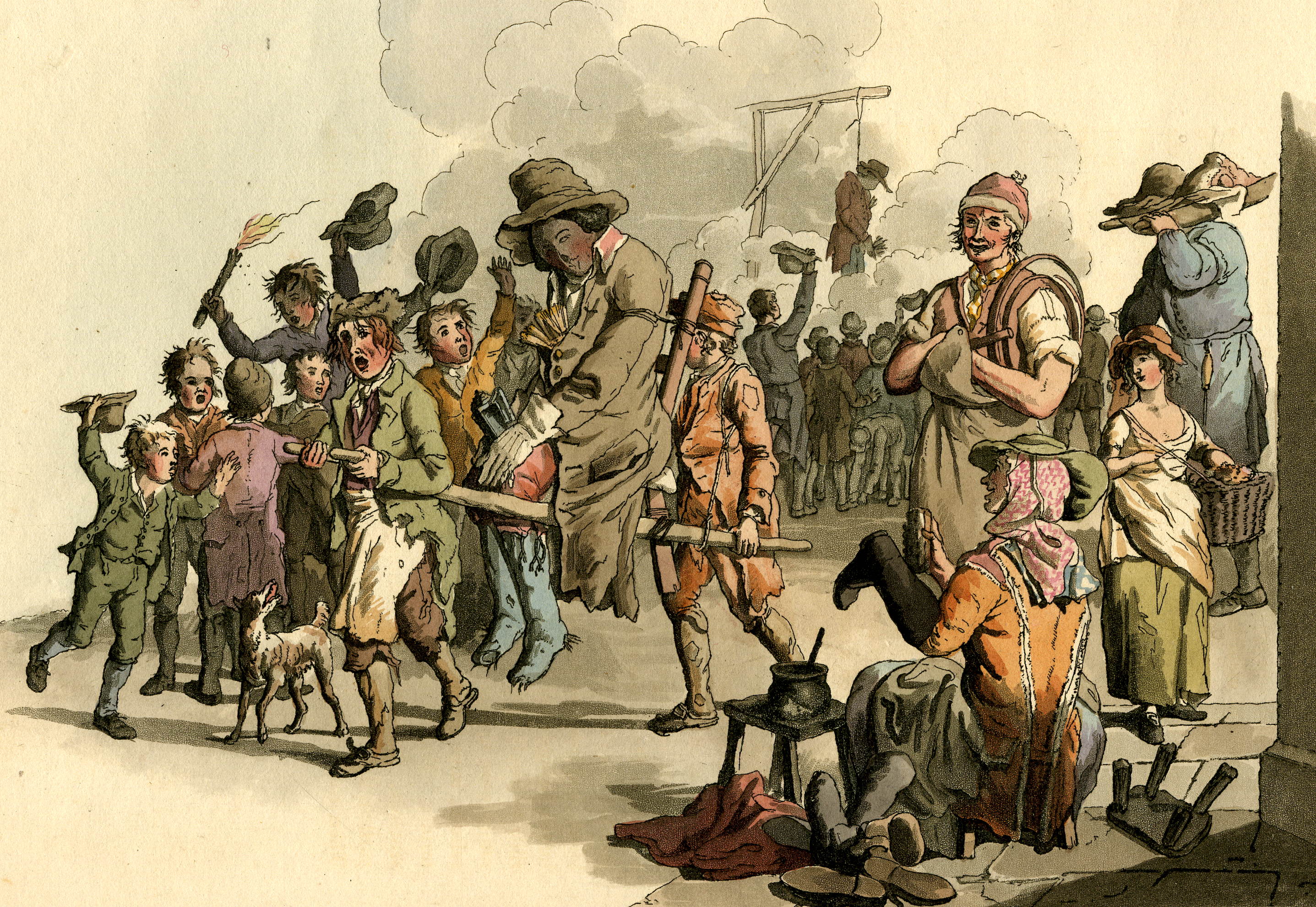
Packaging was paper-based, so could be reused until it fell apart or was put on the fire. Clothing was re-cut and reused and gradually descended through the social orders from lady to lady’s maid, to second-hand clothes shop to rag man and finally paper manufacturer. In this detail from William Pyne’s ‘Guy Fawkes’ the woman applying blacking to boots is wearing an old army jacket while the coat on the guy has reached the end of its life.Guy Fawkes

The market for second hand goods ranged from the elegant antique shop or a sale at a major auction house to a market stall. Repairing worn or damaged goods was commonplace and gave employment to a range of craftsmen such as chair seat repairers, tinsmiths and cobblers.

In the household candle stubs were reused in the servants’ quarters, or if they were good quality wax, formed part of the housekeeper’s perks and were sold. Ashes were used in the privy or on the garden or, if thrown out would be picked over to remove every re-burnable scrap. The chimney sweep would remove the soot and resell it as fertiliser.

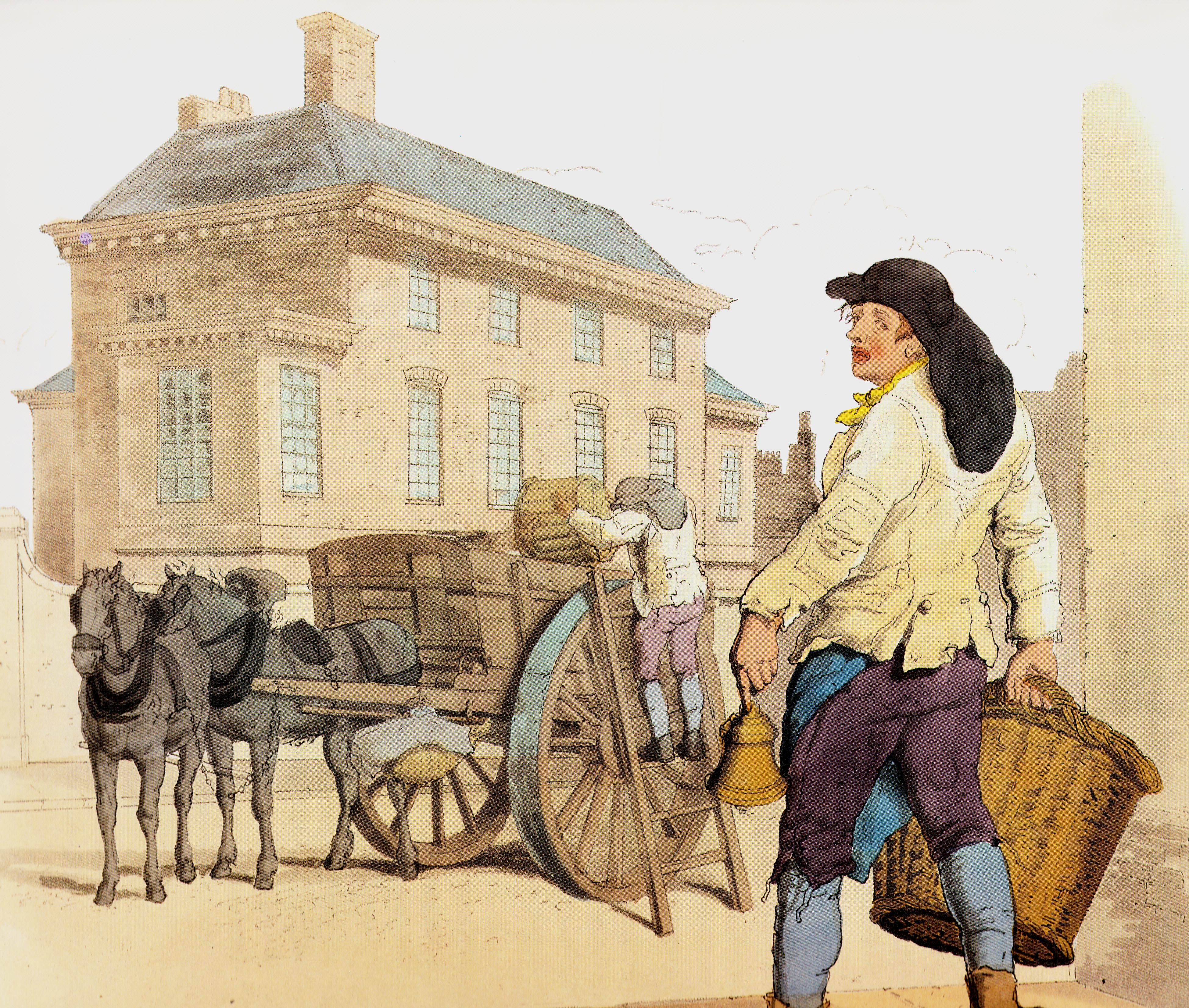
In 1805 William H Pyne produced the series of prints known as Pyne’s British Costumes, showing everyone from a highland shepherd to an admiral by way of bakers, knife grinders and aldermen. A detail from ‘Guy Fawkes’ is shown above and this is a detail of  ‘Dustman’ showing the protective leather attached to the back of his hat so he can shoulder the baskets of waste.

Dustmen 2The accompanying text explains that to prevent plague and pestilence the cities of London and Westminster had appointed ‘a regular body of scavengers, and dustmen, the former to sweep the open streets, and cart away the filth, and stagnant dirt; and the latter, to collect from door to door such waste materials as composed the dunghills.’ An Act of Parliament in 1670 required householders to ensure that ‘the dirt, ashes, or soils, of their houses should be in readiness for the Carmen, by setting out the same overnight in tubs, boxes, baskets, or other vessels…’

Pyne states that the dustmen ring a bell to announce their arrival and collect rubbish to ‘the dust hills in the environs of the town…time has brought to light, that industry, aided by experiment, can turn everything to advantage; and that rubbish and filth, the former pests of the city, are now become a source of utility and wealth.’ The rubbish had become so valuable that scavengers and dustmen had to pay for permission to cart it away. ‘It furnishes the means of an honest livelihood for a great number of men and women, of the lowest order, who are employed in separating the different materials, which are heaped together upon the dust hills.’

It seems that recycling in some form or another was a way of life for the Georgians and one that provided a living for virtually every strata of society below the wealthy.


7 Comments

Filed under Employment, working life