Tag Archives: Jane Austen

Crossing the Knight’s Bridge

Today if you want to travel from the middle of London to visit the smart shops of Kensington and Chelsea, or the museums of South Kensington, or go to a concert at the Albert Hall, you will travel along Knightsbridge, the road that stretches for a mile from Hyde Park Corner to the east to the Royal Albert Hall in the west (becoming, these days, Kensington Road and the beginnings of Kensington Gore in the process). Are you in London? Of course you are.

When Jane Austen was staying with her brother Henry in his homes in Sloane Street and Hans Place, she was just as clear that Knightsbridge (or Knights Bridge, as it was known almost until the 19th century), was not London. ‘If the Weather permits, Eliza & I walk into London this morng.’ she wrote in April 1809 from 64, Sloane Street.

Roque 1741

(Above: Detail of Roque’s map of London 1741 showing Knight’s Bridge and the beginning of Kensington)

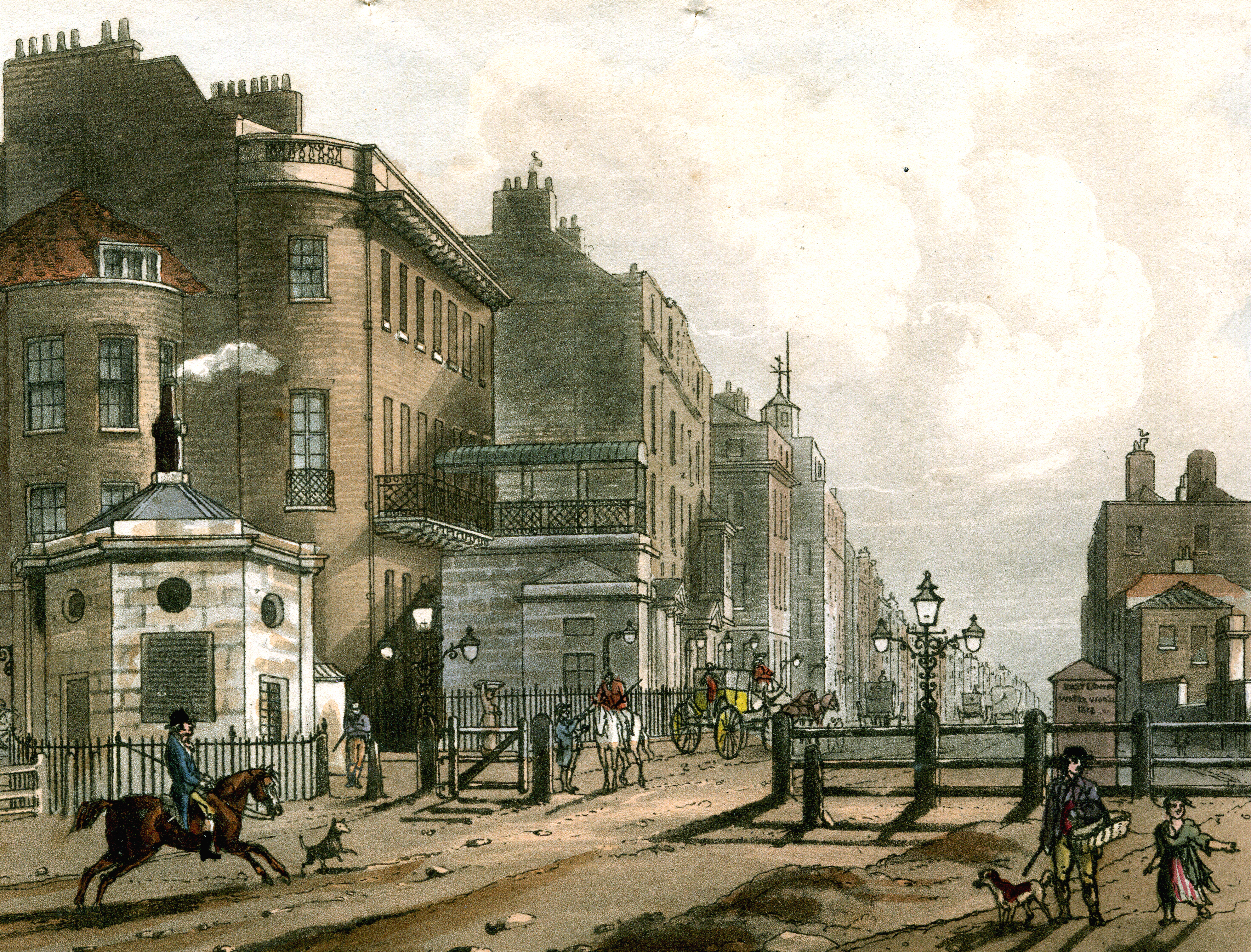
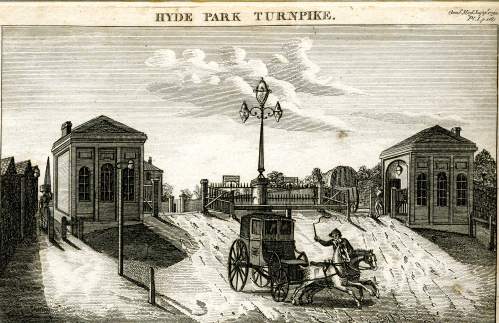
Although the tentacles of development were reaching out from the new Sloane Street, down the Brompton Road and along towards Kensington, London still began at the Hyde Park Turnpike, situated until 1825 just about where Grosvenor Place meets Knightsbridge today. Apsley House, which became the home of the Duke of Wellington, was the first dwelling you came to entering through the gates – Number One, London, in fact.

Knights Bridge was never a parish or a manor, only a locality, known from Saxon times as Kyngesburig, or Knightsbrigg. There are many legends about the origins of the name, but none appear to have any basis in fact. The bridge in question crossed the Westbourne River, one of London’s “lost rivers”, as it left Hyde Park, where it had been turned into the Serpentine. The Westbourne ran on south along a meandering course which marks the boundary of Chelsea and St George’s parishes to meet the Thames in the grounds of Chelsea Hospital. It was finally covered over in 1856/7 and became the unromantically-named Ranelagh Sewer and its outfall can still be seen at low tide. The Albert Gate of Hyde Park marks the point where it went under the road and William Street follows its line southwards.Hyde Park pike0001
If you had ventured this far in the time of the Tudors you would have encountered an appalling road, the “Waye to Reading”, mired so deep in mud that it contributed to the defeat of Sir Thomas Wyatt’s rebel army. They marched against Queen Mary, but arrived so exhausted by the state of the ‘road’ that they were easy prey for the royal troops. Things did not greatly improve for hundreds of years and even as late as 1842 reports were made of pavements ankle-deep in mud.

Worse than the mud were the highwaymen and footpads who infested this road. The last highway robbery on Knightsbridge was as late as 1799, after which a light horse patrol was sent out from the barracks to patrol the road and it was one of the earliest to have street lighting. Mr Davis in his “History of Knightsbridge” (1854) records that even after the armed patrols were instituted, “pedestrians walked to and from Kensington in bands sufficient to ensure mutual protection, starting their journey only at known intervals, of which a bell gave due warning.”

If we are feeling brave we can set out along this perilous mile, guided by the charming little map from Cecil Aldin’s The Romance of the Road (1928). East is at the top and we begin with the Hyde Park Corner tollgate and just before it, at the junction with Grosvenor Place, is St George’s Hospital. That is still there, but is now the Lanesborough Hotel. Behind it was Tattersall’s sale ring until it moved in 1865.
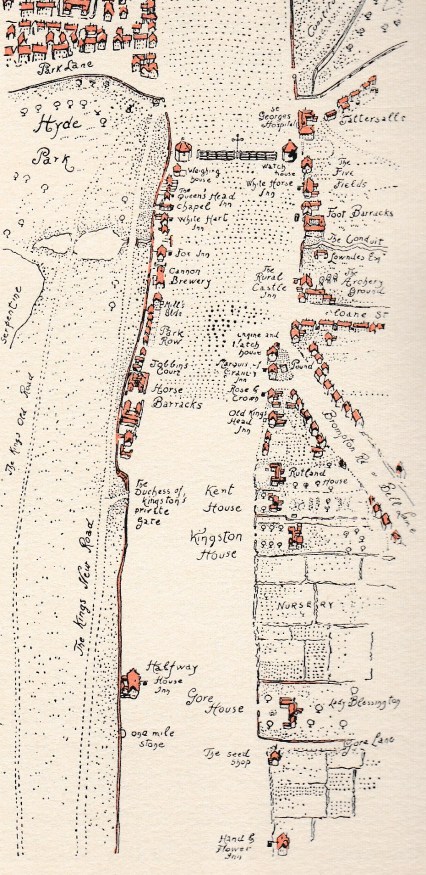
Aldin map 1

Going east we would have passed the White Hart Inn on the north side and a barracks for foot soldiers (demolished 1836) on the south. The narrow entrance to Old Barrack Yard still marks the spot. We cross the Westbourne as we pass William Street and can see today the unlovely round tower of the Sheraton Hotel. Once this was the site of a house owned by a Mr Lowndes and behind it, where Lowndes Square is now, was a rural pleasure garden, Spring Garden (not to be confused with the one of the same name next to what is now Trafalgar Square) at the sign of the “World’s End”. It is referred to in Pepys’s diaries several times, including in the final entry, May 31st 1669: “To the Park, Mary Botelier and a Dutch gentleman, a friend of hers being with us. Thence to the ‘World’s End’ a drinking house by the Park, and there merry, and so home late.”

(Below: Spring Gardens from a Victorian engraving of an earlier drawing.)
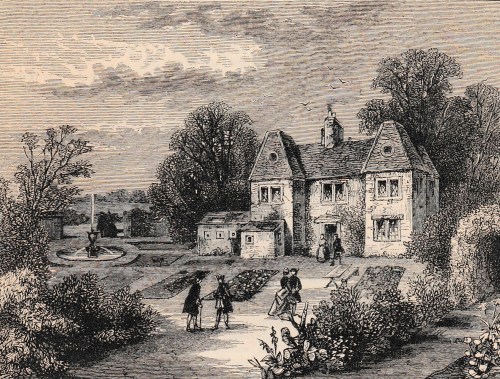
Spring Gardens

More or less opposite was Trinity Chapel which was probably medieval in origin and functioned as a hospital, or lazar house, for the poor. Traditionally it was said to have taken in plague victims in 1665 and the dead were buried opposite under Knightsbridge Green at the present junction of Knightsbridge, Sloane Street and Brompton Road. Eventually the chapel fell into total disrepair and was rebuilt. Its present incarnation is further along the road in Kensington.
For a long time before the passing of Lord Hardwicke’s Marriage Act in 1753 it was the location for irregular, clandestine or runaway marriages and the registers for the chapel contain entries with notes such as “secrecy for life” or “secret for fourteen years” added to them. Possibly the most famous person married there was Sir Robert Walpole who wed a daughter of the Lord Mayor of London. (The chapel is shown below in a view of part of the north side of Knightsbridge in 1820)

cahpel

Now we reach the Albert Gate into Hyde Park, the point where the Westbourne still runs under our feet. On the park side of the bridge was the Fox and Bull Inn (shown as the Fox on Aldin’s map), patronised by artists such as George Morland and Sir Joshua Reynolds, who painted its sign. Less pleasantly it was a receiving house for the Humane Society, founded to assist drowning persons, or deal with their bodies. It was to this inn that the body of Harriet Shelley, the poet’s first wife, was brought after she drowned herself in the Serpentine in 1816. Immediately after the Fox and Bull was the Cannon Brewery, so called from the cannon mounted on its roof. That was surrounded by “low and filthy courts with open cellars” – a far cry from the elegant Kuwaiti and French Embassy buildings which occupy the site now.

Almost opposite is the junction with Sloane Street, developed after 1780 along the old track from the King’s Road in Chelsea. Another old road, the Brompton Road, comes in at an angle at the same point and led to the village of Brompton and on to Fulham. At this junction was Knightsbridge Green with a watch house for the constable, a pound for straying livestock, and possibly the site of Trinity Chapel’s plague pit. This was the point where the granite sets that made up the road surface ceased and the mud really began. It is also close to this point that Tattersall’s moved in 1865.

Just past the brewery were the barracks for the Horse Guards, giving them direct access into Hyde Park, just as they have today. Originally built in 1794/5 the barracks were rebuilt in 1878/9 and then again in the 20th century, slightly further west on Knightsbridge. From here on there were virtually no buildings on the north side, only the brick wall of Hyde Park. The road now becomes Kensington Road.

On the south side of Knightsbridge, following the Brompton Road turning, were the Rose and Crown (the oldest of Knightsbridge’s inns, shown below) and the Old King’s Head and then the floor-cloth manufactory of Messrs. Smith and Barber. It had been established in 1754 and lasted well into the Victorian era.
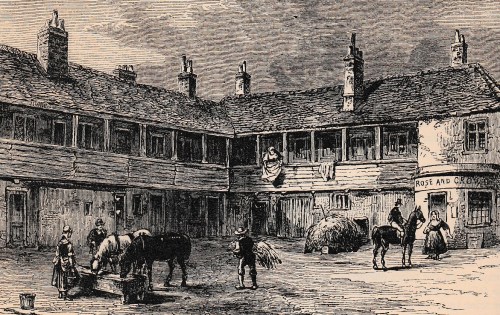
Rose and Crown
Then came three mansions that were, when they were built, true “country houses”. The first was Rutland House, the next Kent House, home for a while of the Duke of Kent, Queen Victoria’s father, and then Kingston House. Kingston House was built in 1769 for the scandalous Elizabeth Chudleigh whose story is so amazing that I will save it for another post. She died in 1796 and it later became the home of the Marquis of Wellesley who died there in 1842. He was the elder brother of the Duke of Wellington.

Half Way House

An area of nursery gardens followed on the south side of the road, part of the great expanse of fruit and vegetable-producing land that surrounded London. Somewhere along this stretch we enter what is now known as Kensington Gore – nothing to do with blood, but named after Gore House which stood on the site of the Royal Albert Hall. It was built in the 1750s, decorated by Robert Adam and was the home in the 1780s of Admiral Lord Rodney. It was acquired in 1808 by William Wilberforce, the great campaigner for the abolition of the slave trade, who lived there until 1821.
Opposite Gore House, a most insalubrious neighbour for a fine mansion, was the Halfway House Inn (shown above). This was where the spies for the highwaymen of Hounslow Heath would congregate to see who was travelling and pass the word on to alert the highwaymen about fine carriages or vulnerable riders. Just beyond it on the park side was the first milestone from the Hyde Park turnpike, the point where we can leave the dangers of Knightsbridge behind us and enter the village of Kensington with a sigh of relief for our arrival safe from the mud and the footpads.
5 Comments

Filed under Buildings, Crime, High Society, London Parks

Going to the Zoo – Upstairs

PolitoIn Sense and Sensibility one of John Dashwood’s feeble excuses for not calling promptly on his half-sisters was that he had to take his young son Harry to see the wild beasts at Exeter Change on the Strand.
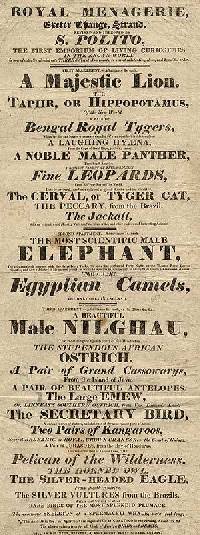
I was prompted to find out more when I bought a print from Ackermann’s Repository which shows the interior of “Polito’s Royal Menagerie” in 1812 and then found a copper token issued by one of the earlier owners, Mr Pidcock. “The collection of divers beasts and birds [was] only exceeded in rarity by those of the Royal Menagerie in the Tower,” according to The Picture of London for 1807, but what neither the guide book nor the Ackermann’s article appear to find worthy of comment was that this little zoo was on the first floor of a building otherwise occupied by shops and offices. The collection included at various times adult elephants, two rhinoceroses, a pair of kangaroos, a “gigantic male ostrich”, a Bengal tigExeter Change 2er and a pair of lions. How any of these were coaxed or carried up a flight of stairs is not explained.
Exeter Change was built in around 1676 as a not very successful collection of small shops specialising in millinery, drapery and hosiery, but by the late 18th century many were let as offices. An animal dealer, Thomas Clark, began a menagerie on the first floor in 1770, advertising that the animals could be viewed “in complete safety.” In 1793 Gilbert Pidock, who had been using it as a winter headquarters for his travelling show, bought the menagerie and on his death in 1810 it was acquired by an Italian, Stephen Polito, and renamed The Royal Menagerie.
Edward Cross worked for Polito and his daughter married Polito’s brother. When Polito died in 1814 Cross took over the menagerie. He tried on two occasions to sell the collection to the Zoological Society of London and moved it to the Royal Mews on the site of The National Gallery when Exeter Change was demolished in 1829. He eventually managed to sell some animals to the new London Zoo and moved the rest to the Surrey Zoological Gardens, which he created.
The Morning Chronicle for 17 May 1808 reported that, “The grandest spectacle in the universe is now prepared at PidcoUntitled-1 copyck’s Royal Menagerie, Exeter Change, Strand, where a most uncommon collection of foreign beasts and birds, many of them never before seen alive in Europe, are ready to entertain the wondering spectators. This affords an excellent opportunity for Ladies and Gentlemen to treat themselves with a view of some of the most beautiful and rare animals in creation. Amongst innumerable others are five noble African lions, tigers, nylghaws, beavers, kangaroos, grand cassowary, emus, ostriches etc. Indeed such a numerous assemblage of living birds and beasts may not be found for a century. This wonderful collection is divided into three apartments, at one shilling each person, or the three rooms for two shillings and sixpence each person.”Untitled-2 copy
Of course the conditions were utterly unsuited to keeping wild animals and complaints were made even in the early 19th century. In 1796 Pidcock had three elephants in one room. The most horrifying example of the cruelty was the fate of Chunee the elephant who weighted 5 tonnes and who became so irritable – understandably in view of a rotten and untreated tusk – that in 1826 it was decided he must be destroyed. When the first attempt to kill him by shooting failed, soldiers were brought from Somerset House further along the Strand. They also failed to destroy the poor creature, now maddened by pain and a cannon was ordered. Thankfully the keeper managed to kill Chunee before it arrived. The carcase was dissected by the Royal College of Surgeons.
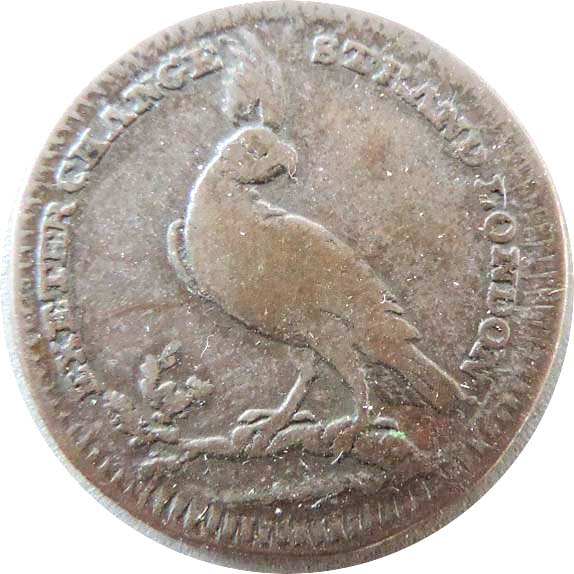
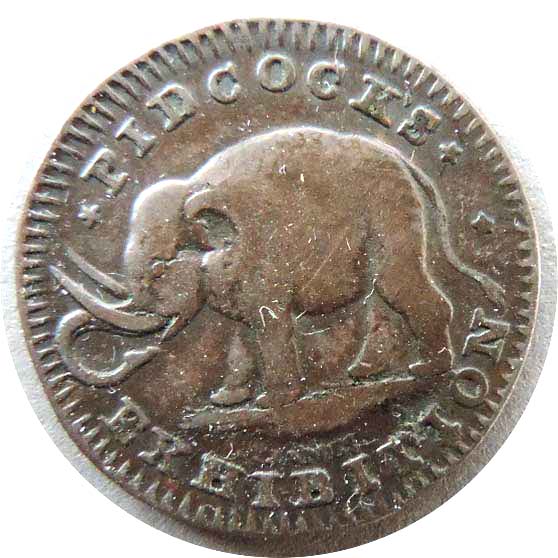
Numerous copper tokens were issued for the menagerie. These were produced for many businesses in the late 18th century to supplement the poor supply of small coinage. The one I own shows an elephant with the words “Pidcock’s Exhibition” on one side and a bird and “Exeter Change, Strand London” on the other. Other designs showed lions, beavers and a rhino.
Celebrity visitors included Lord Byron, who was amused by Chunee taking his money and then courteously returning it. He also saw a hippopotamus there which, he said, reminded him of Lord Liverpool.

Exeter ChangeAs the Ackermann’s print shows, this was very much a family entertainment. In my next post I’ll visit Bullock’s Museum where the public could view a wide range of exotic species, but, probably fortunately for the animals concerned, all stuffed.

5 Comments

Filed under Entertainment, Science & technology

Coach-fevered, coach-crazed and coach-stunn’d

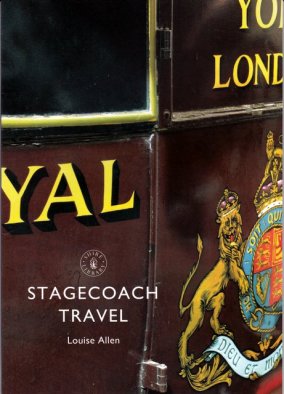
“Coach-fevered, coach-crazed and coach stunn’d” was how the poet Samuel Taylor Coleridge described himself after arriving at Hatchett’s Hotel, Piccadilly in November 1817 after an all-night journey on the Bristol to London mail coach. It made me wonder if everyone had such a ghastly experience of coach travel and the result of my research is my new book Stagecoach Travel, out in the UK this month from Shire Publications (September in the US).

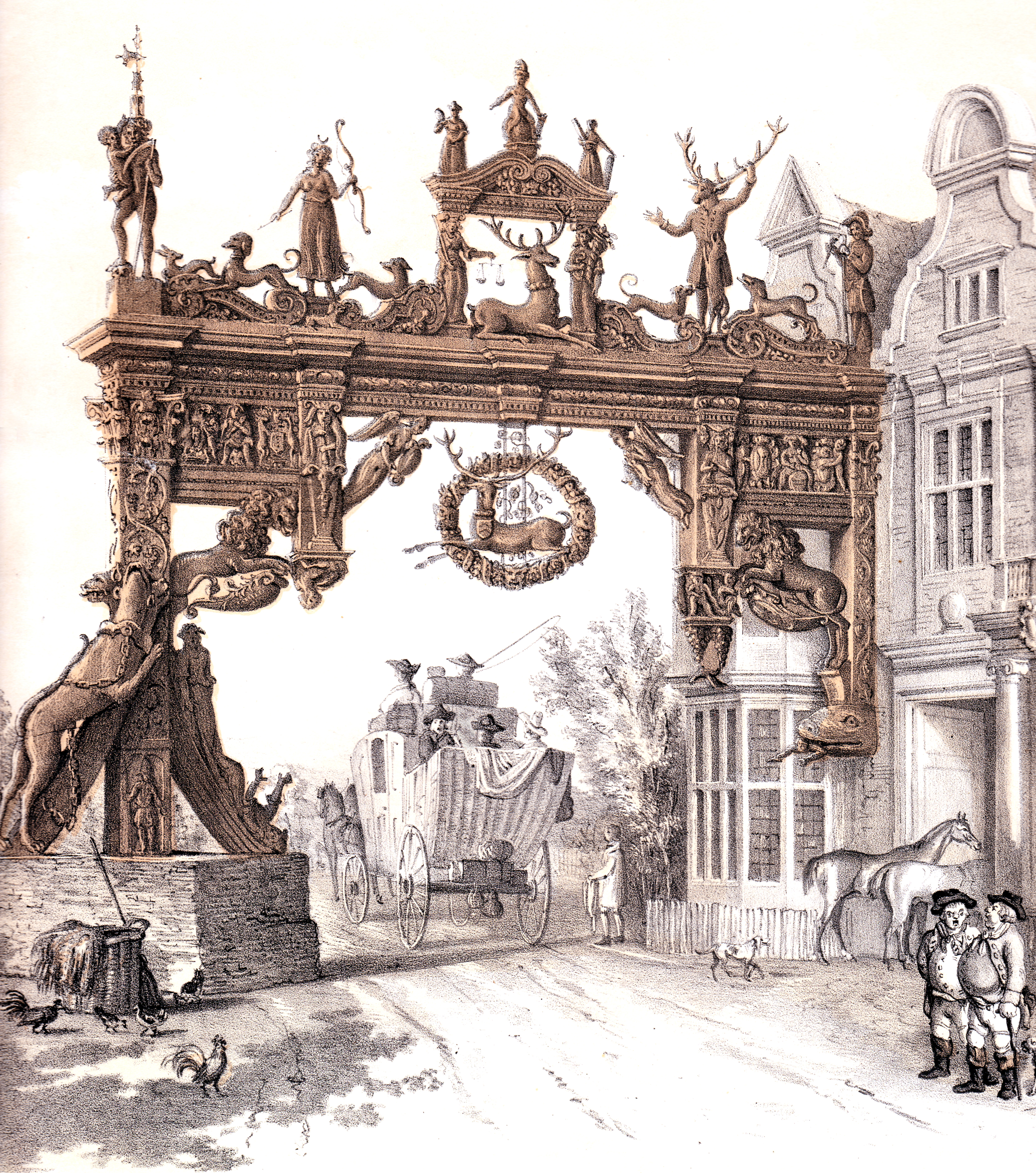
The first 1-Stagecoach coverstagecoaches appeared in the mid-17th century – and wise passengers made their will before setting out as well as allowing considerable time – the 182 miles from London to Chester took six days in 1657 (if the weather was kind). But at least in those days speed was not going to kill you and the coach would stop overnight so you had a chance of a meal at your leisure and a night’s sleep. (Prudent travellers would bring their own bed linen). If you were very hard up and could not afford the £1 15s for the London-Chester route you could perch on the roof (no seats or handrail) or ride in the basket with the luggage. To be ‘in the basket’ became slang for being hard-up. Passengers riding this way can be seen in this print of the quite fabulous sign (below) for the White Hart, Scole, Norfolk. The sign really was this ornate and was unfortunately demolished as a traffic hazard in the 19th century. The inn is still operating.
inn sign


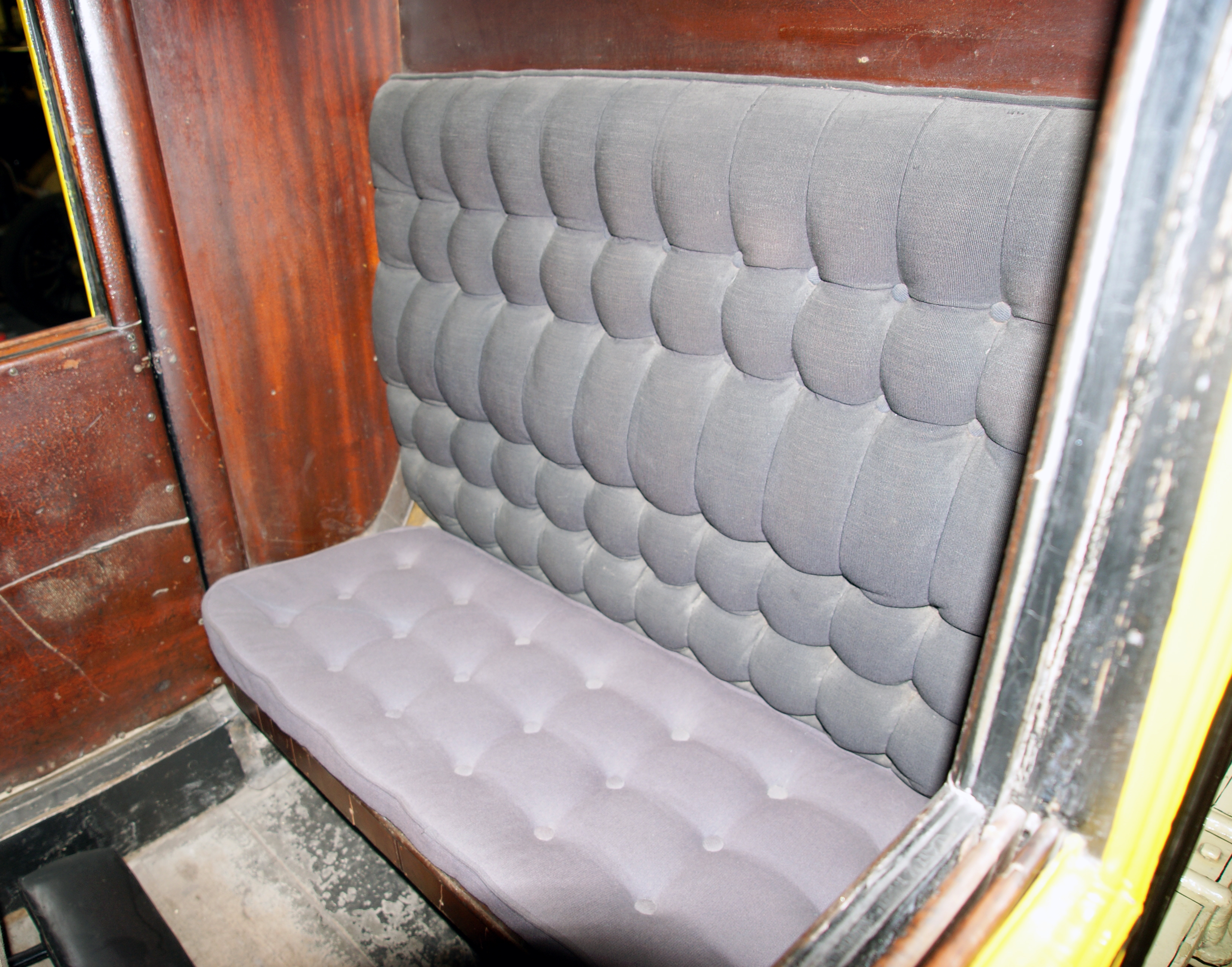
By the early 19th century roads had improved greatly, at least along the turnpike routes, coach design incorporated lighter bodies and better springs and reliable timetables were in place. But although this meant the passengers got to their destination faster and on time it did not necessarily translate into greater SONY DSCcomfort or safety. I measured the interior of one of the few, genuine, surviving stagecoaches – the Old Times (Shown left in Birmingham Museum stores). It carried six inside passengers who would have been wearing bulky outdoor clothing. Each had 14 inches (35 cm) width on seats 13.5 inches (34 cm) deep. They and the passenger seated opposite had 18.5 inches (47 cm) of leg room to share. It makes budget airline seating seem luxurious.

Then there was the question of your fellow passengers who might be smelly, noisy, offensive or simply excessively chatty. As the Hon. John Byng ranted “…box’d up in a stinking coach, dependent on the hours and guidance of others, submitting to miserable associates and obliged to hear their nonsense, is great wretchedness!” Nor were the live human passengers the only source of discomfort. Coaches might carry the occasional turtle (live and strapped to the roof) on its way to some nobleman’s soup tureen, a smuggled veal calf (also live) in the guard’s box (definitely against regulations) or the sinister ‘box of book’ containing a body-snatcher’s ill-gotten corpses addressed to a London surgeon for dissection.

Travelling outside was cheaper and you were in the fresh air, but you were also exposed to the weather. Jane Austen’s nephews Edward and George arrived in Southampton in October 1808, “…very cold, having by choice travelled on the outside, and with no great coat but what Mr Wise, the coachman, good-naturedly spared them of his, as they sat by his side. They were so much chilled when they arrived, that I am afraid they must have taken cold.” They were fortunate, during very cold spells passengers sometimes died of exposure on the outside seats.

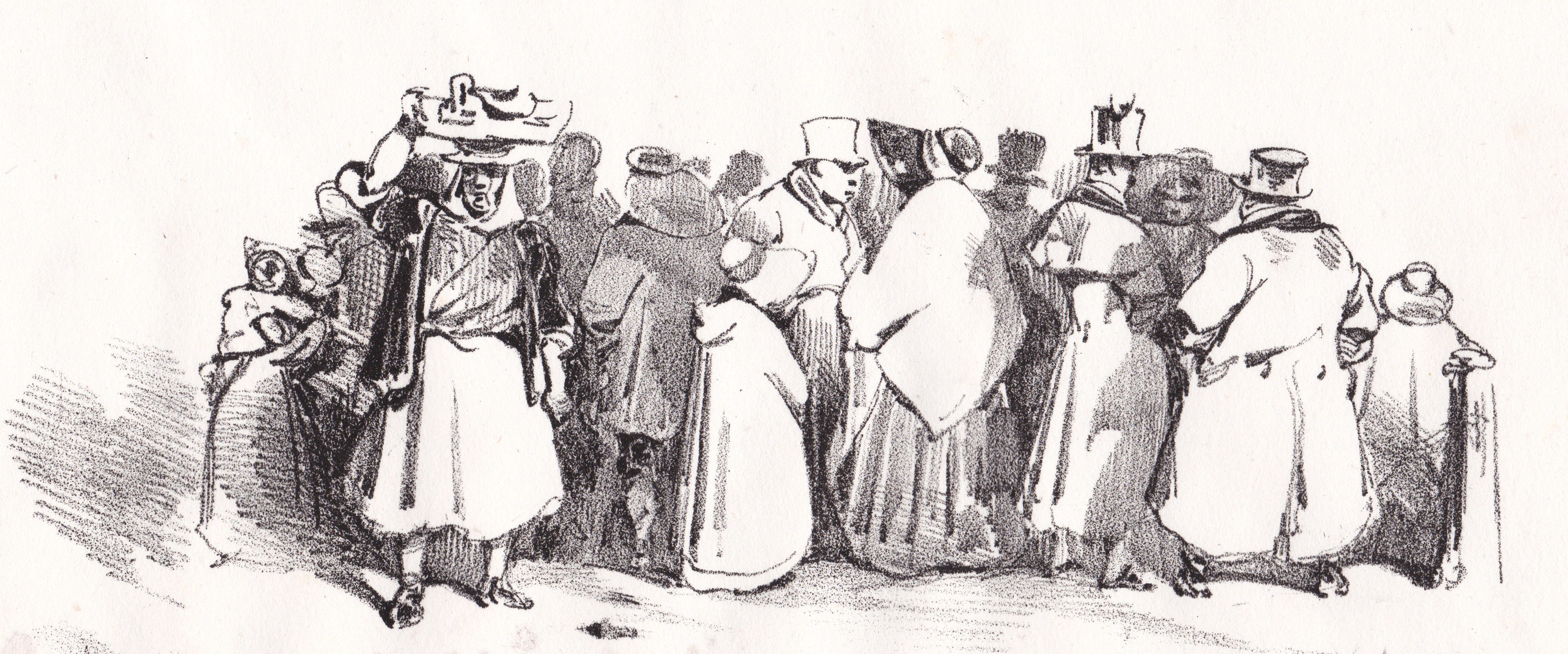
Then there were the inns, another source of misery, although foreign travellers usually wrote with admiration of “…that picture of convenience, neatness and broad honest enjoyment, the kitchen of an English inn.” (Washington Irving). With overnight stops a thing of the past, the 19th century innkeeper had to make his money where he could which meant over-priced, rushed meals. A useful trick was to serve it slowly and make it very hot but to prevent passengers removing any uneaten portions of the meal once the coach was ready after its 20 minute stop. The half-eaten food would go back in the pot for the next arrivals. You could, of course, bring your own picnic or buy from a vendor. The scene below is of an inn yard with passengers waiting to board their coaches with, to the left, the pie-seller carrying his wares on his head.inn yardI’ll post again about the pleasures of coaching, its dangers – from the highwayman (uncommon) to overturnings (all too frequent) – and those essential ingredients of the experience: the coachman, the guard, the vehicle and, of course, the horses.

Stagecoach Travel is available from Shire Publications http://tinyurl.com/ot6p2os, Amazon.co.uk  http://tinyurl.com/nafrkfs and, for pre-order, Amazon.com http://tinyurl.com/k52g7bd

10 Comments

Filed under Accidents & emergencies, Food & drink, Transport and travel

Eliza and I Walk Into London This Morning…

In a long letter dated Thursday 18th – Saturday 20th April 1811 Jane Austen wrote to her sister Cassandra about her activities in London. She was staying with her brother Henry and his wife Eliza in their house at 64, Sloane Street in Knightsbridge, which at the time was a separate village from London. From the way Jane writes about walkiSONY DSCng ‘into’ London it was clear that this separation was felt by residents.

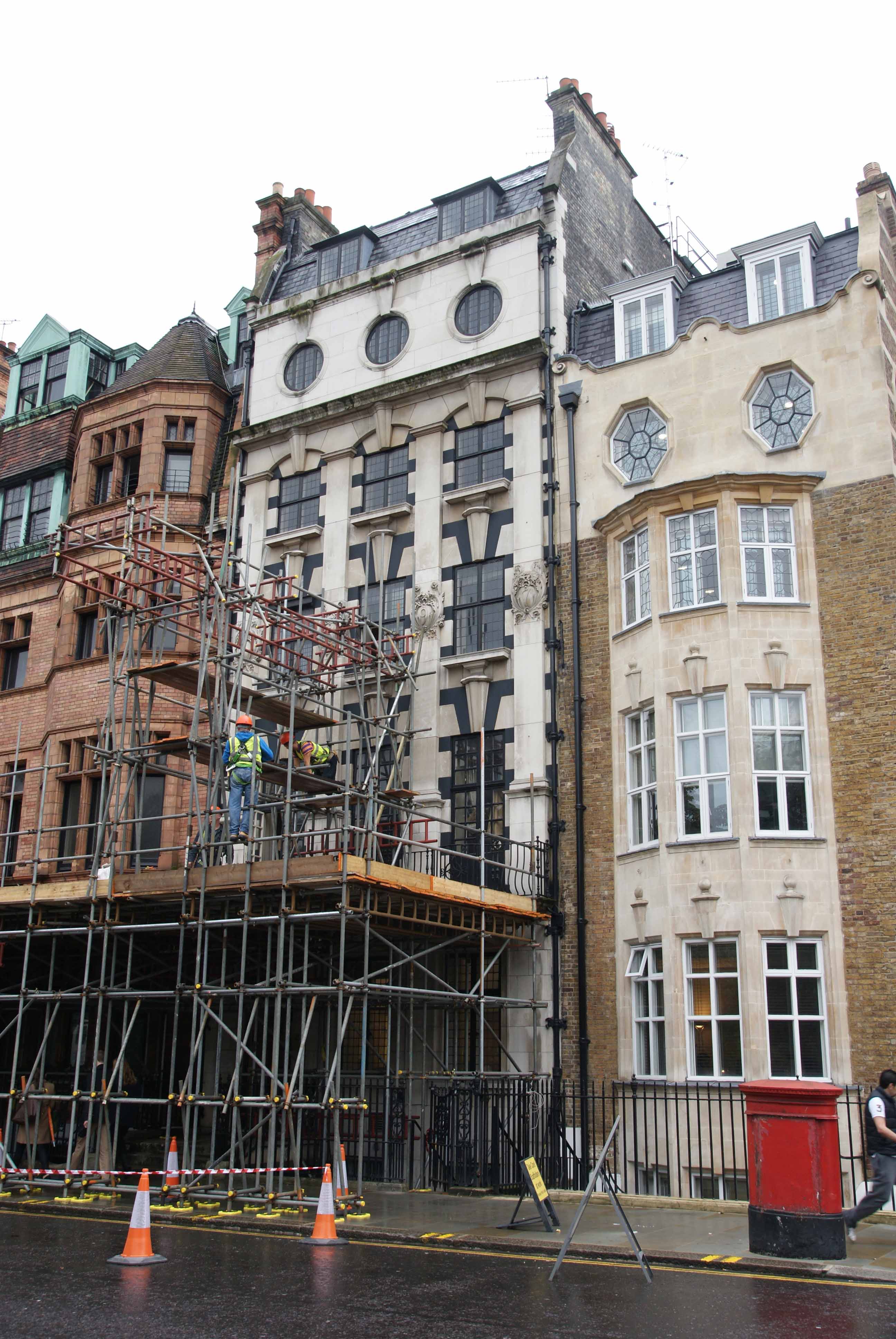
The house in Sloane Street is still there, although at first glance it is unrecognisable as the one where Jane stayed.  In 1897 another floor was added and the whole house refaced, but embedded inside is the original house, built in 1780. It is even possible to see the outer bay of the octagonal room where Eliza held a party on 25 April 1811 – all you need to do is walk a little way down Hans Street and look back at the rear of the house. In the photograph the house is covered in scaffolding and undergoing yet more changes.

Knightsbridge village, and that section of the Bath road, are named for the medieval bridge over the Westbourne River, one of the ‘lost’ rivers of London which is not lost at all, but still runs under the streets to the Thames. It descends from Hampstead Heath and crossed the area that is now Kensington Palace Gardens and Hyde Park before meeting the Bath road. In 1730 it was dammed to form the Serpentine in Hyde Park and the Long Water in Kensington Palace Gardens.

The village straggled along the highway with Hyde Park and the palace grounds to the north, and market gardens to the south. Brompton Road cut notheastwards from the little village of Brompton and the new, planned, Sloane Street meets the older, more irregular road at Knightsbridge at the point where there was a watch house and the village pound for straying livestock. All along Knightsbridge was a scatter of substantial houses, inns and cottages. There was a cavalry barracks on the northern edge, with access to the park, and an infantry barracks on the southern side.

In her letter Jane describes two expeditions on foot into London. To begin she would have had a stroll of about three quarters of a mile from Henry’s house to Knightsbridge. Sloane Street was built up with houses all along the western edge with the remains of market gardens to the east, although Cadogan Place was being laid out and a few terraces were beginning to appear on the eastern edge. Once she reached Knightsbridge she would then have turned right to ‘walk into London’ which she reached at the Hyde Park turnpike gate, another three quarters of a mile. There is nothing she would have recognised in the scene today. Sloane Street was rebuilt, or, in many cases, refaced, in the late 19th century and the inns have all either disappeared or have been replaced by Victorian buildings on the same sites. The cavalry barracks is still there, but rebuilt twice, most recently to a design by Sir Basil Spence that includes a tower block regularly voted one of the eyesores of London.

Hyde Park pike0001

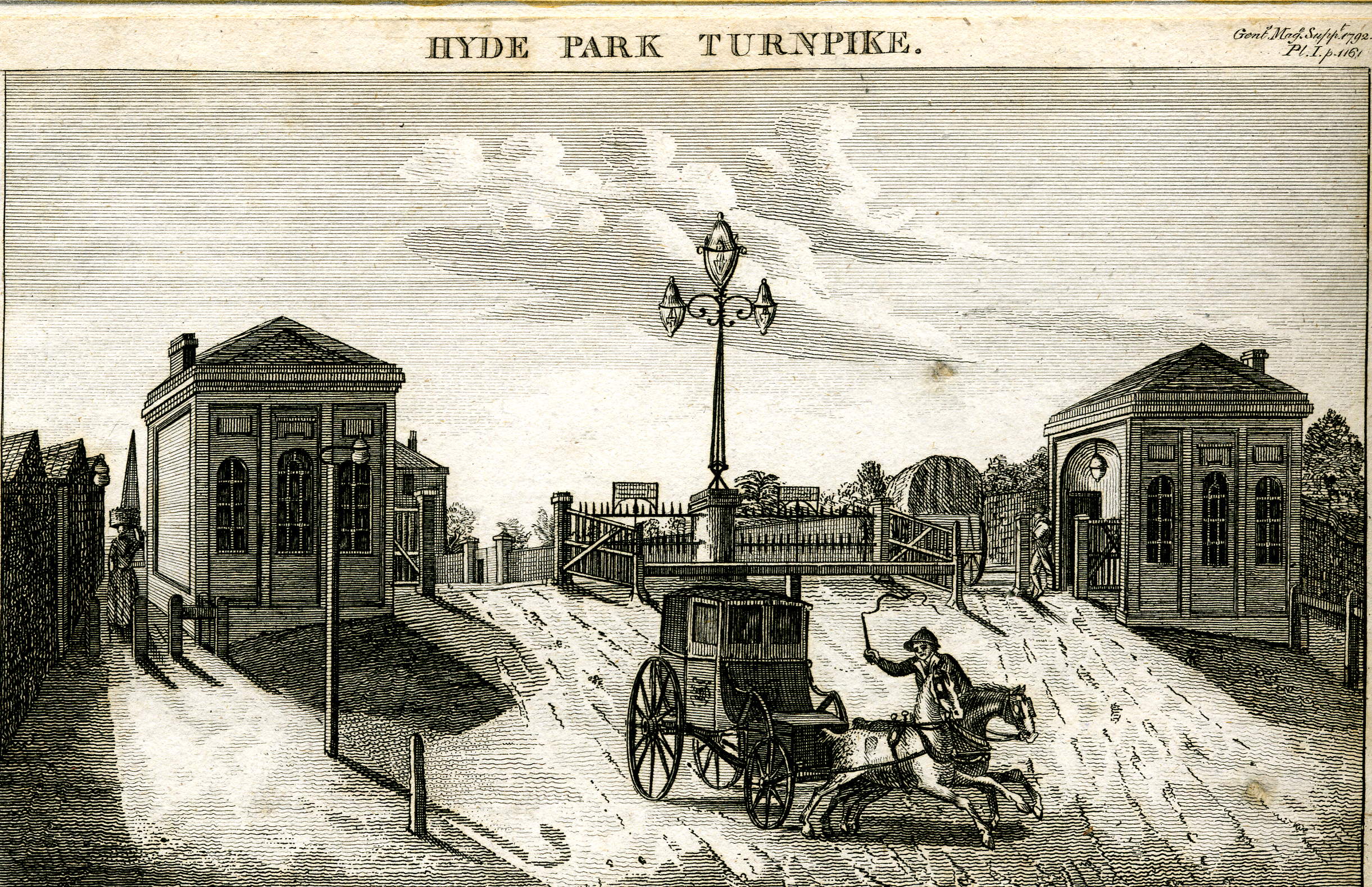
Her sister-in-law Eliza seems to have been a rather nervous carriage passenger, so she would probably have been terrified by the volume of traffic at Hyde Park Corner today. On the 25th April Jane wrote home about an incident at the turnpike: ‘The Horses actually gibbed on this side of Hyde Park Gate – a load of fresh gravel made it a formidable Hill to them, & they refused the collar; – I believe there was a sore shoulder to irritate. – Eliza was fightened, & we got out – & were detained in the Even[ing] air several minutes.” She blames this for the cold that Eliza had contracted, not realising that Eliza probably caught the same cold Jane was complaining about suffering earlier. The print above shows the turnpike gate looking towards Piccadilly. On the right is a watch house and on the left, just out of the picture, was a weighing house.

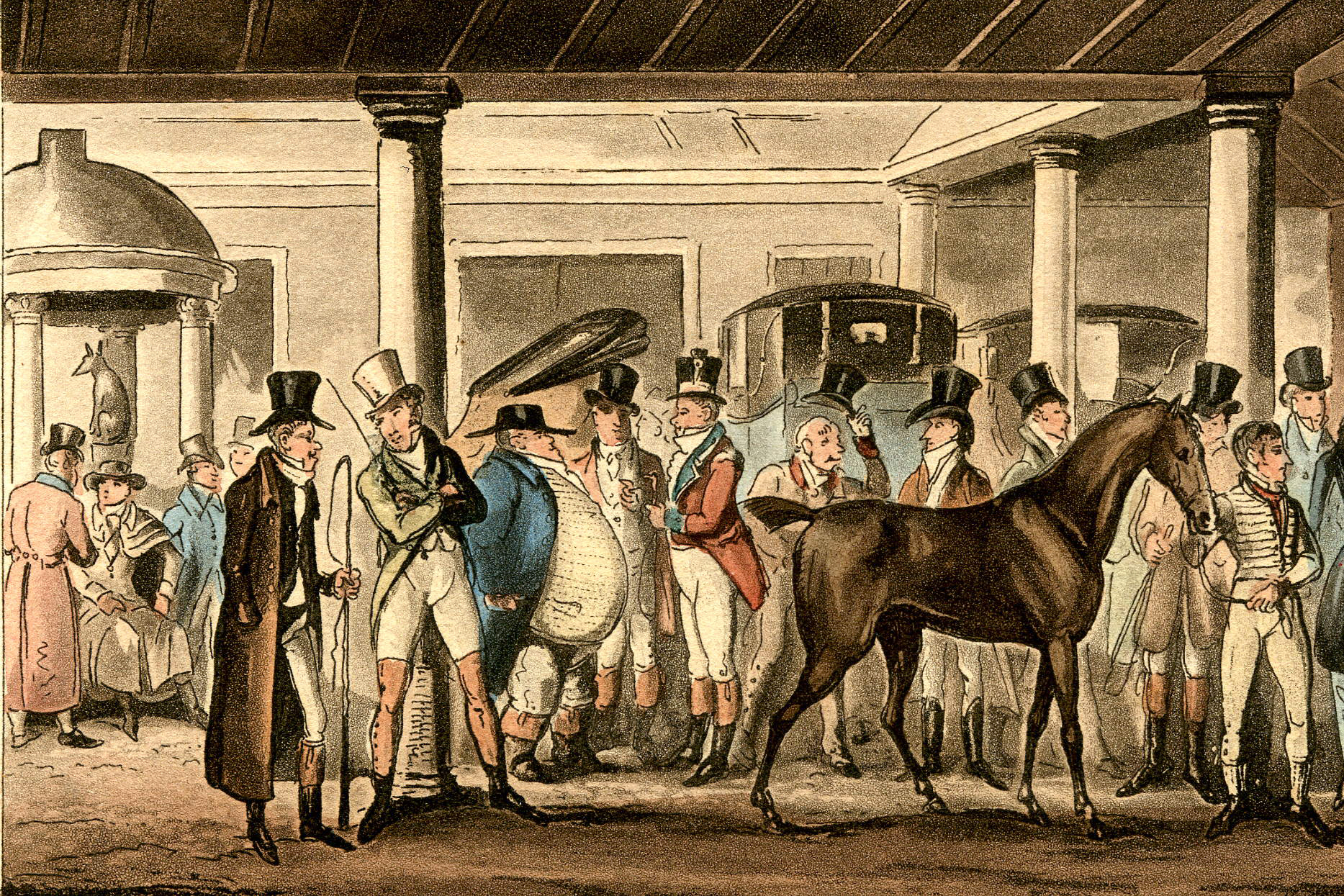
These dTatts0001ays the Lanesborough Hotel occupies the old St George’s Hospital on the corner of Knightsbridge and Grosvenor Place and just behind that was the location of the famous Tattersall’s auction ring (1766-1865 when it moved to Newmarket). The print shows the central yard with an auction for a horse in progress. Carriages were also sold and some can be seen at the back.

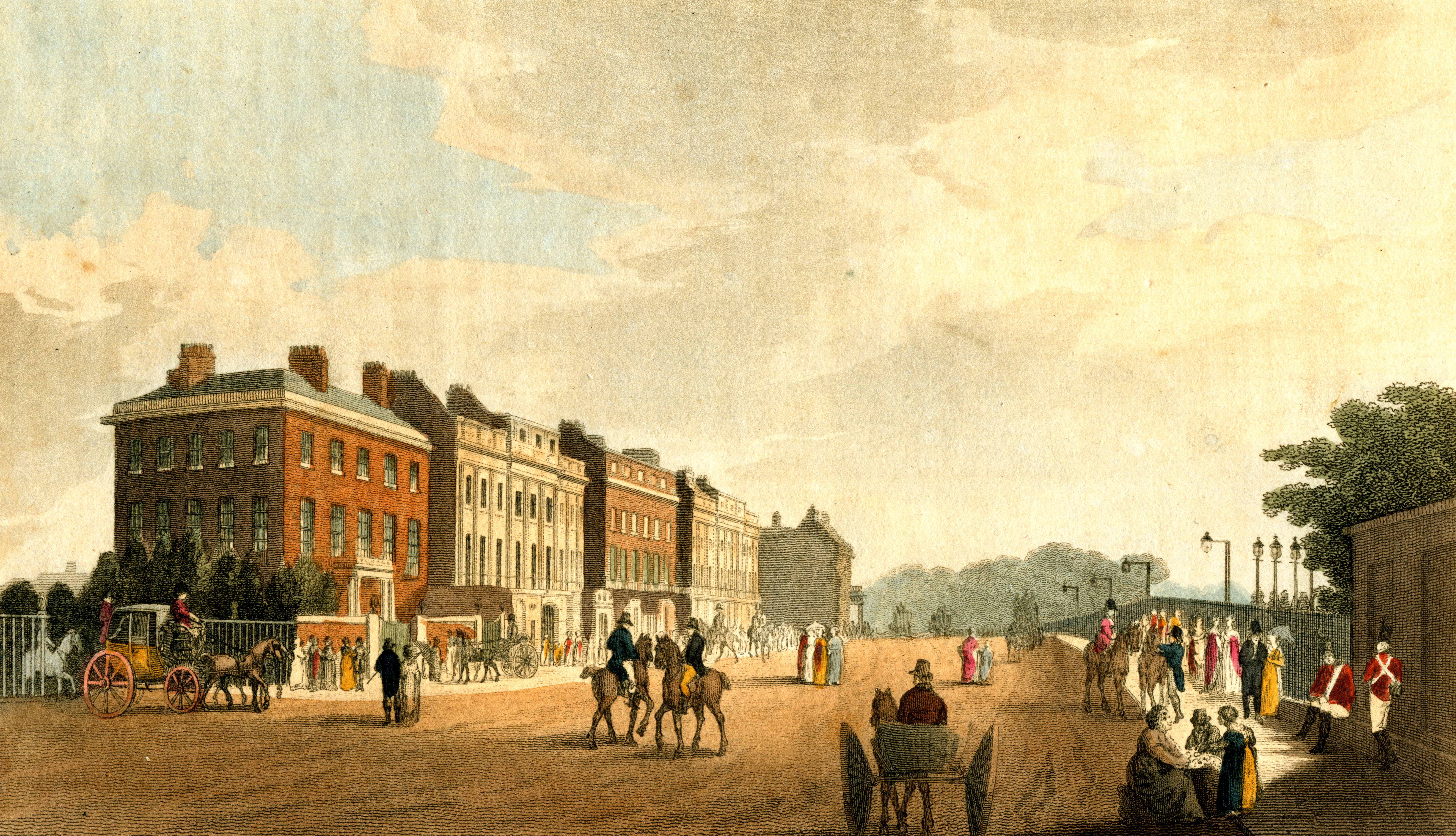
Now Hyde Park Corner is dominated by Apsley House, known as Number One London because it is the first house you came to once you were through the gates. The print from Ackermann’s Repository  below shows it before the work on the houses to the left created Wellington’s impressive residence. On the right is the wall surrounding Green Park and Piccadilly stretches ahead of us.

Jane wrote that on Wednesday 17th April, ‘Manon [Eliza’s maid] & I took our walk to Grafton House…I liked my walk very much; it was shorter than I expected, & the weather was delightful. We set off immediatel007y after breakfast & must have reached Grafton House by 1/2 past 11.’  Grafton House was the premises of Wilding & Kent, a very superior draper and haberdashers, on the corner of Grafton Street and New Bond Street. The most logical route for them to have taken was along Piccadilly to Old Bond Street and then  up that to New Bond Street and the shop, a distance of another 3/4 of a mile, so a distance of two and a quarter miles in all. It is clear from her letter that they walked back, after a wait in the crowded shop of half an hour to be served. Jane was obviously quite happy to make a walk of four and a half miles, simply to purchase bugle [bead] trimming and three pairs of silk stockings. The next day, ‘If the Weather permits, Eliza & I walk into London this morn[ing]. – She is in want of chimney lights for Tuesday [the day of her party]; – & I, of an ounce of darning cotton.’ Unfortunately she doesn’t say where they shopped. These walks were in addition to several trips by carriage to visit friends and attend the theatre, yet Jane still had time to work on Sense and Sensibility. On Thursday 15 April she wrote to Cassandra who must have commented on her activities, ‘No indeed, I am never too busy to think of S&S. I can no more forget it, than a mother can forget her sucking child…I have two sheets to correct, but the last only brings us to W.s first appearance.’

003You can follow Jane’s walks into London in Walking Jane Austen’s London. Walk One takes you to Henry’s two houses in the area, then up to Hyde Park Corner and across the park to Kensington Palace. The site of Grafton House is visited in Walk Two.

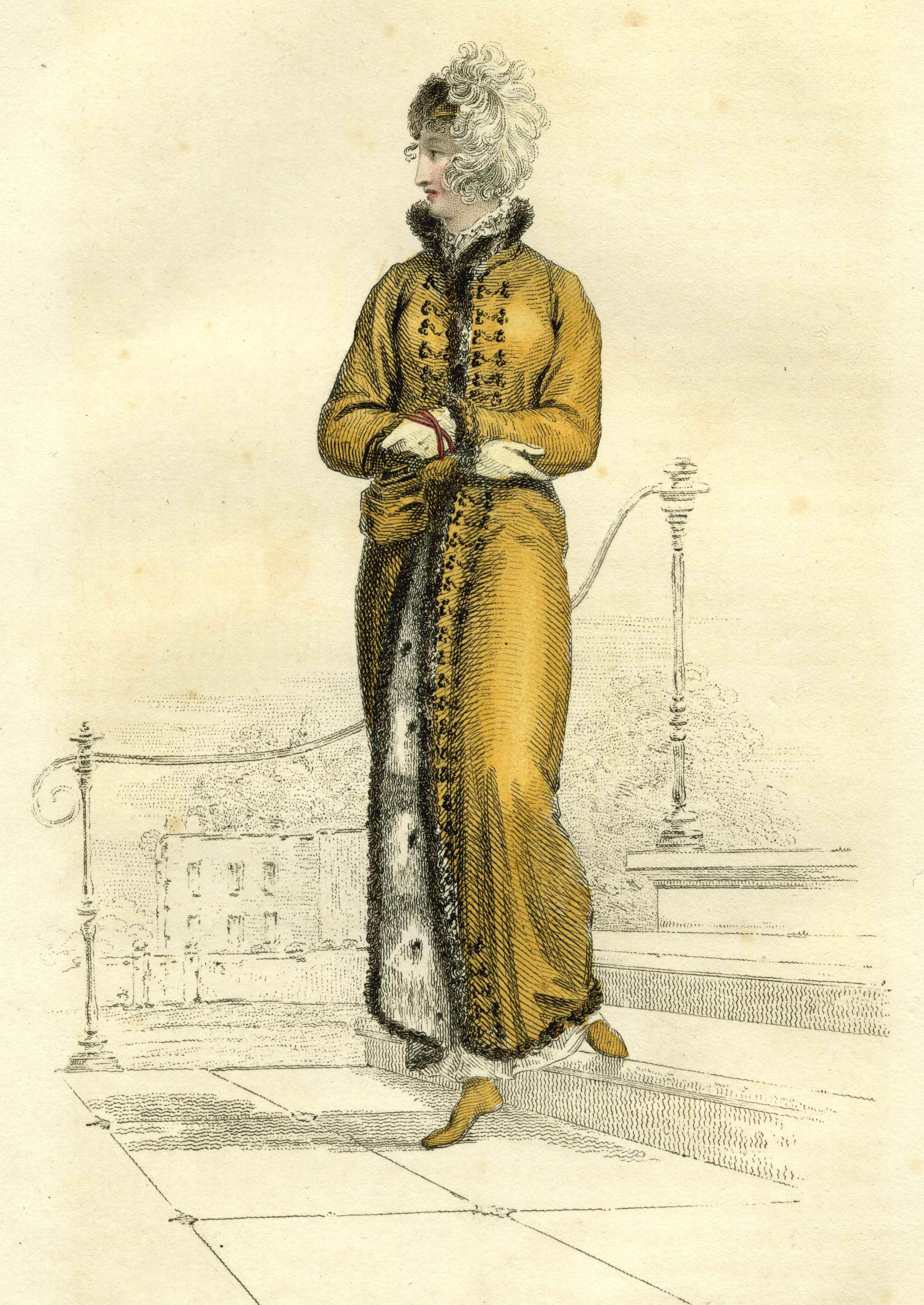
The Walking Dress is from a plate in Ackermann’s Repository for November 1811. It is just right for fashion-conscious Eliza, but probably rather smart for Jane!

5 Comments

Filed under London Parks, Shopping, Walks

Jane Austen Visits Trafalgar Square

Trafalgar Square is one o1-Scan0013cropf the most recognisable London landmarks, a major tourist destination redolent with history, yet it is a relatively modern feature, only about 175 years old.

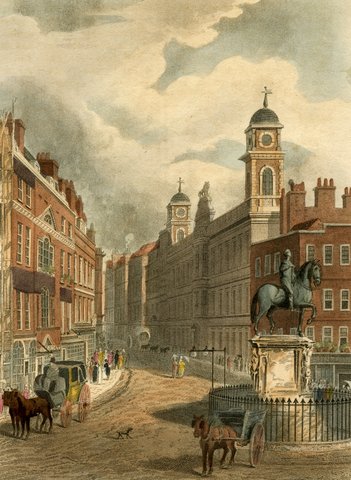
If Jane Austen were to find herself in Trafalgar Square today, I wondered, would she recognise anything at all? There are, in fact, only two landmarks she would be familiar with and one is the statue of Charles I which stands at the western end of the Strand looking down Whitehall to his place of execution. It was the work of Hubert Le Sueur in 1633 but was not erected here until 1675 after a perilous time buried to avoid being melted do1-Scan0005cropwn by the Parliamentarians. Eventually it was purchased by Charles II and the pedestal was designed by Christopher Wren.  You can see it here in this print from Ackermann’s Repository (1811) which looks eastward down the Strand.

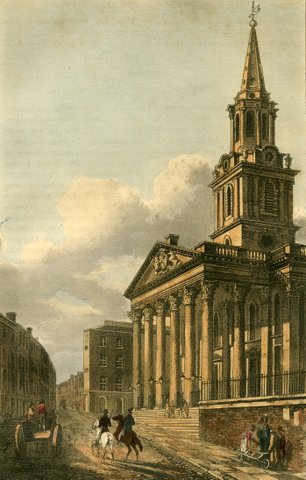
The other landmark she would be familiar with is the church of St Martin in the Fields (built 1722-6) which is clearly recognisable in another Ackermann print of 1815. If Jane stood on the steps, what would she have seen?

The road was called St Martin’s Lane, as it is now, but the buildings on the left of the picture formed a frontage to the vast St Martin’s Workhouse which covered the space now occupied by the National Portrait Gallery.

Directly in front of her would have been a jumble of small buildings and lanes and then the yard of the Queen’s Mews. The King’s Mews occupied the site of the National Gallery.

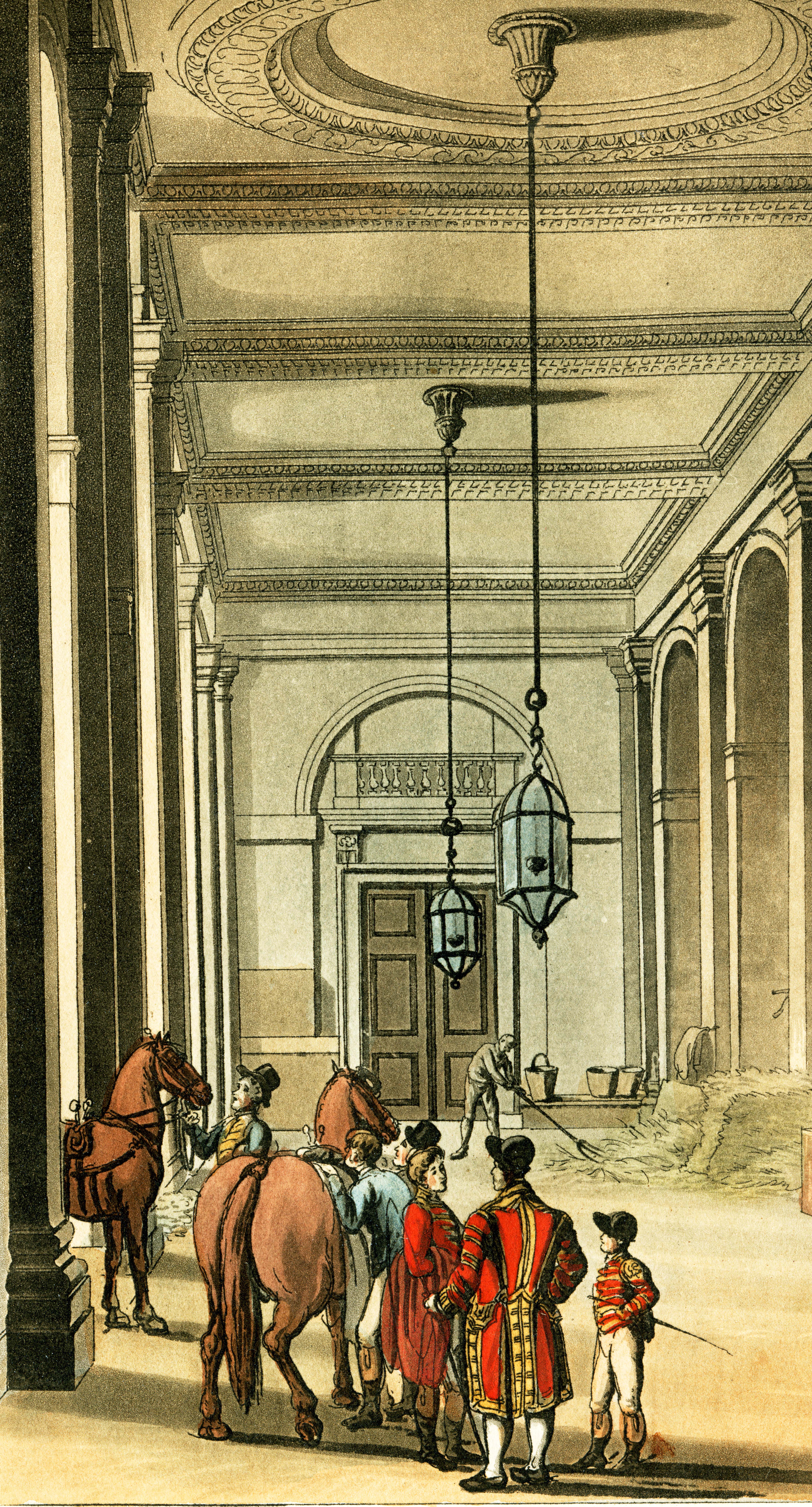
The royal mews for falcons, horses and carriages, along with lodgings for grooms,  and all the associated workers, had been here since the reign of Edward I . The name of nearby Haymarket is explained by the huge requirements for fodder and bedding. William Kent rebuilt the main stable block in 1732 and a detail from Ackermann’s Microcosm of London shows something that looks more like a palace for horses than a stables.Roayl mews

The land sloped to the south – the flatness of the square is due to terracing by Charles Barry in 1840 – and around the mews other buildings grew up like coral on a reef. Many of the buildings were let to private individuals for lodgings or shops, there was a menagerie, a store for public records and in the south-west corner, facing onto Cockspur Street, was the Phoenix fire engine, ready to gallop off to deal with fires – provided the buildings bore the mark of the phoenix showing that they had been insured with the company.

The most notable inn in the area was the Golden Cross, a major coaching establishment with a large yard. It lay under what is now South Africa House at the point where Strand meets Trafalgar Square.

Opposite was Northumberland House which can be seen in the print showing the Charles I statue. It was built in the 17th century for the Earl of Northampton before passing into the hands of the Percy family – the earls of Northumberland. Despite its antiquity and splendour it was demolished in 1874. The site now lies between Craven Street and Northumberland Avenue.

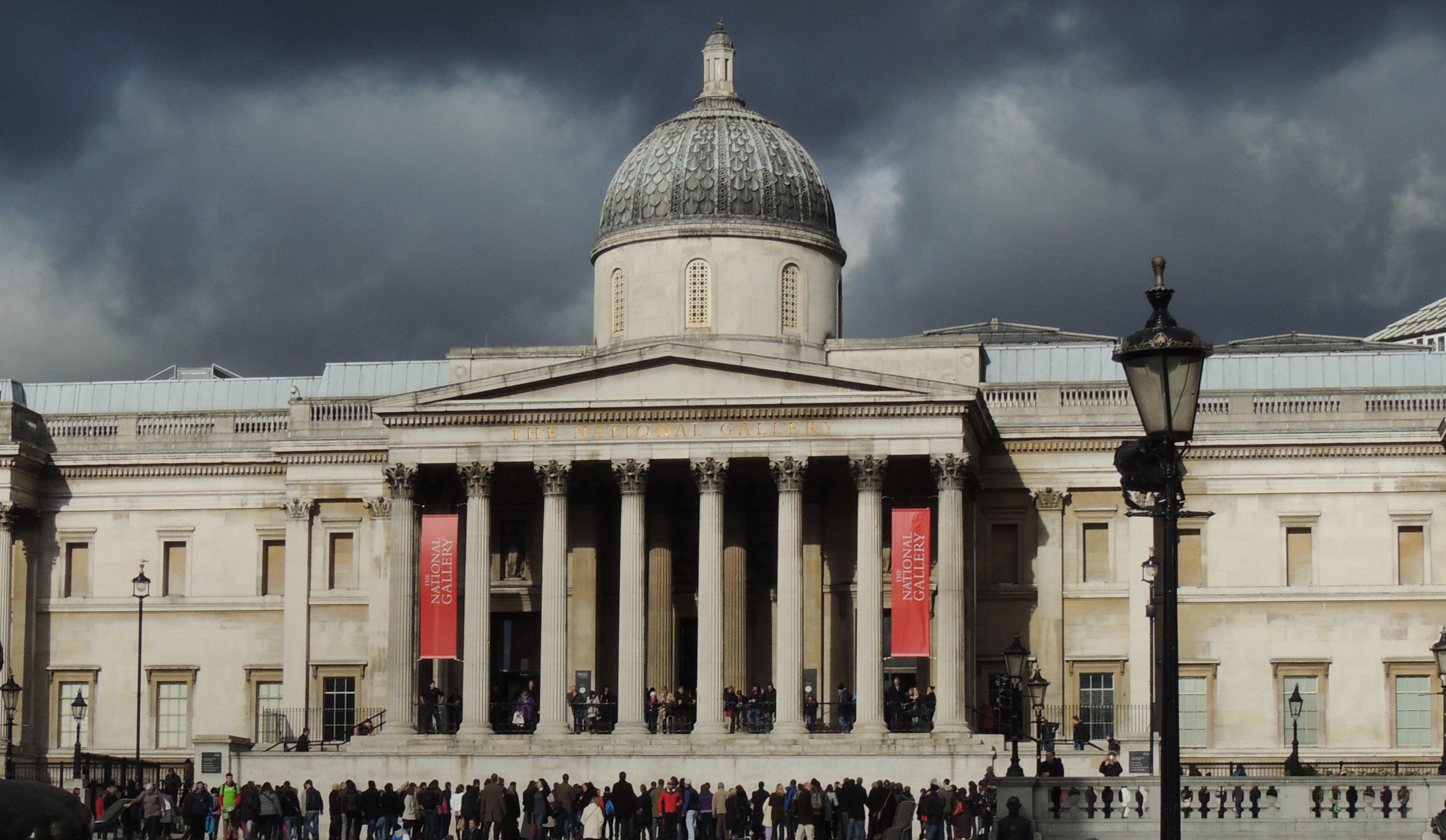
The area would have remained much as Jane Austen knew it until 1830 when demolition began to create John Nash’s Charing Cross Improvement Scheme. The National Gallery was built 1833-7 and includes one feature Jane must have seen in her lifetime but may not have recognised again – pillars from the recently-demolished Carlton House. Nelson’s Column was erected between 1839-43 and the statue added in 1843. The fountains and basins came next in 1845 (remodelled in 1939) and the four lions arrived in 1867.Nat Gallery

The National Gallery

So what would Jane have made of the changes? Probably she would be most upset by the disappearance of Spring Gardens just to the south of the square and now under Admiralty Arch. Once the home to picture galleries that she visited and charming tea shops and amusements, it now survives as a few yards of truncated street, a sad relic of Jane Austen’s London.

4 Comments

Filed under Buildings

Take the Number 23 Bus Into History

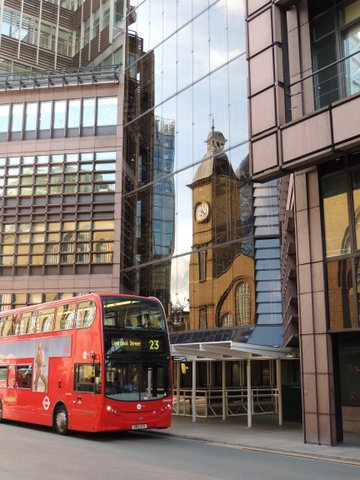
My favourite journey through London’s historic streets isn’t from  a tourist bus but from the front seat on top of the ordinary number 23 from Liverpool Street 1-DSCN2030station to Marble Arch. I thought you might like to share the ride with me. If you do decide to try this trip I would recommend starting from Liverpool Street station, perhaps after a morning exploring the fascinations of the Spitalfields area on the other side of the station. The picture on the left shows the bus with the yellow brick of the station reflected above it

The 23 comes every ten minutes, and starts at the station, so if you aren’t at the front of the queue and able to run upstairs to claim a front seat then it is worth waiting for the next one and being the first person on. You are right on the edge of the City of London here – Spitalfields was outside the Roman and medieval walls – and we are going to travel through every era of London’s history from the Romans to the present day.

The bus sets off down Old Broad Street (a Roman street), crosses London Wall (no prizes for guessing what that’s on the line of) and takes a slight bend to the left, just before Turnbull & Asser’s shop – if you look to the right you’ll see Austin Friars, the reminder of a large Augustinian monastery on the site. Now we turn right into Threadneedle Street (a reference to either the Company of Needlemakers or the Merchant Taylors) with the Royal Exchange on the left and the Bank of England  (1788) ahead on the right. The Royal Exchange is the Victorian rebuilding of the trade centre that has flourished here since Tudor times. This is a great place to get off on another day for exploration on foot – the George & Vulture tavern, the Monument, the Bank of England Museum and London Bridge are all close by.

Ahead to the left is Mansion House, official residence of the Lord Mayor of London (not to be confused with the Mayor of London!) since 1752. We pass Mansion House and turn down Queen Victoria Street, one of the later 19th century roads driven through the tangle of medieval streets, whose pattern is fossilised from before the Great Fire. On the left, deep underground, are the remains of the Roman Temple of Mithras, to the right you can catch a glimpse up Watling Street – a Roman road – of St Paul’s Cathedral.1-DSCN2032 (Photo left) We pass the church of St Mary Aldermary and turn left into Cannon Street (the name is a corruption of Candelwrithe Street, a reference to 12th century candlemakers) which leads into St Paul’s Churchyard. Ever since the Middle Ages this area around the cathedral was full of shops, especially book shops, book binders and printers, and that tradition survived even after the Great Fire when Sir Christopher Wren’s great new church rose from the ashes.  Jane Austen’s newly-orphaned father George was sent here to live with his uncle Stephen at his shop at “the sign of the Angel and Bible.” George later wrote that he was received “with neglect, if not with positive unkindness.”

If you look out to the left you will catch glimpses of the Thames and it is also fun to spot the street names that go back to the pre-Reformation Catholic past of the area – Ave Maria Lane, Godliman Street, Creed Lane, Pilgrim Street. The bus passes the cathedral (also the site of a Roman temple) and dives down Ludgate Hill towards the valley of the River Fleet. Look out on the right, just after St Martin’s church, for the Old Bailey, leading to the site of Newgate Prison, now under the Central Criminal Courts. The triangular area in front preserves the shape of the area where public hangings were carried out when they were transferred from Tyburn, the end of our journey today.  The area immediately to the south, being redeveloped at the moment, was the location of the Belle Sauvage inn, one of London’s oldest and a major coaching terminus. Look up Limeburner Lane immediately after this building site – the curve of the buildings reflect the shape of the walls of the Fleet prison. The picture below shows Ludgate Hill.1-DSCN2036

When you reach the bottom of Ludgate Hill you would originally have been on the Fleet Bridge crossing the open stream. Gradually it was covered over but it still runs beneath the street, as do all the ancient rivers of London. To your left New Bridge Street runs down to Blackfriar’s Bridge (1769), with the site of the Bridewell prison on its west side, and if you look up to the left you will see the “wedding cake” spire of St Bride’s church, reputedly the building that inspired a local pastrycook to create what became the modern wedding cake.

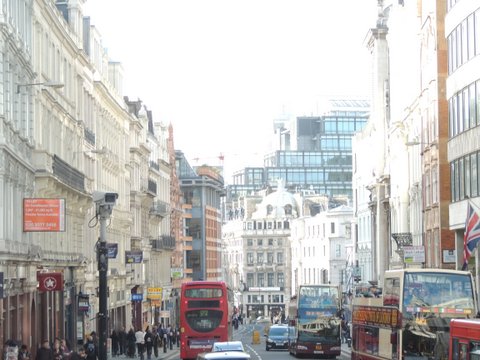
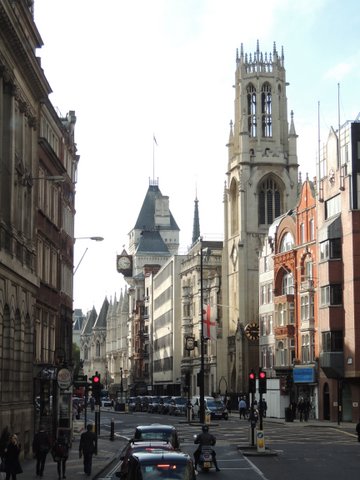
Now we are climbing out of the Fleet valley up Fleet Street, one of medieval London’s major thoroughfares and once centre of the publishing and newspaper industry. Look out on the right for Ye Olde Cheshire Cheese, a seventeenth and eighteenth century tavern frequented by Dr Johnson. Ahead on the right you can see the clock of St Dunstan’s church protruding out over the street (church tower in photo below with Royal Courts of Justice behind). Almost opposite this, at number 32, John Murray, Jane Austen’s publisher, had his offices. He was there until 1812 when he moved to fashionable Albemarle Street, Mayfair. Just past this look out for the  Inner Temple Gateway (1610), a survivor of the Great Fire which stopped just short of it.

In the middle of the road is the Temple Bar monument, with the City of London’s griffin roaring defiance at the City of Westminster which begins just the other side. Even the monarch, on state occasions, will stop at the Bar and be greeted by the Lord Mayor before proceeding. Temple Bar itself was moved in the 19th century as a traffic hazard and is now in St Paul’s churchyard.1-DSCN2041

The Royal Courts of Justice (1880s) loom on your right but keep a sharp look-out to the left as the bus passes to the left hand side of St Clement Dane’s church. Twining’s tea shop occupies a narrow site here with the oldest surviving shop front in London (1787). You can see two Chinese gentlemen (no Indian tea in those days) over the doorway. Jane Austen was often asked by her mother to buy tea here when she was in London, or to pay the bill. In 1814 she wrote to her sister, “I suppose my Mother recollects that she gave me no Money for paying Brecknell & Twining; & my funds will not supply enough.”

We are driving along Strand now, an 11th century street originally on the river bank  or strand. We pass St Mary le Strand (location in the 17th century of the first hackney carriage stand ) and come to Somerset House on the left. It dates back to the mid 16th century and was a royal house in the 17th century. By the time Jane Austen knew it the Royal Academy, the Royal Society, the Society of Antiquaries and the Navy Board all occupied wings.

We pass the turning down to Waterloo Bridge (1817) and continue along Strand. All the pre-Victorian buildings have gone now, but just past the Savoy Hotel on the left was the Cole Hole Tavern, home to the Wolf Club, founded by actor Edmund Kean, so he said, for men whose wives did not allow them to sing in the bath. Rudolph Ackermann’s famous Emporium was also close by. On the other side of the street, on the site of what is now the Strand Palace Hotel, was the Exeter Change with its many small shops and Pidock’s (later Polito’s) Menagerie. It was located, bizarely, above ground floor level and contained, amongst other live animals, a hippopotomus that Byron said resembled Lord Liverpool, and even an elephant.

Ahead of us now we can see Nelson’s Column, but before we reach Trafalgar Square we pass Charing Cross station on the left. In the forecourt is the Victorian replacement for one of the twelve Eleanor Crosses that stood on this site. 1-DSCN2042They were erected by King Edward I to mark the places where the funeral cortege of his wife – his chere reine (=Charing) – stopped in 1290. The original cross stood a little 1-DSCN2046further along where the statue of King Charles I is now, looking down Whitehall towards his place of execution. The Parliamentarians pulled down the old cross in 1647, but when Charles II was restored to the throne he had eight of the regicides hanged drawn and quartered on that spot.

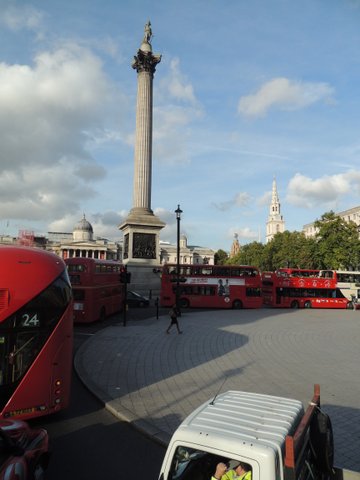
1-DSCN2044We skirt the southern edge of Trafalgar Square, developed in 1840 from the chaos of the royal mews, inns, barracks and shops. To our left we can look down Whitehall to Westminster Abbey and the Houses of Parliament and through Admiralty Arch down the Mall to Buckingham Palace. Across the Square is the National Gallery (some of the pillars were reused when the Prince Regent’s Carlton House was demolished) and St Martin in the Fields. The bus will leave the Square by Cockspur Street. Look out to your left for an unprepossessing alleyway, Warwick House Street. Once this terminated in Warwick House, home of the Regent’s daughter Princess Charlotte.  He tried to separate her from her mother, his estranged wife Caroline, but one day Charlotte sneaked out of the house and fled down to Cockspur Street where she took the first hackney carriage and fled to her mother.

We pass the foot of Haymarket – home to the market selling, amongst other things, hay and fodder for London’s thousands of horses. It was also notorious for its prostitutes – Haymarket Ware. The bus crosses Waterloo Place and turns up Regent Street. Behind us is the Duke of York’s Column, overlooking St James’s Park. All along that side of Pall Mall stretched Carlton House, once intended to be the culmination of Nash’s dramatic Regent’s Street redevelopment begun in 1816. But Carlton House was demolished in 1826 after the Regent became George IV and moved into Buckingham Palace. All Nash’s original buildings have been replaced as the requirements for modern shops have changed, but the scale and the style remains much as he envisaged.  The new street cut though London, separating the squalor of Soho to the east from the riches of fashionable Mayfair to the west.

1-DSCN2048At Piccadilly Circus – always an awkward shape – we continue up Regent Street to Oxford Circus and turn left into Oxford Street. In the late 18th and 19th centuries it already had a name as a major shopping destination and, as Ackermann’s Repository had it, was “allowed to be one of the finest streets in Europe.” Only one feature remains that is older than the late 19th century and that is one pillar of the entrance to Stratford Place and, as I write, it is shrouded in a protective box while works on Bond Street tube station are carried out.

But one very ancient feature of Oxford Street can still be experienced from our position on top at the front of the bus, and that is the valley of Tyburn Brook which crossed Oxford Street on its way south. On foot you hardly notice it, on the bus it is a definite dip, just where the entrance to Bond Street tube station is. We climb up the other side and continue along to Marble Arch where I suggest leaving the bus. This is the location of the Tyburn gallows, notorious place of public execution, and also of Tyburn turnpike gates marking one of the main entrances into London from the west. From here you can stroll south-east into Mayfair or into Hyde Park – the very edge of Regency London.

Tyburn turnpike On the left is a print from Ackermann’s Repository showing the view eastwards along Oxford Street from the Tyburn turnpike gates. Hyde Park is to the right.


Happy exploring!

16 Comments

Filed under Buildings, Transport and travel

A Stroll In St James’s Park

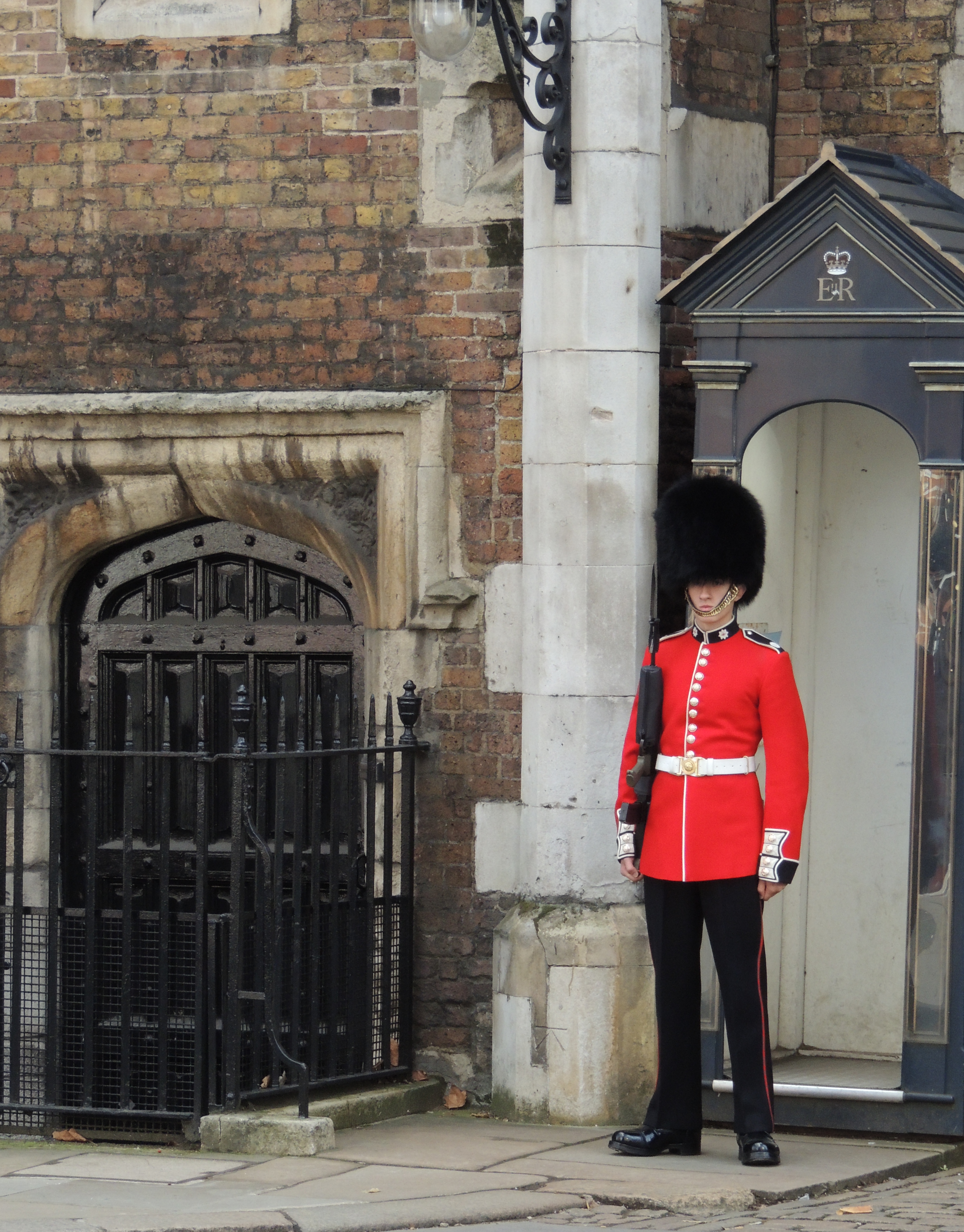
DSCN2018 soldierThe sun is shining – just the afternoon for a stroll in St James’s Park. The other day I started off at St James’s Palace where the scarlet-coated guardsmen were fending off the advances of crowds of camera-wielding tourists and then walked down narrow Marlborough Road between the Palace and Marlborough House. This access to the park did not exist until the 1850s and effectively cuts off Marlborough House and the Queen’s Chapel on one side from the Palace on the other.

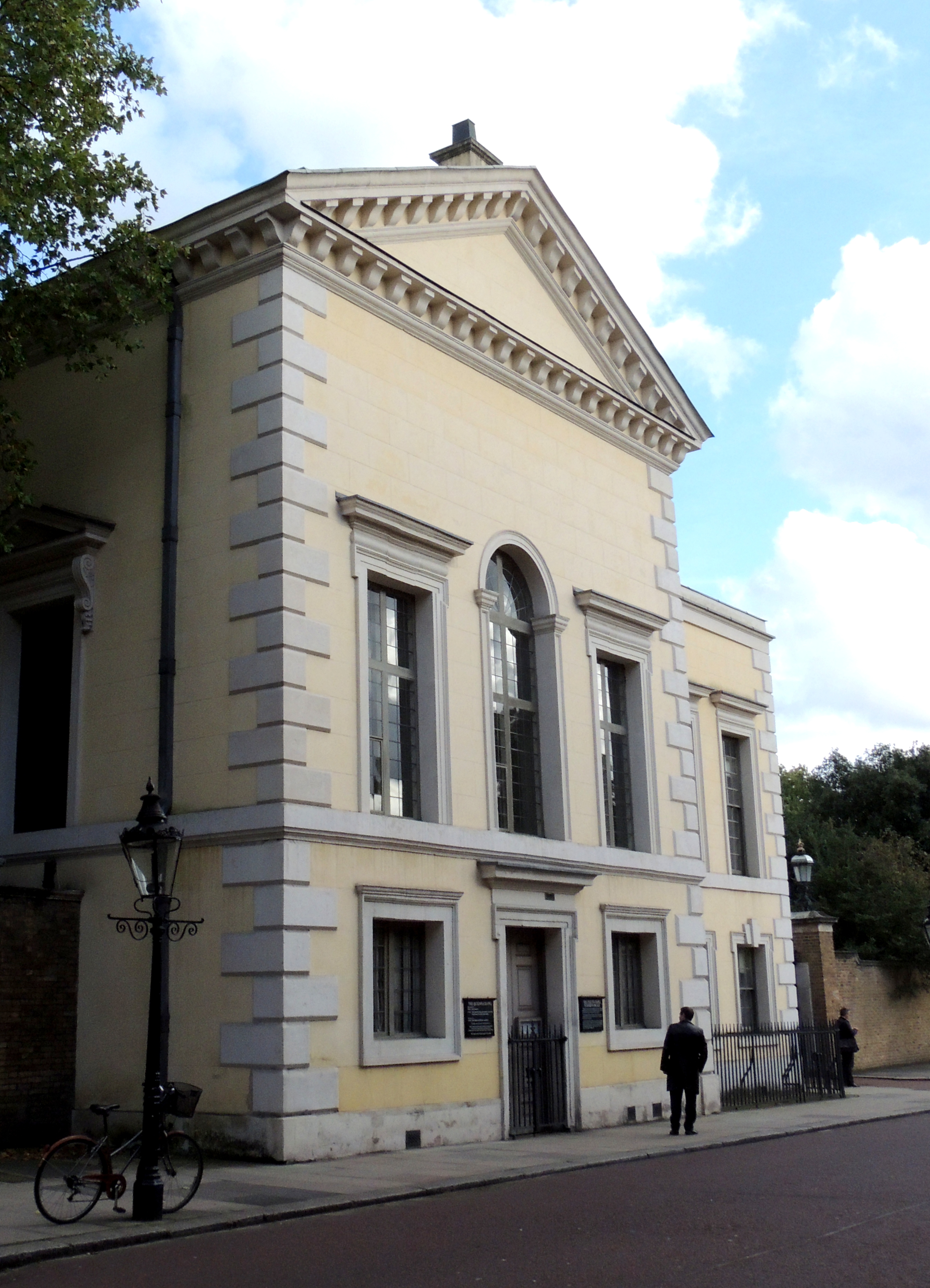
The Queen’s Chapel, although a Chapel Royal is not The Chapel Royal which is within the Palace and which is where Prince George was christened recently. The Queen’s Chapel was designed by Inigo Jones in the 1620s for Queen Henrietta Maria, the Roman Catholic wife of Charles I, although since the 1690s it has been used as a Protestant place of worship.DSCN2019

Crossing the Mall, with its view of BuckinghamPalace to the right, I dodged the Royal Parks gardeners getting ready for the post-picnic lunch clear-up in the Park and entered through the gorgeous wrought iron gates.

St James’s Park is the oldest royal park and dates back to Tudor times. Elizabeth I hunted deer here but by the time of James I there was a physic garden, a menagerie (including crocodiles) and an aviary, which is recalled in the name of Birdcage Walk on the northern edge of the park.

Charles II had considerable work done to create the central canal by joining up several ponds and marshy areas, planting trees and stocking it with deer. It is from this date that the pall mall alley was laid out. The Russian ambassador presented Charles with a pair of pelicans in 1664 and there are still pelicans amongst the exotic birds on the lake today. Occasionally one creates havoc by pouncing on a passing pigeon and swallowing it whole.

At the eastern end of the park was SpringGardens, a pleasure garden dating from the 17th century. All that remains of it now are two stubs of roads cut across by the Mall and with Admiralty Arch sitting in the middle. By Jane Austen’s day they were notable for various indoor places of entertainment, art galleries and so on. The Picture of London (1807) recommends Wigley’s Royal Promenade rooms here. They were open 10am to 10pm, admission one shilling. The visitor could ‘meet’ two invisible girls who spoke or sang on demand, or listen to a performance on the panharmonium, a mechanical orchestra.DSCN0397

The Society of Painters In Water Colours exhibited at Spring Gardens. On 24 May 1813 Jane wrote of a visit with her brother Henry and reported that she was well-pleased with what she saw, especially, ‘with a small portrait of Mrs Bingley…exactly herself, size, shaped face, features & sweetness; there never was a greater likeness. She is dressed in a white gown, with green ornaments, which convinces me of what I had always supposed, that green was a favourite colour with her.’ Deirdre le Faye identifies this picture as the charming Portrait of a Lady by J F-M Huet-Villiers.

However pleasant it was in broad daylight, Miss Austen would have been cautious about walking in the park after dusk without a male escort for it was a notorious haunt of prostitutes of both sexes. Even though the park was locked at night it was thought that almost 7,000 keys were in  private possession, so it might just as well have been open. James Boswell records various encounters with prostitutes there but it was also a dangerous place for a man by himself, for gangs of blackmailers operated under cover of its shrubberies. One man, his breeches undone, would leap out at the victim, crying that he had been attacked, while his confederates threatened to fetch the watch and swear they had witnessed an indecent assault. At a time when homosexual acts were criminalised and could lead to the gallows, many men paid up rather than risk not being believed.

The Globe newspaper for January 7th 1809 reports, We were in hopes that the conviction of Cannon and his companion Wilkinson, for extorting money from Mr Butterworth the silversmith, in St James’s Park, would have put a stop to the depredations of those execrable wretches who are making a miserable existence by the diabolical practices of threatening respectable persons with a most detestable crime. But they regret to have to report yet another instance had just come to light.

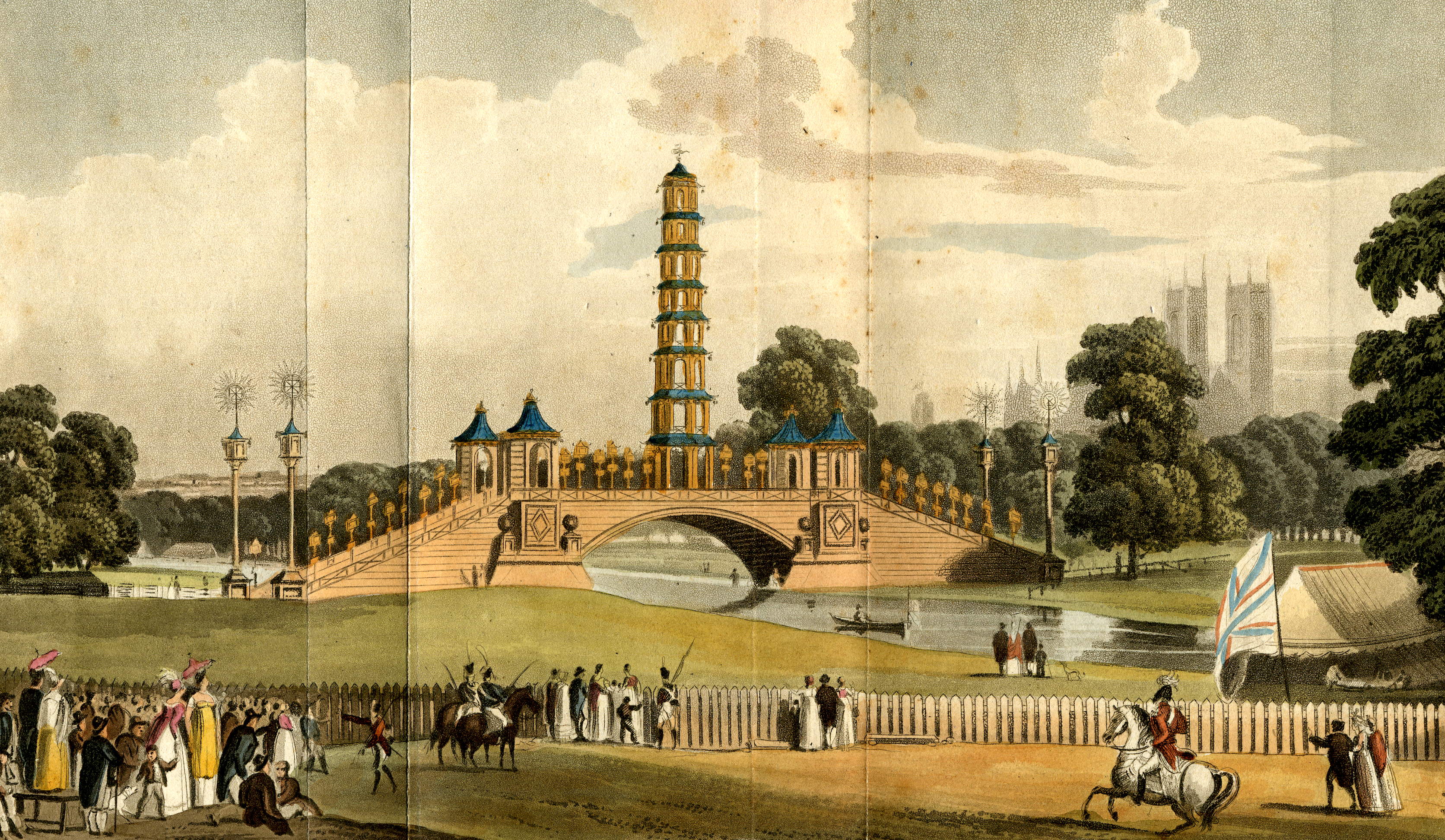
In August 1814 the park was the site of a series of extravagant celebrations: first for the centenary of Hanoverian rule, then the anniversary of the Battle of the Nile and finally the peace celebrations following Napoleon’s exile to Elba. The architect Nash designed an exotic seven-storey pagoda, which unfortunately caught fire during a firework display. Ironically this was organised by Congreve, the inventor of the military rockets which went on to cause almost as much alarm and confusion amongst British troops as amongst the enemy at the Battle of Quatre Bras the following year. There was also a bridge, which lasted rather longer, until 1825, although in a half-burnt condition and made perilous by the remains of the hooks that had held the Catherine wheels.St J Park0001

Festivities were also held on the Serpentine in Hyde Park, which had a miniature navy afloat on it, and at the temple of Concord in Green Park, both events open freely to the public. The organisers at St James’s Park, however, decided to charge half a guinea and erected barriers and toll gates. Despite the charge the event was hugely popular and the gates had to be closed. Despite the crowds none of the public were killed during the fire, although two unfortunate workmen died.

After the event the park was left in a dreadful state and it was not until 1827 that the government found the money to renovate it. Nash was chosen for the job and he remodelled the canal into a sinuous lake, added a duck island, a new bridge, widened the Mall and replanted the trees, shrubberies and flowerbeds.

The park now is much as Nash left it, although the bridge is a replacement and the view includes the London Eye. FroStrand0002m the modern bridge there is an excellent view of DSCN0389-001Buckingham Palace. Jane Austen knew it as the Queen’s House and it only took on its present appearance when George IV began its enlargement to fit his concept of a fitting palace. The black and white print of skaters shows the Queen’s House with the park before Nash’s remodelling.

Often I will walk from the bridge to Horse Guards Parade, this time I went down to Bird Cage Walk and along to Westminster Abbey to catch a bus up Whitehall to Trafalgar Square – I’ll be talking about exploring London by bus in my next post.

6 Comments

Filed under Accidents & emergencies, London Parks

The Unsanitary Business of Sanitation – or, Would You Swim in This River?

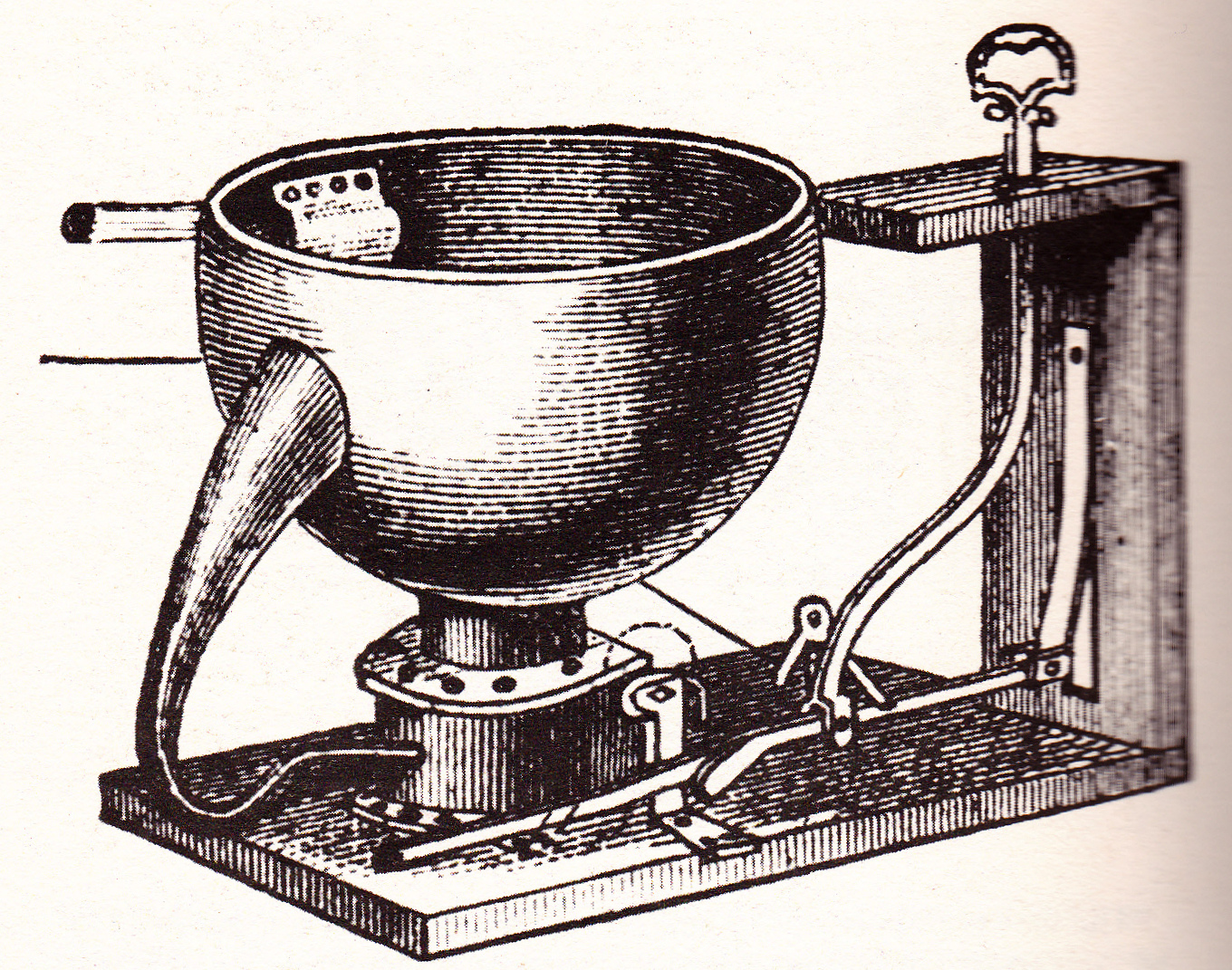
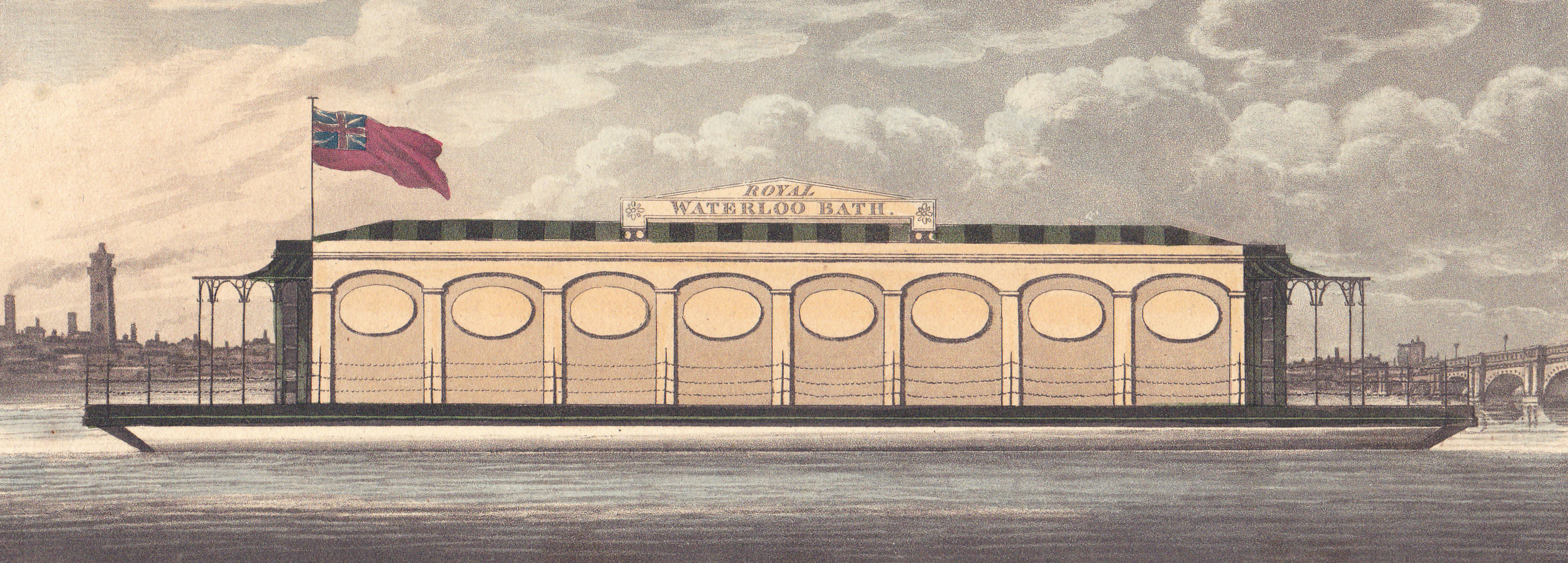
What, you might ask, has a diagram of Joseph Bramah’s flushing Valve Closet of 1778 got to do with a rather strange boat on the Thames? Well, it is all to do with unexpected consequences.

Someone asked me the other day if Henry Austen’s London houses had flushing water closets and if, therefore, Jane Austen would have been familiar with them. I have no evidence for Henry’s loos, although his wife Eliza was a bit of a social climber so she may well have wanted one installed.

But Jane would surely have come across them, for they were becoming common in upper class homes from the 1780s, although they certainly were not cheap. The enterprising Joseph Bramah opened a showroom at 124, Piccadilly in the 1780s and charged 8 guineas for his ‘patent apparatus’. On top of that one had to buy valves, a cistern and pipework which could bring the cost up to £11 or more. Even so, by 1797 he claimed to have sold over 6,000 closets. He had rivals of course – seven more patents for flushing water closets were taken out by 1800.

ImageThe illustration shows the Brahmah water closet out of its case, which would probably be made of mahogany, with a comfortable seat.

Even some hotels had water closets. The Pulteney Hotel, on the corner of Piccadilly and Bolton Street, was one of the best hotels of the day and when the Russian Grand Duchess Catherine stayed there she reported with approval on, ‘certains arrangements de commodité.’

We shudder at the thought of living without a flushing toilet but those early ones had  disadvantages that the humble privy with its pail, kept reasonably odour-free with the regular addition of dry soil or ashes and emptied regularly, did not. Of course, the horrors of unemptied cesspits, often actually in the cellars of houses and seeping into wells and watercourses, make the various problems with flushing water closets look trivial, but even so, the early models were difficult to clean and had very poor systems for stopping gasses coming back into the house – the u-bend had yet to appear.

But these were all technical issues that were overcome with improvements in design as the 19th century progressed. Much more serious was the effect of increasing numbers of water closets all flushing into drainage systems that were only intended to carry rainwater away to the Thames – and that is where this strange boat comes in. The Thames in the 18th and early 19th century might have had its problems, especially around the outlets of drains serving butchery areas, tanneries or the big markets, but then as now it was tidal and clean enough for a healthy population of fish, including the occasional salmon. And it was clean enough to enjoy boating trips on and to swim in – which is what the boat was for.

ImageThis print is from Ackermann’s Repository for June 1819 and shows the Royal Waterloo Bath. “This very elegant floating bath is stationed near the north end of the Waterloo-bridge, and has recently been built and completed…at very considerable expense. It contains a plunging-bath, 24 feet long by 8 feet wide, and two private baths, 10 feet long by 8 feet wide. The depth may be regulated at pleasure by machinery, which raises and depresses the bottom as required… To each of the baths are attached small dressing-rooms, commodiously fitted up, with proper persons to attend upon visitors. These baths are so constructed, that the water, being a running stream, is changed every two minutes. The terms of bathing…are extremely moderate… In the plunging-bath: one shilling; For the season: £1 11 shilings and 6 pence; In the private baths: 1 shilling and six pence; For the season: 2 guineas”

The article goes on to compare London’s paucity of bathing establishments with Paris’s numerous vapour, Turkish, Chinese and Tuscan baths. “Yet …we have a noble river filled with the purest and most wholesome waters in the world. The want of baths in London has led to the incommodious and indecorous practice of public exposure in the Thames.” By which I assume they mean nude bathing. Apparently, by letting the bottom of the boat down to increase the waterflow through it, glimpses of the swimmers – all men and all nude, of course – could be glimpsed from passing boats. It became a titilating extra ‘sight’ for the ladies taking pleasure boats on the Thames!

The proprietors and their customers must have felt the water was clean enough for swimming, although I doubt we would fancy a dip – what with all the drains running into it and the fast flow being restricted as more bridges were built across the river. But it was of perfect purity compared with what the river became once the fashion for water closets caught on in middle class homes.

Privies would be cleaned domestically, and the contents tipped onto the vegetable garden, or emptied by the night-soil men who carted the contents out to the numerous market gardens that surrounded London. The water closets, in contrast, simply flushed their contents into the same drains that carried the rainwater to the Thames, pouring thousands of gallons of untreated sewage straight into the river. The private problem of keeping the home free from waste was simply transferred to the public arena and became everybody’s problem – especially as much domestic drinking water came from the Thames via  huge waterworks such as the one at London Bridge which took 4 million gallons a day to supply its 10,000 customers.

The situation got rapidly worse, until the unusually hot summer of 1858 when the stench from the polluted river was so appalling that people fainted, cholera was rife and Parliament was closed. Finally there was the will to get something done and eventually Joseph Bazalgette’s amazing sewerage system was installed and the Thames could begin its long journey back to cleanliness.

4 Comments

Filed under Medicine & health, Science & technology

Would Darcy Have Ridden a Bicycle?

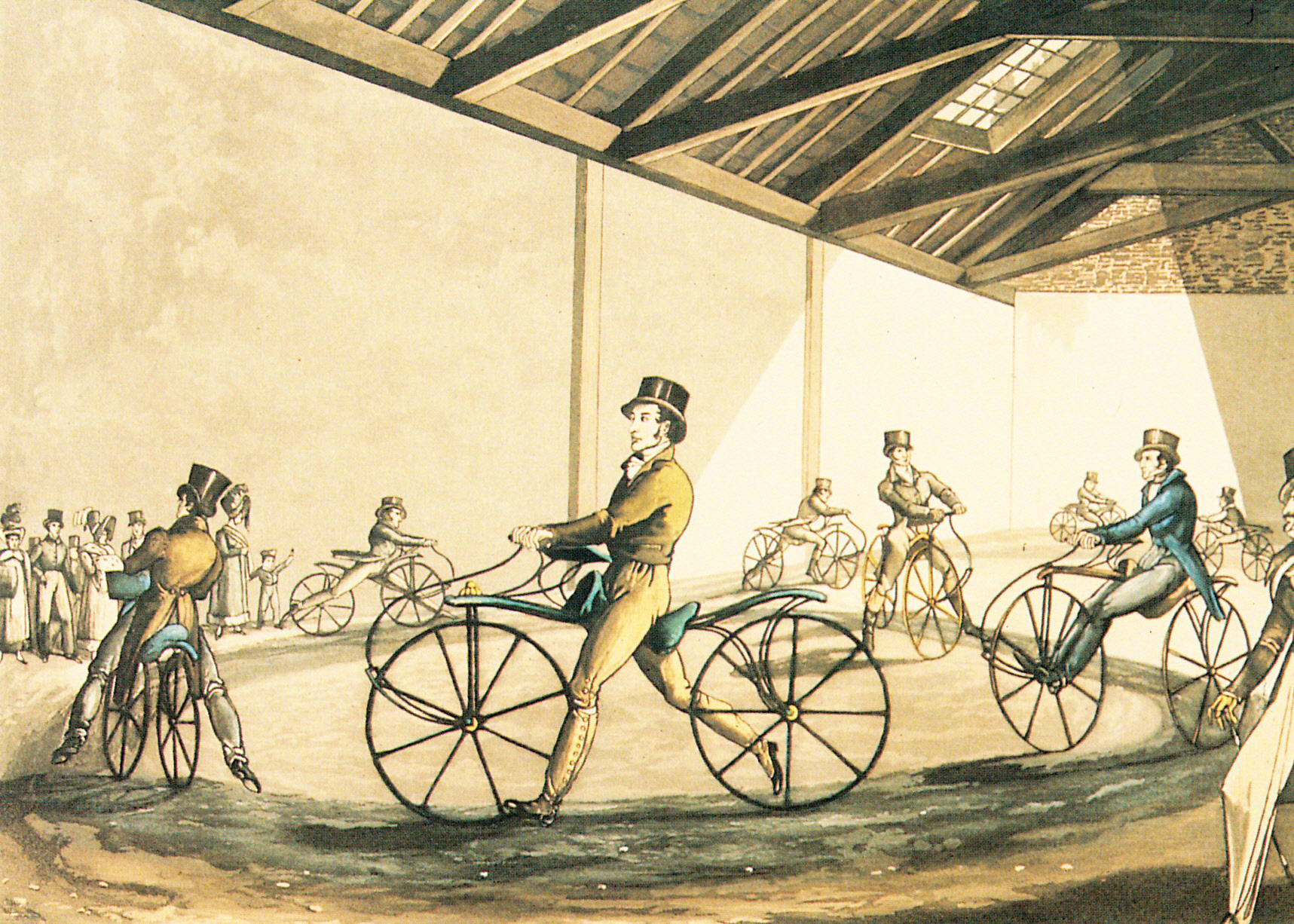
Image

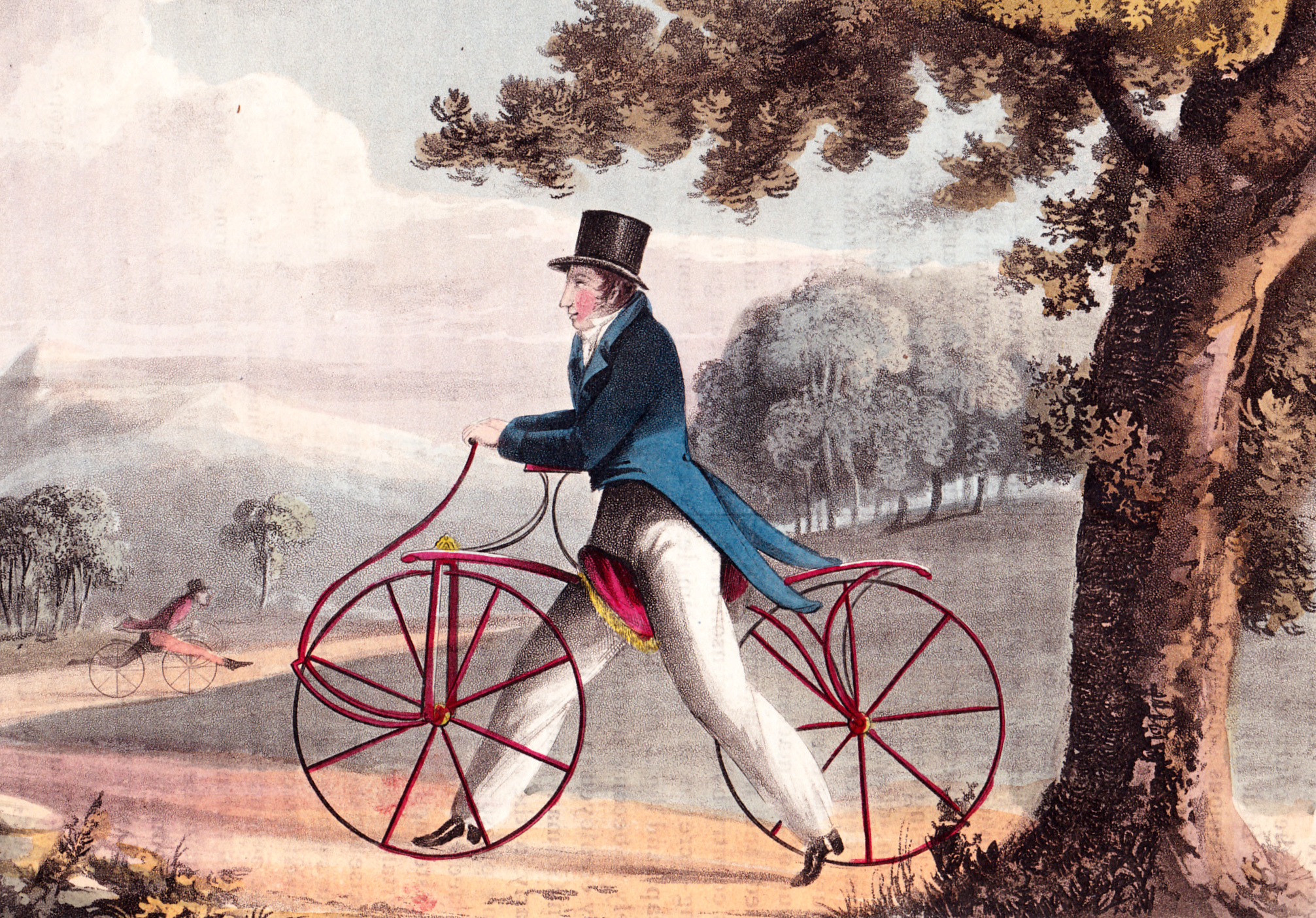
The combination of this fantastic print and the discussion in the UK press recently about encouraging cycling and making it safer prompted this post. Unfortunately the “Pedestrian Hobby Horse” arrived in England soon after Jane Austen’s death – I’ve love to know if she’d have ever given one of her characters a ride. I can imagine Lydia Bennett, skirts flying, shrieking with laughter!

The print, from Ackermann’s Repository (1819) is entitled Pedestrian Hobbyhorse and the text says it was invented by Baron von Drais, “a gentleman at the court of the Grand Duke of Baden.” The baron apparently invented a horseless carriage powered by two servants but it proved heavy and expensive so was abandoned, much to the relief of the unfortunate servants, I imagine!

 The baron went on to invent the hobbyhorse which he used for getting around large parks and gardens and it was introduced to London by Denis Johnson, a coach maker of 75, Long Acre. The Repository considered it simple, cheap and useful, especially in the country and in gentlemen’s pleasure grounds and parks. Medical men in France were already recommending it as a form of exercise.

 “The swiftness with which a person, well practised, can travel, is almost beyond belief: eight, nine, and even ten miles may be passed over within the hour, on good and level ground…the principle of this invention is taken from the art of skating.”

 Image

The rider sat astride a padded seat and rested his forearms on a padded board while steering with a small handle right at the front. Although it appears incredibly simple to us, used to bicycles and motorbikes, it was apparently necessary to take lessons and the  print above shows one of Mr Johnson’s Hobbyhorse Riding Schools. He opened one at 377, Strand and another at 40, Brewer Street, Golden Square in 1819. As you can see from the dress of the riders, this was a sport for well-to-do gentlemen. A hobbyhorse cost between £8-£10.

In Georgette Heyer’s novel Frederica the engaging youth Jessamy Merriville who cannot afford to hire a horse tries out the cheaper option of  a hobbyhorse, which Heyer calls a Pedestrian Curricle.

After a few lessons he hires one and,“Boy enough to want to startle his family with his unsuspected prowess, Jessamy had said nothing to them about his new hobby. Once he had perfected his balance, and could feel himself to be master of the Pedestrian Curricle, he meant to ride up to the door, and call his sisters out to watch his skill…he could not resist the temptation to coast down the long slope of Piccadilly, both feet daringly lifted from the flagway. This feat attracted a great deal of attention, some of it admiring some of it scandalised….”

Poor Jessamy finds himself in the midst of a dog fight and “…trying to control his balance, charged into a man mending chairs, lost control of his machine, and was flung on to the cobbled highway almost under the hooves of a high-stepping pair harnessed to a landaulet.”

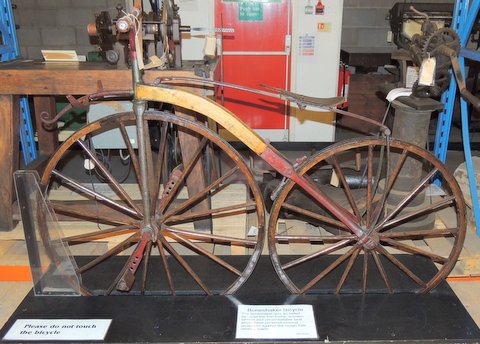
The hobbyhorse proved impractical for any surface other than very well-maintained paths and so dropped out of fashion by the early 1820s. Two-wheeled progression lapsed until the invention of a device in 1865 called a velocipde which had pedals which worked directly on the front wheel. It became known as the Boneshaker and was almost entirely made of wood, with metal tyres and no springs – hence the name.

 Image

This photograph shows one in the Birmingham Museum’s Store.

Which of Jane Austen’s characters would you like to see on a Pedestrian Hobbyhorse? Would it be below Mr Darcy’s dignity? Perhaps Mr Collins would think it an improving way to take exercise…

10 Comments

August 15, 2013 · 1:41 pm

Jane Austen, Stays and Elegant Fig Leaves

At this time of year, when we are all thinking about shedding as much clothing as possible in the heat, I think with even more sympathy about the layers of clothing that women were encumbered with in earlier years – and corsets, or stays as they were more usually known in the early 19th century in particular.

Stays could be made of leather, which was then not washed (a fairly dreadful thought!) or a substantial fabric, which at least could be laundered. Stays normally laced at the back but, before the invention of mass-produced metal eyelets, they could not be pulled as tight as Victorian stays were because the fabric would rip. Their shape and their constricting powers therefore depended on their stiffening of whalebone or thin cane. They pushed the breasts up rather than cupping them and were normally fitted with shoulder straps.

ImageThe print by Gillray is plate 1 from a series called The Progress of the Toilet, dated 1810 and shows a lady being laced into long stays. She is wearing fashionable clocked stockings and, rather daringly, drawers, caught in tight at the knee. Because they resembled masculine costume, drawers were considered very fast.

Jane Austen’s letters contain virtually nothing on the subject of underwear, but she did have very definite views on the subject of stays. In September 1813 she was able to pass on the latest intelligence from London on the subject  to her sister Cassandra. ‘I learnt from Mrs Tickar’s young Lady, to my high amusement, that the stays now are not made to force the Bosom up at all; that was a very unbecoming, unnatural fashion.’

Stays could be made to measure, but were also available off the peg and Mrs Clark, whose shop was at no.56, St James’s Street, advertised in 1807,  ‘…a large assortment of corsets of every size, and superior make, so that ladies may immediately suit themselves without the inconvenience of being measured.’

Ladies living out of town could order stays by mail order as this advertisement from the Morning Chronicle of November 1 1810 shows.

HER MAJESTY’S STAY-MAKER. – MRS. HARMAN No.18 New Bond-street, London, has the honour most respectfully to announce to those Ladies who attend to the elegance of the female figure, that she has now ready for their inspection a very large and fashionable assortment of her much-admired LONG and SHORT STAYS. The great number of Ladies of Rank and Fashion, who honour Mrs. Harman with wearing her Stays, is a most convincing proof of their pleasantness, utility, and superiority to every other Stay. Mrs. Harman’s Stays are finished with that novelty and taste which has procured for her the countenance of Royalty, and the patronage of the first Nobility. Ladies living in the country, by sending a letter (post paid), will have proper directions sent them to send their own measure, so as to insure their fitting.

Newspapers were not constrained by notions of modesty when commenting on ladies’ fashions and undergarments, or their appearance in them as this piece from The Times in 1799 on the flimsiness of fashionable gowns and the fashion for false bosoms shows:

“If the present fashion of nudity continues its career, the Milliners must give way to the carvers, and the most elegant fig-leaves will be all the mode. The fashion of false bosoms has at least this utility, that it compels our fashionable fair to wear something.”

And The Statesman on 2 September 1808 broke into verse to criticise modern fashions compared to those of the days of Queen Anne, managing to incorporate a furniture pun about chests and drawers in the process!

 When panoplied in whalebone stays,

Such as were worn in Anna’s days,

Our fair kept Virtue in their breasts,

And lock’d her safely – in their chests.

 But, since their chests are open’d, how,

And where, do they keep Virtue now?

Is she protected by their lawyers?

Or do they keep her – in their drawers?

Historical re-enactors have told me that they find their stays are supportive, and help prevent backache when they are working in kitchens, so perhaps there was something to be said for stays. What do you think?


6 Comments

Filed under Fashions, Royalty, Shopping