St James’s Palace Part 2 – George III and the Regency

The Palace in 1809

The Palace in 1809

George III moved to St James’s Palace on his accession in 1760 and was married there the next year.  The ramshackle old palace did not suit the couple and in 1762, the year that Prince George (later to be Prince Regent and George IV) was born, George bought Buckingham House on the other side of St James’s Park.  The newly-weds moved there, renamed it the Queen’s House, and used St James’s Palace for state occasions, which included the births of the royal children.

The King held Levées in the afternoon on Wednesdays and Fridays, and on Mondays when Parliament was sitting. These were men-only occasions and formal Court dress or, for officers, dress uniform was worn. Male members of the royal family, ministers and ambassadors were expected to attend and MPs who supported the government of the day often came too. They would line the walls of the Privy Chamber (for those of the highest office) and the Presence Chamber and the King would circulate around the room before retiring to the King’s Closet and holding a Privy Council.
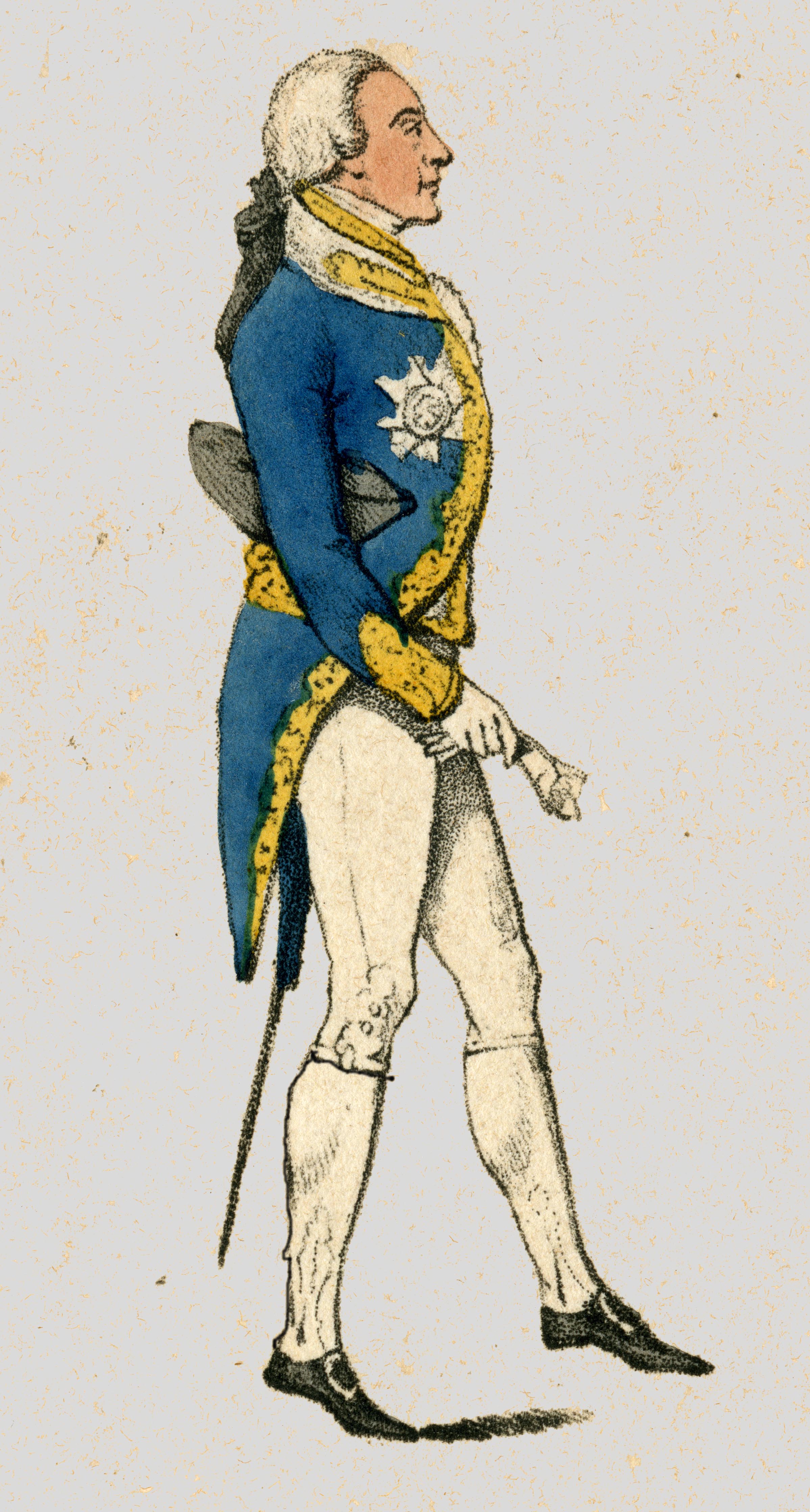
Court dress for men

Court dress for men

Drawing Rooms were held on Thursday afternoons and on Sundays after the morning service at the Chapel Royal. (Today this is the only part of the palace open to the public. Services are at 8.30 am and 11.30am, October to Good Friday.) Men and women were admitted: this was the opportunity for newcomers to Society to be presented and courtiers intending to marry would present their spouses. Drawing Rooms were also the occasion when new ambassadors were received, newly appointed senior officers and ministers would come to ‘kiss hands’ and decorations would be bestowed.Full court dress was worn, which for women meant vast hooped skirts, even when the fashion was for a high waistline, creating a ludicrous silhouette. When George VI came to the throne he allowed hoops to be dispensed with, but ostrich plumes continued to be compulsory. Jane Austen’s cousin, Eliza de Feuillide, attended a Drawing Room in her youth, before she was widowed and remarried Jane’s brother Henry. She complained bitterly about the great weight of the gown.

After the formal business was over the royals would work around the room speaking to the guests and later Queen Victoria recalled learning the art of ‘cercléing’.

After 1788, with the onset of the King’s illness, Levées and Drawing Rooms were held only intermittently at St James. In 1810 John Wallis noted, ‘…since [George III’s] last illness, this palace is almost deserted; a levee only is holden here now and then when the king comes from Windsor, for that purpose. Windsor is now the favourite residence.’ From then on one of the royal princes would preside or, for Drawing Rooms, the Queen.

On the King’s 72nd birthday in 1810 there were great celebrations on June 4th, featured in detail in all the papers. The Morning Chronicle reports that the royal family visited The Queen’s Palace in the morning but the King remained there in the afternoon while the Queen and her family processed to St James’s Palace. They were not only without the King, but also the Duke of Cumberland who was recovering from a murderous sword attack by his valet which left him badly cut around the head (or, as gossip persisted in stating, he had murdered the valet and had been wounded during the fight!) and Princess Amelia who had been in poor health for some time. The paper hints that many ladies had held off from ordering court dress in case they needed to change it for mourning. Princess Elizabeth was in tears throughout, although whether from worry about her siblings, or distress that her father could not attend, is not clear.

The Morning Chronicle devoted two full pages to describing the Drawing Room, the balls and illuminations in the evening and five and a half columns to details of the gowns worn by the ladies.

Although their parents were living at the Queen’s House (or perhaps because of that!) the royal dukes moved into apartments at St James’s Palace with, of course, the exception of the Prince Regent who had Carlton House built for himself. When he succeeded to the throne he redeveloped The Queen’s House to become Buckingham Palace, with State Apartments that removed the necessity to use St James’s. The old palace became the home of other royals, retired courtiers and  palace officials, a role it continues to fulfil as London home to the late Queen Mother, and the Duke and Duchess of Cambridge.

Here is part of the detailed description of the gown worn by every lady attending the Drawing Room for the King’s Birthday in 1810. (Morning Chronicle June 5th)

3 Comments

Filed under Buildings, Royalty

St James’s Palace – Part One

One building we can be certain would be completely recognisable to Jane Austen in today’s London is St James’s Palace which lies at the bottom of St James’s Street with Green Park to the north-west and St James’s Park to the south.

DSCN0073

It had an unglamorous beginning for a royal palace – as a leper hospital. In the 11th century the parish of St Margaret’s, Westminster (whose church sits in the grounds of Westminster Abbey) was given land for the establishment of a hospital for fourteen leprous women. The hospital was dedicated to St James the Less and was remote from habitation in a swampy area, regularly flooded by a branch of Tyburn Brook. What is now Piccadilly was a track on a ridge leading from the City of London to the west, but it was completely without habitation.

Successive kings and queens granted the hospital money until 1348 when the Black Death seems to have killed off the inhabitants and the buildings were leased out to various occupiers until 1439 when Henry VI granted the hospital and its lands to Eton College. In 1531 Henry VIII took it from the College in a swap with some royal lands elsewhere.

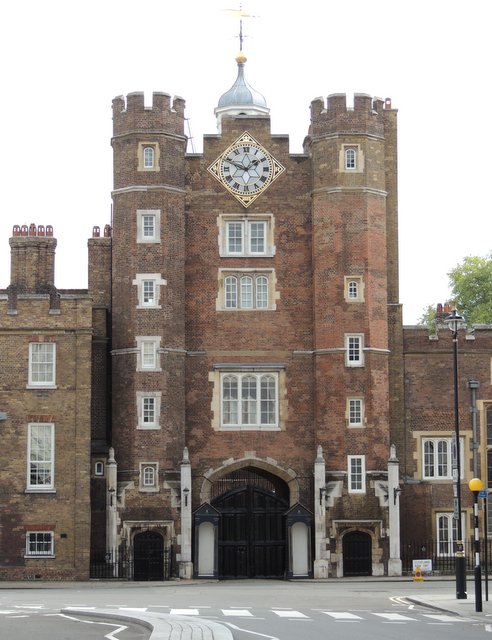
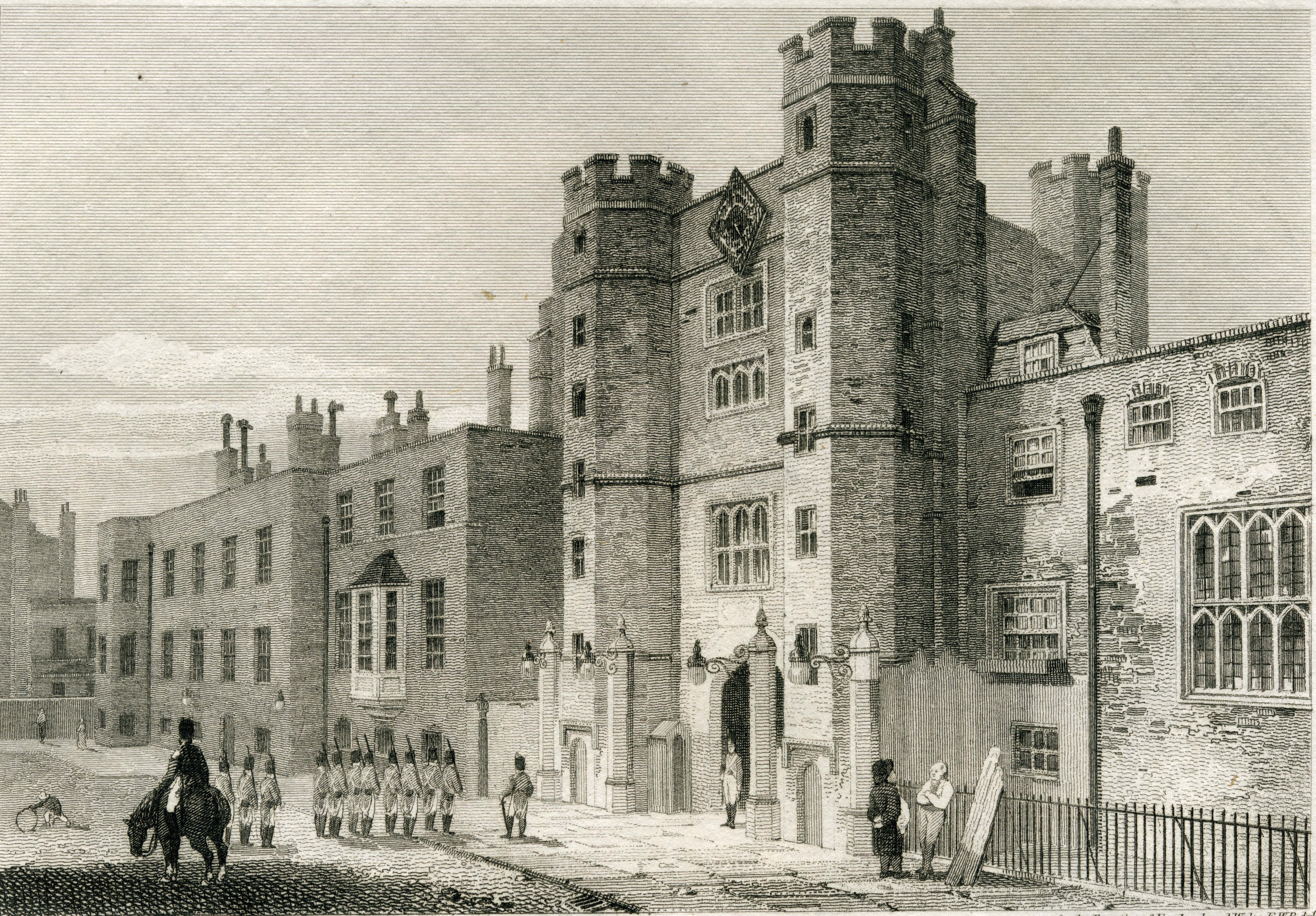
In the City of London and the City of Westminster Henry already possessed the Tower of London, Bridewell Palace, Baynards Castle, Whitehall Palace and Westminster Palace. He had another palace just downstream at Greenwich, plus Hampton Court upstream which he seized from Cardinal Wolsey. Despite all this he decided to build another palace at St James’s and had the old building demolished to make way for it. By acquiring the St James’s property he vastly extended his Westminster/Whitehall lands with a hunting park over a wide area, including what is now St James’s Park.The new palace was begun in 1536 and the great gatehouse that stands at the foot of St James’s Street dates from this phase of building. (Photograph at the top of the page). Edward VI, Mary and Elizabeth all lived at St James’s Palace from time to time and, with the accession of the Stuart dynasty, more work was done to make it a fit residence for the heir. Prince Henry, however, died in 1612, after which it was taken over by his brother, later Charles I. The palace was still remote, with parkland to the south and fields to the north. The only significant development was the Queen’s Chapel, built by Inigo Jones  in anticipation of Charles’s marriage to Henrietta Maria, a Roman Catholic who lived at the palace whilst Charles had his base at Whitehall.

During the Commonwealth the palace became a barracks and a prison, but after the Restoration the Duke of York (later James II) used it and considerable building work was carried out. James moved to Whitehall on his accession leaving St James’s to his queen. It was during this period that the palace’s first water closet, ‘The Stool Room’, was built complete with Dutch wall tiles and brass and ivory fittings to operate the flushing cistern.In the years after Charles II’s return to the throne the entire St James’s area was developed and became a major centre for courtiers, hangers-on at the court and the tradesmen who serviced them. After the Glorious Revolution William and Mary did not live at St James’s but Mary’s sister, Queen Anne, did, and had an extensive building programme carried out with a new suite of royal apartments designed by Sir Christopher Wren. The queen held ‘Drawing Rooms’ during the winter months when anyone of respectable appearance would be admitted, along with the courtiers and ministers there to do business, but they were dull occasions and the queen disliked the palace, preferring Windsor Castle or William and Mary’s Kensington Palace.When the Hanoverian monarchs took over the throne in 1714 George I moved into St James’s Palace and used it more intensively than his predecessors. George II disagreed, apparently concurring with the Prussian Baron Bielfeld who called it ‘crazy, smoky and dirty’ and Daniel Defoe who considered it ‘mean’ and beneath the dignity of the court.But it was the official London royal palace – Westminster and Whitehall had become Parliamentary and governmental complexes and the Tower was impossibly medieval. Winter was the time for the court to be in residence there with monarchs preferring Kew, Windsor and Kensington during the summer months.

Prince George, who was to become the Regent, then George IV, was born at St James’s Palace in 1762 and the baby was displayed less than two weeks after his birth to all those attending the Drawing Room. The king and queen considered the palace,  described by Sir John Fielding as ‘the jest of foreigners’, to be a ‘dust trap’, so they lived at the Queen’s House (later to become BuckinghamPalace). However that had no state rooms, so the Court was still officially at St James’s – where it remains to this day. All ambassadors are still accredited to The Court of St James’s.

I will visit the Court of St James under George III and George IV, as Regent and king, in my next post.

4 Comments

Filed under Buildings, Royalty

Detox the Georgian Way

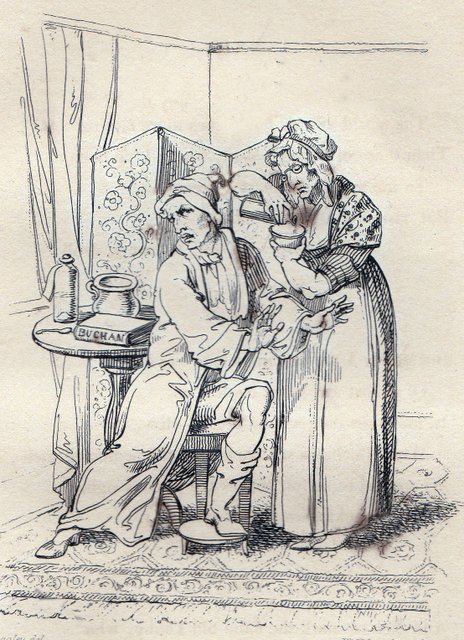
taking physic edit 2Detox diets are nothing new. At a time when those who could afford it would eat large amounts of meat and drink copious quantities of alcohol, while at the same time being wary of the effects of eating green vegetables in any quantity, stomach upsets, constipation and feeling ‘liverish’ were common complaints. A good internal clear-out was considered highly beneficial and taking ‘physic’ or purges and even vomits was commonplace. Physic could be administered as routine, even if the recipient was not experiencing any symptoms and children were regularly dosed, although not everyone thought it a good thing.

In Emma John Knightly says “Well, Emma, I do not believe I have any thing more to say about the boys; but you have your sister’s letter, and every thing is down at full length there we may be sure. My charge would be much more concise than hers, and probably not much in the same spirit; all that I have to recommend being comprised in, do not spoil them, and do not physic them.”

Most housewives would have their own recipes for purges. A fairly standard one consisted of thinly sliced liquorice root and coriander seeds boiled in water, then strained and senna added. Eliza Smith’s The Compleat Housewife of 1758 gives an elaborate recipe for, “An opening drink” which contains pennyroyal, red sage, liverwort, horehound, maidenhair, hyssop, figs, raisins, blue currants, liquorice, aniseed and coriander, all boiled in spring water and bottled. She recommends drinking half a pint in the morning and again in the afternoon, meanwhile keeping warm and eating little.

Most people felt the need for a combined tonic and purge in Spring after a long winter of preserved foods and little greenery. Eliza Smith has the following “Purging Diet-Drink in the Spring”.
Take six gallons of ale; three ounces of rhubarb; senna, madder-roots and dock roots, of each twelve ounces; twelve handfuls of scabious, and as much agrimony; three ounces of aniseeds; slice and cut these, put them in a bag and let them work in the ale; drink of it three or four times a day.

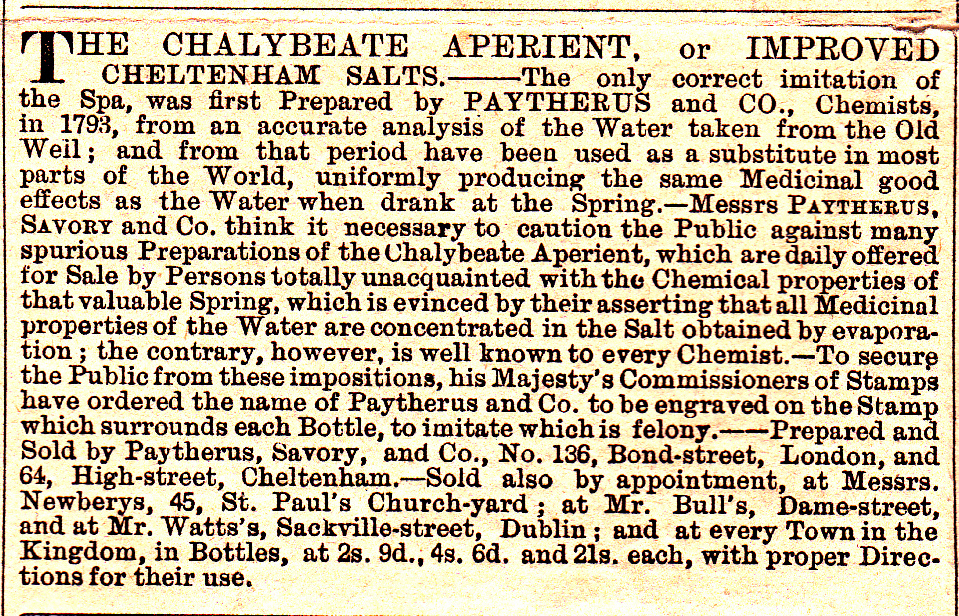
None of these sound particularly pleasant, but at least you knew what was in them. Purges and physics were the stock in trade of quack doctors and those sometimes contained quite dangerous substances. Even the products of respectable chemists had their perils, however this advertisment is for a product from reputable chemist Thomas Savory of Bond Street (see below).

Aperient advert crop

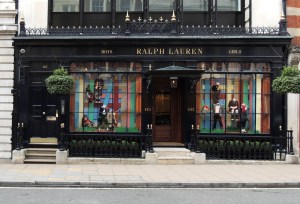
One of the most popular products during the 19th century was Seidlitz powders, a potent mixture of sodium bicarbonate, potassium sodium tartrate and tartaric acid. This was mixed with water until fizzy and drunk. Over-dosing was dangerous, with reported deaths from internal ruptures, but it was widely used and made the fortune of fashionable chemist Thomas Field Savory of the firm Savory and Moore who acquired the UK licence to sell it. The handsome shop front of his store in New Bond Street is the only early frontage remaining in the street. Wellington and Lady Hamilton were amongst his customers and the Duke of Sussex was a personal friend and often dined with Savory. It is not recorded whether he dosed any of them with his famous powders!

028

The unfortunate gentleman resisting his physic is from R. Dagley’s Takings (1821). The advertisement is from The Observer, Sunday October 29th 1809. The photograph shows the shopfront of Savory and Moore in New Bond Street, now the Ralph Lauren store.

3 Comments

Filed under Food & drink, Medicine & health

The Great Fire of Conduit Street

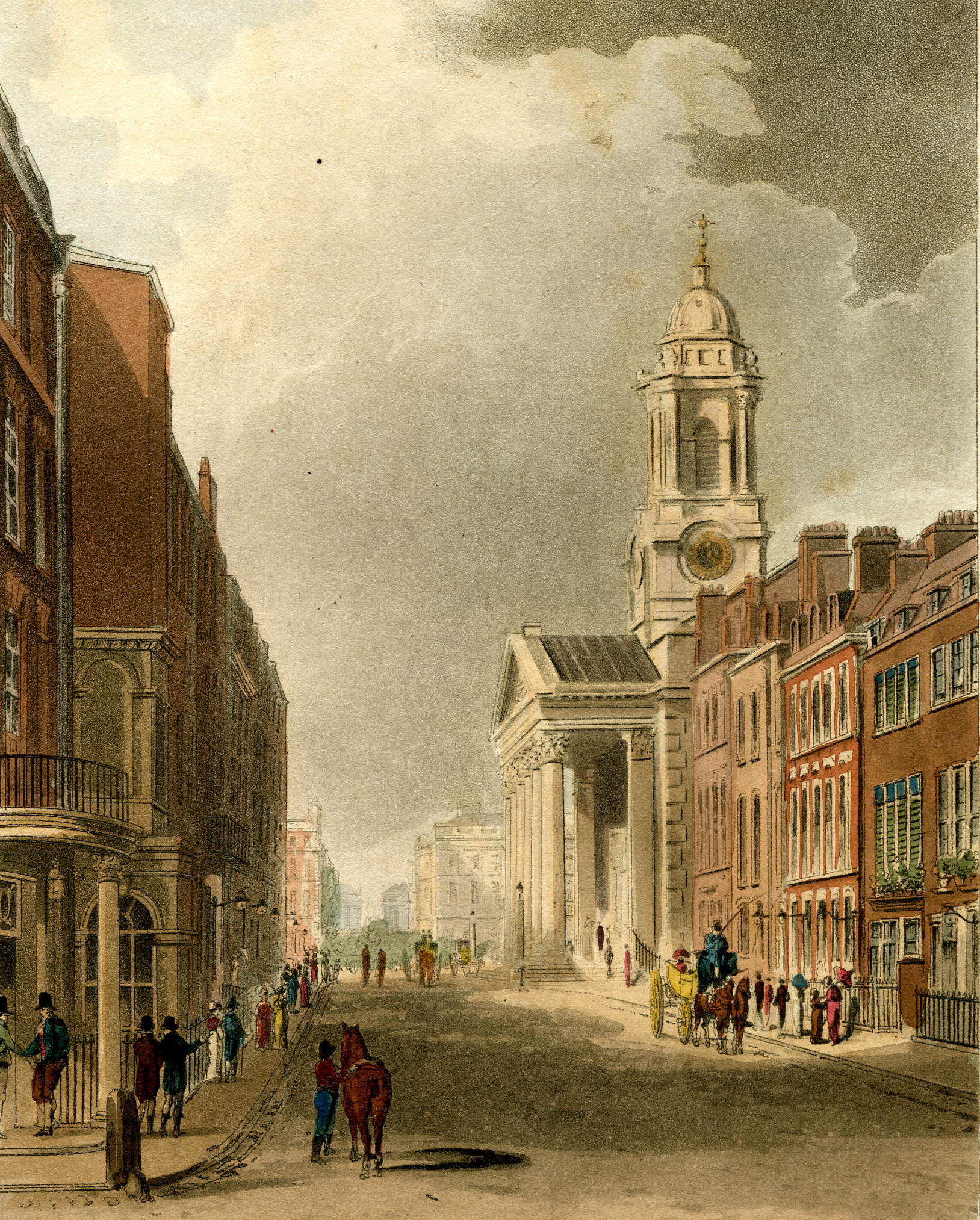
Conduit Street, the the heart of fashionable Mayfair, runs off Bond Street to the north-east, about half way down, From it George Street turns off north to Hanover Square, passing St George’s church, famous for Society weddings, on the way.

Conduit Street itself had a number of hotels during the late 18th-early 19th century, including Limmer’s, the dirtiest hotel in London according to Captain Gronow, despite being a favourite of the rich squirearchy. Another was Warne’s, located on the northern side, half way between George Street and Mill Street.

Image

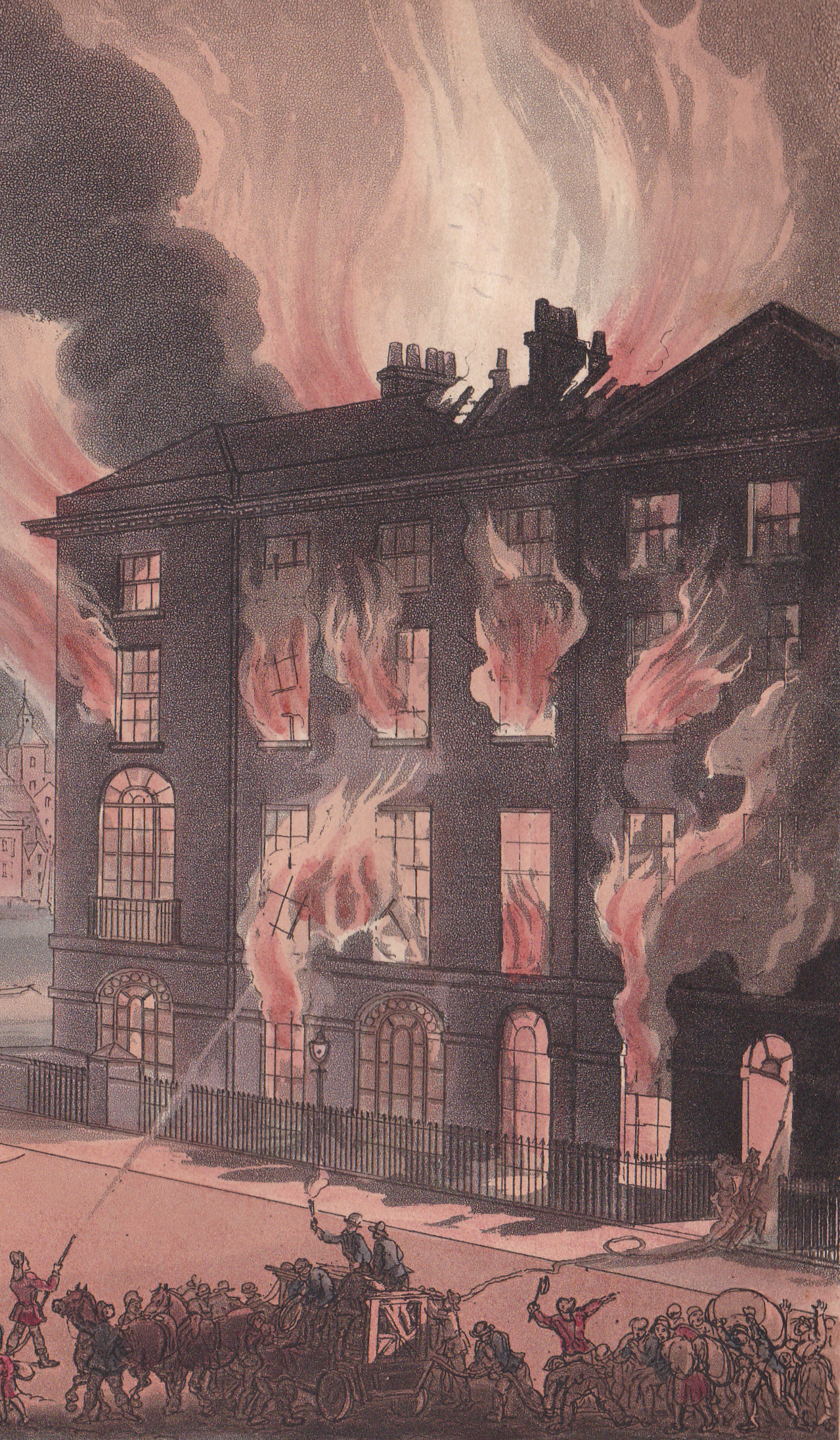
It is no wonder, when fire broke out at Warne’s Hotel, threatening St George’s church itself, that it caused chaos. The Globe of Monday of 30th January 1809 reported the scene. (My comments are in square brackets.)

Dreadful Fire

At half-past four, yesterday afternoon, a most alarming fire broke out at Warne’s hotel, in Conduit-street, Bond-street. The hotel consisted of two houses, being No.19 and 20. [The numbering has remained the same, so the site is easily identified today]. The appearance, on its first breaking out, was most frightful. A great body of smoke issued from the premises, which entirely prevented the passengers [ie pedestrians] from seeing their way in the street. The inmates of the house, including several gentlemen and families, flew in every direction. In an instant afterwards, the flames burst out from every window of the house, and the whole side of the street, from the corner of George-street, Hanover-square, to Mill-street, was enveloped in flames, threatening destruction to the whole neighbourhood.

The drums beat to arms, and the St. James’s, Bloomsbury, and St George’s, Hanover-square, volunteers, [organised by the parishes] repaired to the spot with the greatest alacrity. Engines arrived in all directions, but water could not be immediately procured.

The fire burned with the greatest rapidity; the first house was nearly consumed before the engines could be brought to play with any effect, though the firemen used every exertion in their power; – the wind being very high, the flames spread to such an extent, that it was almost impossible for them to work. Many of them rushed into the Hotel to save some of the property, and, we are sorry to say, that, according to the latest account we could collect, four firemen and a boy were missing. The fire was got under about nine o’clock at night.

Image

The Hotel is entirely destroyed, and part of an adjoining house, including the back premises, which extend nearly to the gates of St. George’s Chapel, in George-street, Hanover-square. The evening service was not over at the time the fire broke out; the flames seen through the windows of the chapel alarmed the congregation. The service was immediately stopped, and the congregation made their escape. Great confusion ensued; the charity children, who always attend there, ran in every direction – some without their hats, the girls without bonnets or cloaks. We are afraid that many persons were hurt, as the confusion was very great, and the congregation numerous. We understand the church plate was secured, as the Chapel, at one time, was thought in great danger.

Great praise is due to the Earl of Chesterfield. On hearing of the accident, he sent for a party of horse [cavalry], who instantly repaired to the spot, and cleared the carriages in Bond-street, which were four a-breast, and entirely impeded the progress of the engines.

Image

Earl Percy also ordered the engine from Northumberland House [ie his private fire engine] to attend; and the Duke of Portland sent out a supply of ale to those who were employed at the fire. Sir Walter Farquhar ordered his servants to render every assistance, and great part of the furniture saved from the flames was brought into his house. A fireman of the Phoenix-Office [insurance company], of the name of Rushfield, was very much injured; the hair of his head was entirely burnt off, and part of his clothes. He was rescued from his perilous situation by a milkman who served the house, and ran to give every assistance; he was also very much burnt in the hand.

Most of the families that were in the hotel, as soon as the alarm was given, went to Bates’s and other hotels, in Jermyn-street, St. James’s.

The fire broke out in Lady Falkland’s dressing-room. Her Ladyship has lost all her jewels. [This was only the beginning of a disastrous year for Lady Falkland, the wife of Charles John Cary, 9th Viscount Falkland. She was widowed on 2nd March 1809, three days after her husband was fatally wounded in a duel.]

Image

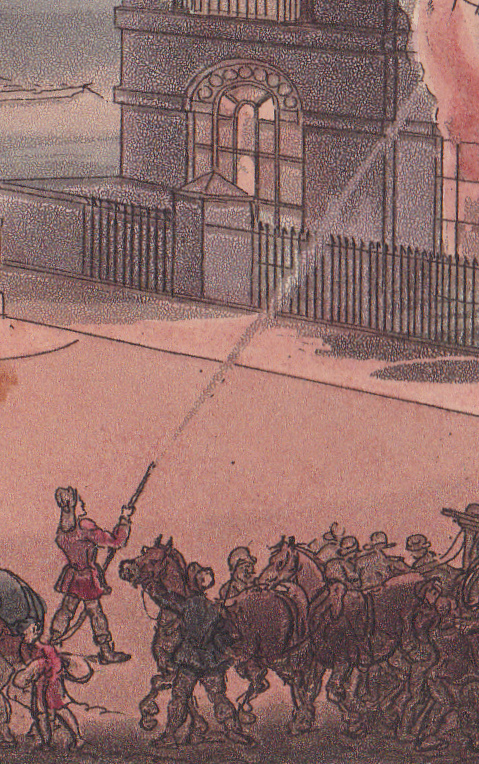
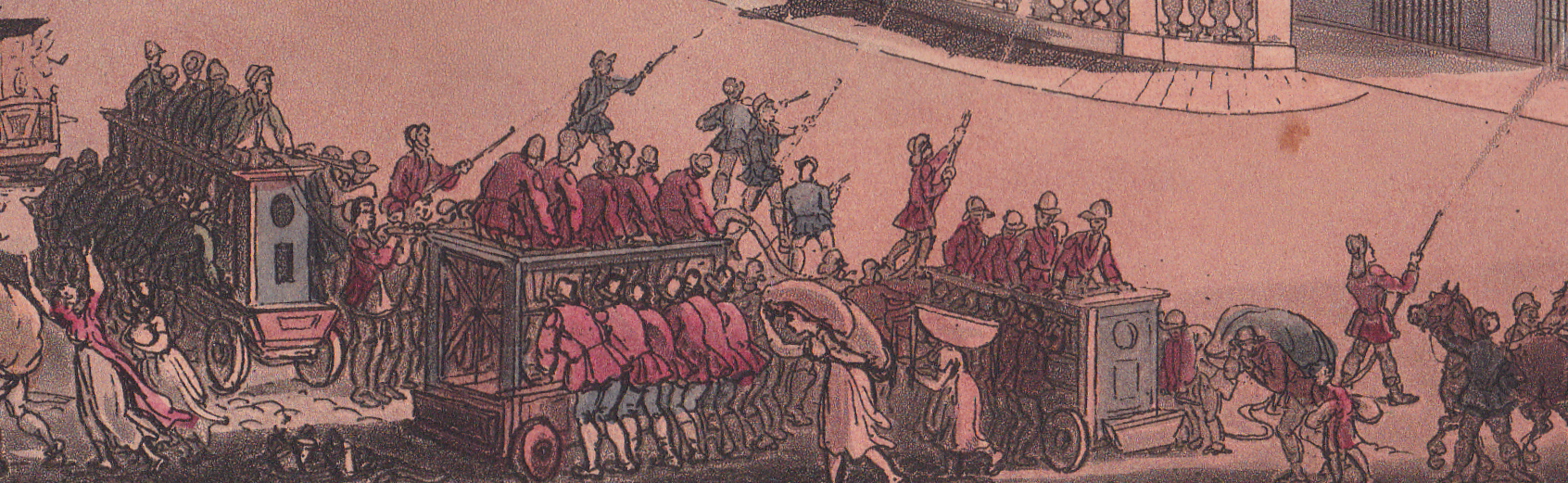
 The scenes of fire and the details of the fire engines and firemen pumping are from a print by Rowlandson and Pugin, published by Ackermann in 1808. It is entitled “Fire in London” and shows a house on fire at the southern end of Blackfriars bridge.

The print of George Street from the junction with Conduit Street shows St George’s on the right. It appeared in Ackermann’s Repository in 1812.

7 Comments

Filed under Accidents & emergencies

Taking Tea at Mr Gunter’s

High class pastry cooks and caterers were an essential part of the infrastructure of Georgian London. The most famous, of course, was Gunter’s in Berkeley Square but others included Parmentier’s in Edward’s Street (now part of Wigmore Street)  and Farrance’s on the corner of Spring Gardens and Cockspur Street, a popular resort for ladies visiting the exhibitions in the Spring Gardens’ galleries.

These luxury establishments were not cheap. This bill from Parmentier’s to a gentleman living in Harley Street is for a bottle each of orange and lemon ‘syrop’ and a dozen rout cakes and totals 18 shillings.

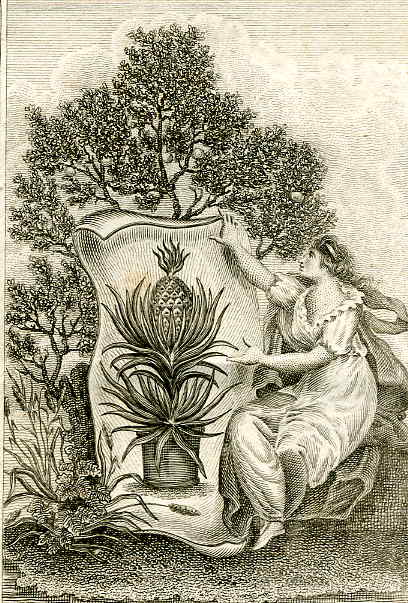
Gunter’s establishment was in the south-east corner of Berkeley Square and was originally the shop of Dominicus Negri, an Italian pastrycook, who set up there in 1757, trading as The Pot and Pineapple. Pineapples, often referred to as ‘pines’, were an exotic luxury, so expensive that people would hire them to form the centrepiece at a dinner party and then return them, uneaten, the next day, so the name of the establishment hinted at its quality. This pineapple below is from the frontispiece of Nutt’s The Complete Confectioner (1815).

Negri’s tradecard advertised “all sorts of English, Fench and Italian wet and dry sweet meats, Cedrati and Bergamet chips and Naples divolini.”

Pineapple0001ParmentiersNegri took Gunter into partnership in 1777 and by 1799 Gunter had taken over the business. He obviously established his reputation for quality as this extract from The Morning Chronicle, 16 June 1801, shows.

“(From a Correspondent)  Mrs Morton Pitt’s Masquerade –

Mrs Morton Pitt opened her house in Arlington-street, for the first time, upon the debut of her beautiful and accomplished daughter in the beau mond: this of course attracted a most brilliant and dazzling assemblage of all the fashionable world; and, whether from the condescending manner of the beautiful hostess, or the high glow of spirits which universally reigned throughout the whole company, the writer protests he has not, in the career of fashion of this year, seen so much conviviality. The supper was such as everyone must expect, when they hear that Mr Gunter, of Berkeley-square, superintended in that department.”

He did not cater only within London. On 25 August 1804 The Morning Post reported, in its Fashionable World column:

“Lady Smith Burgess’s Fete at Havering Bower in Essex…about 200 of the neighbouring nobility and gentry, and many others from town were present…. About five o’clock [in the afternoon] the company…returned into the Saloon, where a most sumptuous Breakfast was set out. The entertainment consisted of every delicacy which the munificence of her Ladyship could provide, and the taste of Mr Gunter, the confectioner, could display.”

I cannot find any advertisements in the London newspapers for Gunter’s – possibly the glowing references in all the accounts of parties, masques and balls was sufficient.

Mr Gunter kept a very fine house in the village of West Kensington, set in 30 acres of grounds which contained the kitchen gardens, orchards and hothouses that produced the vegetables, and more importantly, the pineapples and exotic fruits for the business.

It was his ice creams that he is most known for today. They were made from fresh cream, fresh fruit and sugar and were sometimes frozen using ice shipped in from the Arctic as well as from English ice houses. During the summer the fashionable would drive their carriages to Gunter’s and the waiters would bring out the ices to be consumed under the plane trees that still shade the square. It was considered perfectly respectable for a lady to take tea with a gentleman there. Gunter also enjoyed royal patronage – if enjoyed is quite the right word. Between 1819 and 1828 the Duke of Sussex ran up unpaid bills of almost £700 with him!Ice cream parlour 2

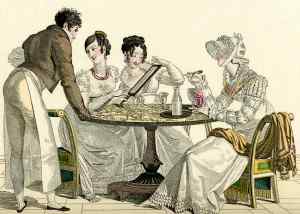
This print shows young ladies chosing their ices in a Paris confectioner’s.

 Gunter’s business continued until 1936 when the east side of the square was demolished and it moved to Curzon Street. By the 1950s the tea shop closed and the catering business continued, only to be shut down in 1976 as more modern tastes and budgets could no longer support the high style of the operation.

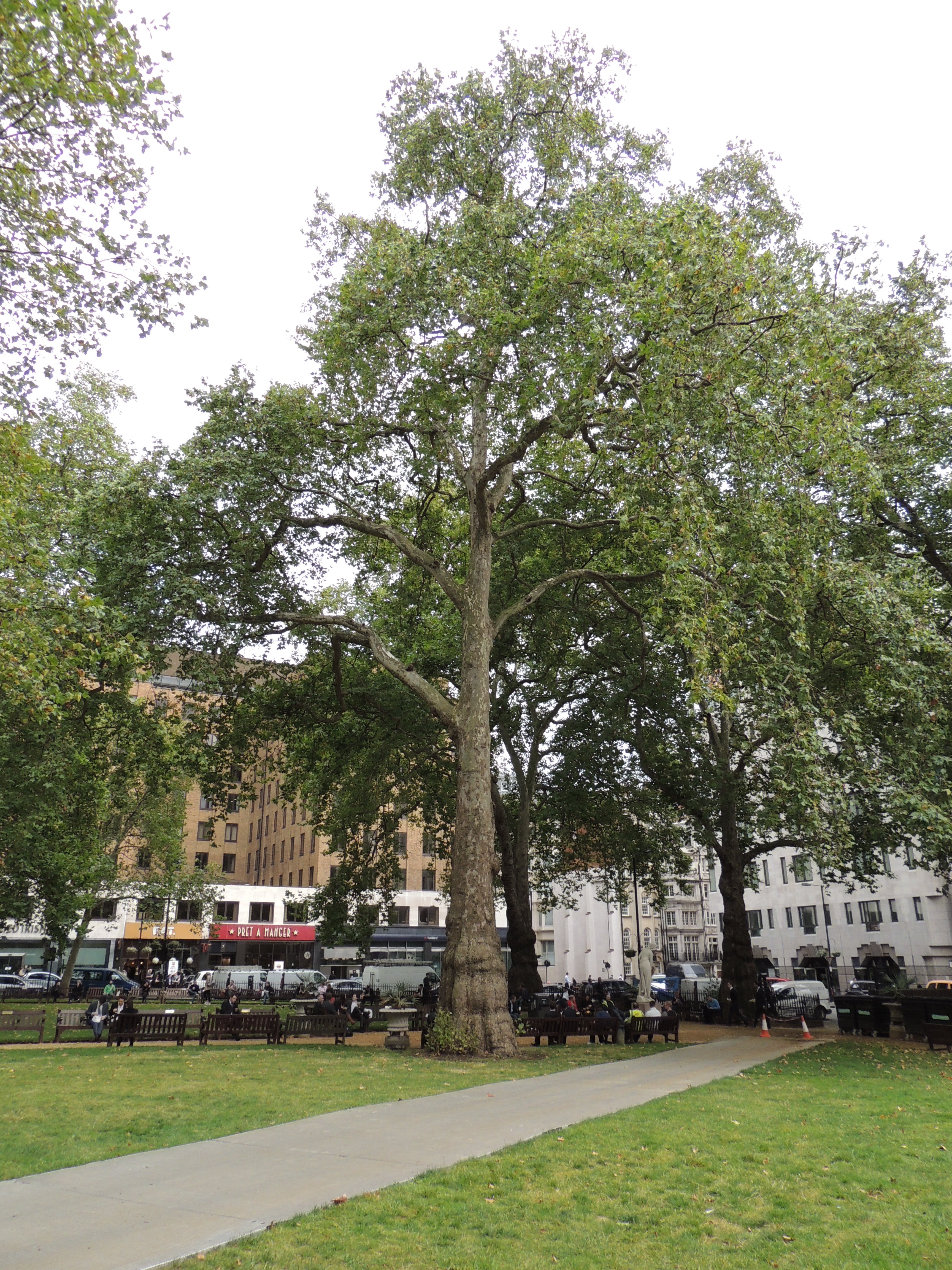
Today there is still a catering establishment on the site of the Berkeley Square shop, and the customers still take refreshments from there to eat in the square under the plane trees. In this picture of the square in 2013 you can just see the red sign – although what Mr Gunter would have made of Prêt is anyone’s guess!DSCN0136

14 Comments

Filed under Food & drink

Walking Jane Austen’s London – the Cover!

Image  Here is the cover for Walking Jane Austen’s London to be publshed 23 July.  I’m delighted with it – it has prints from my collection at the bottom and a present-day photograph at the top to emphasise the past-into-present theme of the     eight walks.

You can pre-order the book now at Amazon.co.uk http://tinyurl.com/dxz3ps4 and Amazon.com http://tinyurl.com/d8d9kvt

I’ll be talking about Jane Austen’s London, and the book,  at Berkhamsted Library, Hertfordshire on 19th March as part of Hertfordshire LitFest. More details of the whole LitFest programe, including how to buy tickets, is at  http://tinyurl.com/c35cu2r

Leave a comment

Filed under Books

Lighting With A Bang

Dighton 2

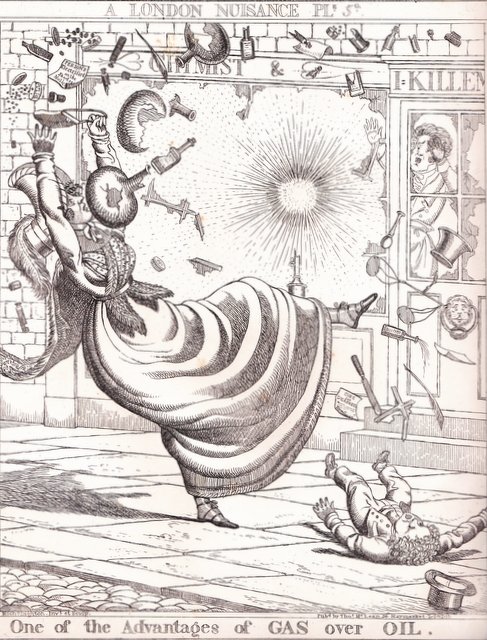
Richard Dighton’s print of 1821 is sarcastically entitled “One of the Advantages of GAS over OIL” and, as it is from his “London Nuisances” series, demonstates that even thirteen years after the first demonstration of street lighting by gas, the new technology was treated with considerable wariness.

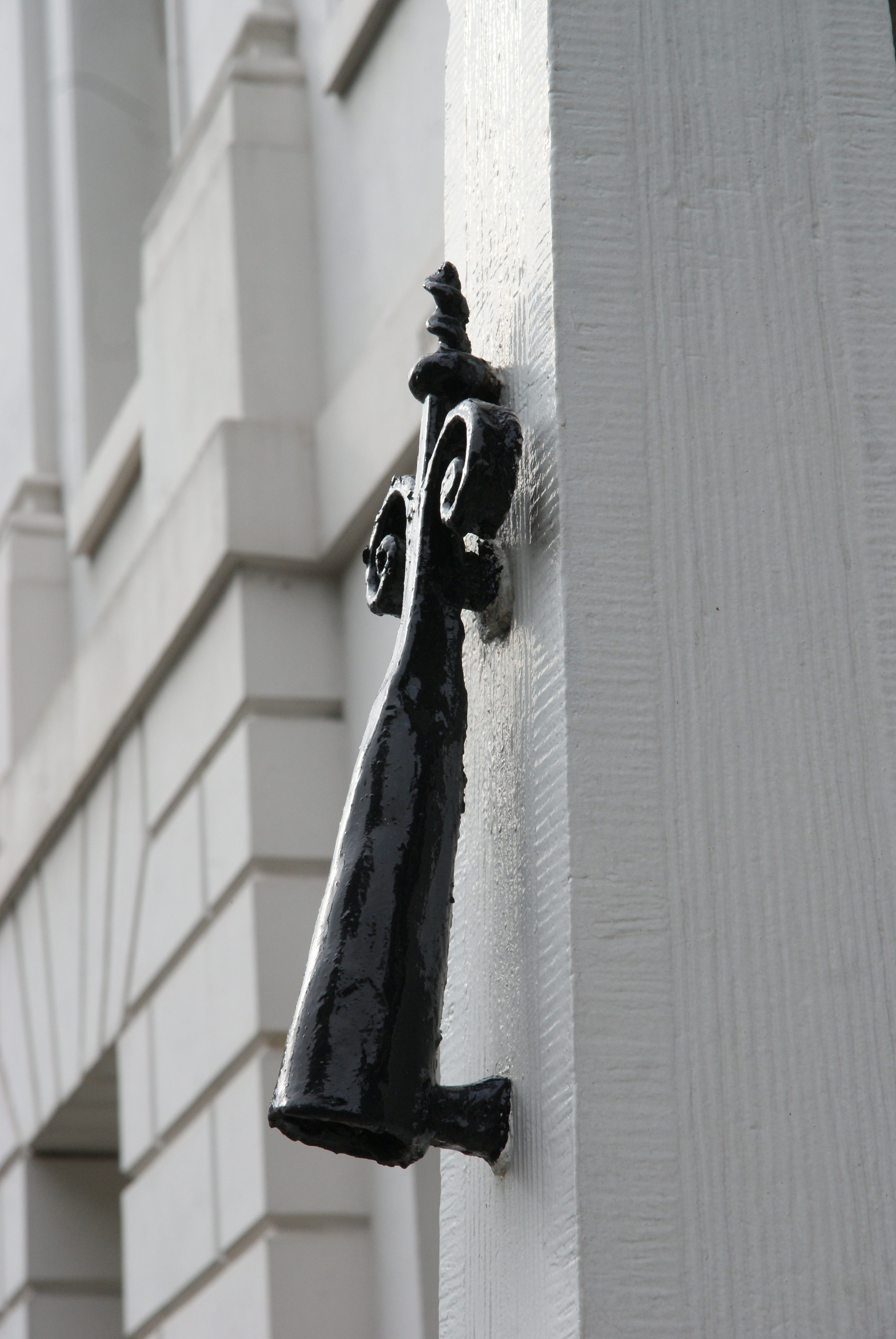
Throughout the eighteenth century scientists were aware of the light produced by both coal, wood and natural gases, but could see little practical use for it. Meanwhile streets contined to be dark, dangerous and crime-ridden, the only pools of light the lanterns put out by householders and the precarious illumination of the link-boys’ torches. SONY DSCOften the link-boys could not be trusted to guide the walker safely home and not into the hands of muggers and pickpockets and the air of danger was intensified by the identification of the boys, plunging their flaming torches into the dark snuffers, with illicit  acts. The presence of a link boy in a painting was enough to alert the viewer to a sexual sub-text. This snuffer is outside Chatham House in St James’s Square.

William Murdoch, an engineer working for Matthew Boulton and James Watt at their Soho Foundry steam engine works in Birmingham is the first person known to have lit a house by gas, although, having tried it at home in Redruth, Cornwell in 1792, he did not seem interested in trying to expand on that use. Instead he used gas to light the interior of the Soho Foundry in 1798 and four years later he illuminated the outside in a spectacular public display.

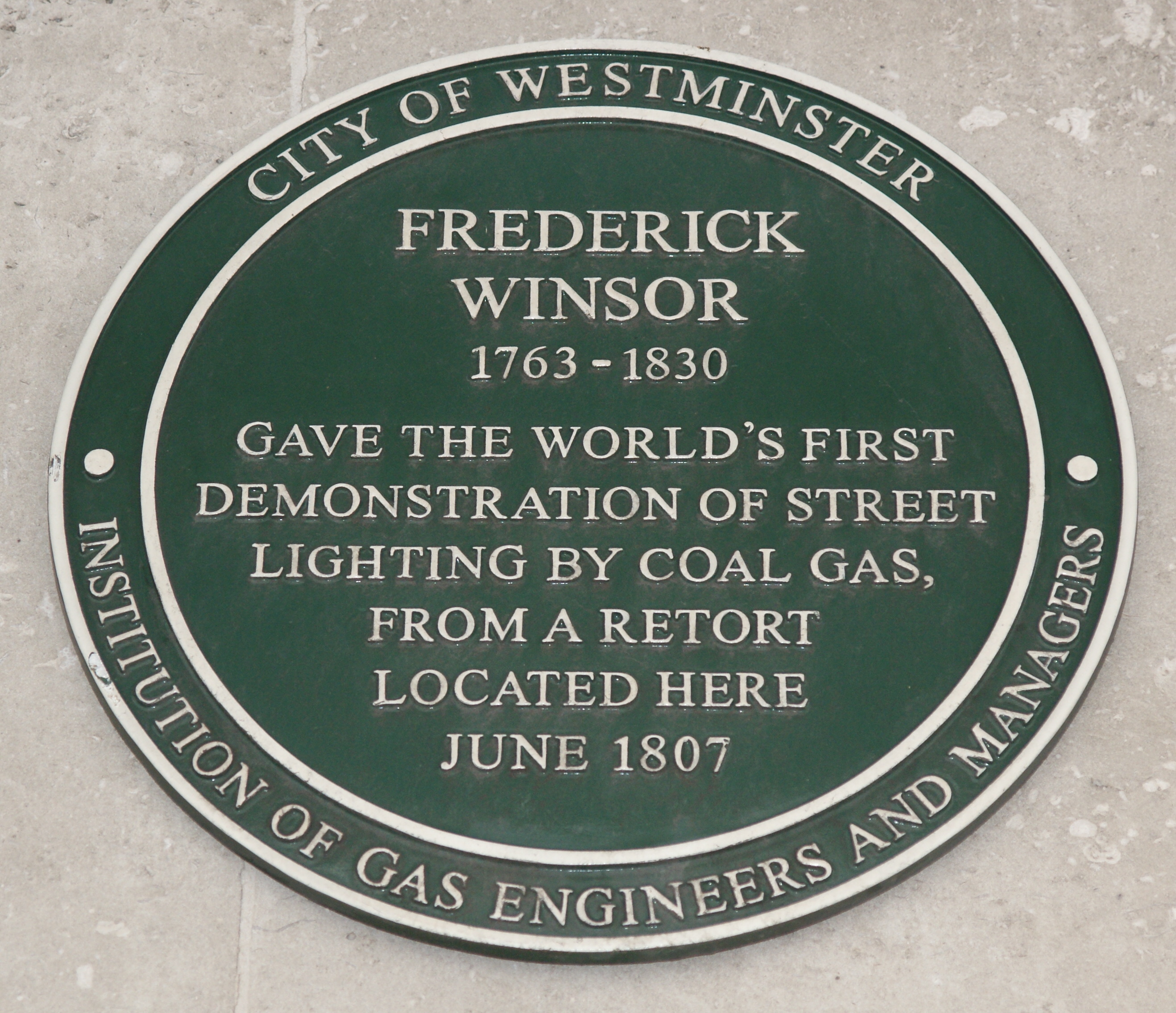
Meanwhile a German inventor, Fridrich Winzer, known in Britian as Frederick Albert Winsor, took out the first patent for a gas light in 1802. In 1807 he set up a retort in Pall Mall and produced a temporary display of street lighting on January 28th 1807 for the Prince Regent’s birthday. Prinny became a fan of the new technology and gave it his support.

SONY DSC

Coal gas contains hydrogen, methane, carbon monoxide and sulphur – smelly, explosive, a fire risk and a definite health hazard and the technology to make it safer lagged beghind the ability to produce it. Gas in homes was very rare until the 1840s and did not really catch on until the 1860s when the gas lighting installed in the new Houses of Parliament allayed public fears. Even then the light was from a flame, in effect a powerful candle – the first gas mantle was not invented until 1885.

Meanwhile some shops risked introducing it. Entrepreneur publisher Rudolph Ackermann rebuilt his  luxurious Emporium in the Strand in 1810 and it was the first shop in London ‘to be lit solely by Gas, which burns with a purity and brilliance unobtainable by any other mode of illumination hitherto attempted.’ But it was slow to catch on , although its benefits for street lighting – and the reduction of crime –  were easily appreciated. In 1812 Parliament granted a charter to the London and Westminster Gas Light and Coal Company and on December 31st 1813 Westminster Bridge was illuminated permanently.

In 1804 Winsor had tried lighting the Lyceum theatre by gas, but it was not until 1817 that it was installed there and at the Covent Garden and Drury Lane theatres. In that year the Chartered Gas Company’s three stations produced 8,500 cubic metres of gas, capable of lighting gas lamps giving the equivalent light of 450,00 candles. Despite the dangers, gas light was here to stay and by 1826 virtually every city and large town in Britain had gas street lighting.

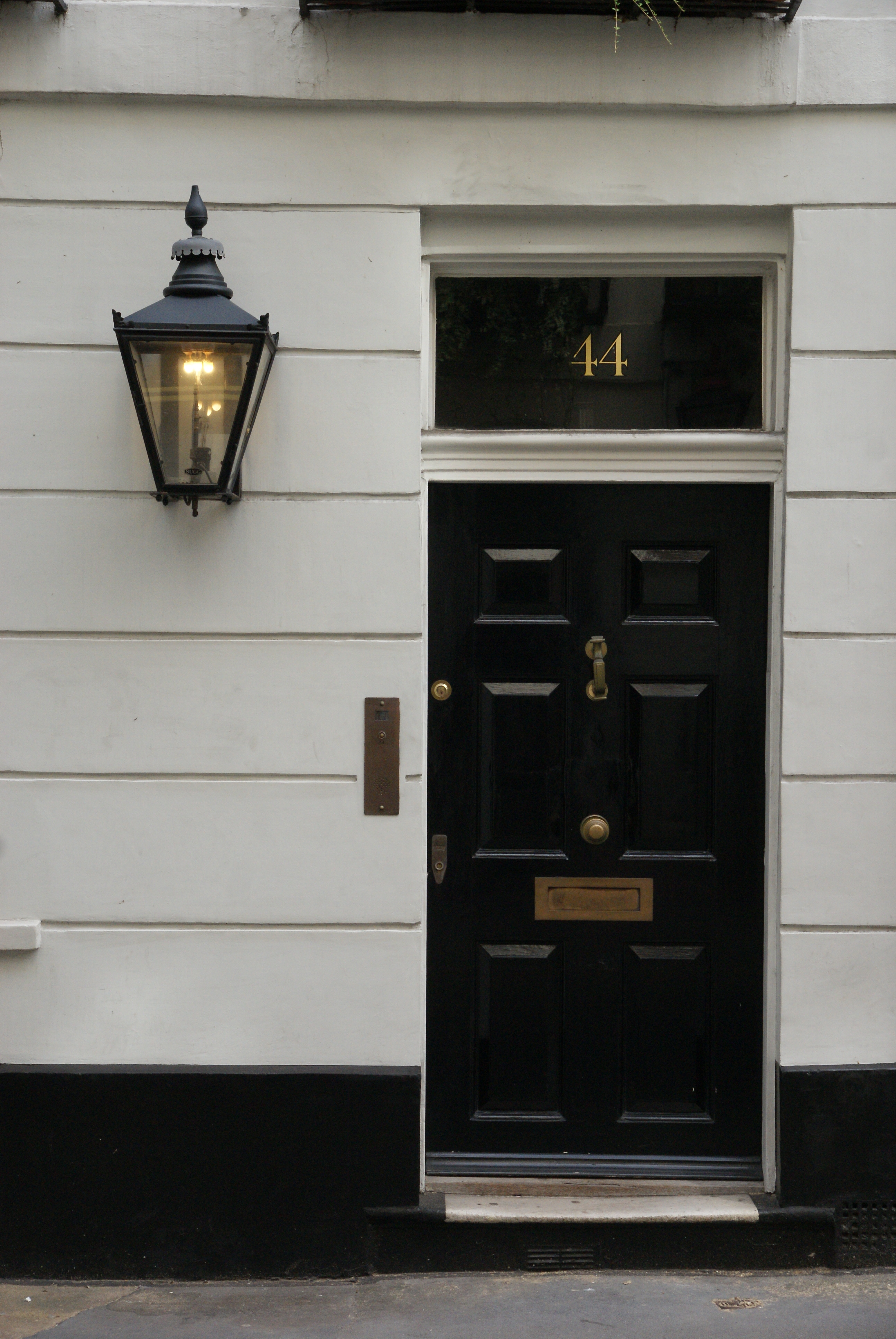
There are still gas lights on the streets of London today. Crown Passage, which runs between King Street and Pall Mall, is still very reminiscent of the network of alleys and courts that crisscrossed the fashionable St James’s area – home to gaming hells, brothels and lodging houses on the doorstep of St James’s Palace and Almack’s Assembly Rooms – and it still has gas light and a gas lighter, although when I met him he was simply setting the timing mechanism that turns the gas on and off these days. The other gas light shown is on the front of a house in St James’s Place, almost opposite Cleveland Court where Henry Austen, Jane’s brother, had his banking premises for a time.

SONY DSC                SONY DSC

Save

3 Comments

Filed under Accidents & emergencies, Architecture, Street life

Braving the Dentist With Jane Austen

With a dental check-up looming next week my thoughts have turned to teeth!

Image

Jane Austen wrote to Cassandra from Henrietta Street, Covent Garden, 15-16 September 1813 about the experience of her nieces, the daughters of Edward Austen Knight:

 Going to Mr Spence’s was a sad Business & cost us many tears…& alas! we are to go again to-morrow. Lizzy is not finished yet. There have been no Teeth taken out however, nor will be I believe, but he finds hers in a very bad state, & seems to think particularly ill of their Durableness. They have all been cleaned, hers filed, and are to be filed again. There is a sad hole between two of her front Teeth.

 The next day she wrote again

The poor Girls & their Teeth! …we were a whole hour at Spence’s, & Lizzy’s were filed and lamented over again & poor Marianne had two taken out after all, the two just beyond the Eye teeth, to make room for those in front. When her doom was fixed, Fanny, Lizzy & I walked into the next room, where we heard each of the two sharp hasty Screams. Fanny’s teeth were cleaned too & pretty as they are, Spence found something to do to them, putting in gold & talking gravely & making a considerably point of seeing her again before winter…The little girls teeth I can suppose in a critical state, but I think he must be a Lover of Teeth & Money & Mischief to parade about Fanny’s. I would not have had him look at mine for a shilling a tooth & double it.

 Poor Marianne was twelve and Lizzie thirteen. I am not sure what the filing was for unless this is Jane’s misspelling of “filling”. Or perhaps it was to remove jagged edges from a broken tooth. Image

Mr Spence was probably George Spence, dentist to George III, who had his business in Old Bond Street. He patented a brand of tooth powder and was wealthy enough to buy a country estate at Cranford and to see his sons well educated and launched on successful careers in the law, the navy and the church. “The World In Miniature” edited by W.H.Pyne (1827) contains a series of descriptions of various typical characters and occupations. In the section on Boxers it describes Mr Spence being interrupted while attending to a lady by the arrival of a gentleman who had made the mistake of trying to settle a dispute with a drayman and who had swollen lips, front teeth “beaten in” and his mouth left in “a deplorable state”. Mr Spence pushed his teeth back into place and called on him the next day to finish the job. It does not record what the unfortunate lady who was abandoned part-way through her treatment thought!

 Image

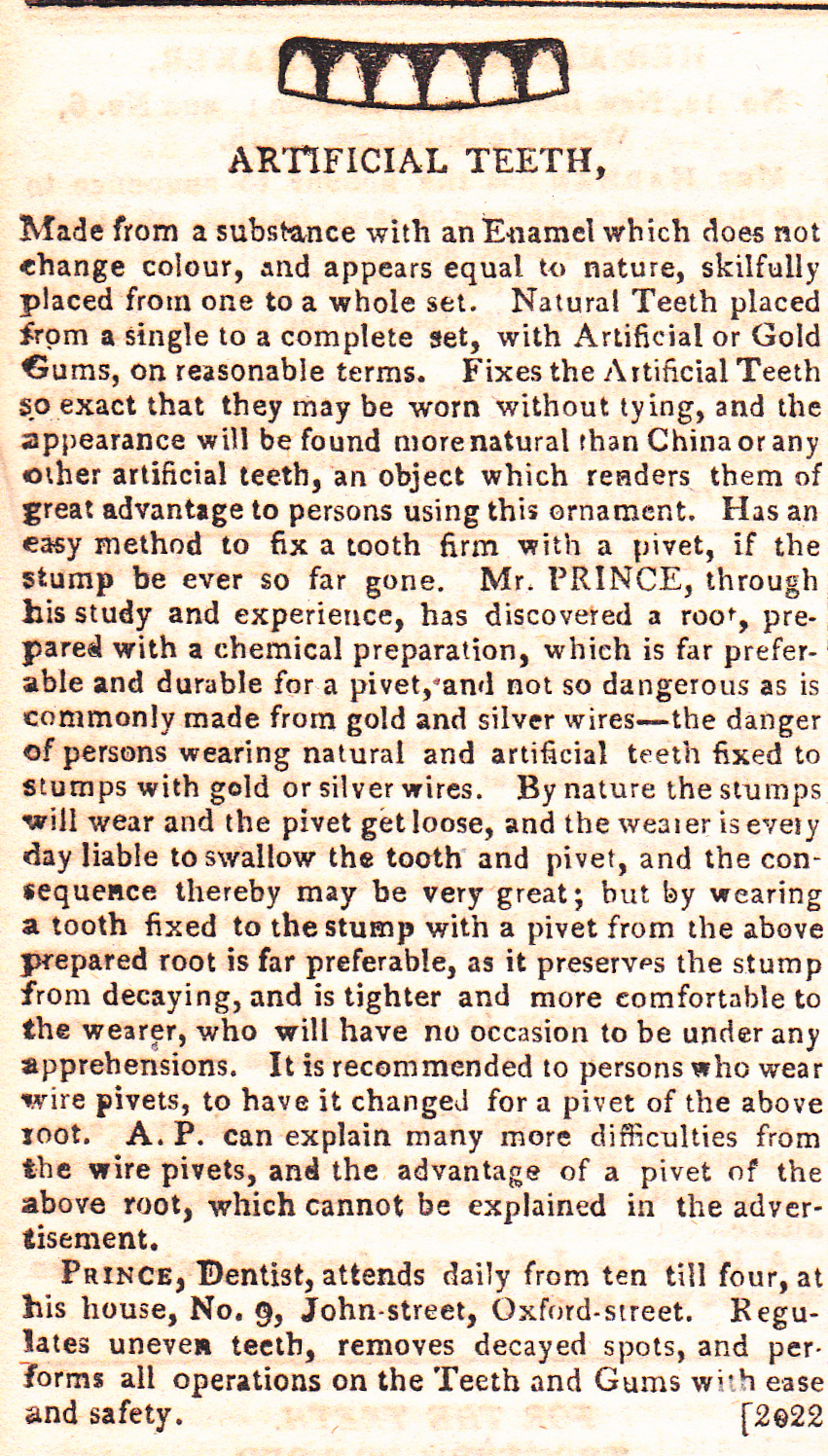
Tooth brushes looked very much like modern ones but tooth powders must have been quite abrasive and contained all sorts of substances, including soot. Various pastes and gums were also used to fill cavities and disguise damaged teeth, but these must often have done more harm than good: I would love to know what the Ceylon Exotic consisted of! The advertisements for Trotter’s Tooth powder and the false teeth are from The Spectator of February 1809, the Ceylon Exotic was advertised in the same newspaper, June 1806.

False teeth ranged from wooden ones to various porcelain and metal varieties to real teeth taken from corpses – even on battlefields. This must have carried with it grave risks of infection and Mr Spence himself wrote a paper on, “Observations on a Disease Consequent to Transplanting Teeth” in 1790. One does wonder what e happened to the teeth he extracted from Marianne!

 Dentists like Mr Spence were for the well-off, of course. For the working people it was probably a case of putting up with toothache until it got too bad and then getting someone to pull it out for you or using the services of someone at a market or fair. This photograph of a roadside dentist, with a picture of gleaming white teeth displayed outside his tent, was taken in Rajasthan, India, last year and I wonder if perhaps his ministrations would not be preferable to Mr Spence’s after all! Image

6 Comments

Filed under Medicine & health

Jane Austen Buys a Cap

Image

On March 7th 1814 Jane Austen was staying with her banker brother Henry in Henrietta Street, Covent Garden, and writing to her sister Cassandra. The weather was wintry – “Here’s a day! The Ground covered with snow! What is to become of us? We were to have walked out early to near Shops, & had the Carriage for the more distant.”

In the end she, and her niece Fanny, did go out on foot to Coventry Street to Newton’s the linen drapers and, it seems, wandered a litle futher along into Cranbourn Street to do some window shoping in Cranbourn Alley.  “A great many pretty Caps in the windows of Cranbourn Alley!  I hope when you come, we shall both be tempted. I have been ruining myself in black satin ribbon with a proper perl edge; & now I am trying to draw it up into kind of Roses, instead of putting it in plain double plaits.”

You can just make out Cranbourn Alley in the street view above – the second opening from the left. The Alley is still there today, just a minute’s walk west from Leicester Square tube station, but there is no longer any hope of finding charming headgear – it is just a narrow passage between a money exchange and a fast food shop and the crowds making for Leicester Square pass it without a glance.

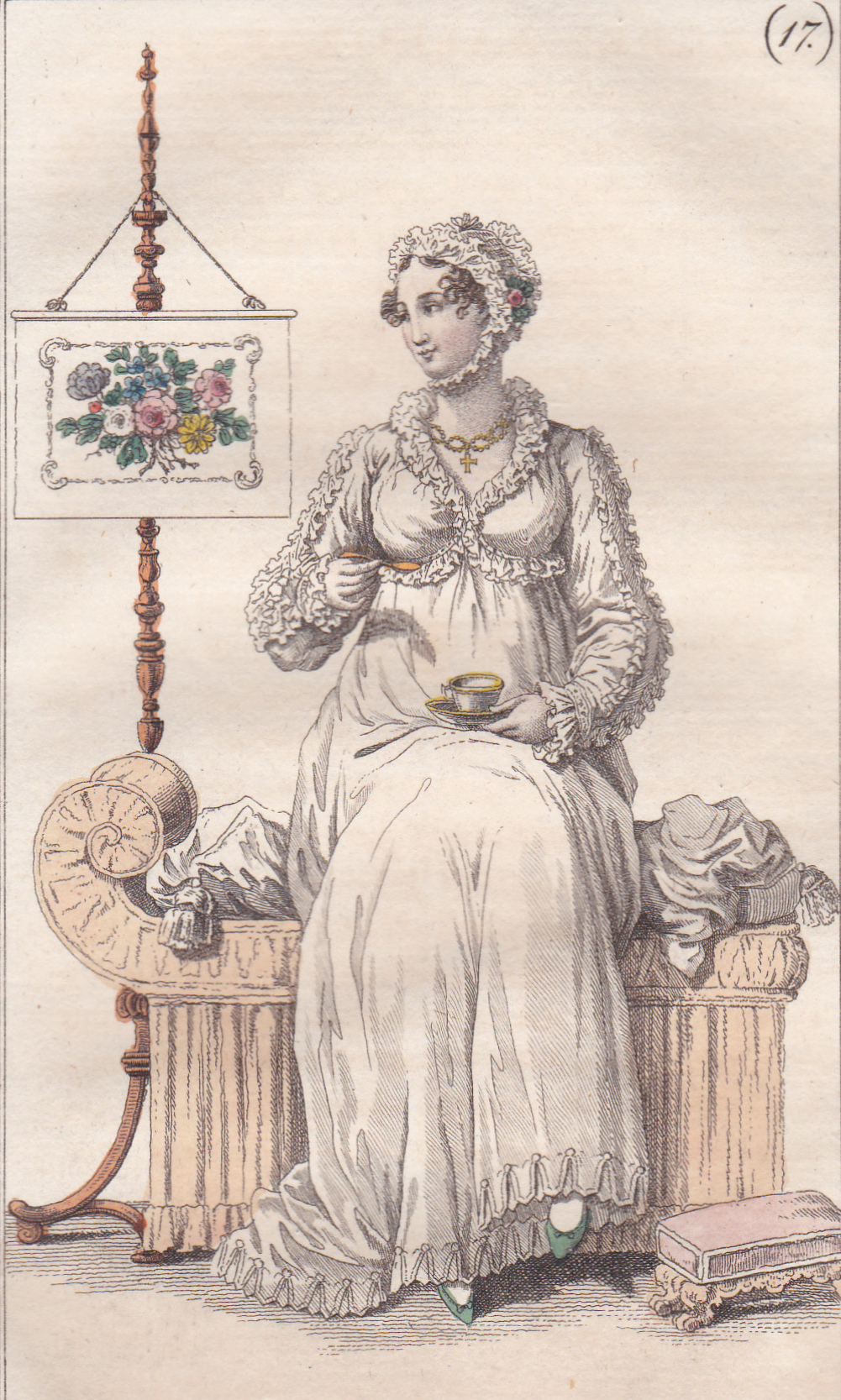
Image The pretty cap in the print is worn with Morning Undress and is from the French Journal des Dames et des Modes for 1814, headed Costume de Londres. Jane describes a new cap in detail in a letter to Cassandra on 16th September 1813. “My Cap is come home & I like it very much, Fanny has one also; hers is white Sarsenet & Lace, of a different shape from mine, more fit for morning, Carriage wear – which is what it is intended for – & is in shape excedingly like our own Sattin & Lace of last winter – shaped round the face exactly like it, with pipes & more fullness, & a round crown inserted behind. My Cap has a peak in front. Large, full Bows of very narrow ribbon (old twopenny) are the thing. One over the right temple perhaps, & another at the left ear.”


8 Comments

Filed under Fashions, Shopping

New Blog!

Bear with me while I set this blog up!

1 Comment

Filed under Uncategorized