Bell Rock Lighthouse – A Regency Engineering Marvel

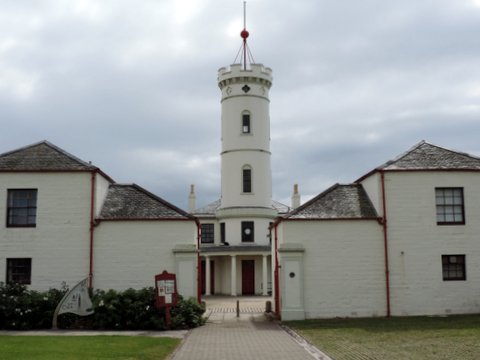
I’m back north of the Border again for today’s blog, visiting an engineering feat by one of Regency Britain’s greatest engineers which, although located in Scottish waters, imust have been a wonder for the entire country. When I was in the delightful little fishing port of Arbroath ( in pursuit of the famous and delicious Arbroath Smokies) I spotted an elegant and unmistakeably Regency building on the shore. It looked like a miniature lighthouse but turned out to be the signalling station for the Bell Rock lighthouse and home to the families of the lighthouse keepers.
04-DSCN9403

Bell Rock is 11 miles (18 km) off the coast at Arbroath and is part of the lethally dangerous Inchcape reef that had proved a major hazard to shipping on this busy coastal route for centuries. In the Middle Ages an abbot had a bell fixed to a floating platform anchored to the reef, which was some warning, but the frequent storms repeatedly destroyed it. The reef is virtually invisible except at low tide when about four foot of it is above the water. Building a lighthouse seemed an almost impossible technical feat, but following the loss of HMS York with all hands in 1806 pressure grew for a solution. In that year a bill was passed through Parliament for a stone tower at a cost of £45,000 to be paid for by a duty on shipping between the ports of Peterhead and Berwick-upon-Tweed.

Two of the greatest engineers of the day were inv12-DSCN9411olved – John Rennie, who as Chief Engineer, was responsible overall for the project, and Robert Stevenson, who as Rennie’s assistant and the resident engineer, risked his life on the reef along with the workmen. On shore the signalling station allowed communication with the lighthouse and provided a home for the keepers’ families and accommodation for them when they were not on duty. Now it is an excellent little museum all about the Bell Rock and its construction.
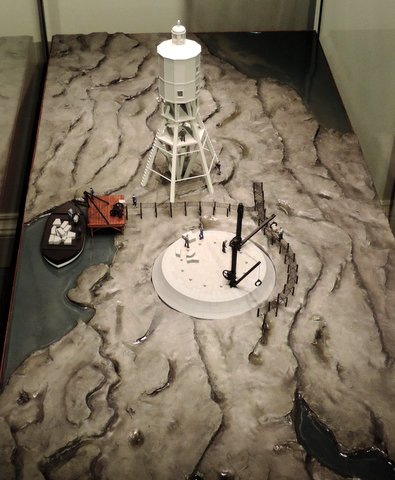
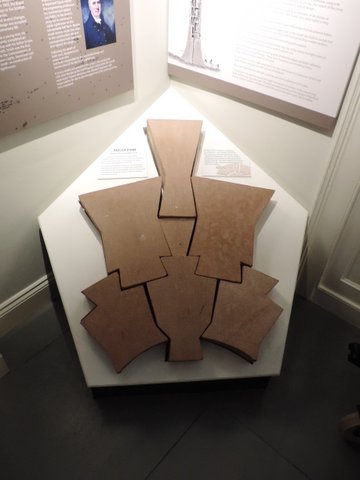
This photograph is of one of the models in the museum showing the difficulties that Stevenson had to overcome to build the lighthouse. First a wooden tower was built to house the men when the tide came in and then, whenever there was low water, they came out onto the exposed reef and worked on the tower itself, building it up with a jigsaw of interlocking stone blocks that had been cut during the winter months when no building could take place on the rock. The ingenious design of the blocks is shown in this model.
11-DSCN9410Despite the dangers and difficulties the tower was completed in only four years and became operational in 1811. It has been in continuous operation ever since, saving innumerable lives. These days the light is fully automated.

Robert Stevenson (1772-1850) was educated at a charity school when the death of his father left the family almost destitute. His future career was determined when he was fifteen and his mother married Thomas Smith, a tinsmith, lamp maker and mechanic who was engineer to the Northern Lighthouse Board. Robert became his assistant and by the age of nineteen had built his first lighthouse on the River Clyde. Bell Rock is considered his masterpiece, but he was responsible for many other lights as well as roads, bridges, harbours, canals, railways, and river navigations. Three of his sons followed in his footsteps as civil engineers and his grandson was the writer Robert Louis Stevenson.


2 Comments

Filed under Architecture, Buildings, Science & technology, Transport and travel

Bartholomew’s Fair

The George Cruickshank monthly print for September is a lively image of the Bartholomew fair, held at Smithfield from 1133 until Victorian moral outrage finally suppressed it in 1855.

Barth fair
Its origins were in the cloth fair which provided much of the income for the priory and hospice dedicated to St Bartholomew that eventually became today’s Bartholomew’s Hospital (“Barts”). The fair, one of the largest in the country, was held for three days from the eve of St Bartholomew’s Day (24th August). With the change of calendars in the 18th century the date slipped to 3rd September.
At the same time as the cloth fair the Corporation of London held a cattle fair at the same site and eventually, after many wrangles and the Dissolution of the monasteries, the Corporation took over the whole event.
By the 17th century the fair was more a vast funfair than a cloth or cattle sale and even the Puritans did not try and shut it down. By the time Charles II was on the throne it lasted for three weeks of carnival and downright disorder.
Everyone, rich or poor, went to the Fair, including Samuel Pepys who records numerous visits over the years. On September 2nd 1664 he watched the rope-dancing and bought combs for his wife and her maids.
Entertainments included theatrical performances, jugglers, magicians, stalls selling every kind of trinket, animal shows, food stalls, freaks and vast amounts of drink. The print for a fan dated 1721 shows a rather tidy and sedate fair, but does illustrate some of the activities – rope dancers, Faux the conjuror, rides in a dog cart, an early form of Ferris wheel, a peepshow of the Siege of Gibraltar and a stall selling “toys” – not children’s playthings but adult novelties and trinkets. Dolls known as Bartholomew Babies were one of the most popular souvenirs.

V0014666 Bartholomew Fair, site of St. Bartholomew's Hospital, London Credit: Wellcome Library, London. Wellcome Images images@wellcome.ac.uk http://wellcomeimages.org Bartholomew Fair, site of St. Bartholomew's Hospital, London, pictured in 1721. Aquatint with etching, c. 1800. Published: - Copyrighted work available under Creative Commons Attribution only licence CC BY 4.0 http://creativecommons.org/licenses/by/4.0/

V0014666 Bartholomew Fair, site of St. Bartholomew’s Hospital, London
Credit: Wellcome Library, London. Wellcome Images
images@wellcome.ac.uk
http://wellcomeimages.org
Bartholomew Fair, site of St. Bartholomew’s Hospital, London, pictured in 1721. Aquatint with etching, c. 1800.
Published: –
Copyrighted work available under Creative Commons Attribution only licence CC BY 4.0 http://creativecommons.org/licenses/by/4.0/

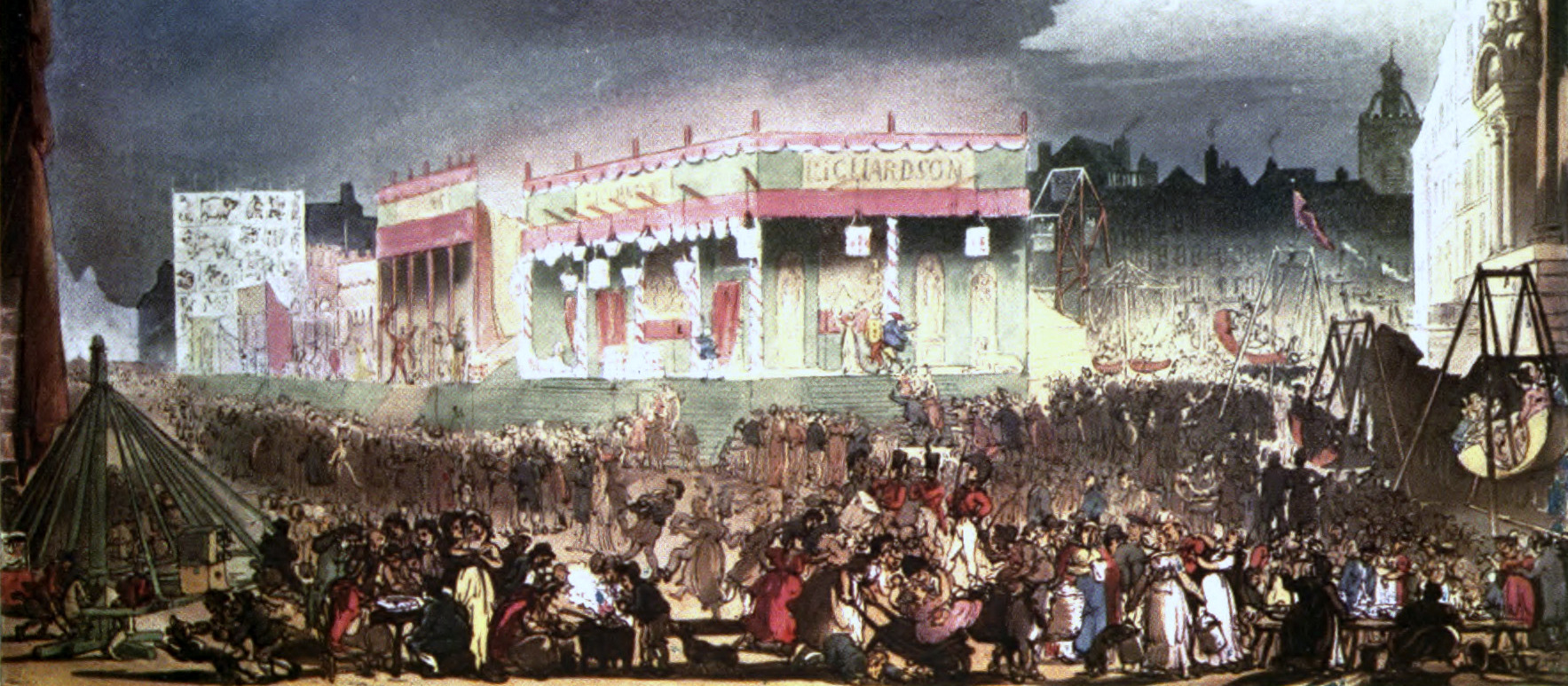
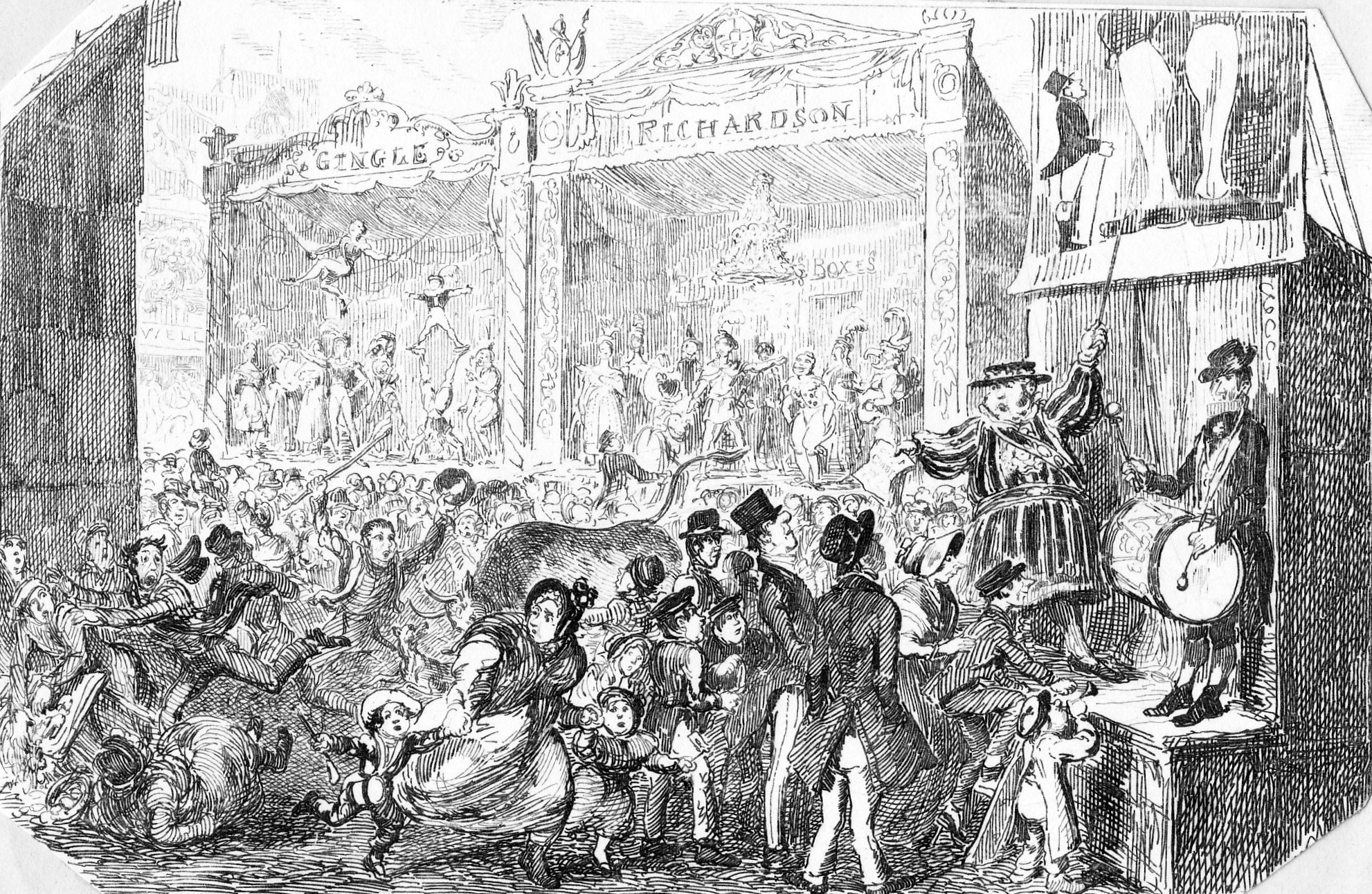
By the later 18th century Richardson’s booth was considered to have the best theatrical entertainments. He charged 6d admission (most others only charged a penny) and the tent was lined with green baize, illuminated by 2,000 lamps and the ushers were dressed as beefeaters. One can be seen to the right of Cruickshank’s print.
A visitor in 1825 records seeing “four lively little crocodiles hatched from eggs at Peckham by steam, Wombwell and his menageries [and] a glass blower in a glass wig blowing tea cups for 3d each.” An account of the money made by stallholders in 1828 gives an idea of the type of sideshows – the Pig-Faced Lady earned £150 (at 1d a time), the Panorama of the Battle of Navarino, £60 and the Chinese Juggler, £50. Wombwell’s Menagere made £1,500.
Cruickshank’s image shows a daytime scene with many children in the crowd – although even then the place is crowded and the bull-baiting appears to have got completely out of control. The coloured image by Pugin and Rowlandson for the Microcosm of London in 1801 shows a much darker, night-time scene, hinting at danger, debauchery and sin.

Microcosm Barth Fair
The Victorians certainly did not approve. In 1840 a committee regulated the booths and increased the rents and forbade “giants and dwarfs”. City notables ceased their support and by 1850 it was so reduced that it was no longer worth having an opening ceremony. In 1855 it ceased to exist, leaving only its name as a bye-word for uncontrolled fun for every class.

1 Comment

Filed under Entertainment, Street life, Traditions

Protecting the Hanoverian Kings From the Jacobites


16-DSCN9509

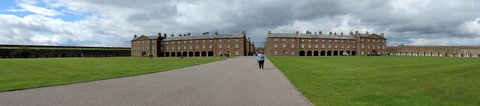
My blog today is set a very long way north of London, but its subject – Fort George on Scotland’s Moray Firth – must have represented a great comfort to Londoners recovering from the shock of the ’45, Prince Charles Edward Stuart’s attempt to regain the throne of his grandfather, James VII of Scotland, II of England.
Charles, known as the Young Pretender or, more romantically as Bonnie Prince Charlie, had led his troops as far south as Derbyshire, causing widespread panic throughout England before he retreated back to Scotland with the realisation that the expected English support was not going to be forthcoming.
The forces of George II in London reacted with brutal force. Charles’s army was slaughtered in the Battle of Culloden in less than an hour on 16th April 1746 and the Young Pretender fled, the hopes of the Stuarts fleeing with him.
The government was not going to take any more chances with Jacobite sympathies in Scotland and put in place an ambitious plan to extend the military roads across the country and to build fortifications that would ensure a rising could never happen again.

14-DSCN9502
The old Fort George in Inverness had proved inadequate against the Jacobites and the town council was objecting strongly to having two thousand “wild and licentious” soldiery located in the heart of their respectable town, so the new fort was eventually located on a spit of land jutting out into the Moray Firth at Ardesier, a safe eleven miles away from Inverness’s citizens and commanding an excellent strategic position guarding the mouth of the Firth.
Fort George was begun in 1748, planned by Lieutenant-General William Skinner and built under the direction of the architectural dynasty of the Adams family – father William (who had worked on Edinburgh Castle), then son John and eventually even John’s brother Robert Adam, one of Britain’s most famous and fashionable architects.15-DSCN9504
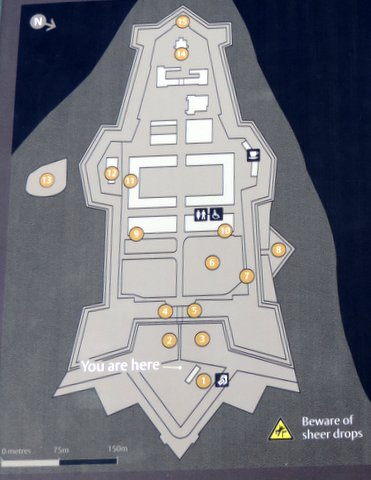
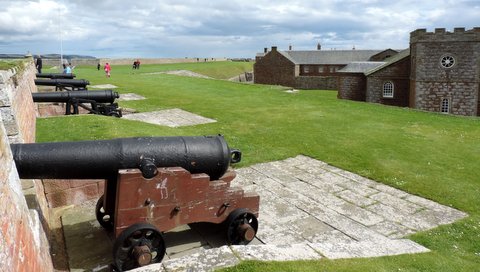
The 42 acre fort cost £200,000, equivalent to £20 million now and more than Scotland’s entire GNP for 1750. It only ever saw one shot fired in anger – and that was by a panicky night-time guard firing on a cow that was approaching the outer defences. As a result the fort appears almost exactly as it did when it was completed and it is one of the most impressive fortifications of the period in Europe. To add to the atmosphere for the modern visitor it is still in use for troops who have been accommodated into the historic fort without adding to, or damaging, the original building.

18-DSCN9513
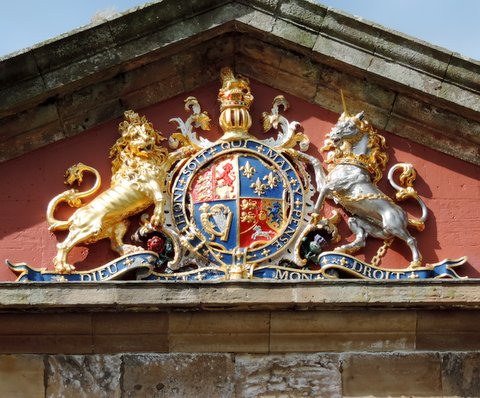
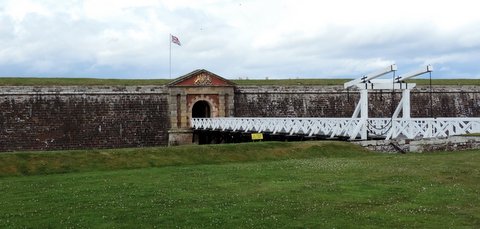
Today one can view the complex and seemingly impregnable series of outer walls, bastions and moats, designed to put any attacker under withering cross-fire.

22-DSCN9537Inside the walls the buildings are handsome and impressive, from the Governor’s house to the barracks (still in use for their original purpose, although with fewer men in each large room and more modern heating and plumbing!) to the gunpowder magazine, the stores and the simple chapel.

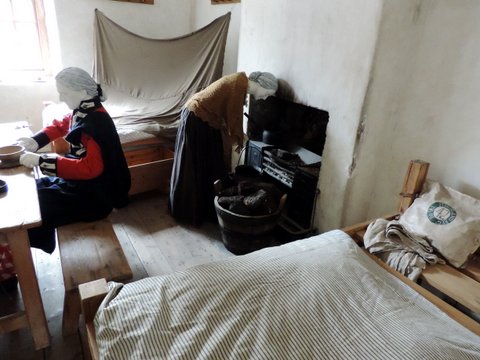
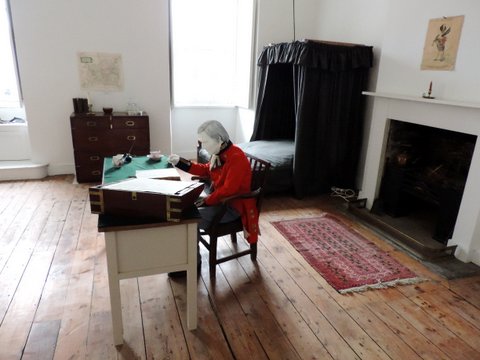
20-DSCN9523The recreated corner of one of the barrack rooms shows the draped blanket that was the only privacy a married couple had in a room sleeping eight men. In contrast one of the senior officers enjoys a room to himself with larger window panes and a smart fireplace. 21-DSCN9525

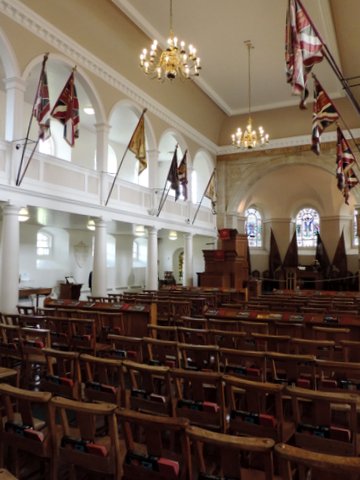
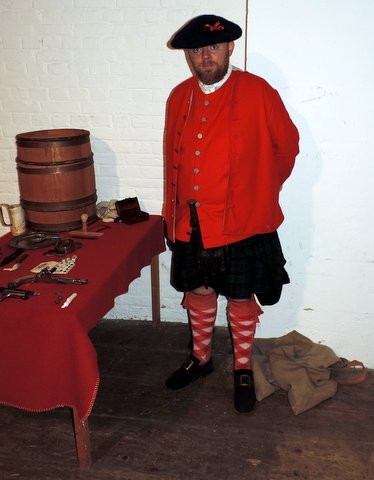
24-DSCN9540 The chapel contains many standards of regiments who have been stationed at Fort George, some of them from the early 19th century. The icing on the cake for me was the re-enactor in the dress of the original Scottish regiments garrisoned there who allowed me to try out all his weapons, including his musket and whose tales of the fort really brought it to life.

19-DSCN9520

5 Comments

Filed under Architecture, Buildings, Military

It Is August In London – Eat Oysters on Oyster Day or Run Away to the Seaside?

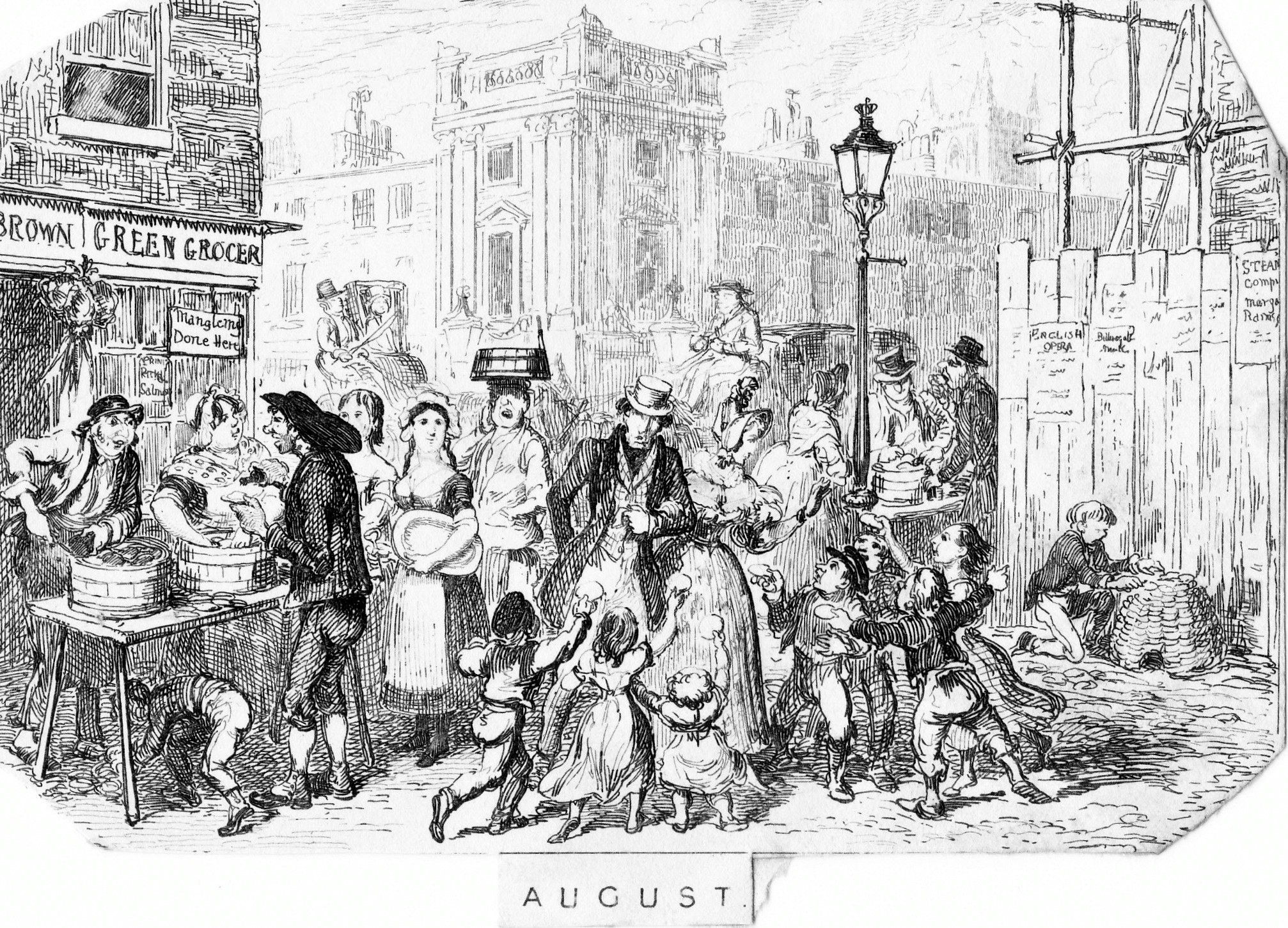
August in London was the time to celebrate “Oyster Day” – the arrival of the first oysters at Billingsgate fish market. The scene on the streets is shown in the first print from Crucikshank’s London Almanac. This was a significant day for the poor for whom oysters was a cheap staple. In London Labour and the Poor Mayhew wrote that “the number of oysters sold by the costermongers amounts to 124,000,000 a year. These, at four a penny, would realise the large sum of £129,650. We may, therefore, safely assume that £125,000 is spent yearly in oysters in the streets of London.”

London August

In the scene working people queue up at two trestle tables to buy oysters. The vendors are opening them and on the left we can see a coal heaver or dustman, distinguished by his hat with a protective neck flap, pouring some kind of relish or ketchup over his.

A small boy is rummaging under the trestle for empty shells and on the right one lad is building them into a construction while other children holding up shells mob a respectably-dressed couple begging for coppers. An article in the Illustrated London News of 1851 explains what must be happening.

“We will not pursue the calculation into how many grottoes might be built from the shells of a year’s supply of oysters…. The coming-in of oysters is observed as a sort of festival in the streets; and in such a nook of the metropolis as the present locality, the grotto is usually built of inverted oyster-shells piled up conically with an opening in the base, through which, as night approaches, a lighted candle is placed within the grotto, when the effect of the light through the chinks of the shelly cairn is very pretty. It is but fair that the young architects should be rewarded for their trouble accordingly, a little band, of what some churl may call urchins, sally forth to collect pence from the passers-by ; and the usual form of collecting the tax [is] by presenting a shell…”

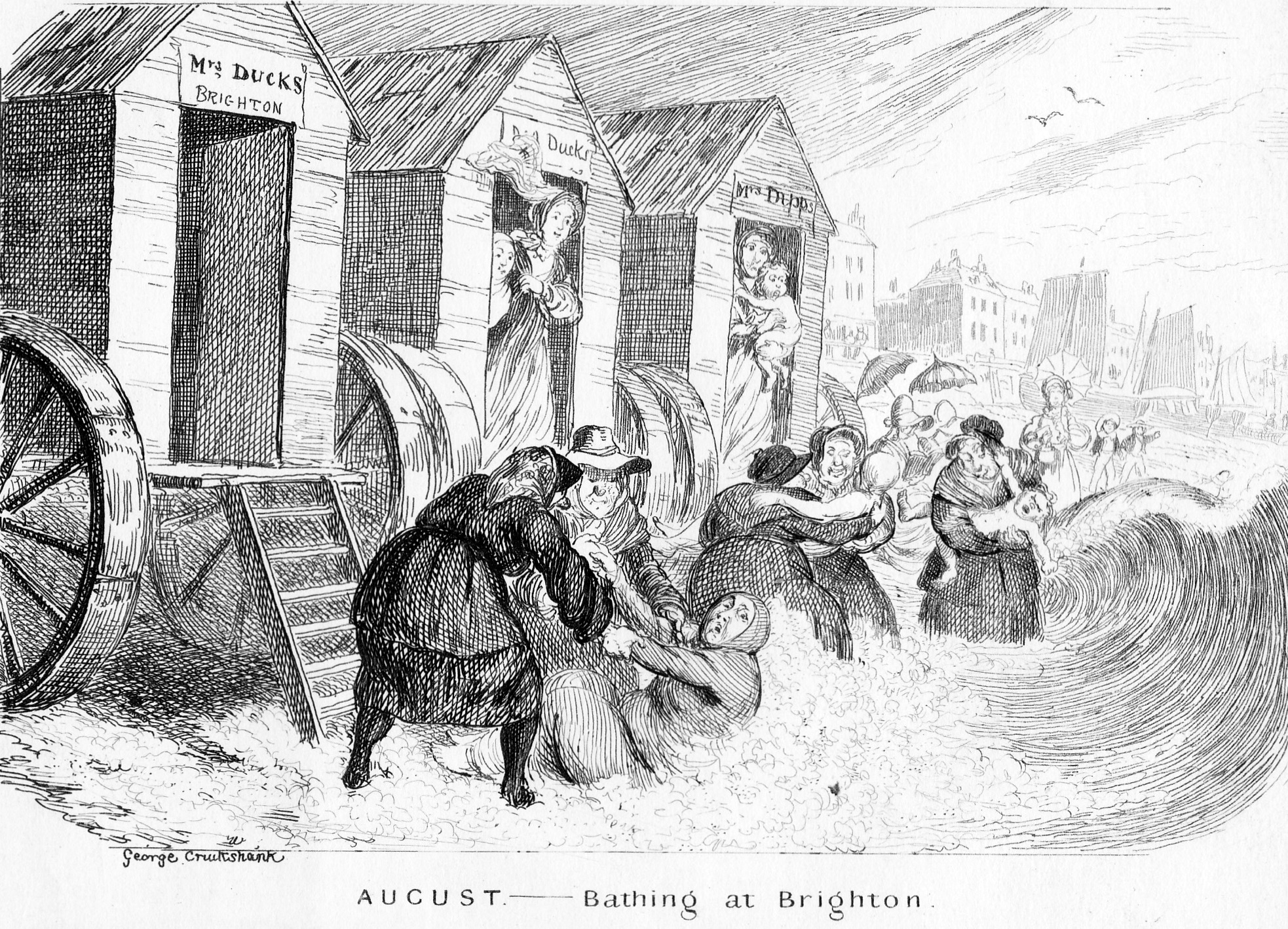
Of course, you might choose to leave the heat and dust of London in August (to say nothing of the smell of discarded oyster shells) and go to the seaside. Brighton, Margate and Ramsgate were closest (if one leaves aside Gravesend, which even in the Georgian period was getting a reputation for being somewhat rough).

Brighton AugustCruikshank has chosen to show bathing machines at Brighton with four burly female “dippers” dunking their quailing customers in the sea. The machines have boards showing the names of the dippers – two for “Mrs Ducks” and one for “Mrs Dipps”. In the foreground a lady is entirely enveloped, head and all, in a flannel “case” while in the middle two dippers are about to plunge a slight figure – a teenage girl perhaps – in backwards. A furious baby is getting a relentless ducking at the far end.

The Margate design of bathing machine, invented by Quaker Benjamin Beale, had a hood which came down to shelter the bather’s modesty, and perhaps divert some of the force of the waves, but these were not used at Brighton.

Although the seaside holiday is often thought of as a Victorian invention they were very much a feature of the Georgian scene for those who had money and leisure. By 1800 every English county with a coastline had at least one seaside resort. Brighton is perhaps the most famous example, but it was by no means the first – Scarborough probably has best claim to the title, although Margate and Brighton were close behind and all three were flourishing in the 1730s, long before the Prince Regent made Brighton notorious.

Brighton did have the benefit of closeness to London that Scarborough did not. In 1821 Dr John Evans remarked on stagecoaches doing the journey in six hours and predicted that balloon travel would reduce it to four hours in the future and in 1823 Cobbett wrote of “stock-jobbers…[who] skip backwards and forward on the coaches, and actually carry on stock-jobbing, in ‘Change Alley, though they reside in Brighton.” In 1834 four hundred and eight passengers arrived by coach in Brighton in one day, and 50,000 were recorded for the year.

Just as beach-wear and cruise-wear figure in the fashion magazines today, outfits for seaside visits were carefully chosen. Here is one from La Belle Assemblée designed by Mrs Bell for “Sea Coast Promenade”. personally I think the wearer has located the gentlemen’s bathing beach and has no intention of promenading any further…

1809 telescope

6 Comments

Filed under Entertainment, Fashions, Food & drink, Seaside resorts

A Blue Plaque for Georgette Heyer

An absolute favourite writer for most lovers of the Regency is Georgette Heyer, and the great news is that on Friday 5th June English Heritage unveiled a Blue Plaque at 103, Woodside, Wimbledon, where Georgette was born on 16th August 1902.
I’ve been a Heyer fan as long as I can remember, and I particularly get a thrill when I’m in the History stacks at the London Library in St James’s Square and recall that this was where she did so much of her research.
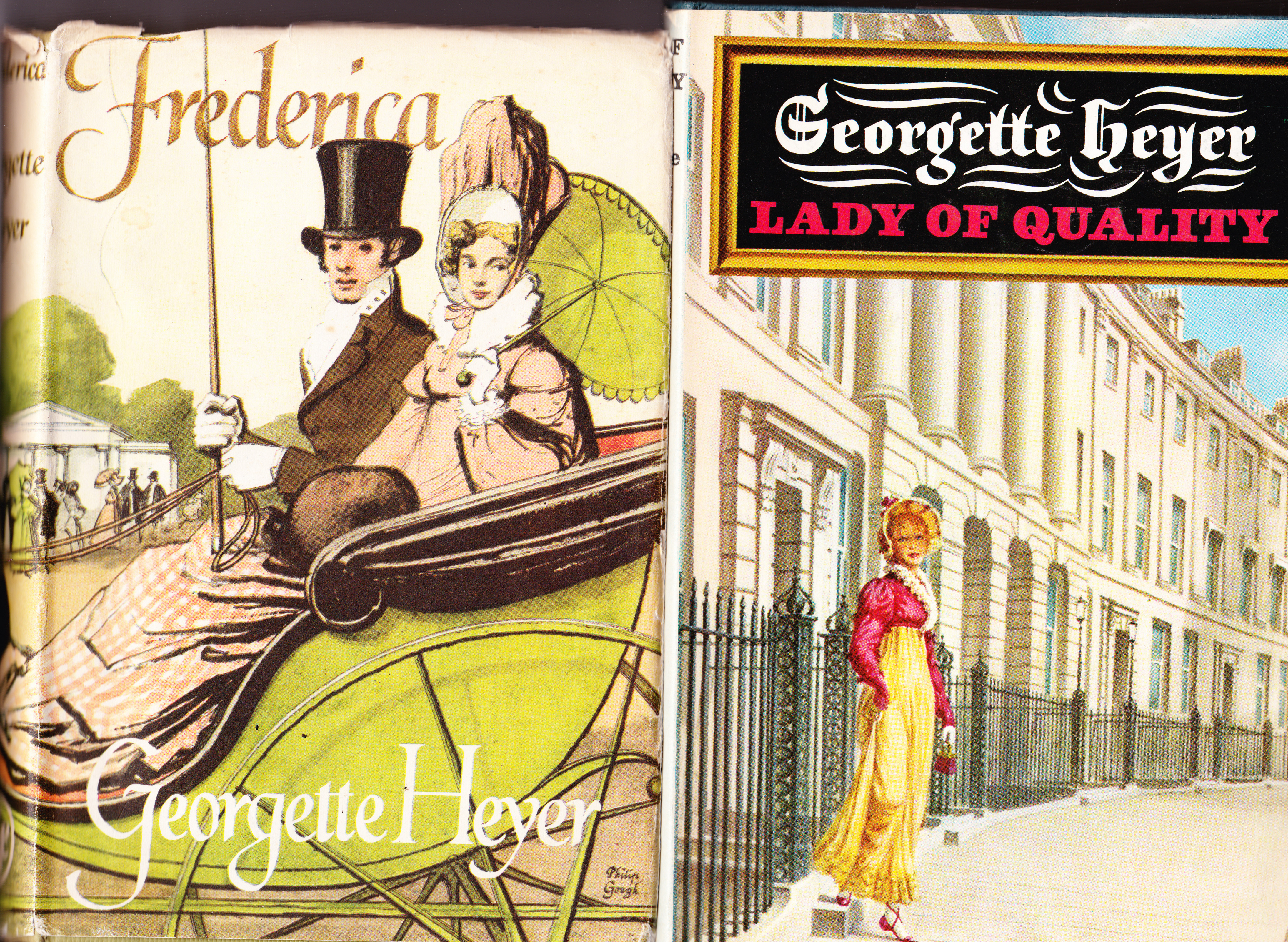
Heyer’s novels are a treat for anyone who loves Georgian London and my favourite is Frederica, with its priceless image of the dreadful dog Lufra chasing the cows in Green Park, even if it does contain one of Heyer’s few research failures when she located the Soho Foundry, not in Birmingham, but in…Soho.
For anyone who is inclined to dismiss her writing as romantic froth, I would recommend Jenny Haddon’s post http://jennyhaddon.com/?p=973 “The Space Between the Words” on the understated power of her writing. And if you haven’t already read it, Jennifer Kloester’s biography Georgette Heyer, is the perfect accompaniment to her books.
I’ll leave you with a picture of two books from my collection, including one of my precious first editions. And if you like to see a (good) feature film, made of one of her novels, why not sign the petition http://www.petitionbuzz.com/petitions/georgetteheyerfilm
Heyer_0002

5 Comments

Filed under Books

It’s June and the Pictures Are On the Wall

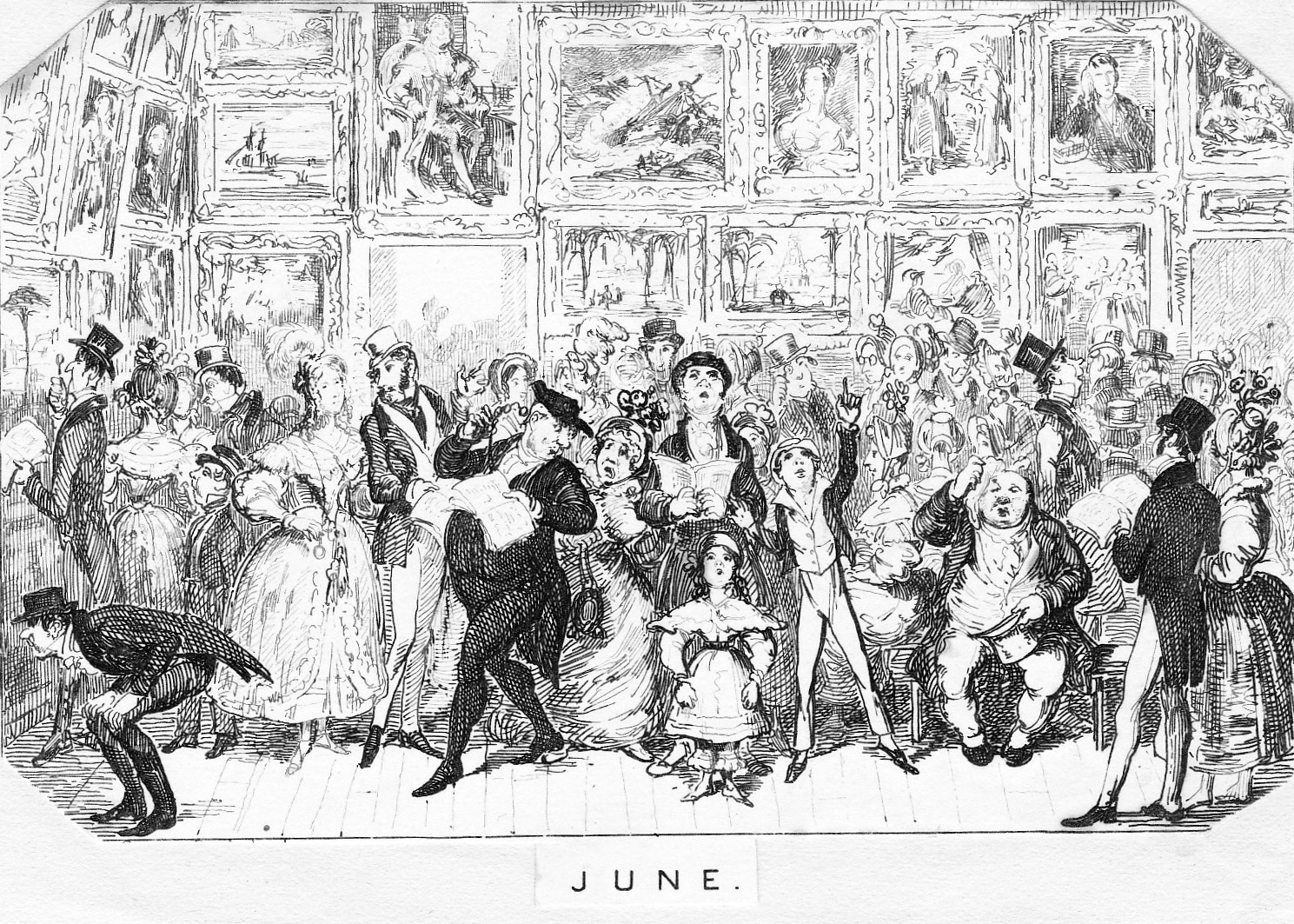
JuneFor the first of June here is another of Cruickshank’s delicious drawings of London life month by month. It shows the Royal Academy’s Summer Show with the gawping crowd of connoisseurs, fashionable types and sightseers, all jammed in to look at the pictures hung floor to ceiling in the fashion of the time. This was one of the major events in the London Season and has been held every year since 1769.

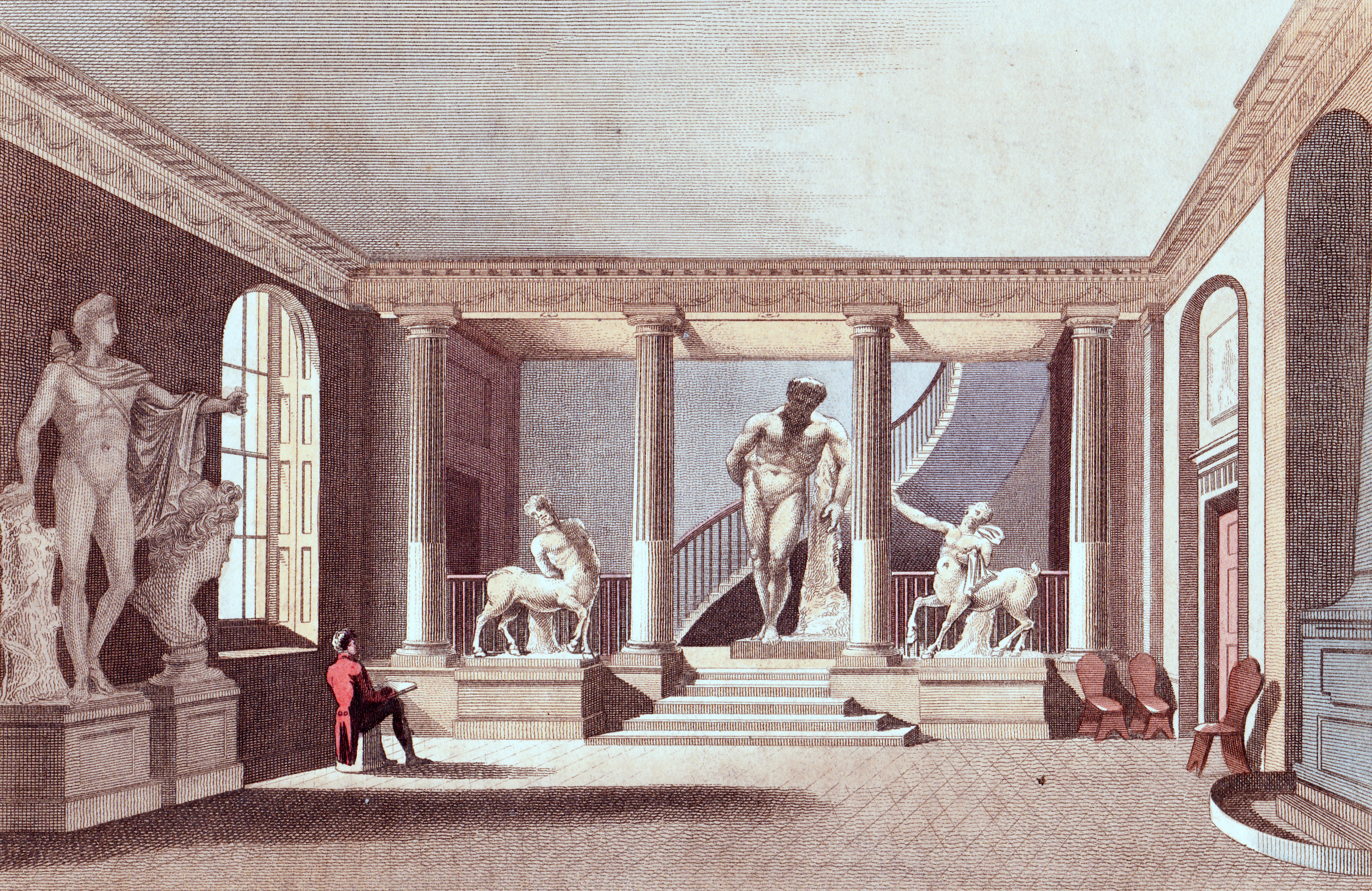
Here is Henry Alken’s view of the same event, drawn in  1821. Summer showThe Royal Academy was initially located in Pall Mall, then moved in 1771 to the first completed wing of New Somerset House, in the Strand. In 1837 it occupied the east wing of the recently completed National Gallery in Trafalgar Square and in 1868 it moved to its present location, Burlington House, Piccadilly. The plate below from Ackermann’s Repository for May 1810 shows the “Hall at the Royal Academy, Somerset House” with an artist sketching one of the plaster casts of Classical statues.

Royal Ac

Leave a comment

Filed under Art, Buildings, Entertainment, High Society

The Road to Waterloo Week 14: Napoleon Presents Eagles, Haymaking Begins & The Cavalry Passes in Review

On the first, and only, sunny Sunday of the entire 100 Days, Napoleon held a great military parade at La Place du Carrousel in Paris. 25,000 troops passed before him, comprising five regiments of line, four of the Young Guard and a party of recruits, not yet in uniform. They shouted Vive l’Empereur as they marched and he came down from his podium to join the Guard. Paris was full of troops now, as they marched through towards the border.
By the end of May the total armed forces available to Napoleon had reached 198,000 with 66,000 more in depots training up but not yet ready for deployment.

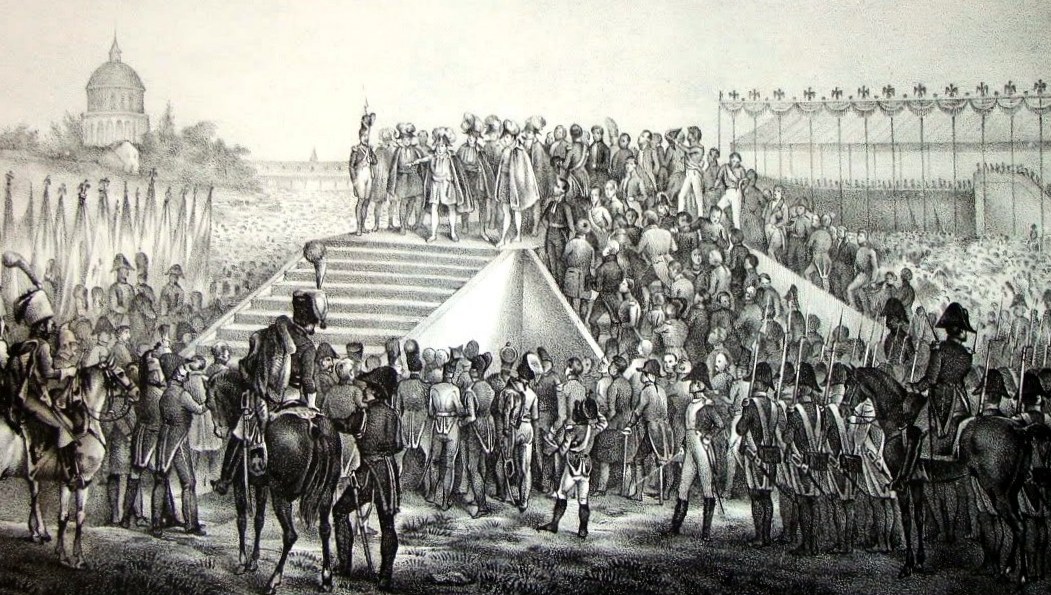
Finally the much-postponed Champ-de-Mai arrived, on June 1st. Champ de Mai The sun had deserted Paris again and it was a cold, grey day as 200,000 people assembled in the Champ de Mars, most of them unable to see what was going on within the wooden arena built for the ceremonial. The court, the university, the magistrates, all turned up in their robes and then had to wait for hours until Napoleon finally appeared in a purple mantle that was too tight and too short and which gave him great problems as he came down the steps to his throne. One observer described him as looking “ungainly and squat”. Declarations and promulgations were read, speeches were made and a Te Deum sung. Napoleon then processed to a throne on a pyramid, surrounded by soldiers brandishing swords and flags while he distributed eagles to the National Guard and the army.

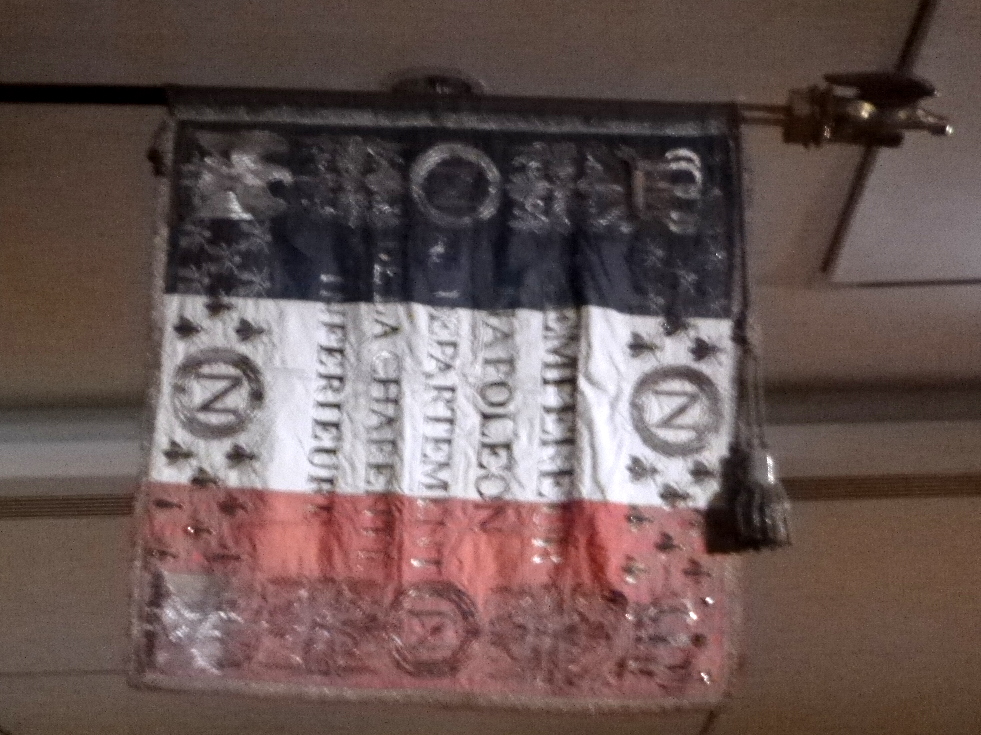
I was thrilled to see two of the actual eagles Napoleon distributed at the “Bonaparte and the British” exhibition at the British Museum. They were captured at Waterloo and sixty seven of them were presented to Wellington by a grateful King Louis. The banners are beautifully worked in silver bullion thread on silk.

EagleA British observer noted that all the enthusiasm came from the troops – the ordinary people were mainly silent.
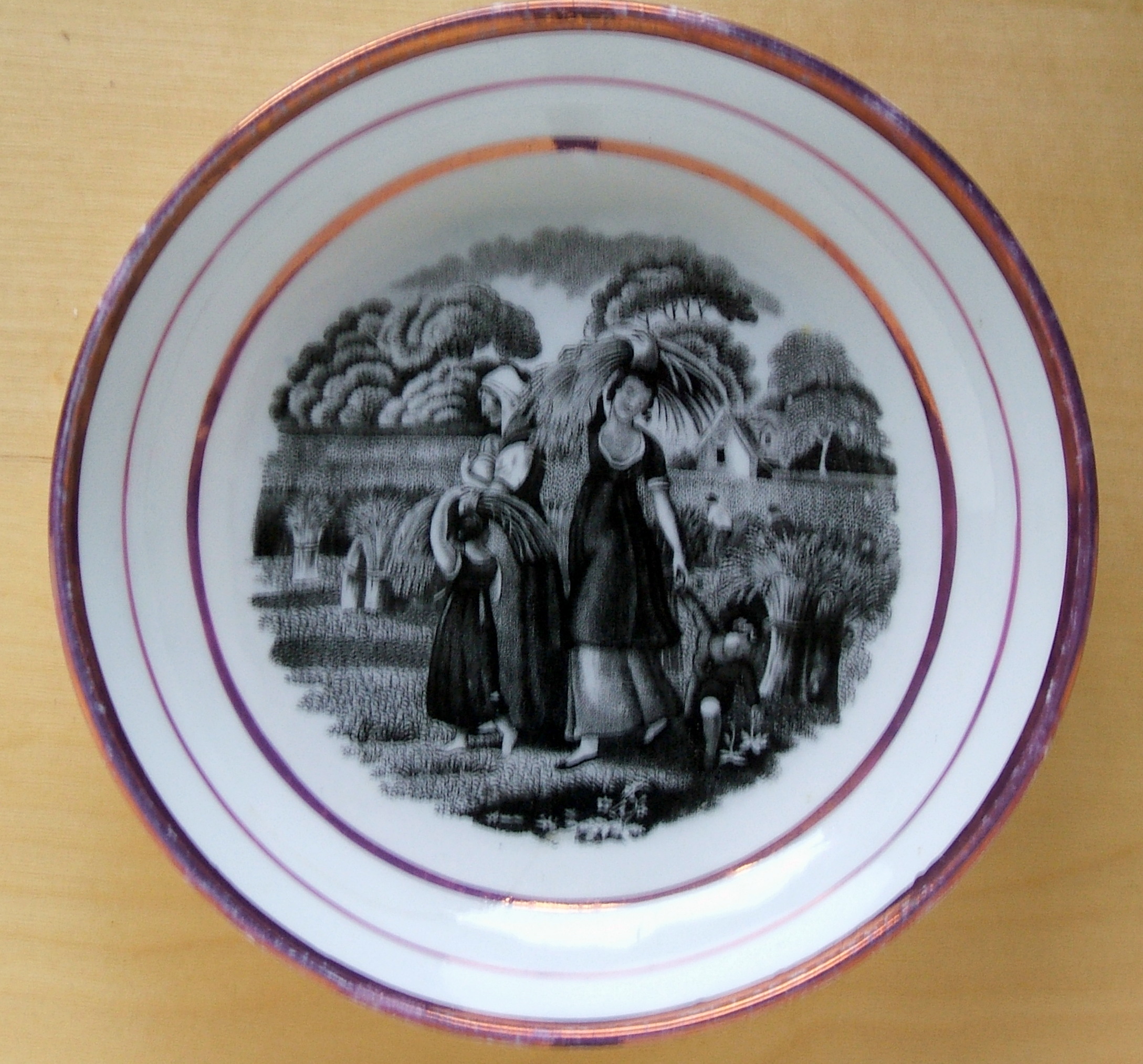
In London the ton were making ready to depart to country estates, spas or seaside resorts.  “Fashionable Departures” noted in the Morning Post for June 1st included the Duke and Duchess of Newcastle, off to Lincolnshire; the Duke of Marlborough to Sion Hill; Mr Drake, MP, for Tunbridge Wells and, more ominously, “Captain Mackenzie for the continent.” The sun was shining at last and farmers were getting ready for haymaking. Below is an idyllic country scene of harvesters

Pic009
Near Brussels things were clearly moving towards a confrontation. On 29th May the Earl of Uxbridge held a review of British cavalry near Ninove, a major event which was attended by Blücher, the Duke of Brunswick, the Prince of Orange and the King of the United Netherlands as well as a large number of Russian and Prussian generals. The day before there was a parade in Brussels and Wellington hosted a dinner. The next day the cavalry assembled in the meadows – almost 7,000 in number. “46 of the finest squadrons of cavalry ever seen were drawn up in a place in their lines, with 6 troops of Horse artillery and a Brigade of rockets,” with thousands of spectators, including “all the haut ton of Brussels,” according to one spectator.
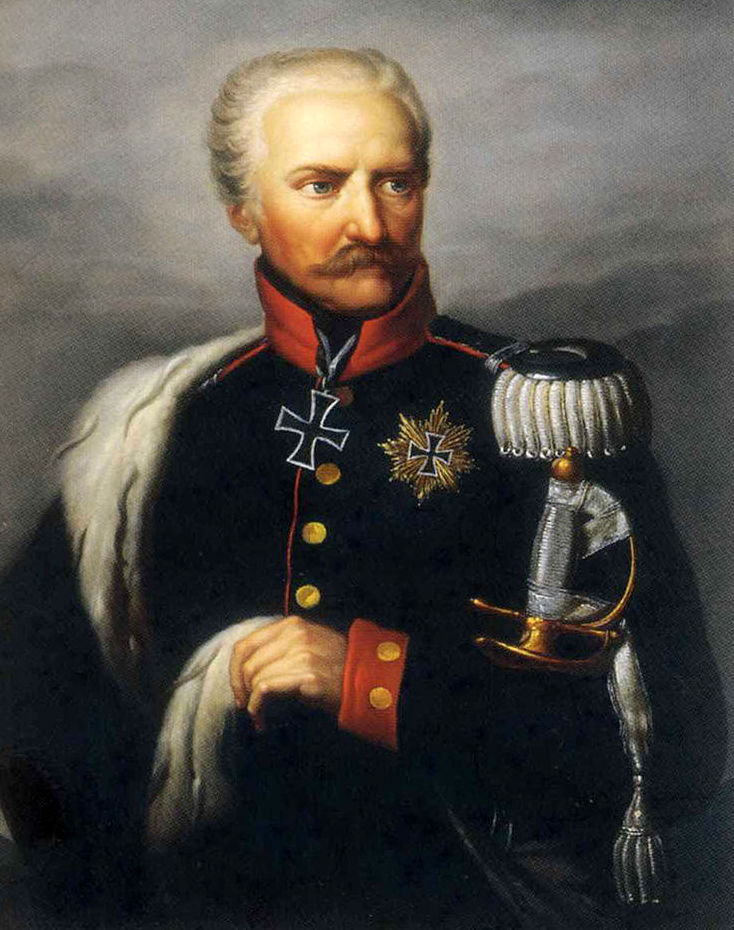
It was followed at 5 o’clock by a banquet for a hundred guests, all accompanied by “the finest wines.” Apparently the meal ended and the party broke up at 8 o’clock, far too early for Marshall Blücher, (shown below left) a man who enjoyed hard drinking.

Blucher
Despite this clear indication that the fighting could not be far off, the British in Brussels thought that the Allied troops would march off to meet the French close to, or over, the border. Visitors to Brussels and to Flanders generally, continued to arrive on sightseeing trips, quite confident of their personal safety.

2 Comments

Filed under Agriculture, Battle of Waterloo, Napoleon

The Road to Waterloo Week 13: War Is Declared at Last, the Prince Regent Builds and the Mob Protests

France was still in the grip of a miserable, cold, foggy Spring but Napoleon would have been encouraged by Britain’s reluctance to declare war, giving him more time to wrestle with his constitutional and political problems and continue to expand his army.
An insecure British government was facing Radical opposition within the Commons and on the streets, the economy was shaky and everyone was depressed by the weather. The price of bread was rising, the farmers were having a tough time because of the rain and the King’s health kept him out of the public eye – “his disorder continues without any sensible alteration,” according to the bulletins.

Carlton House detail
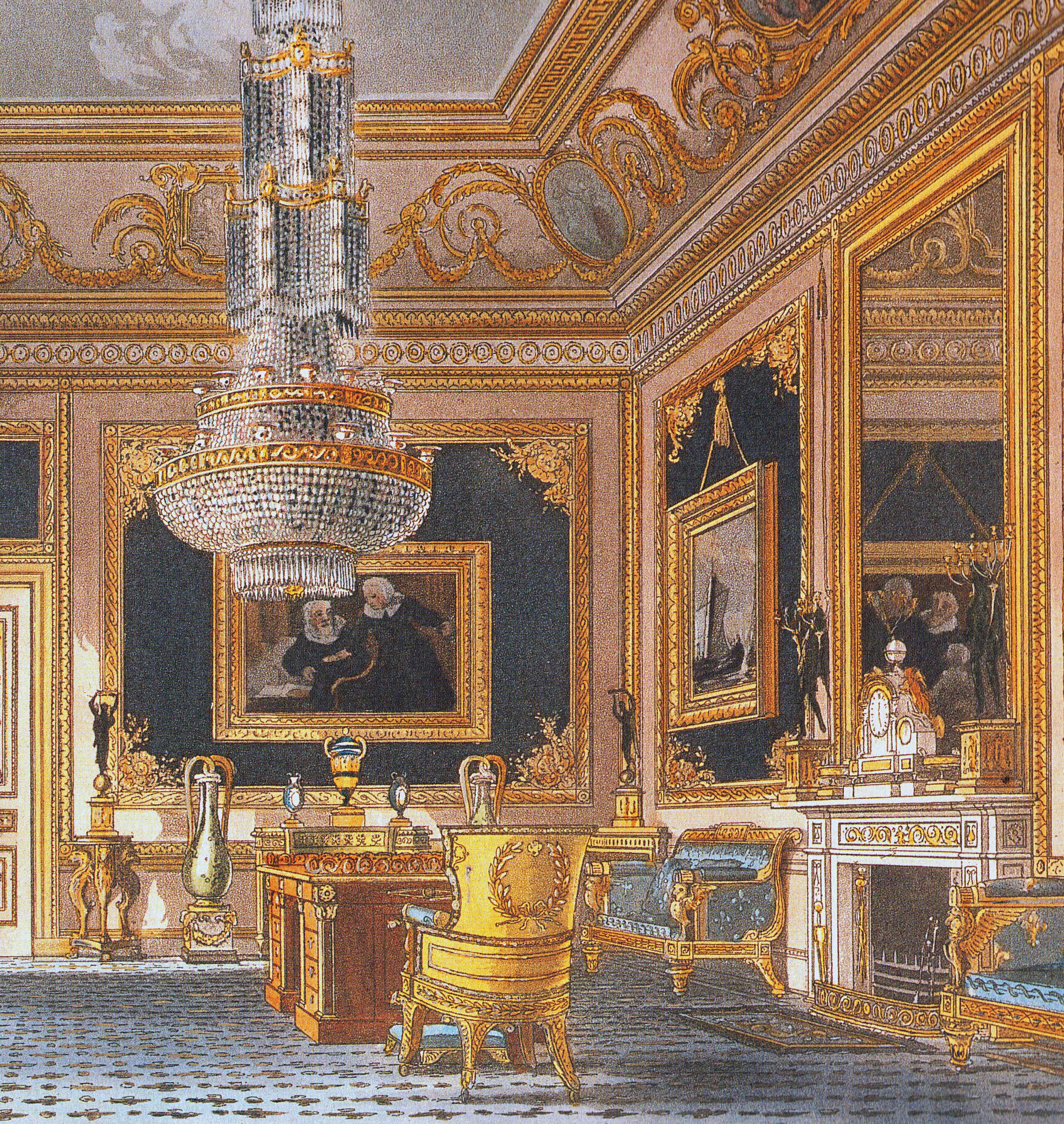
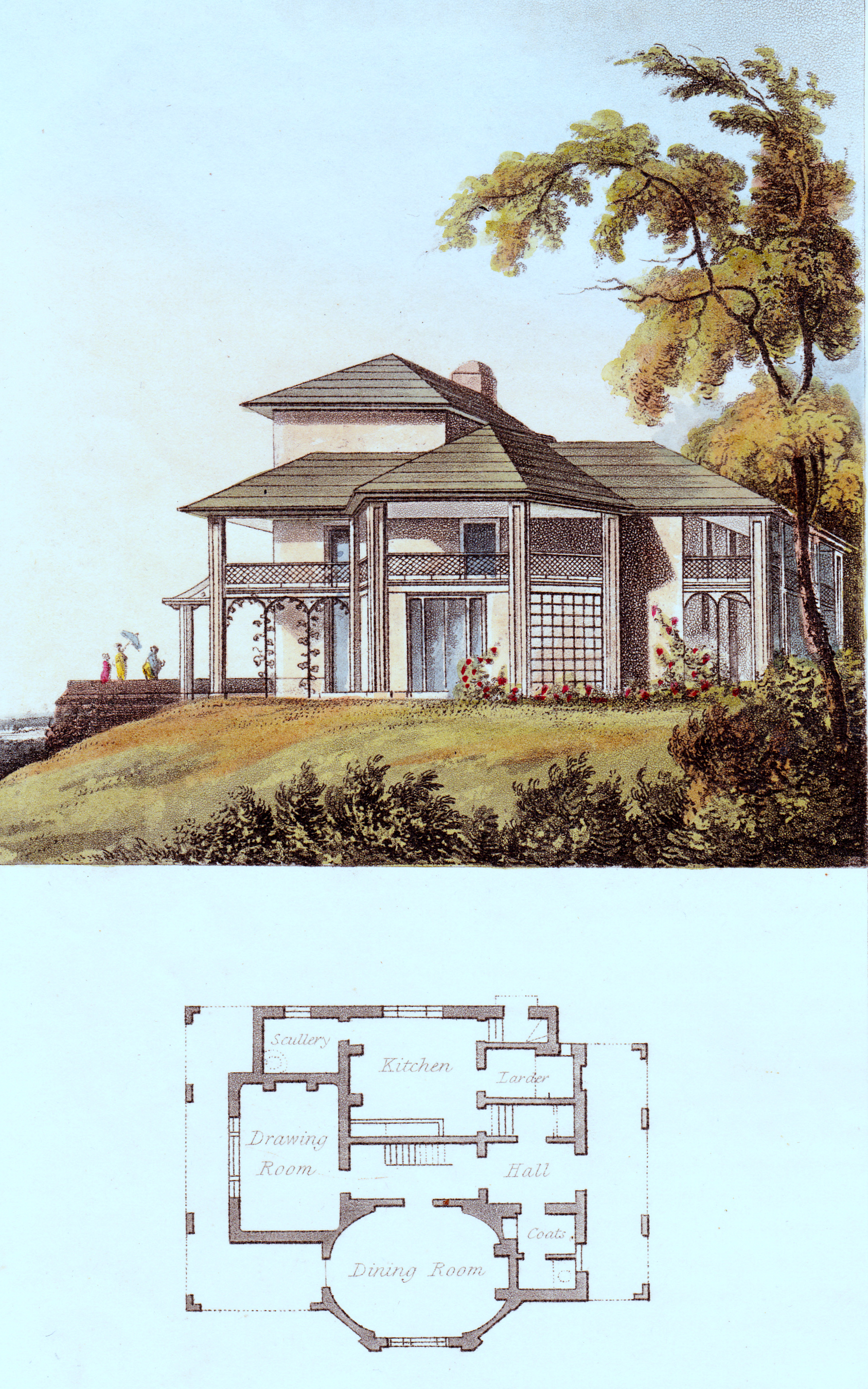
Only the Prince Regent seemed to be in a good mood – or perhaps he was keeping his spirits up with an orgy of lavish building works. A gothic-style dining room was added to Carlton House along with a library in the same style and a golden drawing room. Above is a detail of the Blue Velvet Room at Carlton House, a good example of the Regent’s lavish taste. At the same time John Nash was working on a “cottage” for the Regent in Windsor Great Park, a large and elaborate house the cottage orné style, with thatched roofs, verandas, and a conservatory. (It was demolished by William IV and the Royal Lodge now stands on the site). Nash was also working on further plans for the Pavilion at Brighton. Below is an example of the cottage orné style, although this is a much smaller example than Nash’s would have been. The drawing is from Ackermann’s Repository (November 1816)

cottage ornee
The Whigs were attacking the head of the diplomatic corps, Lord Castlereagh, and, through him the Congress of Vienna, dominated by Russia, Prussia and Austria who, they said, were a threat to independent nations. Vociferously led by Samuel Whitbread they argued that Napoleon had the support of the French people and it was wrong to go to war simply because Britain did not like him. Whitbread argued that the Emperor was now peace-loving, Castlereagh countered that once he had assembled 400,000 troops it would soon become apparent how peace-loving he was.
The harassed government was faced with mobs on the streets protesting about the Corn Law, the Income Tax, the slave trade and the Prince Regent’s extravagance, but they finally decided that Napoleon was secure on the French throne and that war was inevitable. The Allied Treaty, signed at Vienna on 25th March, was laid before the House at last – if Parliament ratified it, it became a declaration of war. It was approved in the Lords by 156 votes to 44 and in the Commons by 331 to 92 on 25th May. War was now inevitable, the only question was – when?
The firebrand Samuel Whitbread fell strangely silent after this, his place as the radical leader taken by Francis Burdett and Henry Hunt. Whitbread may have been in financial difficulty and earlier in the month he had resigned his management of Drury Lane Theatre, in which he had invested a great deal of money.
At Drury Lane on the 24th, there was a benefit performance by Edmund Kean, announced as a never-before performed tragedy by Shakespeare. The newspapers the next day were respectful of Kean, but sarcastic about the play.
“MR KEAN took his benefit last night. A tragedy by SHAKESPEARE – “never acted” had been announced as the performance of the evening; but “insurmountable difficulties” opposing the execution of this design, (no great wonder, bye the bye, for what play, undoubtedly SHAKESPEARE’S, can we at this time of day, take upon ourselves to assert, had never been acted?) the tragedy of the “Revenge”, was substituted, and MR KEAN appeared for the first time as the representative of Zanga.”

Leave a comment

Filed under Architecture, Entertainment, Napoleon, Prince Regent

The Road to Waterloo Week 12 – Income Tax is Here to Stay, A Famous Dipper Dies and Naploleon Digs In

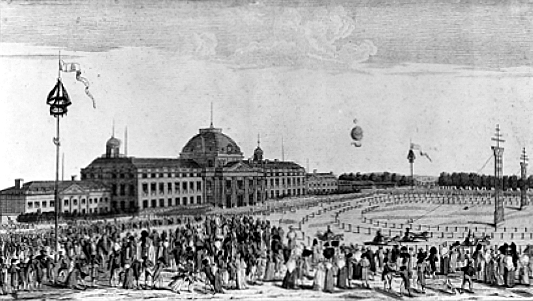
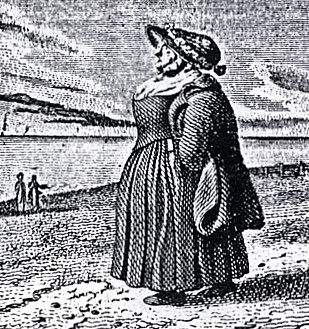
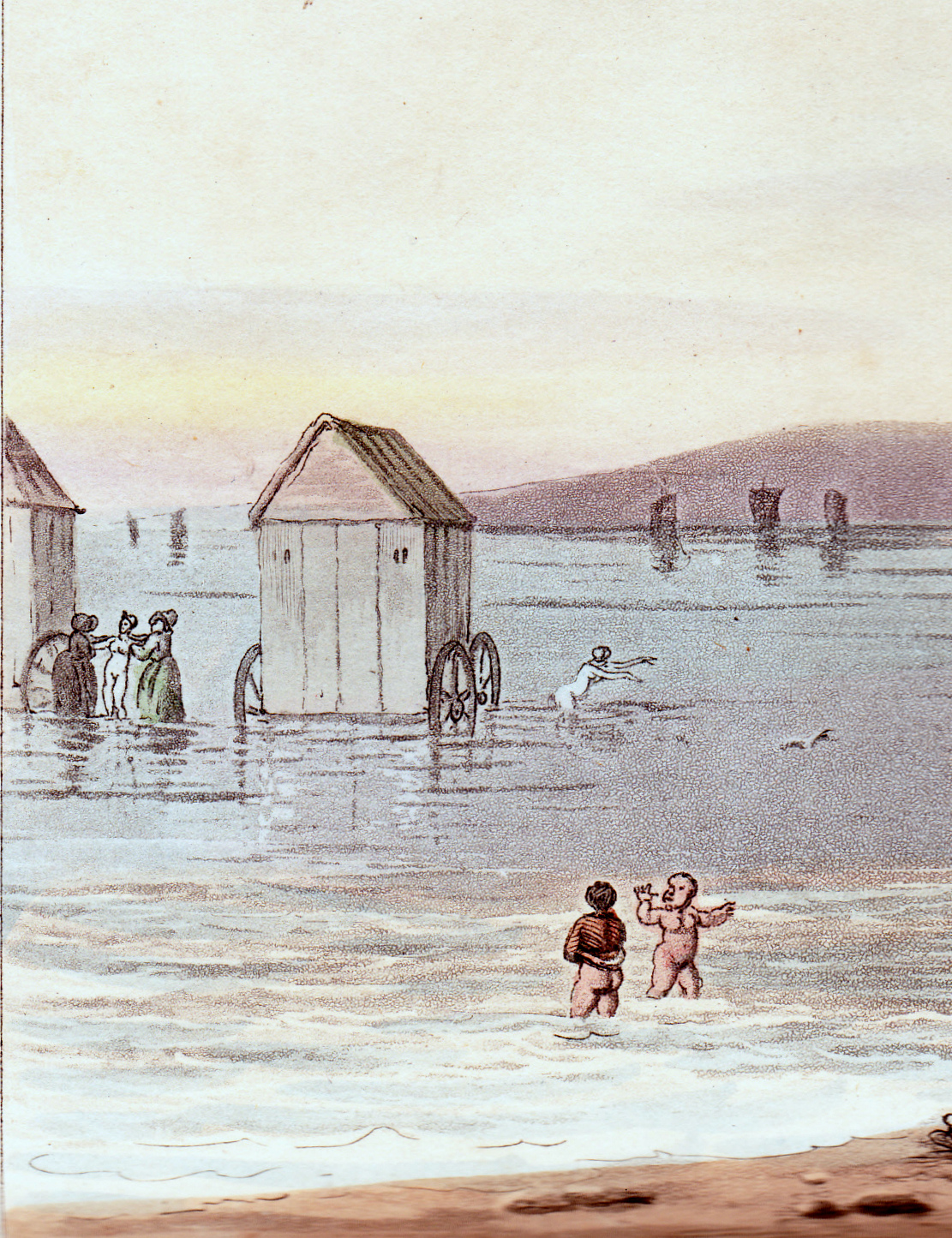
The Fédéres, the hard-core revolutionary group, had attracted tens of thousands of supporters by the second week in May – but this was out of a nation of thirty million and the level of true support for Napoleon was still unclear, not only abroad but also in France. On Sunday 14th May twelve thousand Fédéres marched past Napoleon in the Tuileries, just before the usual Sunday military parade. They were unarmed and appeared in their working clothes – “labouring dresses and dustmen’s hats” according to one observer. While they waited for the muskets that Napoleon promised them (and his Ministers were very dubious about providing) they continued to work on the barricades. Napoleon would ride out every morning to inspect the works which created vast muddy ramparts from Montmartre to Vincennes. Champ de Mars Since early April work had been going on to create a huge temporary amphitheatre on the Champ de Mars. This was intended to house the Champ de Mai which would include a national congress – or perhaps a celebration of the new constitution or… Plans wavered, were changed, fiddled with… but the work went on, with platforms and flag staffs, a vast throne on top of a pyramid and hordes of eagles. Eventually it was held on June 1st. The Champ de Mars still remains as a public park in Paris, located between the Eiffel Tower to the northwest and the École Militaire to the southeast. It was named after the Campus Martius in Rome – the field of Mars, the Roman god of war. The space was intended as a drilling and marching ground for the French army. The print shows the École Militaire end of the Field. In England feelings were unsettled. War had still not been declared, but military encampments were springing up all over the south of England, 6,000 horses had been purchased and sent to the Thames ports and 1.5 million cartridges were shipped out of the Ordnance Wharf at Chatham. To further lower the public mood the weather was atrocious, the price of bread was rising, the King’s health was very poor and the promised abolition of the Income Tax had not occurred – in fact on May 12th a Act had been passed to extend it for another year. Newspapers recorded petitions against the war, but the opinion columns made it clear that a declaration was inevitable. Marth Gunn A notable personality had passed away the week before and on Monday the Morning Chronicle recorded the funeral of Martha Gunn, a famous ‘dipper’ or bathing woman from Brighton. “The whole town was in motion to witness [the funeral]. Her remains were followed to the grave by about forty relatives and friends, chiefly bathers. The ceremony throughout was conducted with the greatest order and solemnity.” The print shows the sturdy figure of Martha – she must have needed that solidity and layer of fat to stand in the sea day in, day out, helping to dunk bathers who had been prescribed regular immersion in the sea by their doctors. Dipping The detail from a coloured print shows two sturdy dippers assisting a completely naked female bather, with another striking out from her bathing machine unaided. This is from Political Sketches of Scarborough (1818) and it is interesting that the bathers are nude and that no-one on shore shows the slightest interest in them.

5 Comments

Filed under Napoleon, Seaside resorts, Women

All About April – Fools and Showers

April showers

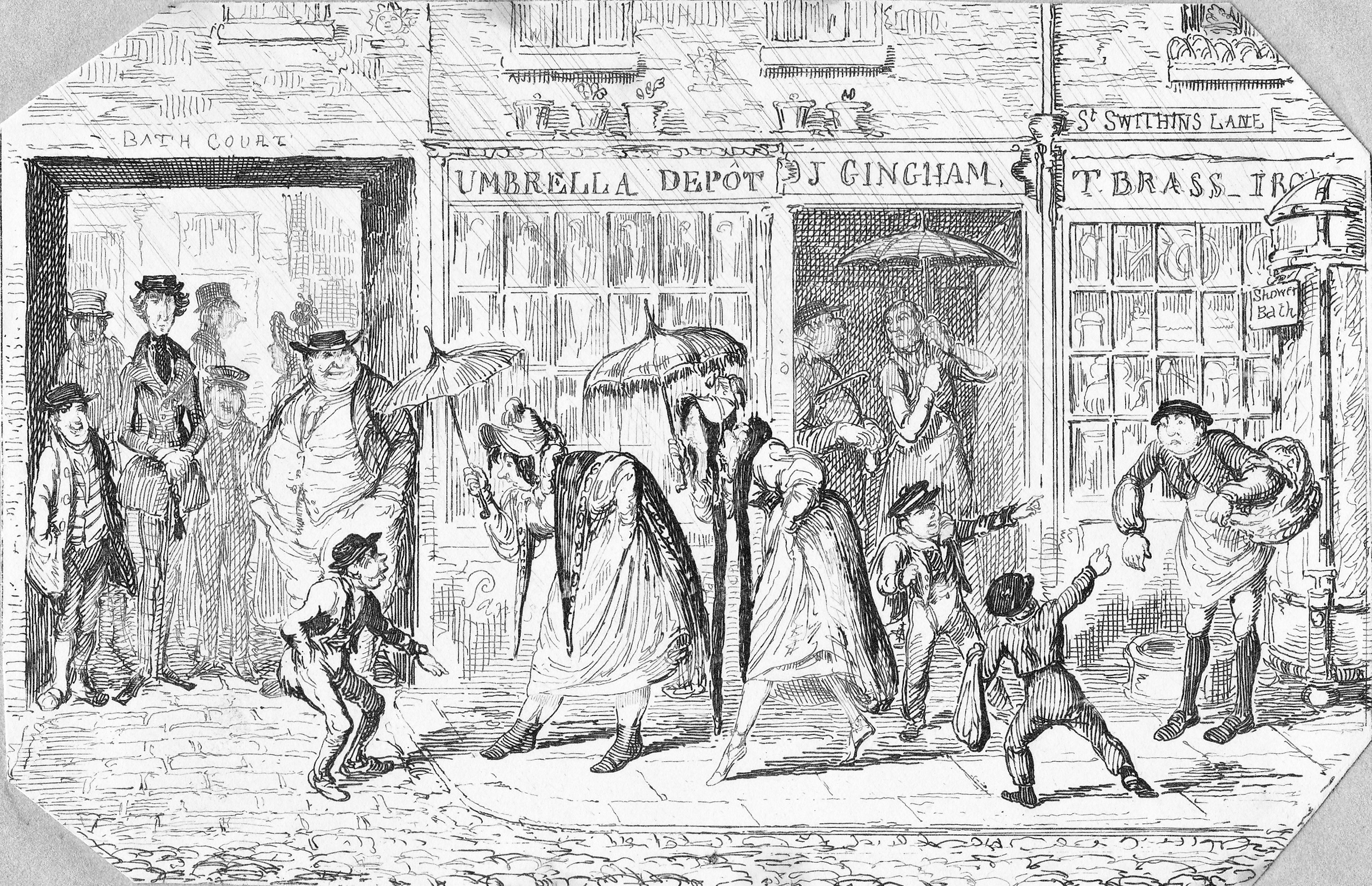
These days April is famous for its showers and its fools, and I love this illustration by Cruickshank showing two ladies caught out in the rain while everyone else is either sheltering under an archway or buying a new umbrella from J. Gingham, Umbrella Depot. I’m not sure what the three lads are doing – possibly they are up to some kind of April Fool’s Day prank. As always with these tiny Cruickshank drawings the fun is in the details – behind the pieman with his basket is a shower bath standing outside T. Brass, Ironmonger. And, of course, the scene is set in St Swithin’s Lane. There is a real lane of that name in London, running between Cannon Street and Lombard Street in the City. St Swithin’s Day is July 15th, but the connection with rain was obviously too much for the artist to ignore.

St Swithun’s day if thou dost rain
For forty days it will remain
St Swithun’s day if thou be fair
For forty days ‘twill rain nae mare.

For April Fool’s Day in the Georgian era I turned to Observations on Popular Antiquities, Chiefly Illustrating the Origin of our Vulgar Customs, Ceremonies and Superstitions by John Brand (1813). They don’t write titles like that any more. Brand considered it to be of Druidical origin (but then he considered a great deal was) and comments that it was observed from ancient times all over the kingdom, and in France. “The wit chiefly consists in sending persons on what are called sleeveless errands, for The History of Eve’s Mother, for Pigeon’s Milk, with similar absurdities. ” He quotes rather a charming little love poem, dated 1798:

To  A Lady, who threatened to make the Author an April Fool

Why strive, dear Girl, to make a Fool,

Of one not wise before;

Yet having ‘scaped from Folly’s School,

Would fain go there no more.

Ah! if I must to school again,

Wilt though my teacher be?

I’m sure no lesson will be vain

Which though canst give to me?

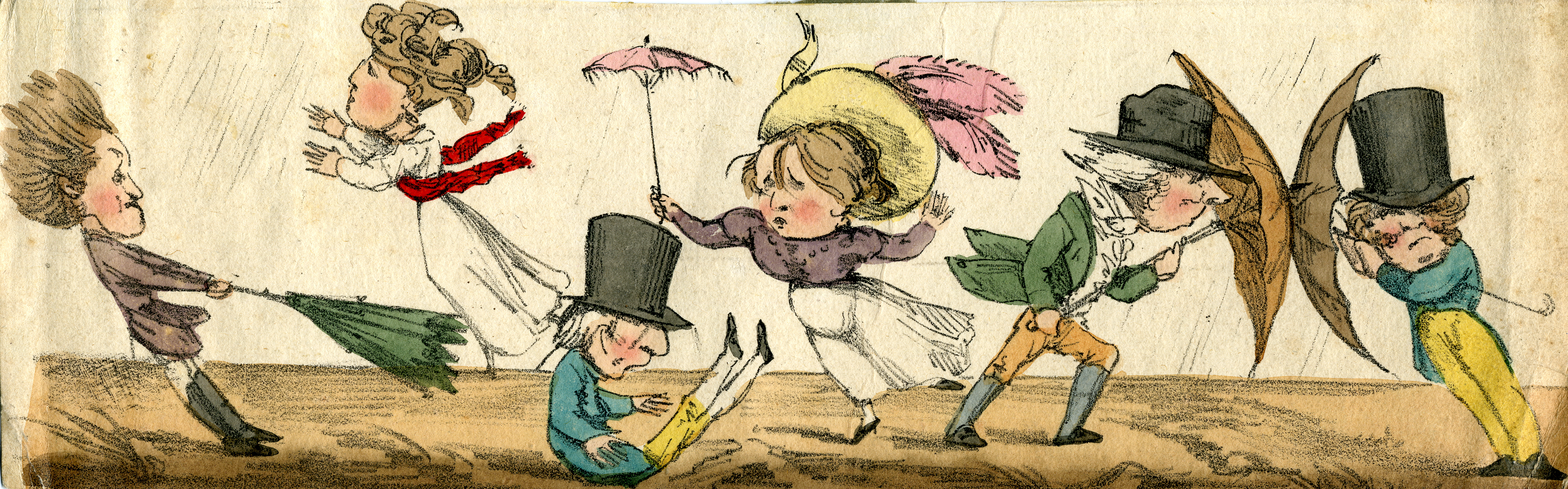
And finally, as we are buffeted here in England with a windy beginning to the month, I’ll leave you with this delightful little watercolour sketch. It isn’t signed or dated, unfortunately.

Windy weather

5 Comments

Filed under Street life, Traditions, Weather