
This year Plough Monday, the first Monday after Twelfth-day, fell on the 10th January. Traditionally, especially in the North, the East Midlands and East Anglia, this marked the day when work resumed in the fields after the Christmas festivities, although I can’t imagine that every farm labourer was sitting about having a nice rest throughout the twelve Days of Christmas!
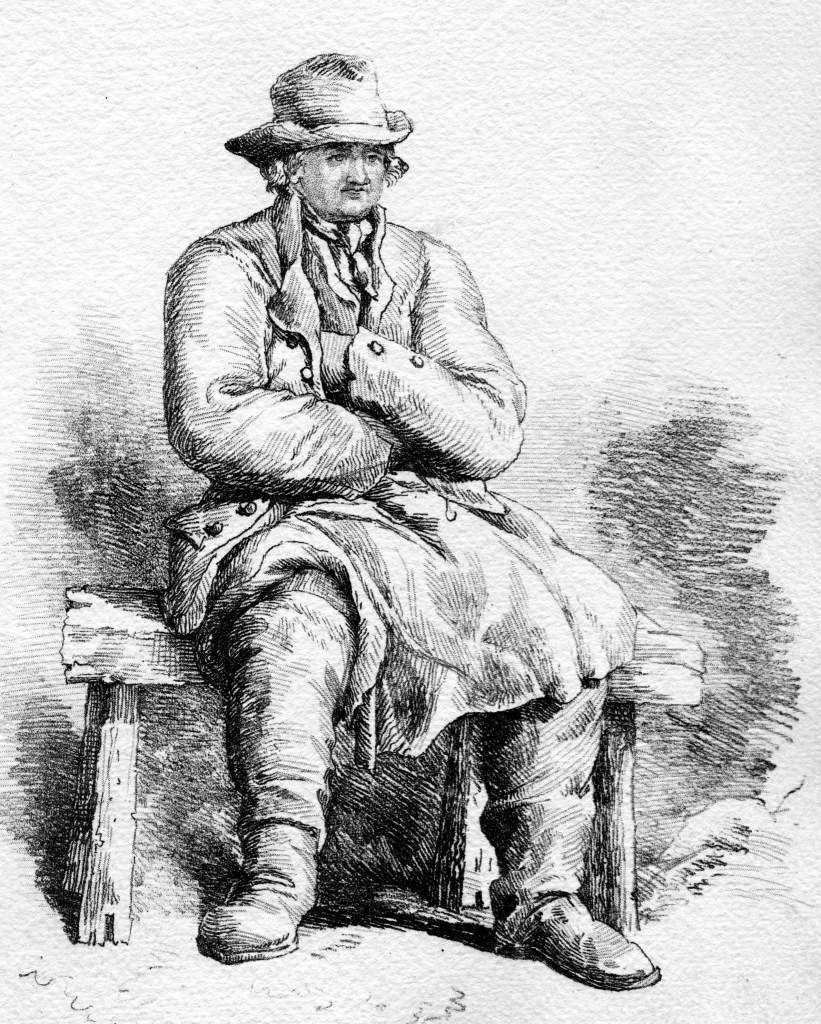
This chap, illustrated by W H Pyne in his Rustic Figures (1817) is clearly well dressed up for a return to work in the cold and the mud.
In the Middle Ages the church had a role in this start to the agricultural year, although the Reformation put an end to that. In 1538, Henry VIII forbade “plough lights” in churches, and Edward VI forbade the “conjuring of ploughs” – presumably their blessing by the local priest.
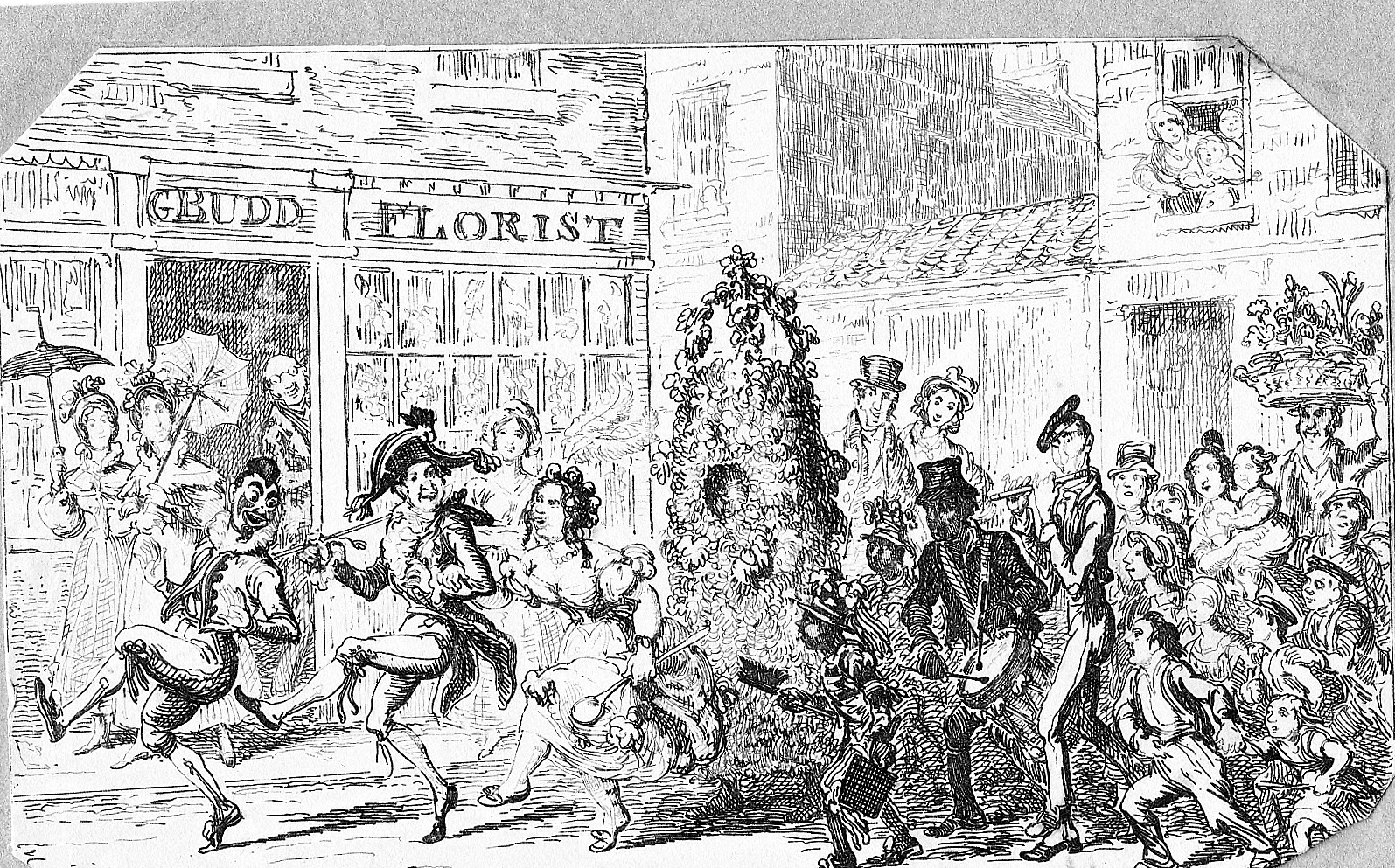
By the early 19th century, even where it survived, the custom seems to have lost all religious involvement and to have become an excuse for fun and games and collecting money as this image shows –
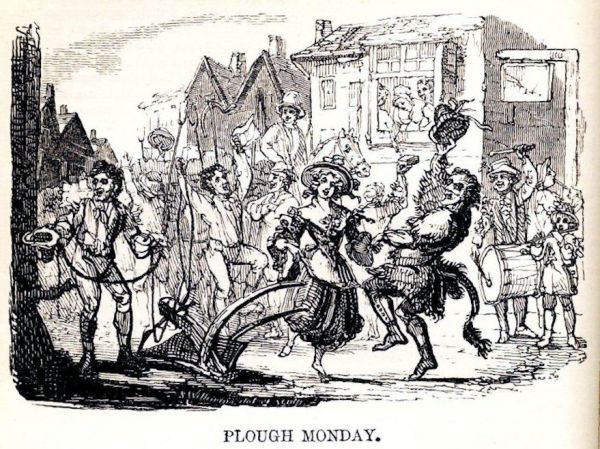
William Hone in his The Every Day Book (1825) describes what went on:
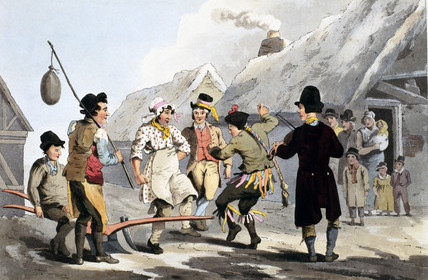
The first Monday after Twelfth-day is called Plough Monday, and appears to have received that name because it was the first day after Christmas that husbandmen resumed the plough. In some parts of the country, and especially in the north, they draw the plough in procession to the doors of the villagers and townspeople. Long ropes are attached to it, and thirty or forty men, stripped to their clean white shirts, but protected from the weather by waistecoats [sic] beneath, drag it along. Their arms and shoulders are decorated with gay-coloured ribbons, tied in large knots and bows, and their hats are smartened in the same way. They are usually accompanied by an old woman, or a boy dressed up to represent one; she is gaily bedizened, and called the Bessy. Sometimes the sport is assisted by a humorous countryman to represent a fool. He is covered with ribbons, and attired in skins, with a depending tail, and carries a box to collect money from the spectators. They are attended by music, and Morris-dancers when they can be got; but there is always a sportive dance with a few lasses in all their finery, and a superabundance or ribbons. When this merriment is well managed, it is very pleasing.
That last comment suggests that the festivities could get out of hand. There is some evidence that they might deteriorate into an unruly version of ‘trick or treat’ – in 1810, a farmer complained to Derby Assizes, saying that when he refused to give money the revellers ploughed up his drive, his lawn and a bench and caused twenty pounds worth of damage.
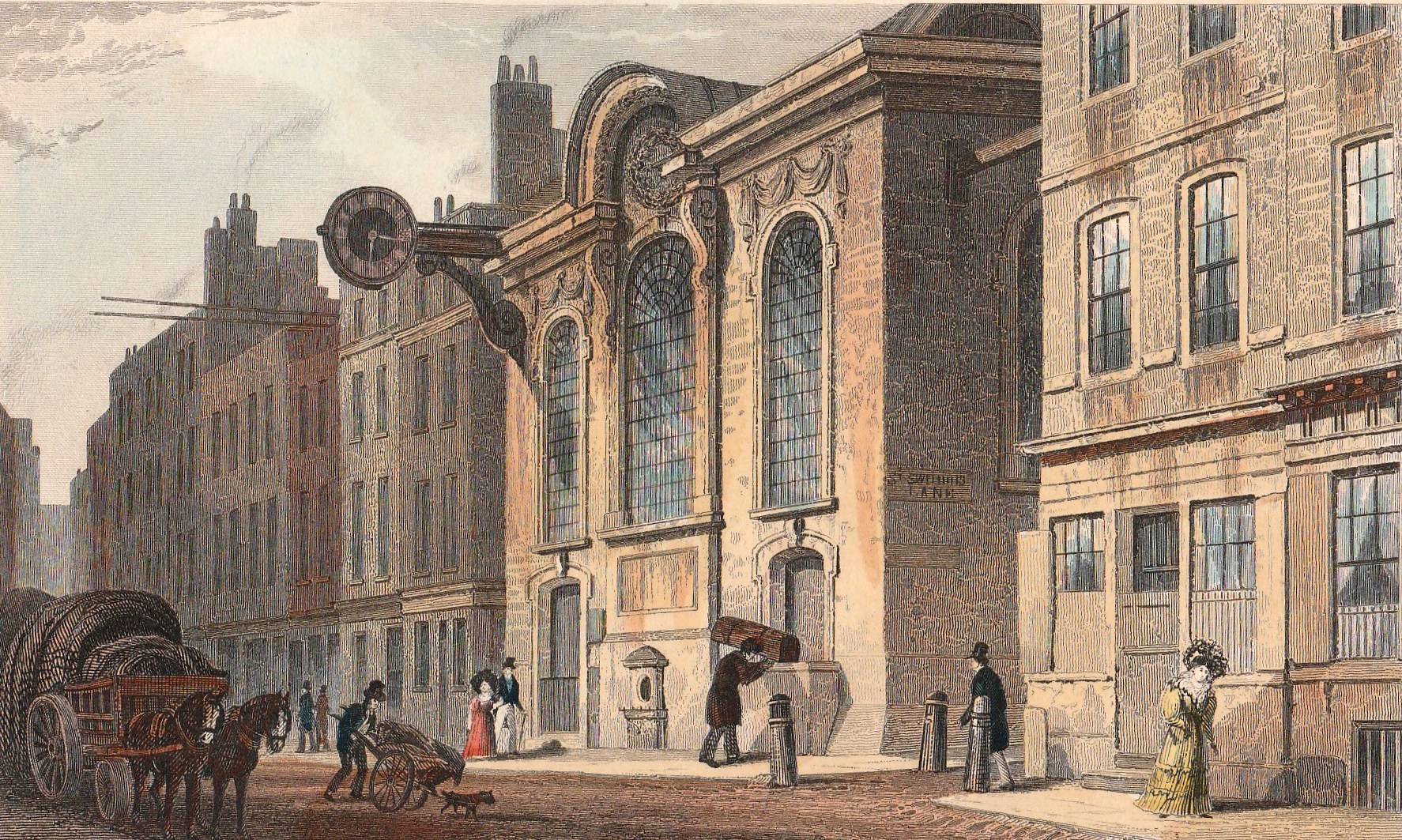
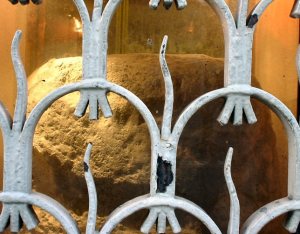 St Swithen’s was gutted during the Blitz, but remained standing as a ruin, complete with the Stone, until the 1960s when the church was demolished. The photograph below is 1962, just before the demolition. An unlovely building (111, Cannon Street) for the Bank of China was built on the site and the Stone was housed – or, rather, caged – behind bars in the front of this building.(Colour photo).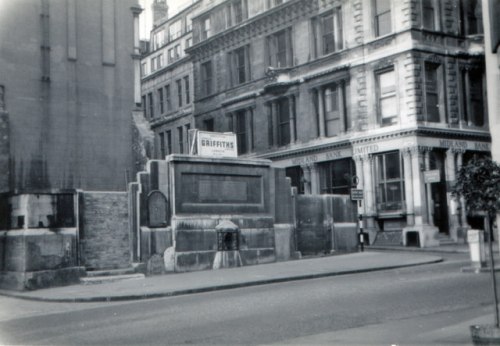

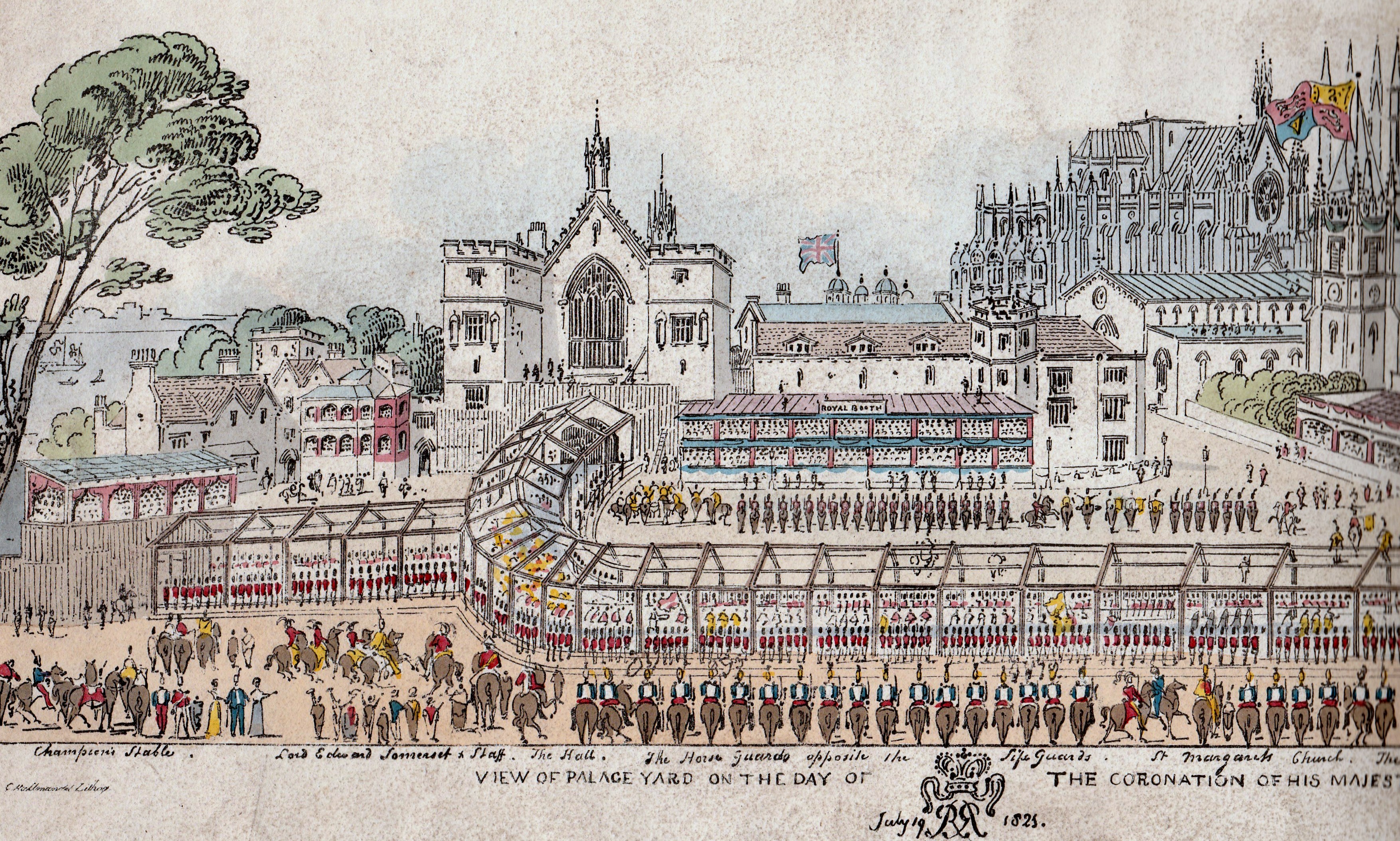
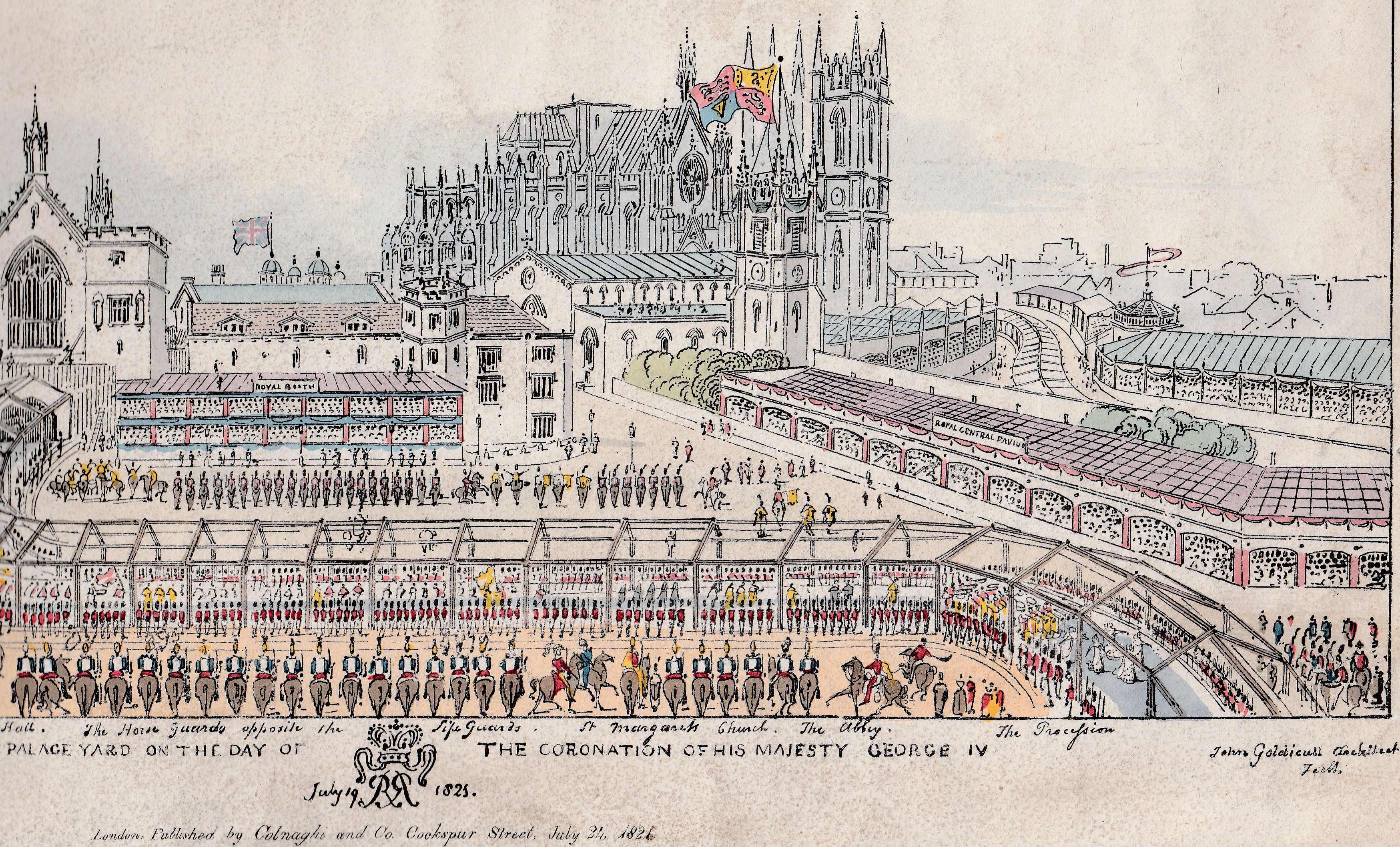
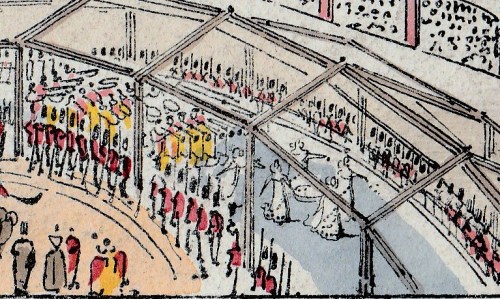 started half an hour late at half past ten in the morning and was headed by the King’s Herb-Woman and six attendant maids scattering sweet-smelling herbs and petals. Behind them came the chief officers of state, all in specially designed outfits and carrying the crown, the orb and the sceptre, preceded by the Sword of State and accompanied by three bishops carrying the paten, chalice and Bible to be used in the ceremony. The peers in order of precedent, splendid in the robes, followed next and those Privy Councillors who were commoners had their own uniform of Elizabethan costume in white and blue satin.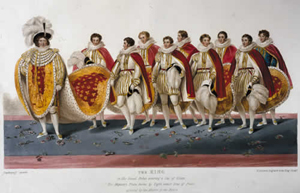


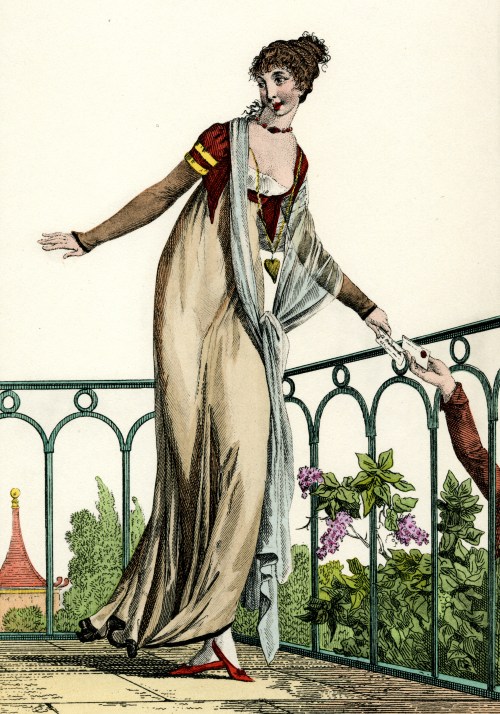
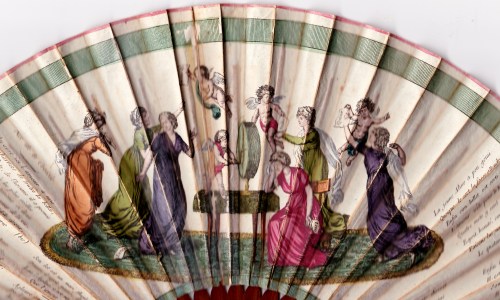
 Whether you picked your bay leaves, sent a card or received a delightful verse – happy Valentine’s Day!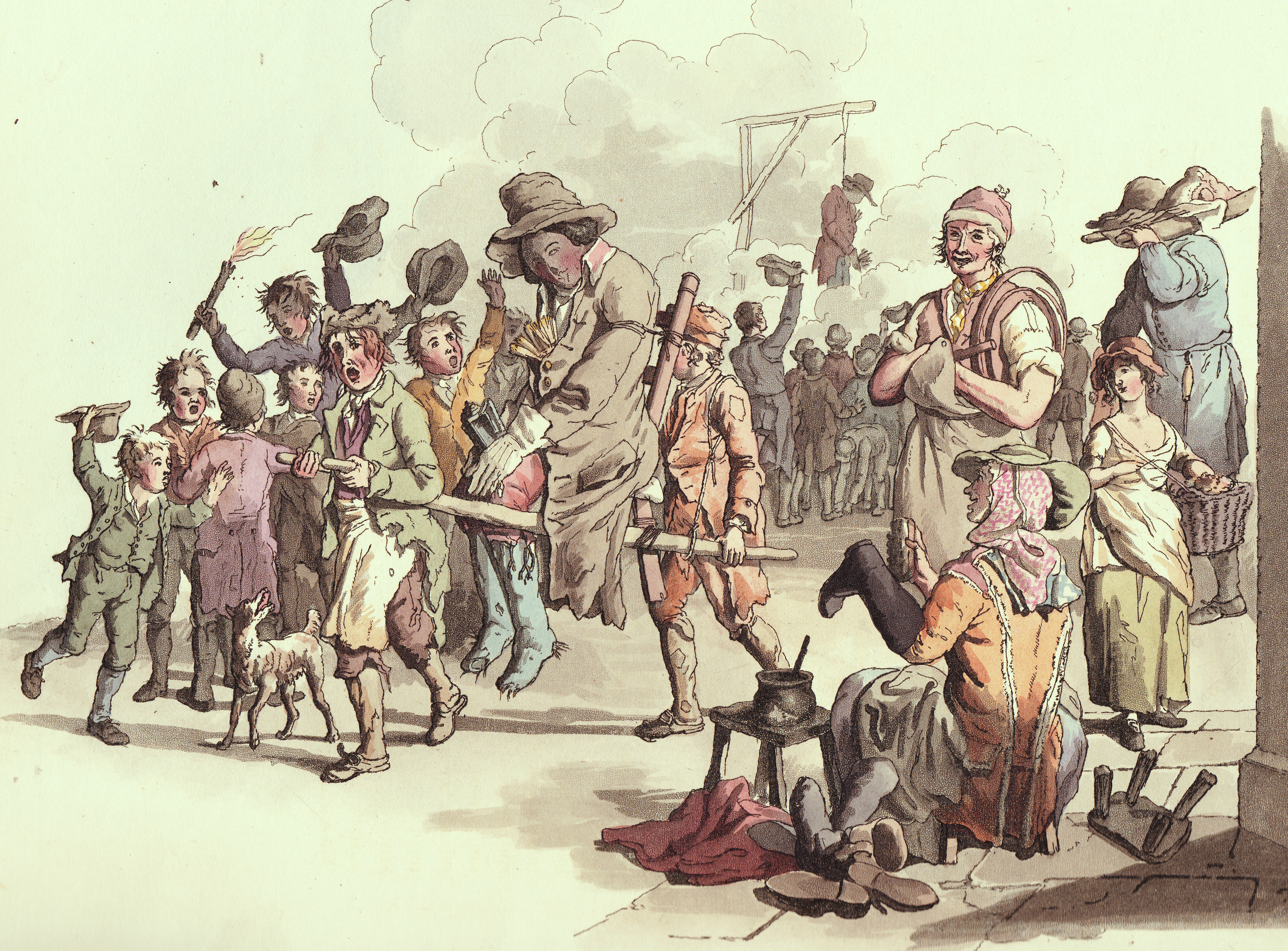



 Jane Austen's London