Category Archives: Food & drink

Eating Out In Georgian London – A Regency Good Food Guide

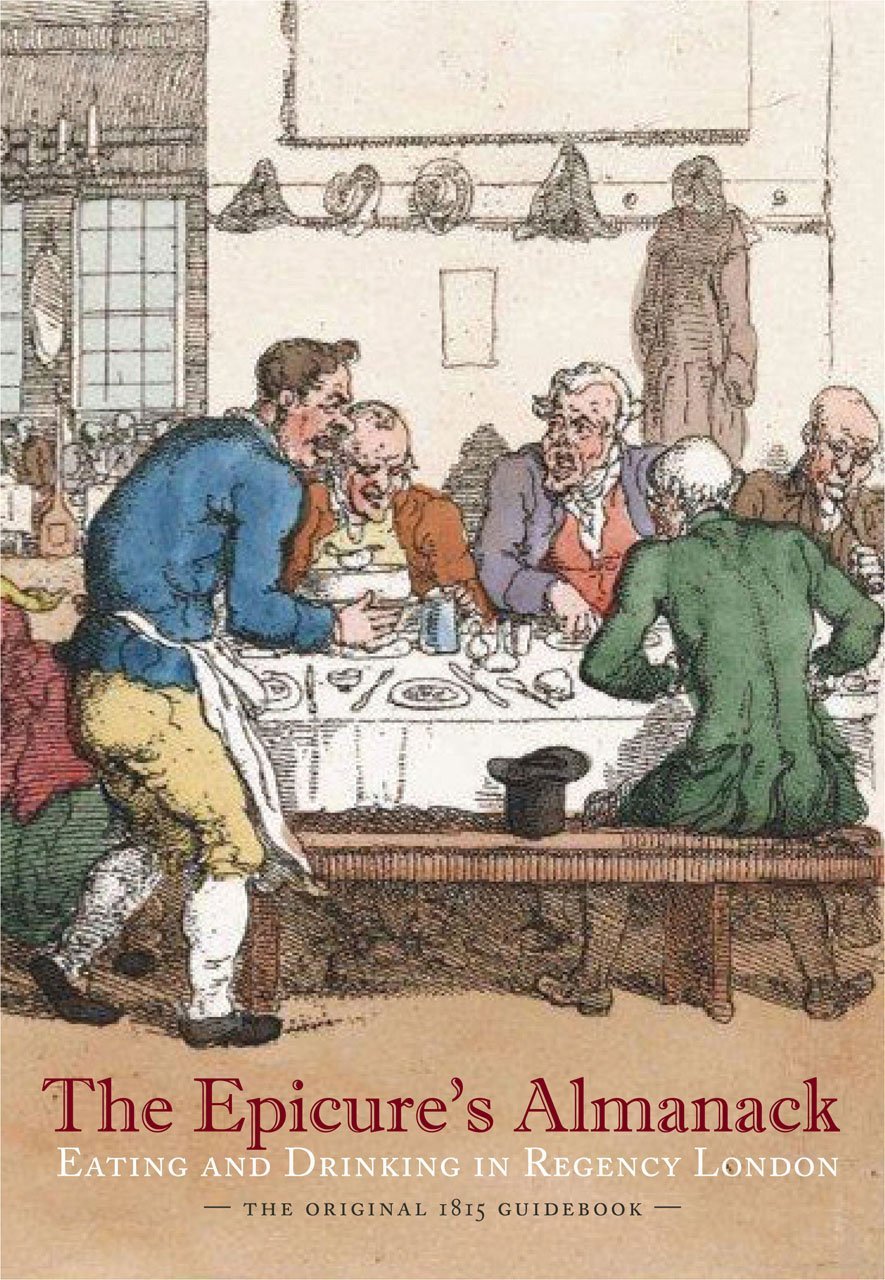
My starrylanceting point for this post is a book that will fascinate anyone interested in Georgian London  – The Epicure’s Almanac: Eating and Drinking in Regency London by Ralph Rylance, edited by Janet Ing Freeman (British Library 2012).

In 1815 Rylance published the first guide to London eating, with, as he put it, the intention of guiding his readers to those establishments where they might ‘dine well and to the best advantage.’  Incredibly, Rylance claimed to have investigated all the locations himself, over 600 of them. His recommendations range from smart Mayfair hotels, inns, chop houses, markets, tea gardens and cake shops. Poor Rylance must have hoped his work would go into many editions, but it survived only the one and the publisher, Longmans, did not reprint.

Janet Ing Freeman has taken Rylance’s original text and investigated all the establishments he mentions, giving us notes on location and lots of interesting snippets about how they developed, who ate there and quotes from other sources. There are original maps to assist. Her detailed scholarly work turns Rylance’s book from a curiosity into a useable guide for the modern reader.

In addition to the places where one might eat there is a ‘Review of Artists Who Administer to the Wants and Conveniences of the Table’ ie shops for kitchen equipment and ingredients. These include Deakin’s Philosophical Kitchen Range which may be obtained from the inventor at 47, Ludgate Hill.  We are told it ‘combines economy with simplicity. It contains an improved oven for bread or pies; a capacious boiler, a place for several stewpans and saucepans with the addition of a moveable steaming apparatus…’ The boiler can also be used for distilling. The editor explains that ‘philosophical’ is used in the sense of ‘scientific’  and in 1817 prices ranged from 11 to 20 guineas.

One of the most frequently mentioned type of eating place is the oyster room. Oysters were cheap fast food and could be eaten at various shellfish warehouses and in most other eateries. Rylance mentions many oyster rooms such as Lynn’s at 145 Fleet Street where ‘the best accommodations are upstairs’, and Sawyer’s, St Martin’s Lane noting that it is, ‘One of the largest concerns of the kind in London, for the sale not only of shell-fish, but also of pickled and dried salmon, spruce beer and other beverages.’

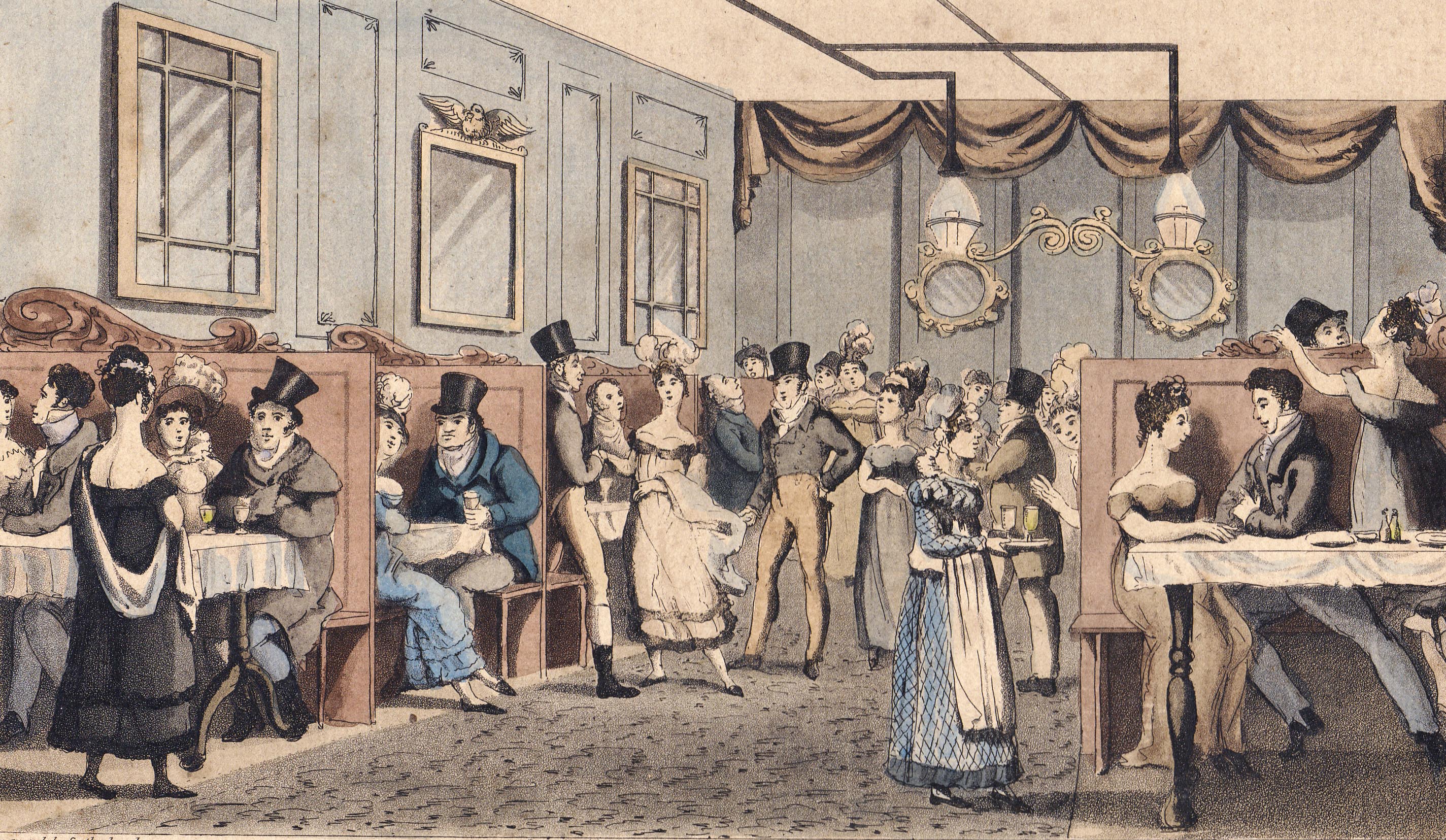
In my collection I have this print, ‘A noted Oyster Room near the theatres -Time 3 o’Clock in the Morning’. (Drawn by Samuel AlOyster rooms_0001ken, published 1823). A very good time is being had by everyone and I strongly suspect that the gentlemen are not accompanied by their wives!
Another popular type of eating place was the coffee house, a very masculine preserve, where coffee was drunk, newspapers read and matters of business and politics discussed. Food was also served in many of them, for example the Piazza Coffee House in Covent Garden, founded by actor Charles Macklin, where ‘dinners for large and small parties are served up in the most consummate style of elegance.’

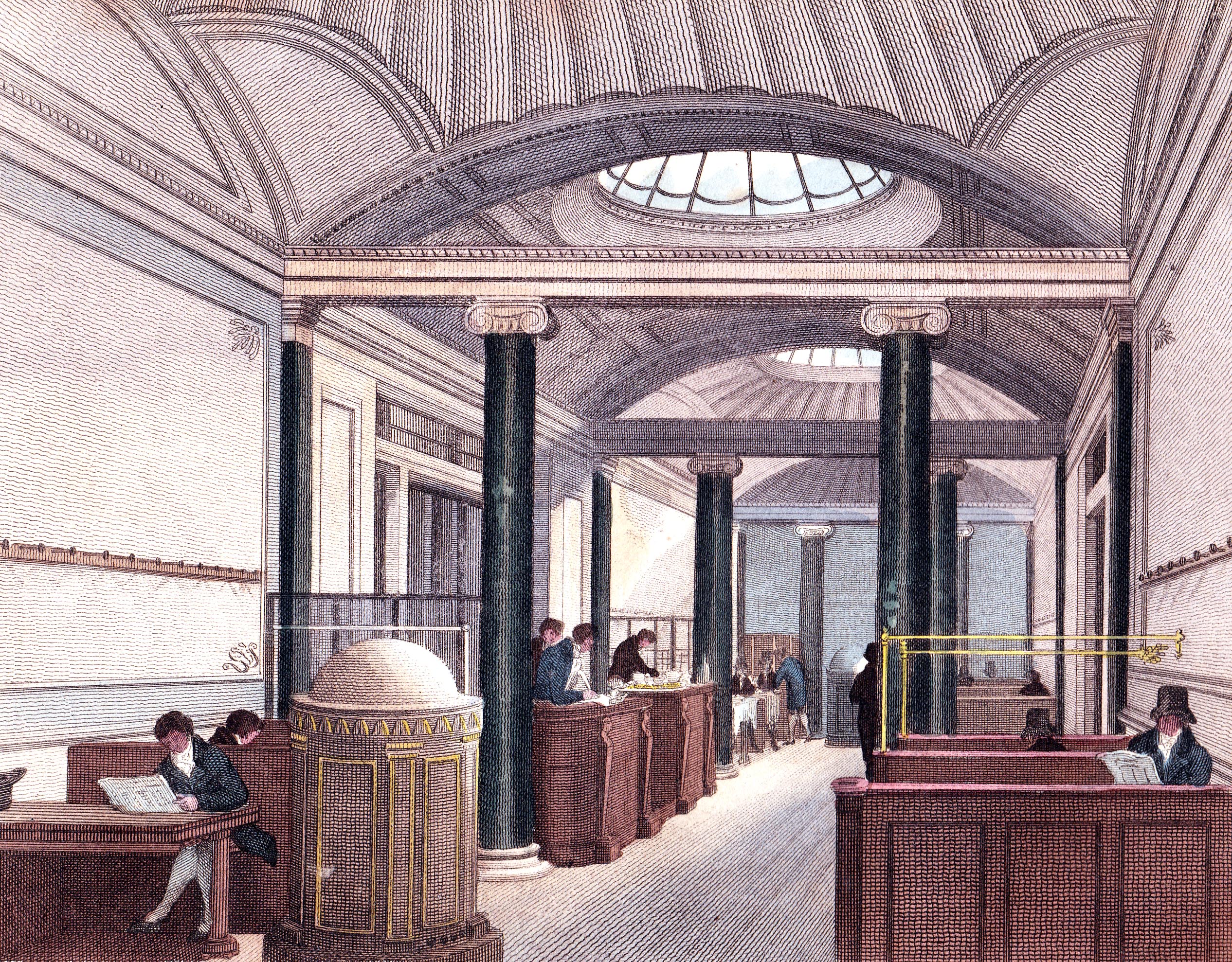
This illustration from Ackermann’s Repository of October 1811 shows the Auction Mart Coffee Room in Throgmorton Street. Auctions were often held in coffee houses and the Auction Mart was an attempt to move some of them into a purpose-built venue, although of course it still had to have its coffee room.  RylanAuction martce observes that it was ‘fitted up in very neat style. Here soups, and the usual coffee-house refreshments, are served up.’ The notes in the Repository are only concerned with the architecture, not the refreshments unfortunately, and the illustration shows an unconvincingly  quiet and uncrowded space.
Finally, for another type of establishment, we have the confectioners. As I have an invoice from Parmentier’s in my collection I’ve chosen that one from the many that Rylance describes. Parmentiers was located in Edwards Street (now part of Wigmore Street). ‘Here every article is perfected in the true Parisian style of excellence. You find eau de Cologne, pâte de guimauve [marshmallow confections], cachou à la rose, cachou à l’orange et à la violette [lozenge-shaped sweetmeats], papillottes avec devises [small candies wrapped in paper containing jokes or mottoes]. Here are to be had preserves and conserves, wet and dry, jellies, jams, coloured transparent pastes, fruits dried or preserved in French brandies, comfits, lozenges, drops of every colour and flavour, superior macaroons, and rout cakes of the most fanciful forms, with ices and creams.’ My invoice is for lemon and orange syrups.

Parmentier0001It is still possible to eat in some of the establishments that Rylance mentions. For example The Cheshire Cheese is still in Wine Office Court off Fleet Street, and close to the Bank of England you can eat at Simpson’s Tavern in Ball’s Court and the nearby George and Vulture in George Yard.

For my next post I’ll be discovering some recipes for popular foods in Georgian London.
 

25 Comments

Filed under Food & drink

Shopping is Wonderful – Until Hoby Sends His Bill

Bill Hoby

If you had the money, late Georgian shops were awash with tempting goods. And even if you weren’t so well off, tradesmen would extend credit for considerable periods if your name was good, you were a prominent person or your expectations were favourable. Many a Regency rakehell kept buying on tick for years, dangling the prospect of an inherited estate or a forthcoming marriage settlement before his unfortunate tailor or wine merchant.

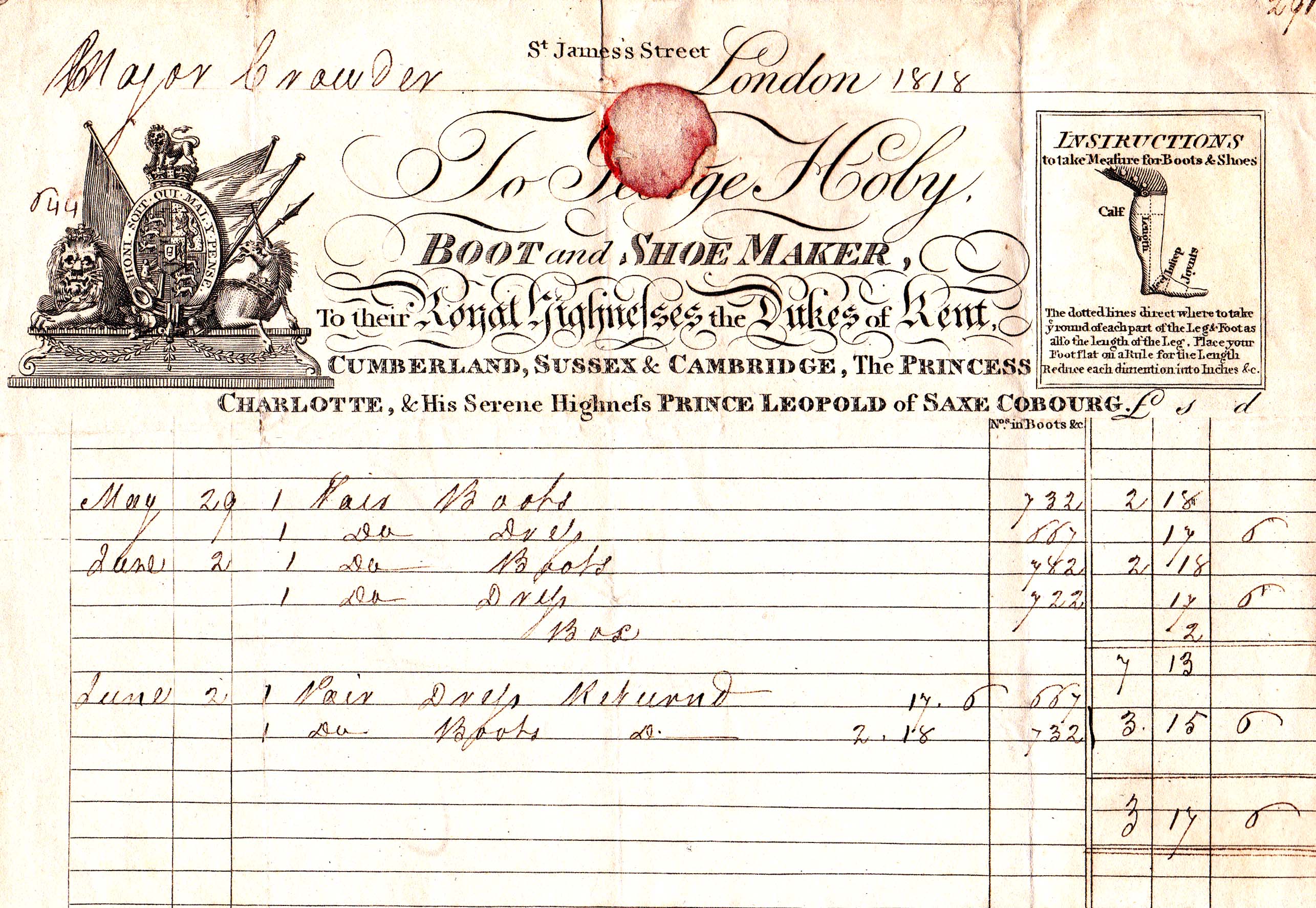
No-one enjoys receiving bills, but distance lends enchantment as far as 18th and 19th century invoices are concerned and we can enjoy them for the insight they throw on shopping habits and prices and the pleasure of their ornate headers. The example at the top of the page is from Hoby, the iconic bootmakers of St James’s Street, to Major Crowder, the officer who captured the carriage with Napoleon’s codes in it during the Peninsula War. It is dated June 1818 and the major had received four pairs of boots and returned two, leaving him with £3 17s 6d to pay. A note on the back says that he did pay it, but does not give a date. Presumably the two pairs came back because he had not measured carefully enough, even with the help of the diagram at the top of the page. The red marks on many of these bills is from the sealing wax used to close them when they were folded up for delivery.

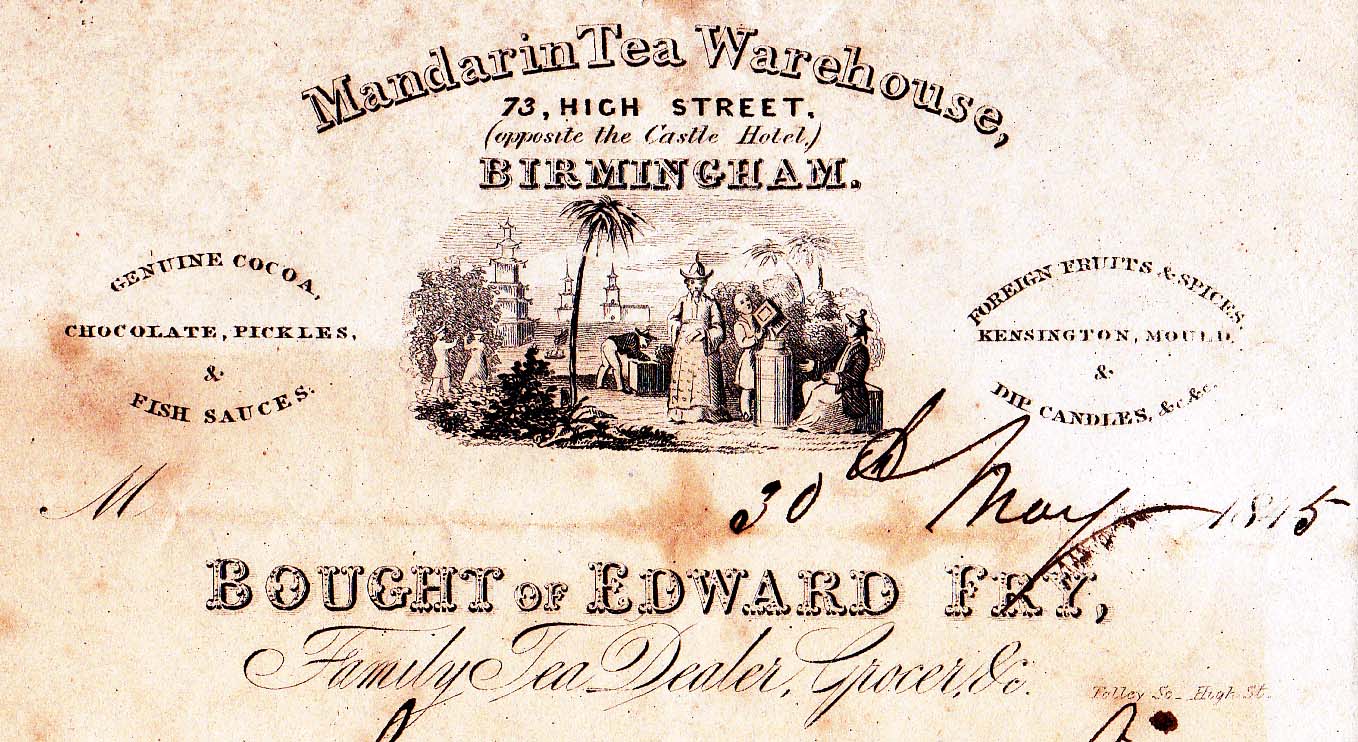
Bill Mandarin tea warehouse The next bill is from a Birmingham merchant, not a London one, but I couldn’t resist the picture of the Chinese tea merchants loading up tea crates with a background of pagodas. It is also from 1815, a time before the East India Company had begun growing tea in India, so all tea drunk in Britain was China tea.

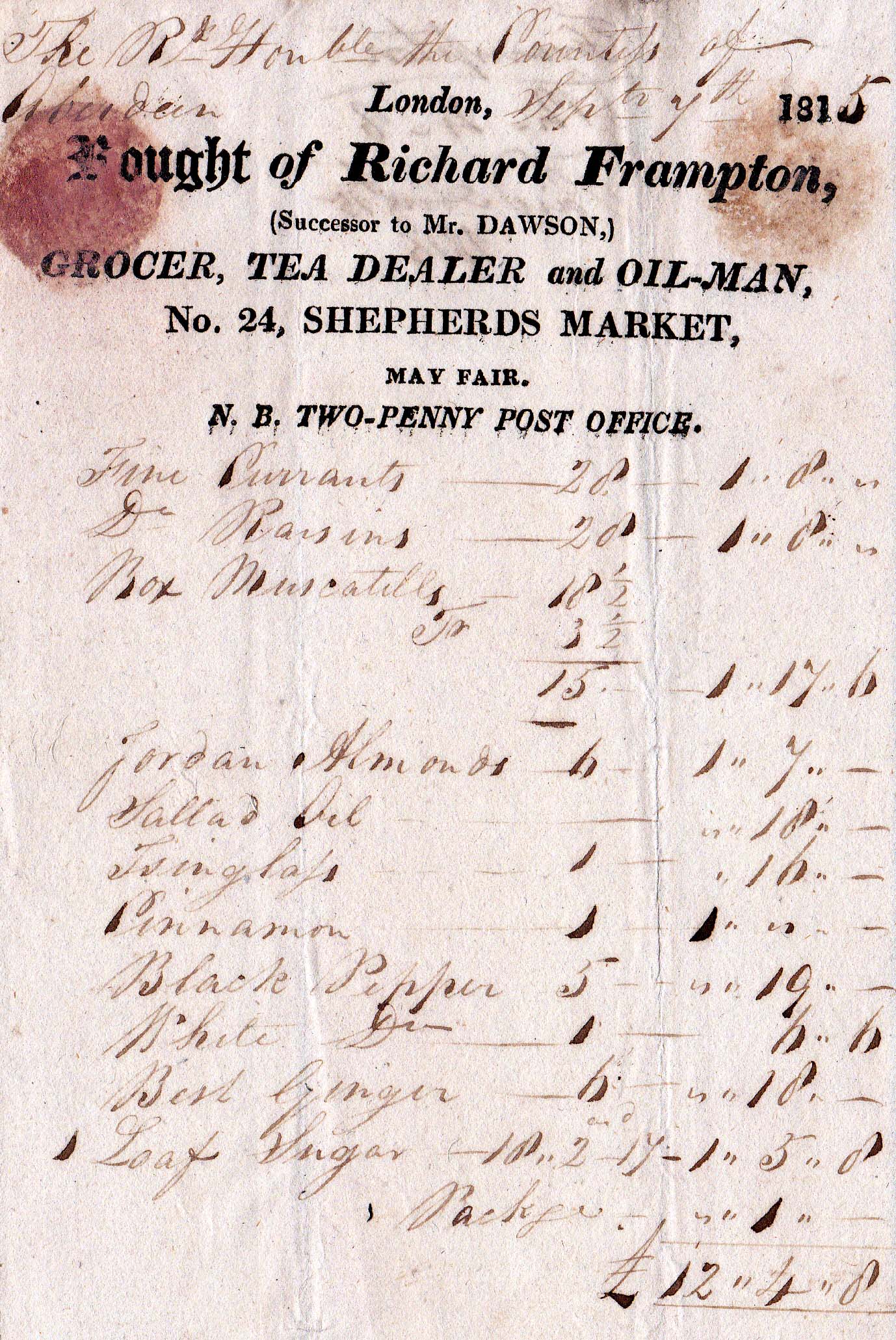
The bill on the right has no ornate header but it is interesting for the location of the businessBill Frampton

and the purchaser of the goods. Richard Frampton was a “Grocer, Tea Dealer and Oil-Man” and also ran a “Two-Penny Post Office”. His shop was in Shepherds Market, the original site of the May Fair that gives the Mayfair area its name today. Shepherds Market now is the lcoation of numerous interesting eateries, but in 1815 was still very much a place to buy essential provisions. Mr Frampton had sold currants, raisins, almonds and spices to the household of the Countess of Fife and submitted his bill for £12 4s 6d on 7th September 1815. He had to wait until August 15th 1816 to be paid.

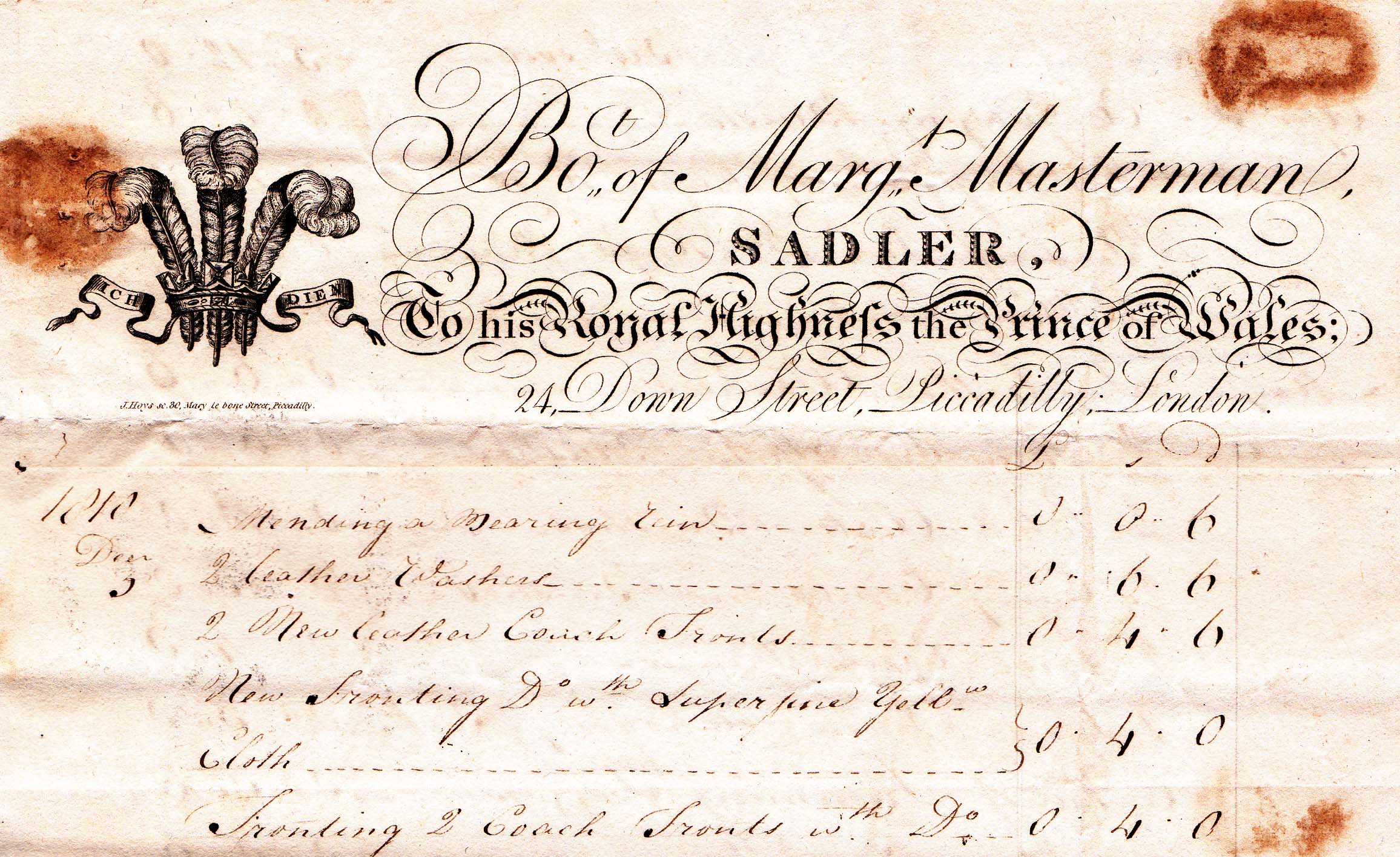
The bill below is a particularly nice one, because not only does it have the royal warrent of His Royal Highness the Prince of Wales and a handsome crest of the Prince of Wales’s feathers, but the business was owned by a woman, Margaret Masterman. Margaret ran her sadlery business from Down Street, off Piccadilly, and submitted a very long account, covering the period December 1810 to May 1811 and amounting to £24 15s 0d. It was paid by John Kitson in June 1811.  Mrs Masterman had repaired harness – “Mending a bearing rein 6d”, “repairing a coach bridle 1s 6d”; provided grooming equipment – “One mane comb 6d”; supplied new saddlery – “Two best Hogskin seated footmen’s saddles £7 7s 0d”and general cleaning equipment for carriages – “A large coach sponge 7s 0d”.

Bill Masterman

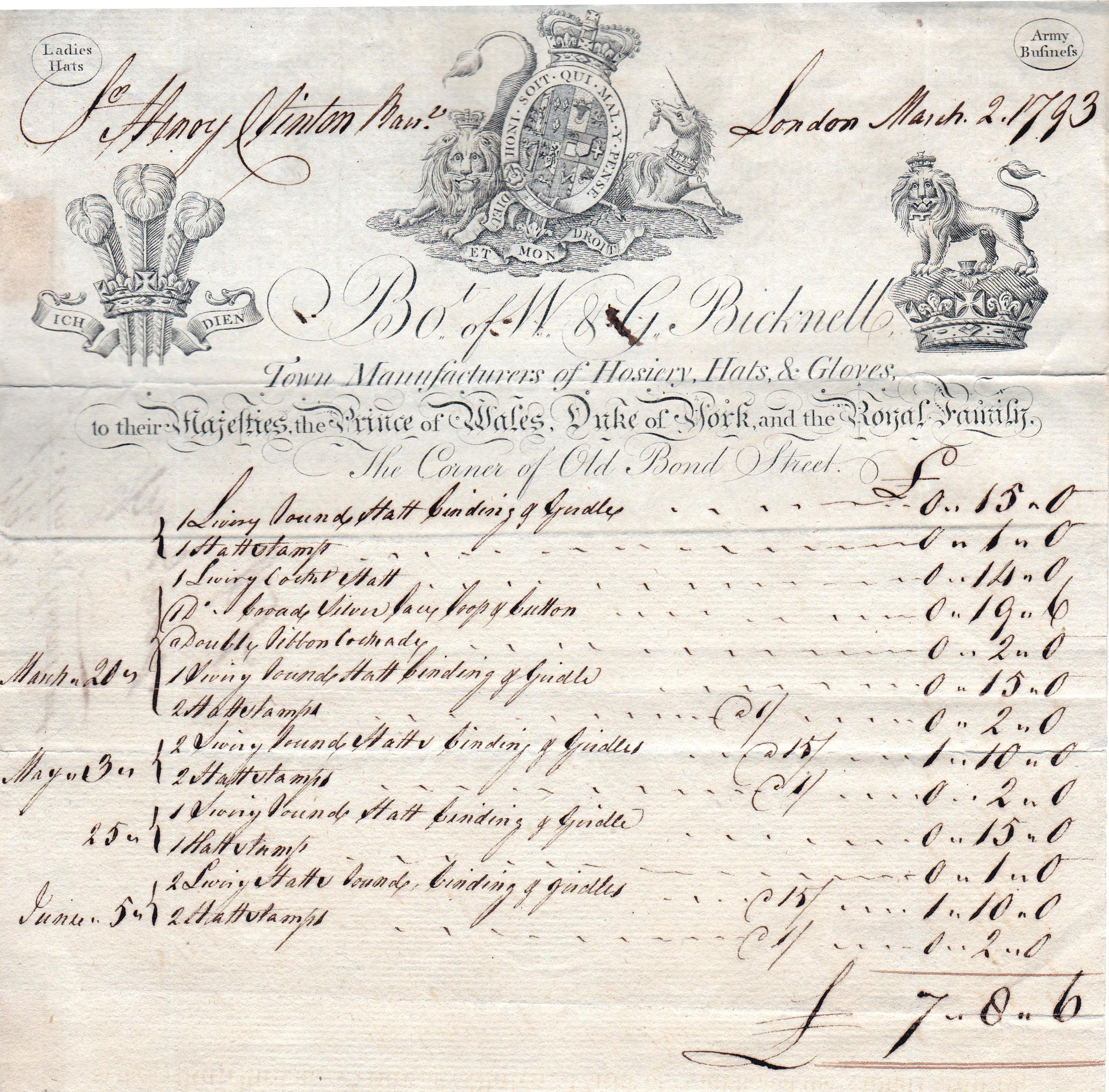
My final invoice is from W & G Bicknell, “Town Manufacturers of Hosiery, Hats and Gloves to their Majesties the Prince of Wales, Duke of York and the Royal Family.” Bicknells’ was located in Old Bond Street and they sent this account to Sir Henry Clinton, bart. in March 1793. He paid it June that year. The handwriting is very difficult to read but Sir Henry was buying ornate livery for his footmen, to a total of £7 8s 6d.

Bill Bicknell

Would it make it any less painful to pay the credit card bills if they came handwritten, with ornate designs at the top? I suspect they would be just as unpleasant., although one of the great advatages of these bills is that there doesn’t appear to be any interest charged, however late the payment!

9 Comments

Filed under Fashions, Food & drink, Shopping

Detox the Georgian Way

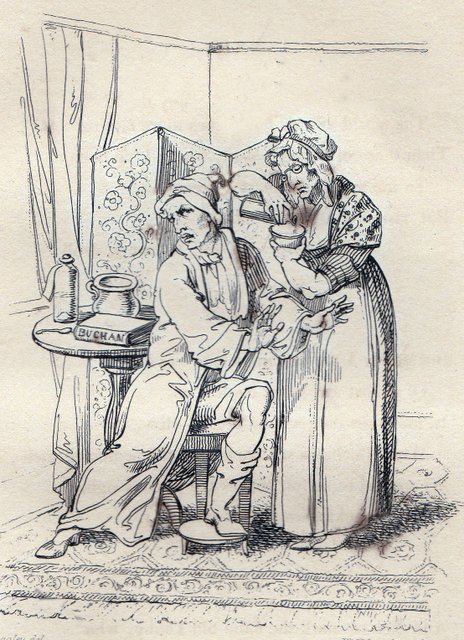
taking physic edit 2Detox diets are nothing new. At a time when those who could afford it would eat large amounts of meat and drink copious quantities of alcohol, while at the same time being wary of the effects of eating green vegetables in any quantity, stomach upsets, constipation and feeling ‘liverish’ were common complaints. A good internal clear-out was considered highly beneficial and taking ‘physic’ or purges and even vomits was commonplace. Physic could be administered as routine, even if the recipient was not experiencing any symptoms and children were regularly dosed, although not everyone thought it a good thing.

In Emma John Knightly says “Well, Emma, I do not believe I have any thing more to say about the boys; but you have your sister’s letter, and every thing is down at full length there we may be sure. My charge would be much more concise than hers, and probably not much in the same spirit; all that I have to recommend being comprised in, do not spoil them, and do not physic them.”

Most housewives would have their own recipes for purges. A fairly standard one consisted of thinly sliced liquorice root and coriander seeds boiled in water, then strained and senna added. Eliza Smith’s The Compleat Housewife of 1758 gives an elaborate recipe for, “An opening drink” which contains pennyroyal, red sage, liverwort, horehound, maidenhair, hyssop, figs, raisins, blue currants, liquorice, aniseed and coriander, all boiled in spring water and bottled. She recommends drinking half a pint in the morning and again in the afternoon, meanwhile keeping warm and eating little.

Most people felt the need for a combined tonic and purge in Spring after a long winter of preserved foods and little greenery. Eliza Smith has the following “Purging Diet-Drink in the Spring”.
Take six gallons of ale; three ounces of rhubarb; senna, madder-roots and dock roots, of each twelve ounces; twelve handfuls of scabious, and as much agrimony; three ounces of aniseeds; slice and cut these, put them in a bag and let them work in the ale; drink of it three or four times a day.

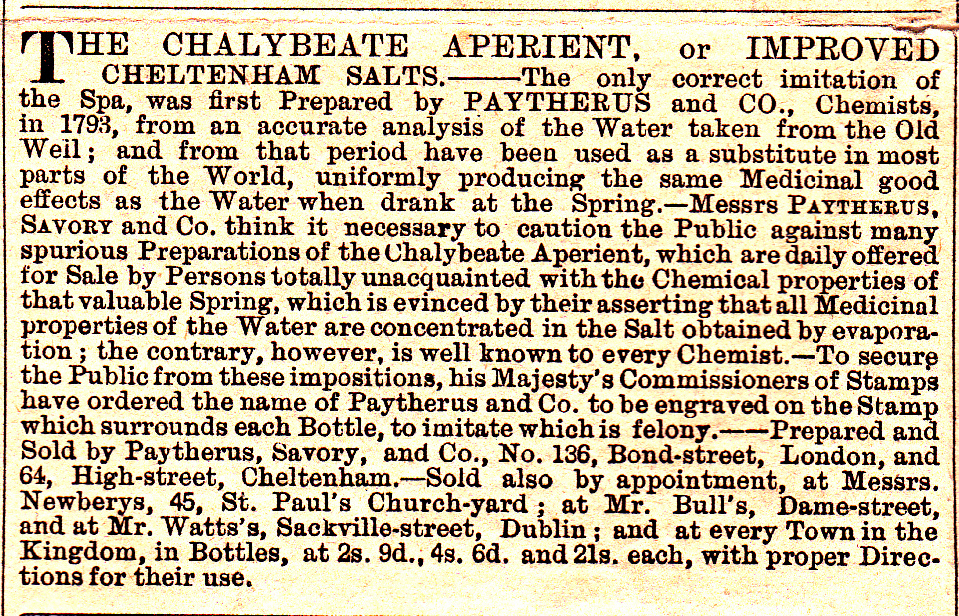
None of these sound particularly pleasant, but at least you knew what was in them. Purges and physics were the stock in trade of quack doctors and those sometimes contained quite dangerous substances. Even the products of respectable chemists had their perils, however this advertisment is for a product from reputable chemist Thomas Savory of Bond Street (see below).

Aperient advert crop

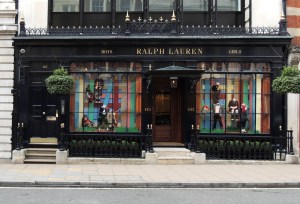
One of the most popular products during the 19th century was Seidlitz powders, a potent mixture of sodium bicarbonate, potassium sodium tartrate and tartaric acid. This was mixed with water until fizzy and drunk. Over-dosing was dangerous, with reported deaths from internal ruptures, but it was widely used and made the fortune of fashionable chemist Thomas Field Savory of the firm Savory and Moore who acquired the UK licence to sell it. The handsome shop front of his store in New Bond Street is the only early frontage remaining in the street. Wellington and Lady Hamilton were amongst his customers and the Duke of Sussex was a personal friend and often dined with Savory. It is not recorded whether he dosed any of them with his famous powders!

028

The unfortunate gentleman resisting his physic is from R. Dagley’s Takings (1821). The advertisement is from The Observer, Sunday October 29th 1809. The photograph shows the shopfront of Savory and Moore in New Bond Street, now the Ralph Lauren store.

3 Comments

Filed under Food & drink, Medicine & health

Taking Tea at Mr Gunter’s

High class pastry cooks and caterers were an essential part of the infrastructure of Georgian London. The most famous, of course, was Gunter’s in Berkeley Square but others included Parmentier’s in Edward’s Street (now part of Wigmore Street)  and Farrance’s on the corner of Spring Gardens and Cockspur Street, a popular resort for ladies visiting the exhibitions in the Spring Gardens’ galleries.

These luxury establishments were not cheap. This bill from Parmentier’s to a gentleman living in Harley Street is for a bottle each of orange and lemon ‘syrop’ and a dozen rout cakes and totals 18 shillings.

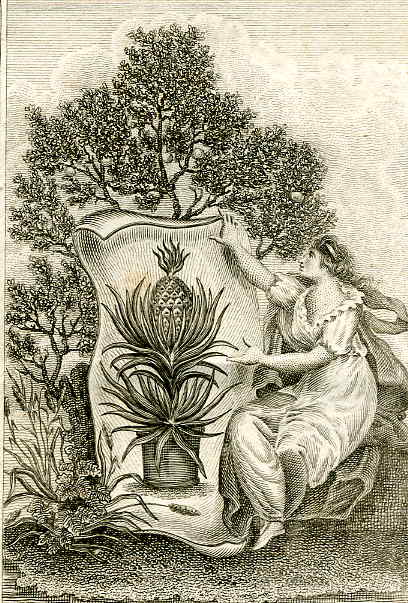
Gunter’s establishment was in the south-east corner of Berkeley Square and was originally the shop of Dominicus Negri, an Italian pastrycook, who set up there in 1757, trading as The Pot and Pineapple. Pineapples, often referred to as ‘pines’, were an exotic luxury, so expensive that people would hire them to form the centrepiece at a dinner party and then return them, uneaten, the next day, so the name of the establishment hinted at its quality. This pineapple below is from the frontispiece of Nutt’s The Complete Confectioner (1815).

Negri’s tradecard advertised “all sorts of English, Fench and Italian wet and dry sweet meats, Cedrati and Bergamet chips and Naples divolini.”

Pineapple0001ParmentiersNegri took Gunter into partnership in 1777 and by 1799 Gunter had taken over the business. He obviously established his reputation for quality as this extract from The Morning Chronicle, 16 June 1801, shows.

“(From a Correspondent)  Mrs Morton Pitt’s Masquerade –

Mrs Morton Pitt opened her house in Arlington-street, for the first time, upon the debut of her beautiful and accomplished daughter in the beau mond: this of course attracted a most brilliant and dazzling assemblage of all the fashionable world; and, whether from the condescending manner of the beautiful hostess, or the high glow of spirits which universally reigned throughout the whole company, the writer protests he has not, in the career of fashion of this year, seen so much conviviality. The supper was such as everyone must expect, when they hear that Mr Gunter, of Berkeley-square, superintended in that department.”

He did not cater only within London. On 25 August 1804 The Morning Post reported, in its Fashionable World column:

“Lady Smith Burgess’s Fete at Havering Bower in Essex…about 200 of the neighbouring nobility and gentry, and many others from town were present…. About five o’clock [in the afternoon] the company…returned into the Saloon, where a most sumptuous Breakfast was set out. The entertainment consisted of every delicacy which the munificence of her Ladyship could provide, and the taste of Mr Gunter, the confectioner, could display.”

I cannot find any advertisements in the London newspapers for Gunter’s – possibly the glowing references in all the accounts of parties, masques and balls was sufficient.

Mr Gunter kept a very fine house in the village of West Kensington, set in 30 acres of grounds which contained the kitchen gardens, orchards and hothouses that produced the vegetables, and more importantly, the pineapples and exotic fruits for the business.

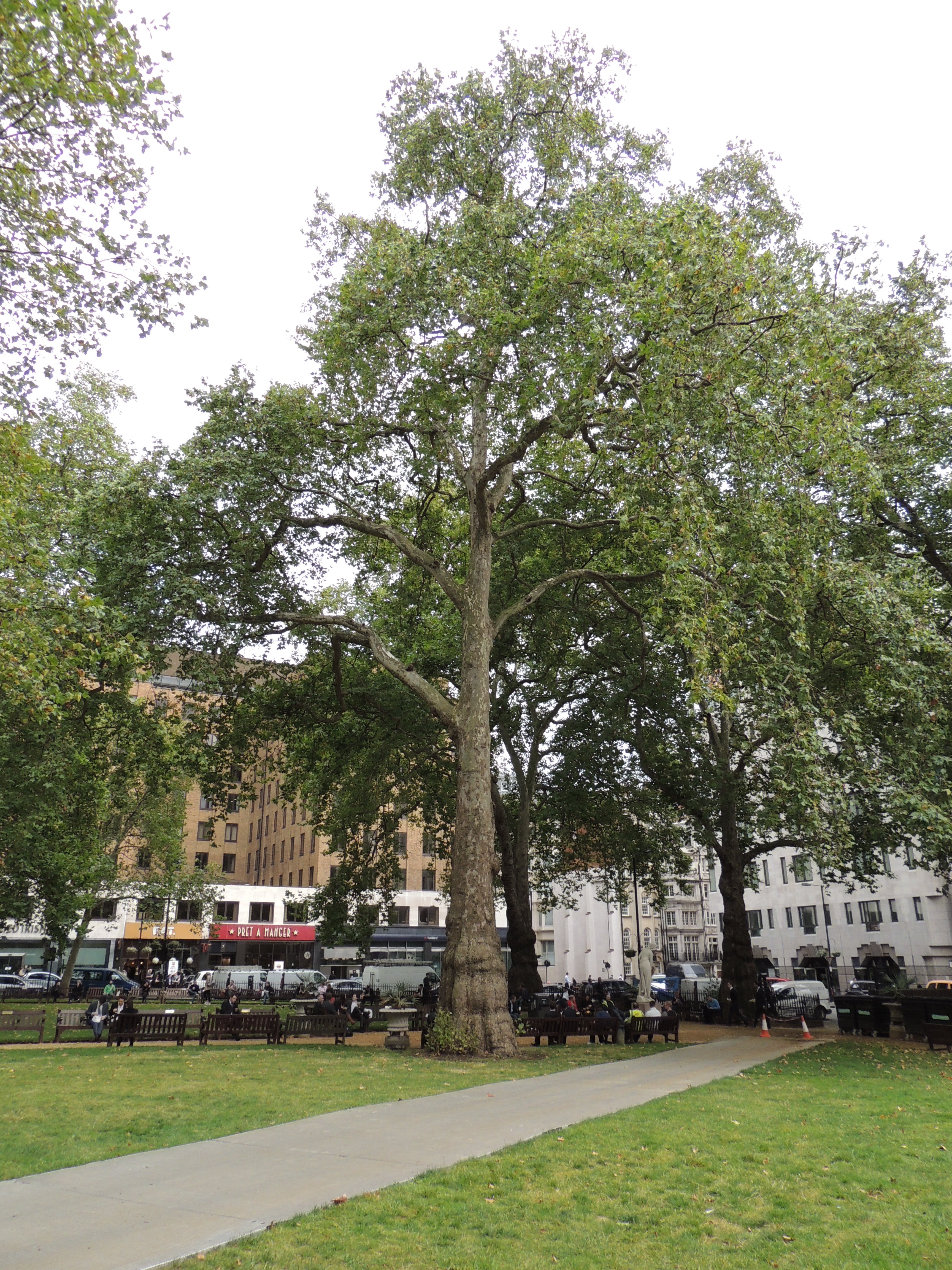
It was his ice creams that he is most known for today. They were made from fresh cream, fresh fruit and sugar and were sometimes frozen using ice shipped in from the Arctic as well as from English ice houses. During the summer the fashionable would drive their carriages to Gunter’s and the waiters would bring out the ices to be consumed under the plane trees that still shade the square. It was considered perfectly respectable for a lady to take tea with a gentleman there. Gunter also enjoyed royal patronage – if enjoyed is quite the right word. Between 1819 and 1828 the Duke of Sussex ran up unpaid bills of almost £700 with him!Ice cream parlour 2

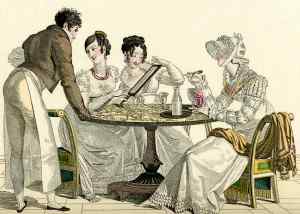
This print shows young ladies chosing their ices in a Paris confectioner’s.

 Gunter’s business continued until 1936 when the east side of the square was demolished and it moved to Curzon Street. By the 1950s the tea shop closed and the catering business continued, only to be shut down in 1976 as more modern tastes and budgets could no longer support the high style of the operation.

Today there is still a catering establishment on the site of the Berkeley Square shop, and the customers still take refreshments from there to eat in the square under the plane trees. In this picture of the square in 2013 you can just see the red sign – although what Mr Gunter would have made of Prêt is anyone’s guess!DSCN0136

14 Comments

Filed under Food & drink