Category Archives: Architecture

The Regency Print Room – DIY Decoration and Early Scrapbooking

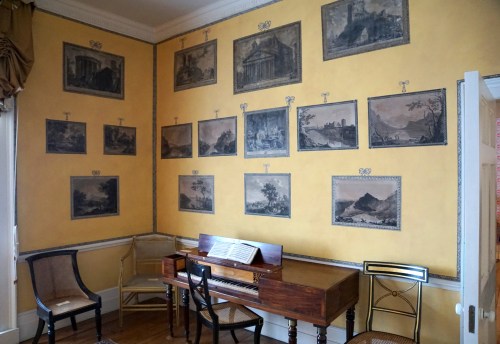
On a recent visit to Blickling Hall in North Norfolk I was delighted to see an example of one of my favourite kinds of Regency interior – the Print Room.
Blickling 1

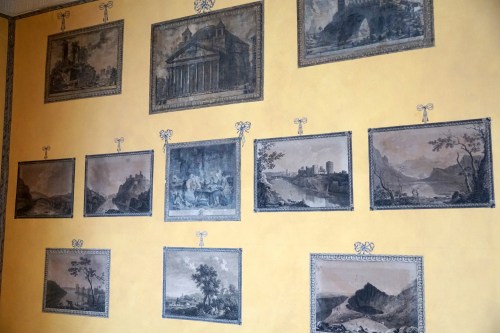
These were usually small rooms with painted walls on which the homeowner would paste prints, surrounding them with fancy borders made to resemble picture frames and perhaps with tromp l’oeil ribbons and cords to ‘hang’ them from.

Print rooms were attractive projects to undertake for a number of reasons, especially since the selection and arrangement of the prints themselves served to demonstrate your personal taste and discrimination, to be admired by friends and visitors. It was a form of satisfying collecting to track down and assemble the prints and, very importantly, it was a craft skill that was perfectly acceptable for ladies to carry out, involving nothing more than a pair of sharp scissors, a ruler, a pot of flour paste and a footman with a step ladder.

Illustrated books were popular conversation pieces, to be handed round and discussed in the evening and many would have been sacrificed for their prints of classical antiquity, foreign lands or plant and animal life. Gentlemen on the Grand Tour might buy prints on their travels and come home with them for their mothers or sisters to use to create a large-scale souvenir of the journey.

Contemporary journals, such as Ackerman’s Repository always contained prints of fashionable ladies of the day or of interesting scenes, and print shops abounded in London and the larger towns.

The prints used in the more formal print rooms seen by visitors were usually black and white or sepia and not the hand-painted coloured types.

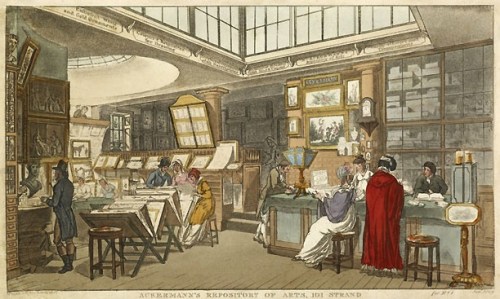
Rudolph Ackermann was the foremost artistic supplier to the well-off amateur as well as to professional artists. He was born in Saxony in 1764 and opened his shop at 101, Strand in 1797. His portrait hangs in the National Portrait Gallery, a mark of how successful and influential he became. He sold paints and colours, other supplies for artists, illustrated books, journals and prints.

He even sold prints of his own shop – excellent publicity, of course. This one shows customers browsing through the prints and hints at the size of his stock. As well as buying the actual prints, anyone creating a print room could also buy borders in lengths to cut to fit, and the other decorative details to create the impression of a collection of hanging pictures.
ackermanns 2

The two photos from Blickling show how the entire room was designed as whole, with a border around the doors and windows to match the ‘frames’ on the pictures. The detail shows one wall with prints mainly from the Grand Tour – the large one in the centre at the top is the Pantheon in Rome – and also shows the variety of ribbon bows available.Blickling 2
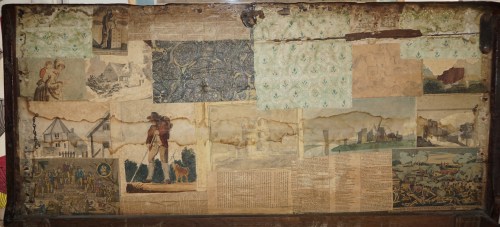
Ladies might also decorate the inside of closets or their dressing rooms – places that were private and not on display to visitors – in more of a ‘scrapbook’ style, building up the decoration as they found something that appealed. An extreme example of the desire to cover any available surface is the interior of the lid of this 18th century chest that I own – it has amateur drawings and watercolours, a print of the Battle of Vittoria, newspaper cuttings and even Moses with the Ten Commandments.
chest

I’m sure Regency ladies would have loved the modern craze for scrapbooking!

5 Comments

Filed under Architecture, Art, Shopping, Women

Looking Down on London Bridge

Last week I went up the Shard on the south bank of the Thames and, knees shaking at the height, looked down on London Bridge, 800 feet below. In the photograph you can see its northern end, the Monument to the Great Fire on Fish Hill and the spire of the church of St Magnus the Martyr.

DSCN7278edit

London Bridge is broken down,
Gold is won and bright renown.
Shields sounding,
War-horns sounding,
Hildur shouting in the din!
Arrows singing,
Mailcoats ringing,
Odin makes our Olaf win!

Not quite the cheery little 17th century nursery rhyme we are familiar with but a Norse poet writing of the attempt of Saxon King Ethelred the Unready (who wasn’t really Unready but Unraed-y – suffering from bad councillors) to recapture London from King Cnut (who never really believed he could hold back the tide, but chroniclers don’t seem to have any sense of irony) with the help of King Olaf of Norway in 1014.
This was the wooden London Bridge that had been rebuilt several times since the Romans left and, for centuries, was the only crossing point in London.
(Oddly, despite burning the bridge, Olaf became a popular saint. His church at the southern end of the bridge is now under an office block bearing his name.)
Even without the intervention of marauding Vikings, wooden bridges needed constant repair, so in 1176 work started on a stone bridge, completed in 1209. All the versions of London Bridge for over a thousand years have been more or less on the same spot, but we know exactly where this one, now known as Old London Bridge, was located because it survived, albeit endlessly adapted, until 1830. DSCN7280edit
The bridge had a drawbridge in it to allow taller ships to pass, gatehouses to guard it – and, from the 14th century, to act as convenient places to stick the heads and assorted limbs of traitors – and a chapel. Almost from the beginning houses and shops were built along the bridge, narrowing the roadway to between 12 and 15 feet (3.7 – 4.6 metres). After the Great Fire in 1666 when some were destroyed they were rebuilt hanging further out over the river, but even so it was hideously congested.
From 1722 tolls were charged on vehicles which meant that they tended to stop in Southwark on the southern side and unload their passengers and goods. Numerous inns grew up to deal with this business. In an attempt to control the flow on the bridge three men were employed to try and enforce driving on the left, the first time a ‘keep left’ rule was applied in England. Stonegate at the southern end was rebuilt in 1728 with a wider arch but even so, when there was a major event at Vauxhall gardens, for example, three hour traffic jams were not uncommon.London Bridge Frost Fair
By the time Westminster Bridge opened in 1750 London Bridge was looking decidedly shabby by contrast and drastic modifications were carried out between 1757-62. All the buildings were demolished, a wider central arch was created and the bridge was widened by 26 feet (8 metres) and refaced in Portland stone. Alcoves were added along its length, some with domes, and the lighting was improved. In 1763 the Stonegate was demolished and arches made in the tower of the church of St Magnus the Martyr at the northern end for pedestrians using the widened road. The clock that overhung the roadway is still there, blocked from the river now by an ugly modern office Monument0002building. In the print looking down Fish Hill you can see the tower of St Magnus and the clock.
Even with the renovations the old bridge was failing and the final straw was the damage in the severe winter of 1813-14 when the last Frost Fair was held on the Thames. (The black and white print above shows one of the arches during the Frost Fair). Work began in 1824 on a new bridge, built alongside the old one so that traffic could continue. The new alignment shifted the approach to the bridge westwards from Fish Hill, site of the Monument, and obliterated the waterworks on the upstream side of the old bridge. The works had waterwheels that took 4 million gallons a day from the river to supply 10,000 customers and they can be seen on the far side in this print of 1814.

Monument0003
The new bridge, designed by John Rennie, opened in 1831 and the old bridge was demolished over the next two years. Rennie’s bridge was replaced in 1972 with the present structure.
So what remains of Old London Bridge? Not a lot, considering what an iconic feature of the London landscape it was for so long. One of the 18thc alcoves is in the grounds of Guy’s Hospital, two are in Victoria Park, Hackney and a fourth in the gardens of a block of flats in East Sheen. A stone from an arch is in the churchyard of St Magnus the Martyr where the clock can still be seen and you can walk through the arch in the tower. There is an excellent model of the old bridge with its houses and shops in the church and an even bigger model in the Museum of London.
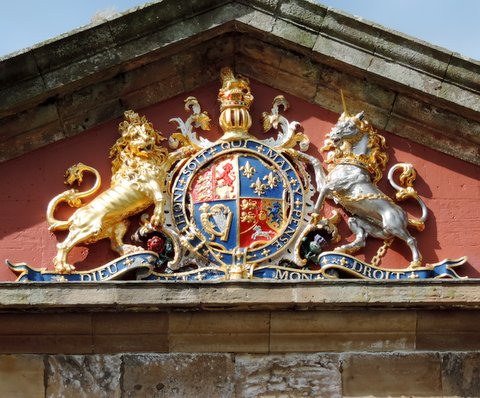
If you walk into Southwark and find Newcomen Street you’ll see the King’s Arms, a Victorian pub with a fine stone coat of arms on the front. This used to say GIIR, for George II, and was fixed on the Stonegate, the entrance to old London bridge from the Southwark side, in 1728. When the gate was demolished in 1760 it was removed, the inscription changed to 1760 and GIIIR for the current king, and put up on a tavern that stood in Axe Yard.

DSCN7281edit


4 Comments

Filed under Architecture, Buildings, Monuments, Transport and travel

Bell Rock Lighthouse – A Regency Engineering Marvel

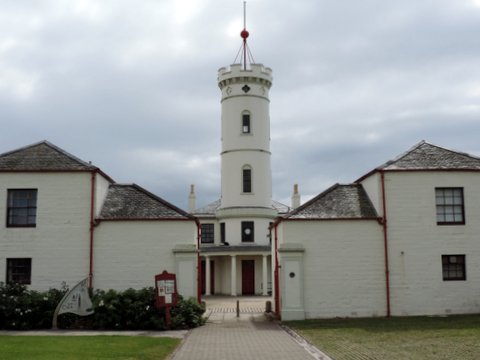
I’m back north of the Border again for today’s blog, visiting an engineering feat by one of Regency Britain’s greatest engineers which, although located in Scottish waters, imust have been a wonder for the entire country. When I was in the delightful little fishing port of Arbroath ( in pursuit of the famous and delicious Arbroath Smokies) I spotted an elegant and unmistakeably Regency building on the shore. It looked like a miniature lighthouse but turned out to be the signalling station for the Bell Rock lighthouse and home to the families of the lighthouse keepers.

04-DSCN9403

Bell Rock is 11 miles (18 km) off the coast at Arbroath and is part of the lethally dangerous Inchcape reef that had proved a major hazard to shipping on this busy coastal route for centuries. In the Middle Ages an abbot had a bell fixed to a floating platform anchored to the reef, which was some warning, but the frequent storms repeatedly destroyed it. The reef is virtually invisible except at low tide when about four foot of it is above the water. Building a lighthouse seemed an almost impossible technical feat, but following the loss of HMS York with all hands in 1806 pressure grew for a solution. In that year a bill was passed through Parliament for a stone tower at a cost of £45,000 to be paid for by a duty on shipping between the ports of Peterhead and Berwick-upon-Tweed.

Two of the greatest engineers of the day were inv12-DSCN9411olved – John Rennie, who as Chief Engineer, was responsible overall for the project, and Robert Stevenson, who as Rennie’s assistant and the resident engineer, risked his life on the reef along with the workmen. On shore the signalling station allowed communication with the lighthouse and provided a home for the keepers’ families and accommodation for them when they were not on duty. Now it is an excellent little museum all about the Bell Rock and its construction.

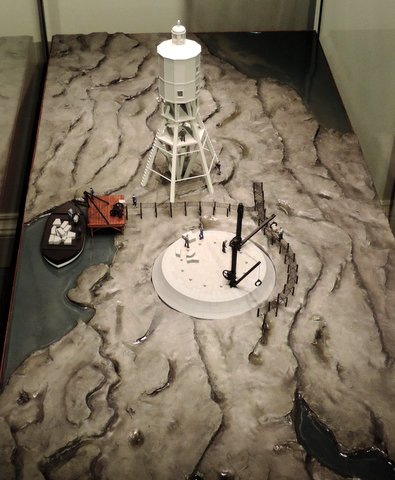
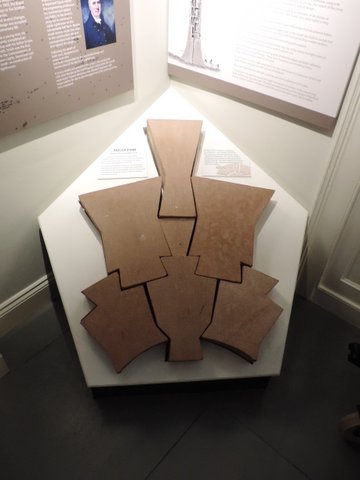
This photograph is of one of the models in the museum showing the difficulties that Stevenson had to overcome to build the lighthouse. First a wooden tower was built to house the men when the tide came in and then, whenever there was low water, they came out onto the exposed reef and worked on the tower itself, building it up with a jigsaw of interlocking stone blocks that had been cut during the winter months when no building could take place on the rock. The ingenious design of the blocks is shown in this model.
11-DSCN9410Despite the dangers and difficulties the tower was completed in only four years and became operational in 1811. It has been in continuous operation ever since, saving innumerable lives. These days the light is fully automated.

Robert Stevenson (1772-1850) was educated at a charity school when the death of his father left the family almost destitute. His future career was determined when he was fifteen and his mother married Thomas Smith, a tinsmith, lamp maker and mechanic who was engineer to the Northern Lighthouse Board. Robert became his assistant and by the age of nineteen had built his first lighthouse on the River Clyde. Bell Rock is considered his masterpiece, but he was responsible for many other lights as well as roads, bridges, harbours, canals, railways, and river navigations. Three of his sons followed in his footsteps as civil engineers and his grandson was the writer Robert Louis Stevenson.


2 Comments

Filed under Architecture, Buildings, Science & technology, Transport and travel

Protecting the Hanoverian Kings From the Jacobites


16-DSCN9509

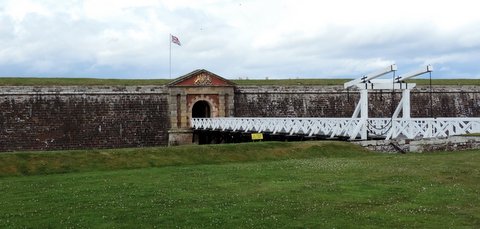
My blog today is set a very long way north of London, but its subject – Fort George on Scotland’s Moray Firth – must have represented a great comfort to Londoners recovering from the shock of the ’45, Prince Charles Edward Stuart’s attempt to regain the throne of his grandfather, James VII of Scotland, II of England.
Charles, known as the Young Pretender or, more romantically as Bonnie Prince Charlie, had led his troops as far south as Derbyshire, causing widespread panic throughout England before he retreated back to Scotland with the realisation that the expected English support was not going to be forthcoming.
The forces of George II in London reacted with brutal force. Charles’s army was slaughtered in the Battle of Culloden in less than an hour on 16th April 1746 and the Young Pretender fled, the hopes of the Stuarts fleeing with him.
The government was not going to take any more chances with Jacobite sympathies in Scotland and put in place an ambitious plan to extend the military roads across the country and to build fortifications that would ensure a rising could never happen again.

14-DSCN9502
The old Fort George in Inverness had proved inadequate against the Jacobites and the town council was objecting strongly to having two thousand “wild and licentious” soldiery located in the heart of their respectable town, so the new fort was eventually located on a spit of land jutting out into the Moray Firth at Ardesier, a safe eleven miles away from Inverness’s citizens and commanding an excellent strategic position guarding the mouth of the Firth.
Fort George was begun in 1748, planned by Lieutenant-General William Skinner and built under the direction of the architectural dynasty of the Adams family – father William (who had worked on Edinburgh Castle), then son John and eventually even John’s brother Robert Adam, one of Britain’s most famous and fashionable architects.15-DSCN9504
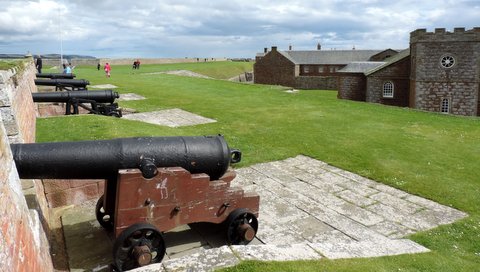
The 42 acre fort cost £200,000, equivalent to £20 million now and more than Scotland’s entire GNP for 1750. It only ever saw one shot fired in anger – and that was by a panicky night-time guard firing on a cow that was approaching the outer defences. As a result the fort appears almost exactly as it did when it was completed and it is one of the most impressive fortifications of the period in Europe. To add to the atmosphere for the modern visitor it is still in use for troops who have been accommodated into the historic fort without adding to, or damaging, the original building.

18-DSCN9513
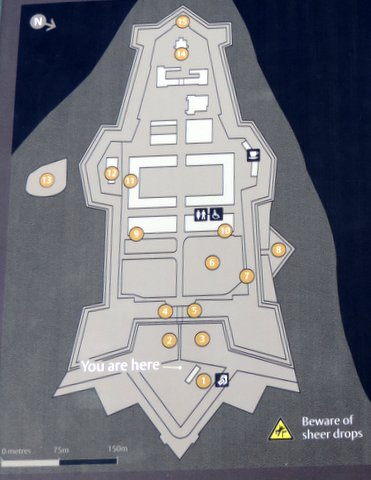
Today one can view the complex and seemingly impregnable series of outer walls, bastions and moats, designed to put any attacker under withering cross-fire.

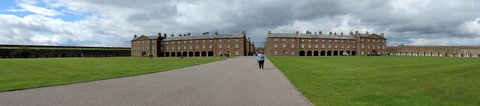
22-DSCN9537Inside the walls the buildings are handsome and impressive, from the Governor’s house to the barracks (still in use for their original purpose, although with fewer men in each large room and more modern heating and plumbing!) to the gunpowder magazine, the stores and the simple chapel.

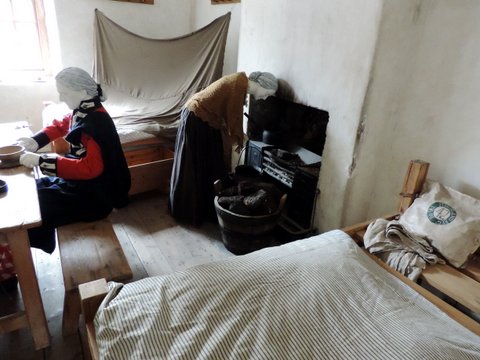
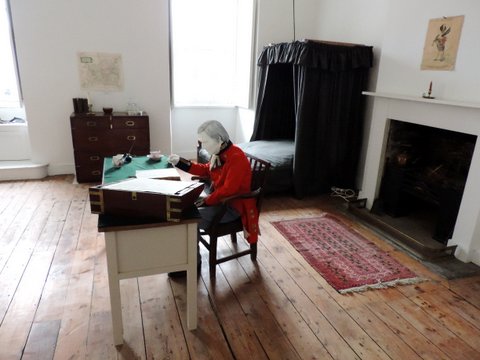
20-DSCN9523The recreated corner of one of the barrack rooms shows the draped blanket that was the only privacy a married couple had in a room sleeping eight men. In contrast one of the senior officers enjoys a room to himself with larger window panes and a smart fireplace. 21-DSCN9525

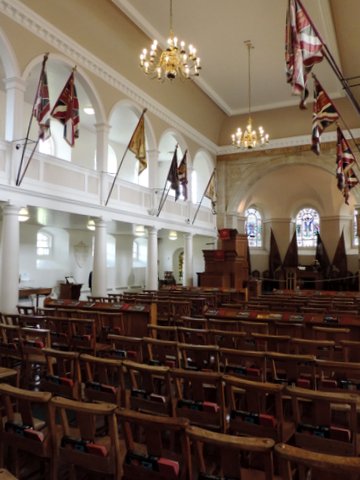
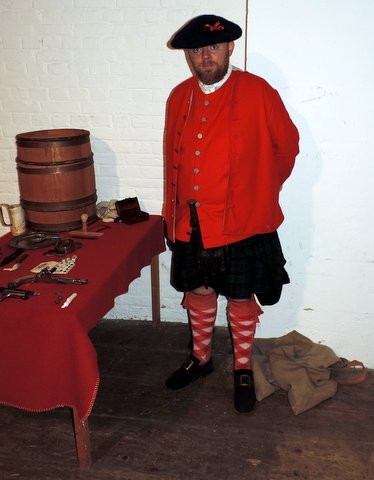
24-DSCN9540 The chapel contains many standards of regiments who have been stationed at Fort George, some of them from the early 19th century. The icing on the cake for me was the re-enactor in the dress of the original Scottish regiments garrisoned there who allowed me to try out all his weapons, including his musket and whose tales of the fort really brought it to life.

19-DSCN9520

5 Comments

Filed under Architecture, Buildings, Military

The Road to Waterloo Week 13: War Is Declared at Last, the Prince Regent Builds and the Mob Protests

France was still in the grip of a miserable, cold, foggy Spring but Napoleon would have been encouraged by Britain’s reluctance to declare war, giving him more time to wrestle with his constitutional and political problems and continue to expand his army.
An insecure British government was facing Radical opposition within the Commons and on the streets, the economy was shaky and everyone was depressed by the weather. The price of bread was rising, the farmers were having a tough time because of the rain and the King’s health kept him out of the public eye – “his disorder continues without any sensible alteration,” according to the bulletins.

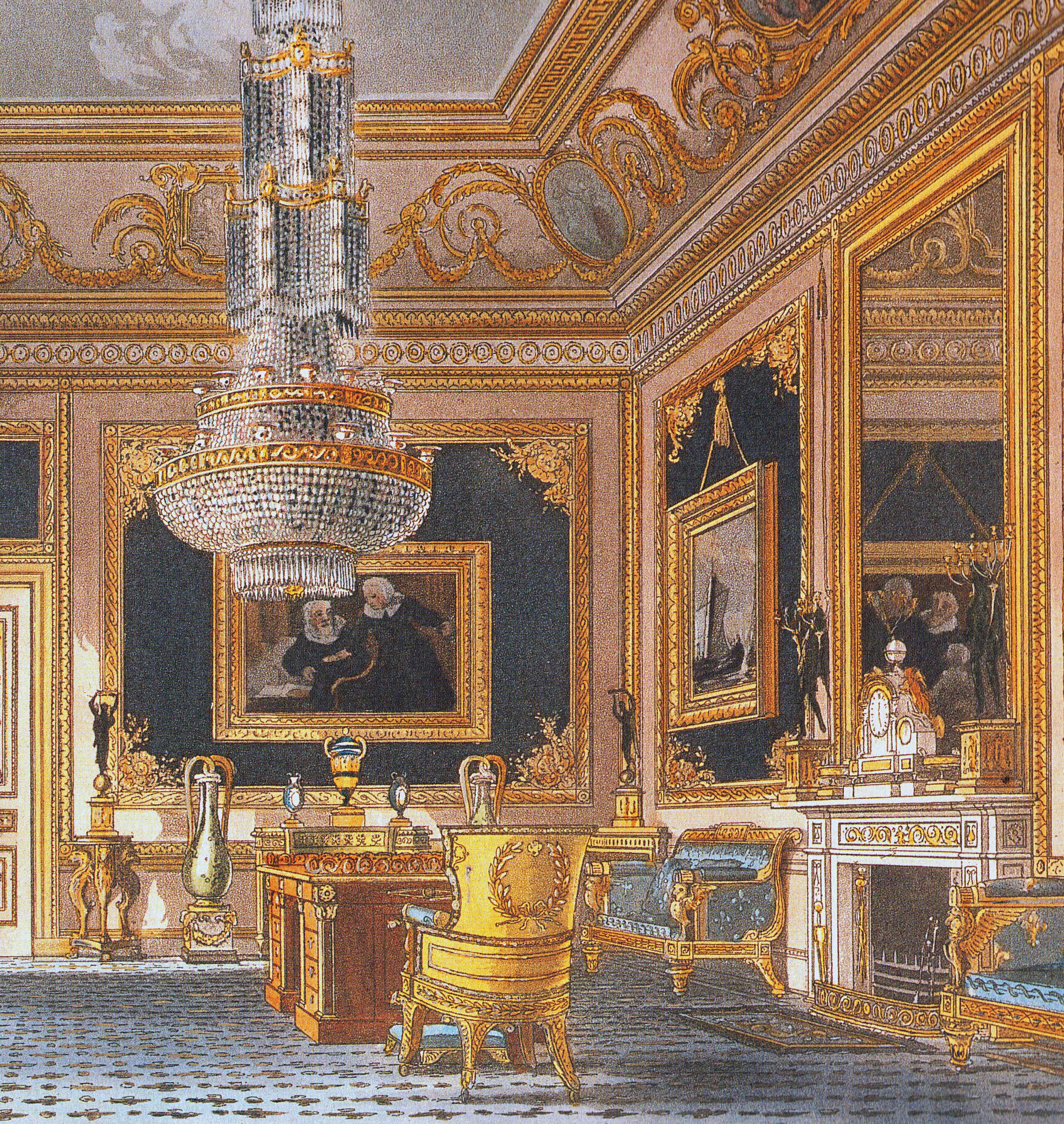
Carlton House detail
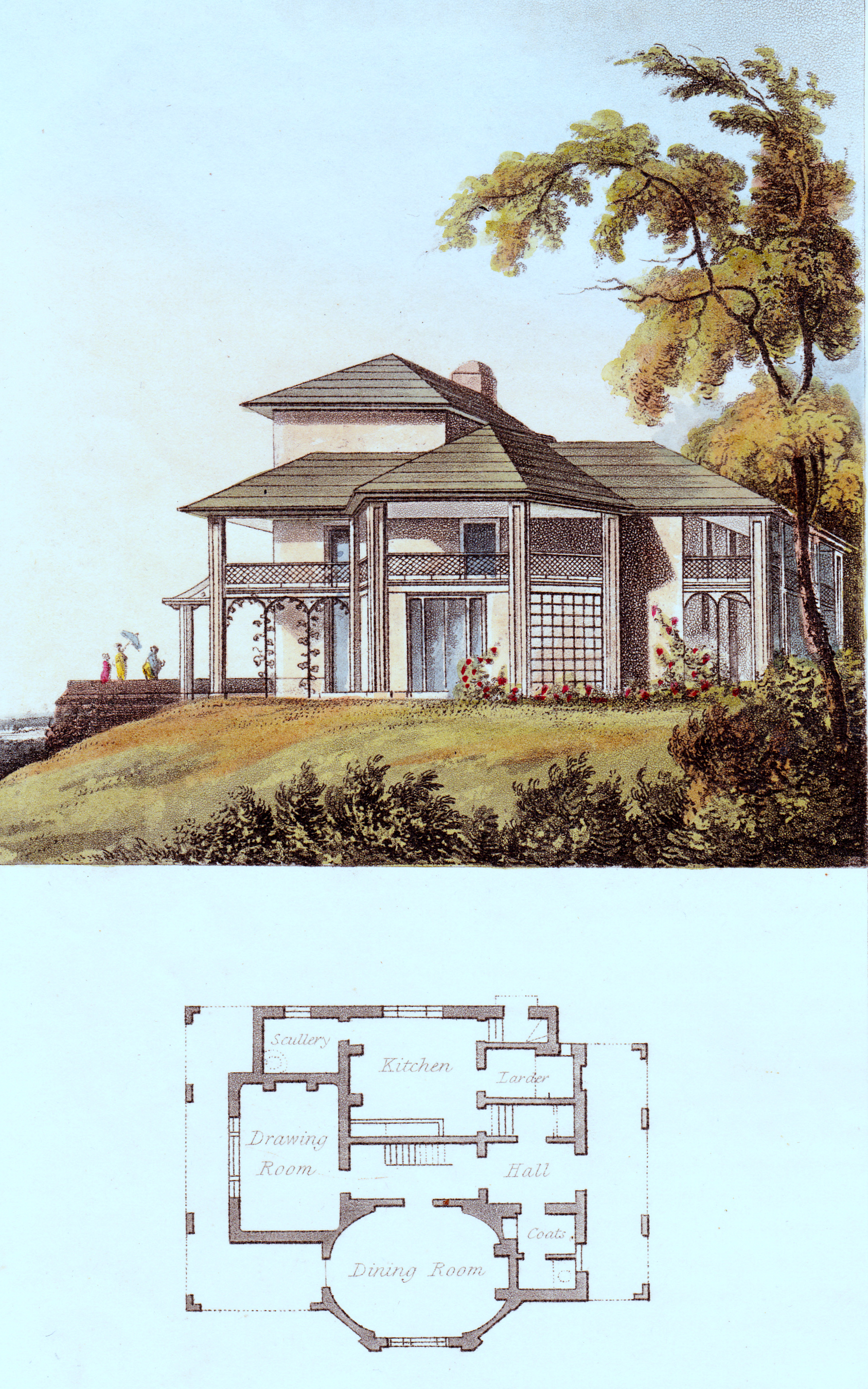
Only the Prince Regent seemed to be in a good mood – or perhaps he was keeping his spirits up with an orgy of lavish building works. A gothic-style dining room was added to Carlton House along with a library in the same style and a golden drawing room. Above is a detail of the Blue Velvet Room at Carlton House, a good example of the Regent’s lavish taste. At the same time John Nash was working on a “cottage” for the Regent in Windsor Great Park, a large and elaborate house the cottage orné style, with thatched roofs, verandas, and a conservatory. (It was demolished by William IV and the Royal Lodge now stands on the site). Nash was also working on further plans for the Pavilion at Brighton. Below is an example of the cottage orné style, although this is a much smaller example than Nash’s would have been. The drawing is from Ackermann’s Repository (November 1816)

cottage ornee
The Whigs were attacking the head of the diplomatic corps, Lord Castlereagh, and, through him the Congress of Vienna, dominated by Russia, Prussia and Austria who, they said, were a threat to independent nations. Vociferously led by Samuel Whitbread they argued that Napoleon had the support of the French people and it was wrong to go to war simply because Britain did not like him. Whitbread argued that the Emperor was now peace-loving, Castlereagh countered that once he had assembled 400,000 troops it would soon become apparent how peace-loving he was.
The harassed government was faced with mobs on the streets protesting about the Corn Law, the Income Tax, the slave trade and the Prince Regent’s extravagance, but they finally decided that Napoleon was secure on the French throne and that war was inevitable. The Allied Treaty, signed at Vienna on 25th March, was laid before the House at last – if Parliament ratified it, it became a declaration of war. It was approved in the Lords by 156 votes to 44 and in the Commons by 331 to 92 on 25th May. War was now inevitable, the only question was – when?
The firebrand Samuel Whitbread fell strangely silent after this, his place as the radical leader taken by Francis Burdett and Henry Hunt. Whitbread may have been in financial difficulty and earlier in the month he had resigned his management of Drury Lane Theatre, in which he had invested a great deal of money.
At Drury Lane on the 24th, there was a benefit performance by Edmund Kean, announced as a never-before performed tragedy by Shakespeare. The newspapers the next day were respectful of Kean, but sarcastic about the play.
“MR KEAN took his benefit last night. A tragedy by SHAKESPEARE – “never acted” had been announced as the performance of the evening; but “insurmountable difficulties” opposing the execution of this design, (no great wonder, bye the bye, for what play, undoubtedly SHAKESPEARE’S, can we at this time of day, take upon ourselves to assert, had never been acted?) the tragedy of the “Revenge”, was substituted, and MR KEAN appeared for the first time as the representative of Zanga.”

Leave a comment

Filed under Architecture, Entertainment, Napoleon, Prince Regent

Lighting With A Bang

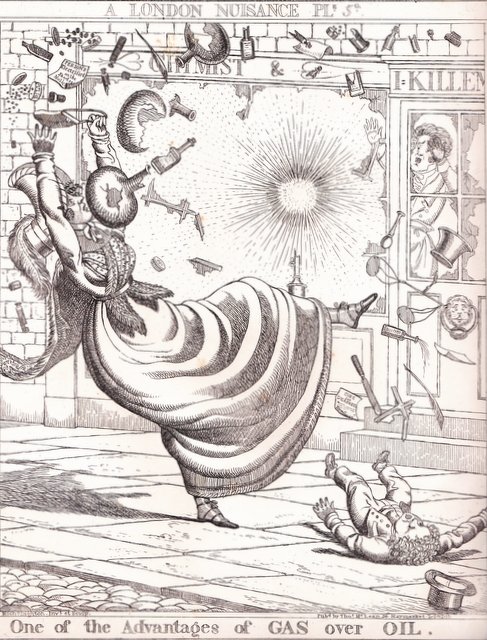
Dighton 2

Richard Dighton’s print of 1821 is sarcastically entitled “One of the Advantages of GAS over OIL” and, as it is from his “London Nuisances” series, demonstates that even thirteen years after the first demonstration of street lighting by gas, the new technology was treated with considerable wariness.

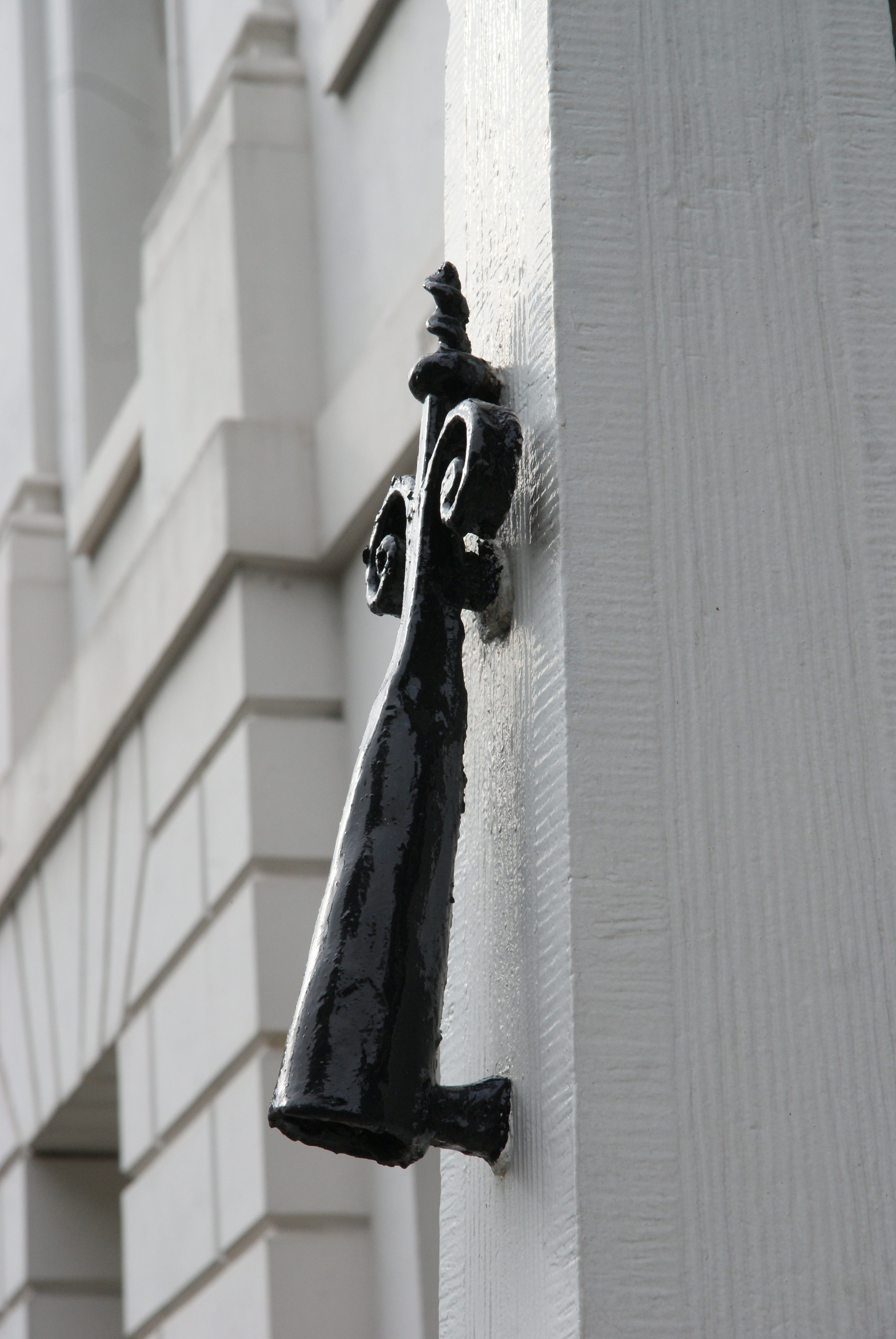
Throughout the eighteenth century scientists were aware of the light produced by both coal, wood and natural gases, but could see little practical use for it. Meanwhile streets contined to be dark, dangerous and crime-ridden, the only pools of light the lanterns put out by householders and the precarious illumination of the link-boys’ torches. SONY DSCOften the link-boys could not be trusted to guide the walker safely home and not into the hands of muggers and pickpockets and the air of danger was intensified by the identification of the boys, plunging their flaming torches into the dark snuffers, with illicit  acts. The presence of a link boy in a painting was enough to alert the viewer to a sexual sub-text. This snuffer is outside Chatham House in St James’s Square.

William Murdoch, an engineer working for Matthew Boulton and James Watt at their Soho Foundry steam engine works in Birmingham is the first person known to have lit a house by gas, although, having tried it at home in Redruth, Cornwell in 1792, he did not seem interested in trying to expand on that use. Instead he used gas to light the interior of the Soho Foundry in 1798 and four years later he illuminated the outside in a spectacular public display.

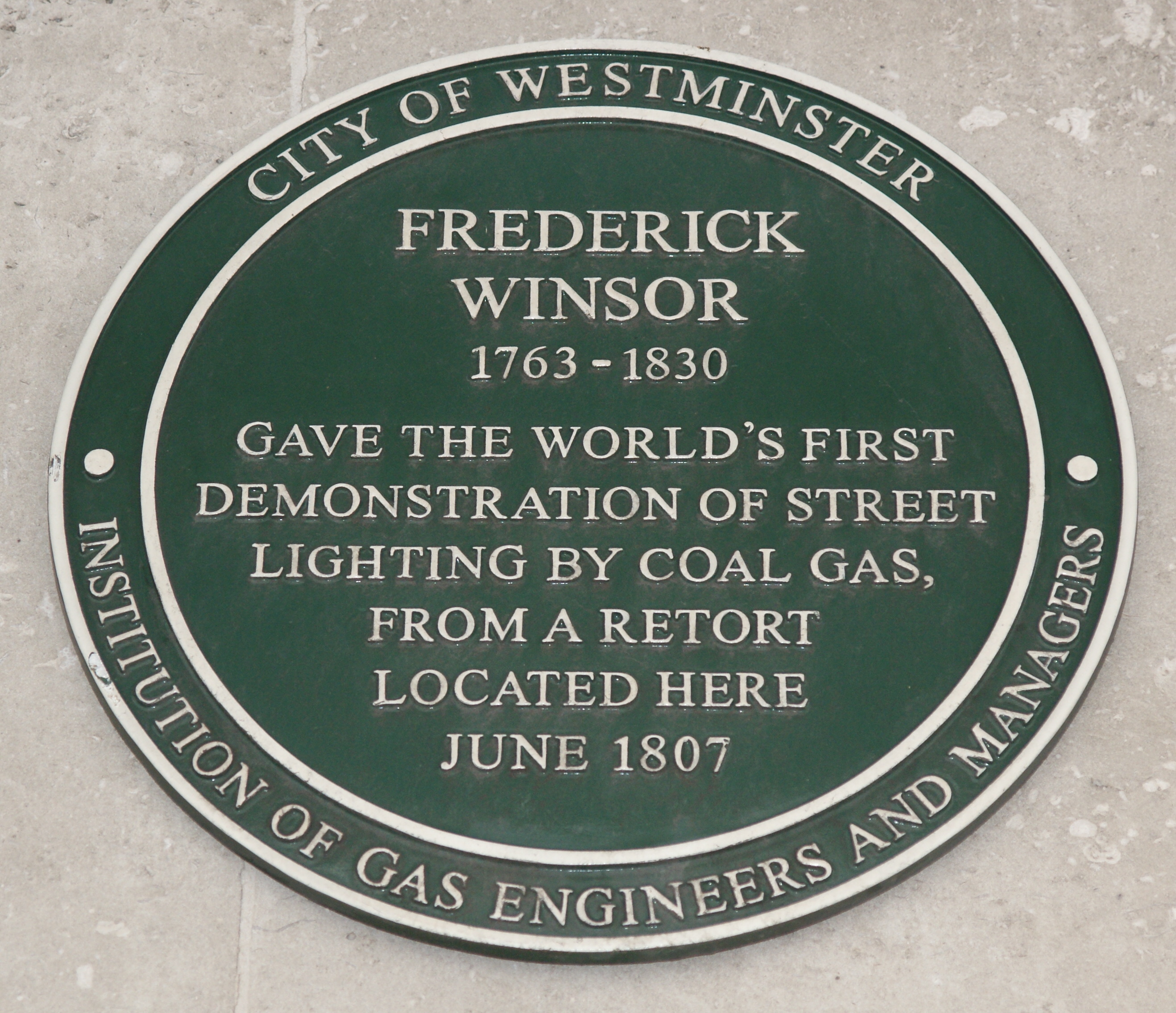
Meanwhile a German inventor, Fridrich Winzer, known in Britian as Frederick Albert Winsor, took out the first patent for a gas light in 1802. In 1807 he set up a retort in Pall Mall and produced a temporary display of street lighting on January 28th 1807 for the Prince Regent’s birthday. Prinny became a fan of the new technology and gave it his support.

SONY DSC

Coal gas contains hydrogen, methane, carbon monoxide and sulphur – smelly, explosive, a fire risk and a definite health hazard and the technology to make it safer lagged beghind the ability to produce it. Gas in homes was very rare until the 1840s and did not really catch on until the 1860s when the gas lighting installed in the new Houses of Parliament allayed public fears. Even then the light was from a flame, in effect a powerful candle – the first gas mantle was not invented until 1885.

Meanwhile some shops risked introducing it. Entrepreneur publisher Rudolph Ackermann rebuilt his  luxurious Emporium in the Strand in 1810 and it was the first shop in London ‘to be lit solely by Gas, which burns with a purity and brilliance unobtainable by any other mode of illumination hitherto attempted.’ But it was slow to catch on , although its benefits for street lighting – and the reduction of crime –  were easily appreciated. In 1812 Parliament granted a charter to the London and Westminster Gas Light and Coal Company and on December 31st 1813 Westminster Bridge was illuminated permanently.

In 1804 Winsor had tried lighting the Lyceum theatre by gas, but it was not until 1817 that it was installed there and at the Covent Garden and Drury Lane theatres. In that year the Chartered Gas Company’s three stations produced 8,500 cubic metres of gas, capable of lighting gas lamps giving the equivalent light of 450,00 candles. Despite the dangers, gas light was here to stay and by 1826 virtually every city and large town in Britain had gas street lighting.

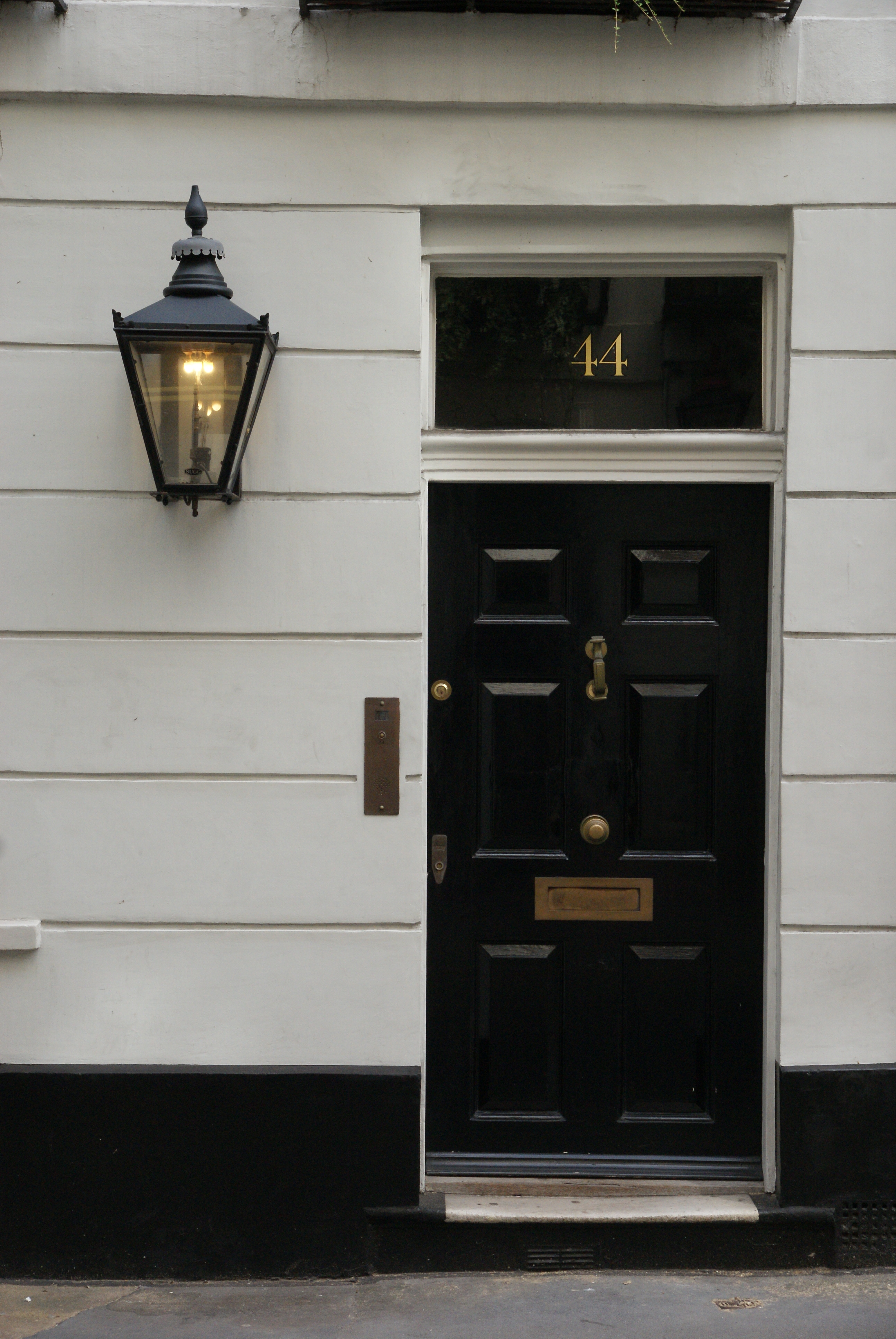
There are still gas lights on the streets of London today. Crown Passage, which runs between King Street and Pall Mall, is still very reminiscent of the network of alleys and courts that crisscrossed the fashionable St James’s area – home to gaming hells, brothels and lodging houses on the doorstep of St James’s Palace and Almack’s Assembly Rooms – and it still has gas light and a gas lighter, although when I met him he was simply setting the timing mechanism that turns the gas on and off these days. The other gas light shown is on the front of a house in St James’s Place, almost opposite Cleveland Court where Henry Austen, Jane’s brother, had his banking premises for a time.

SONY DSC                SONY DSC

Save

3 Comments

Filed under Accidents & emergencies, Architecture, Street life