
The Sami people of Arctic Scandinavia (shown here in a print of c1800) have one thousand words for their reindeer and more than one hundred and eighty for snow and ice, figures that emphasize how important those things are in their lives. 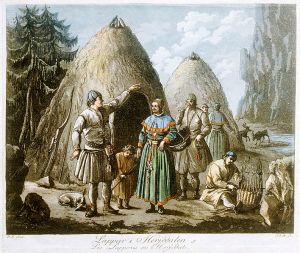
When I was researching for Regency Slang Revealed I found twenty seven words or phrases relating to the crime of pickpocking which suggests that while it might not have filled the thoughts of people in 1800 to quite the same extent, it was a significant crime and one that was encountered on a regular basis.
To go pick-pocketing, or to practice the Figging Law (the art of picking pockets) was to go on the Buz Gloak, to File the Cly or to Dive, Draw, Foist or Shake. There were categories of pickpocket. A Knuckles was a superior practitioner and a Rum Diver was particularly dexterous while a Fork used his middle and forefingers to delve into pockets. A pick pocket who was constantly at work was said to keep his Fives A-Going.
Pickpockets generally were Buzmen, Cly Fakers, Divers, Dummee Hunters, Files or Foists. Very often they worked in groups – Bulk and File – or had associates who would run off with the stolen goods the moment they were taken – the Adam Tylers. A female pickpocket might well wear a Round-about, a large circular pocket worn under her skirts in which to stash her ill-gotten gains.
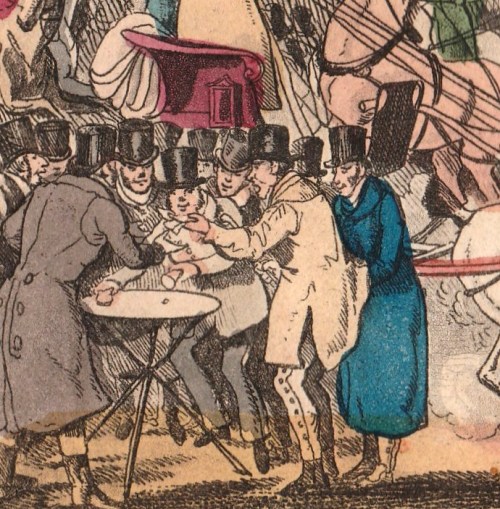
Prostitutes often acted as decoys for pickpockets and a man whose mind was anywhere but on the contents of his pockets might well find them empty after an encounter in a back alleyway. But even the most virtuous were in danger – Autem Divers operated in churches, picking the pockets of worshippers whose concentration was on higher things. An Anabaptist, however, was not a follower of that religious sect but a pick pocket who had been caught and suffered summary punishment with a ducking in the nearest pond or under the pump. In a detail from an Alken print of a race meeting (at the head of this post) the man in a blue coat is picking the pocket of another who is totally distracted by a game of dice.
Stealing handkerchiefs (Clouts or Wipers) was a particular specialty. Unlike the paper tissues of today, costing virtually nothing and instantly discarded, a handkerchief in the Georgian period was a large piece of fabric, often good linen (a Kent), fine cotton lawn (a Lawn) or silk (a Sleek Wipe, India Wipe or Fogle), and worth money. Stealing them was to go on the Clouting Lay and a Fogle, Napkin Hunter or Wipe Drawer was the specialist in this form of crime.
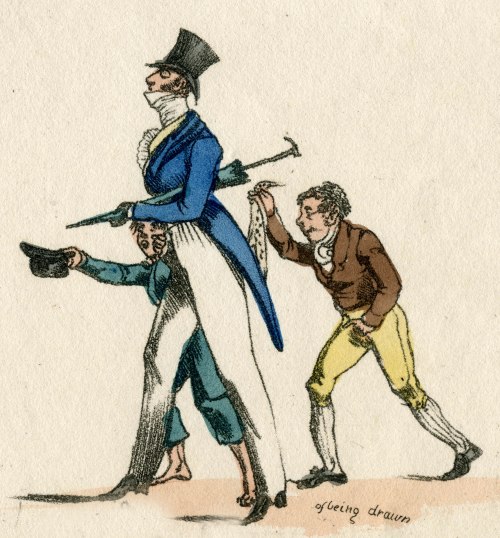
Gentlemen often kept their handkerchiefs in a pocket in the tails of their coats which preserved the line of the body of the coat but made the handkerchief vulnerable. Sometimes they were deliberately displayed coming out of the back pocket to perhaps show off a fine Belcher (spotted silk handkerchief) – and that was asking for trouble. The two lads in the print by Alken seem to be stealing just such a handkerchief, one distracting the mark by begging, the other taking the handkerchief.
In no time at all a stolen handkerchief would be in the hands of of a Ferret (pawnbroker) or for sale in a Bow-Wow, a secondhand clothes shop.
Theft of an article worth more than one shilling was a crime punishable by death until 1823, although juries frequently assessed stolen goods at under that value in order to save the accused from the gallows. Stealing handkerchiefs was probably a profitable form of larceny that kept the Buzmen just on the right side of that line, although they could well face transportation and/or a vicious flogging. One pickpocket who did not do too badly, despite being caught, was George Barrington, known as ‘the pickpocket of gentleman and the gentleman of pickpockets.’ He was transported to Botany Bay in 1791. By 1796 he was the Superintendent of Convicts, and later, High Constable.
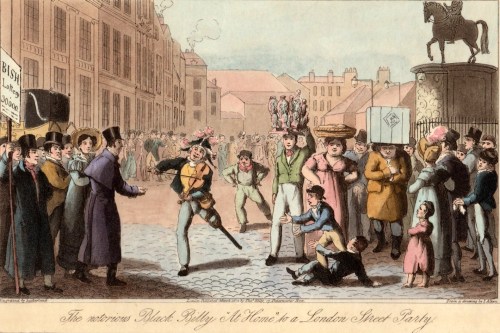
The final print, of the famous street entertainer Black Billy performing in front of the statue of Charles I, shows another handkerchief being stolen on the extreme right of the picture. The pickpocket is a most respectable-looking youth – it seems you couldn’t trust anyone!
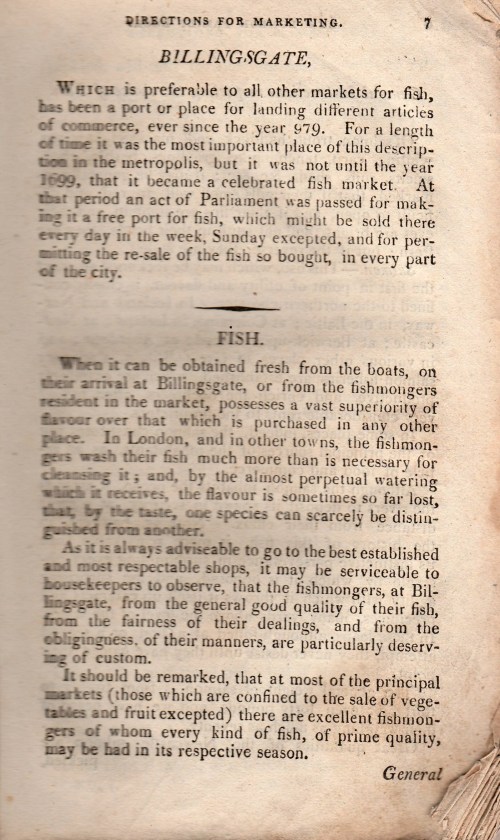
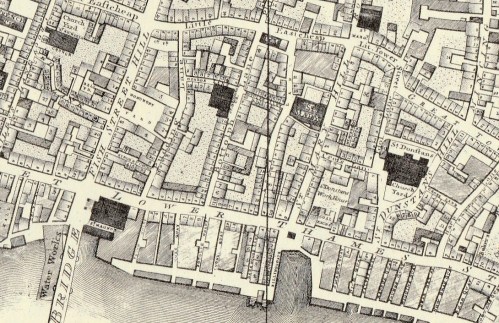
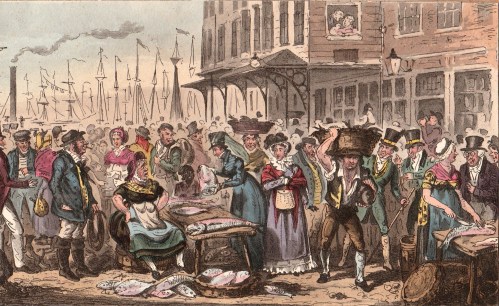
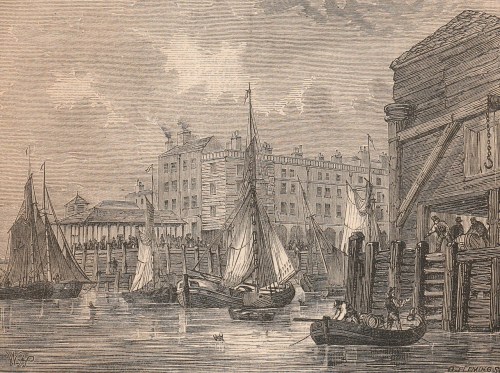 Many of the fish were caught in the Thames and in 1828 a Parliamentary Committee took evidence that in 1798 there were 400 fishermen, each owning a boat and employing one boy, who made a good living between Deptford and London catching roach, plaice, smelts, flounders, shad, eels, dudgeon, dace and dabs. One witness stated that in 1810 3,000 Thames salmon were landed in the season. By the time of the Commission,eighteen years later, the fishery had been destroyed by the massive pollution of the river from water closets and the waste from gas works and factories that went straight into the river.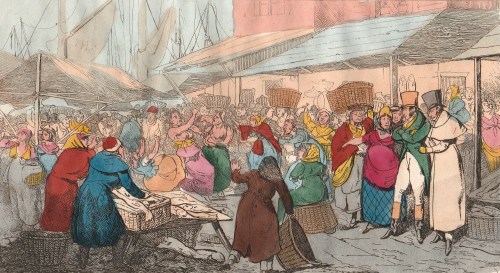

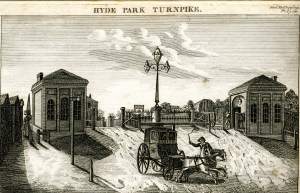 dent at the gates for giving her sister-in-law Eliza a chest cold. ‘The Horses actually gibbed on this side of Hyde Park Gate – a load of fresh gravel made it a formidable Hill to them, & they refused the collar; I believe there was a sore shoulder to irritate. Eliza was frightened, & we got out & were detained in the Eveng. air several minutes.’ You can follow Jane’s London travels in
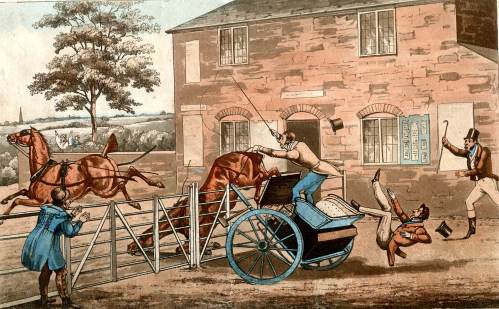
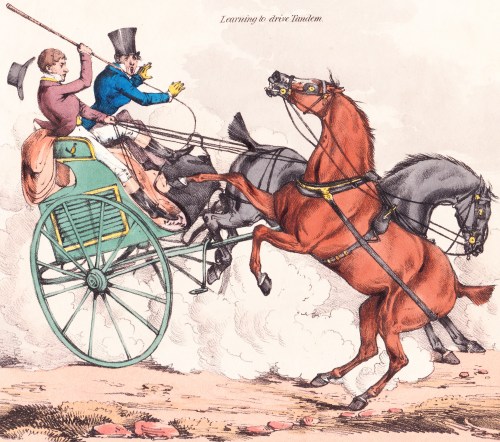 Alken shows a young gentleman who has got one of his pair turned around and one wheel off the road. The vehicle is a cocking cart used to transport fighting cocks and below the seat is a compartment ventilated by slats and a small image of a fighting cock on the armrest. In The Remains of a Stanhope (1827) the crash has already occurred, showing just how fragile these vehicles could be. A carpenter has been summoned and the owner is drawling somewhat optimistically, “I say my clever feller, have you an idea you can make this thing capable of progression?”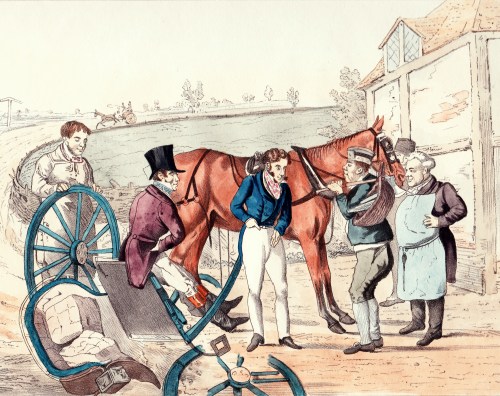
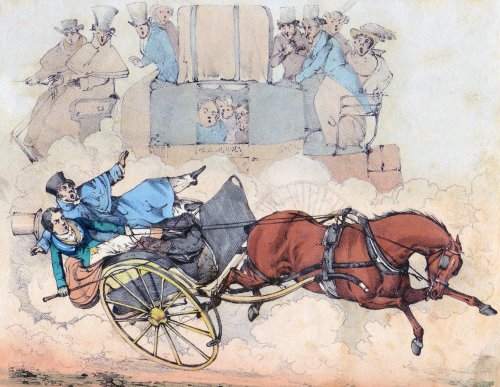
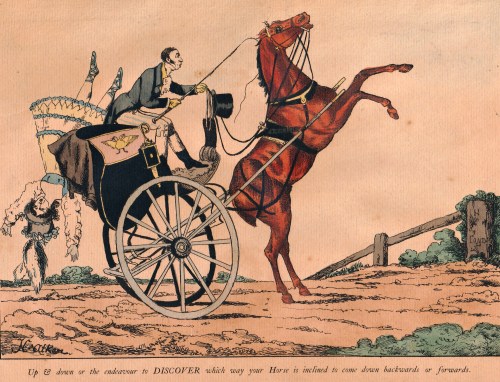
 Young men crashing their vehicles was obviously commonplace, and then as now, showing off to the ladies was also part of the joy of owning a sporting vehicle. Alken was not above titillating his audience with a glimpse of petticoat or a shapely leg, even when the owner of the leg was about to get seriously hurt. In “Up and down or the endeavour to discover which way your Horse is inclined to come down backwards or forwards” (1817) the driver takes no notice at all of his fair passenger vanishing over the back of his fancy carriage. There are some nice details in this print – the two-headed goose on the side panel is presumably a reference to the driver not knowing which way he is going and the luxurious sheepskin foot rug is clearly visible.
  In the same series is an awful warning about the dangers of not choosing your horses with care. Captioned “Trying a new match you discover that they are not only alike in colour weight & action but in disposition.” One young man is heading out over the back of the carriage while his companion is poised to leap for safety amidst flying greatcoats, hats and seat cushions.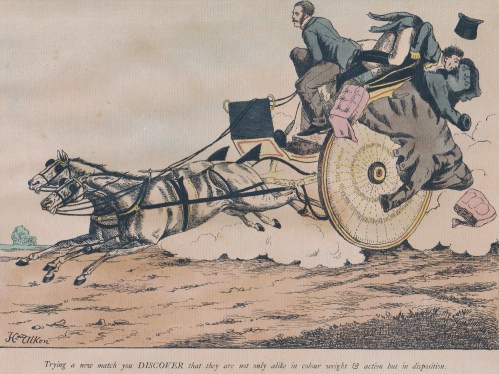

 Jane Austen's London