
We’ve arrived at that windy season when raising an umbrella is asking for trouble, as this delicious original water colour sketch (unfortunately undated) reminds me.
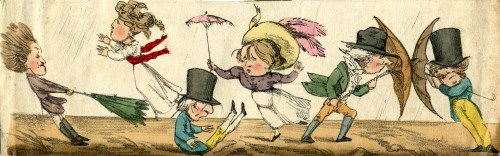
The interesting thing about this is that the men are using umbrellas, something that they probably wouldn’t have considered before the early 1800s.
Although parasols as protection from the sun date back to the 4th century BC in the Near East, and possibly earlier in China, the idea of using them to hold off the rain appears to be a 17th century innovation in France, Italy and England – but for ladies only. By the mid-18th century continental gentlemen would happily be seen sheltering from a downpour under an umbrella covered in oiled silk and English ladies would routinely use them, but there was a distinct stigma about Englishmen resorting to an umbrella.
Umbrellas were, it seems, ‘French’ and therefore, by definition, an effeminate accessory. Beau Brummell would never carry one, considering that no gentleman should, and advocated taking a sedan chair if there was the slightest risk of rain.
However, some practical men did ignore the jeers, the most well-known of them being Jonas Hanway (1712-1786), a much travelled man, who designed his own, rather large and cumbersome umbrella and persisted in using it. He was verbally attacked by the hackney carriage drivers who saw this as a direct attack on their business but he ignored their threats and one of the slang terms for an umbrella at the time was a Hanway. (The Victorian ‘gamp’ was named after Dickens’s Mrs Gamp, not the other way around.) The below detail from a Victorian imagining of Mr Hanway shows the interest he attracted.

By the early 19th century practicality had won over prejudice for most gentlemen and the use of a rain umbrella became usual for both sexes. In 1814 in Mansfield Park Jane Austen writes of the rescue of a very wet Fanny Price:
“… when Dr Grant himself went out with an umbrella there was nothing to be done but to be very much ashamed and to get into the house as fast as possible; and to poor Miss Crawford, who had just been contemplating the dismal rain in a very desponding state of mind, sighing over the ruin of all her plans of exercise for that morning, and of every chance of seeing a single creature beyond themselves for the next twenty four hours, the sound of a little bustle at the front door and the sight of Miss Price dripping with wet in the vestibule was delightful.”
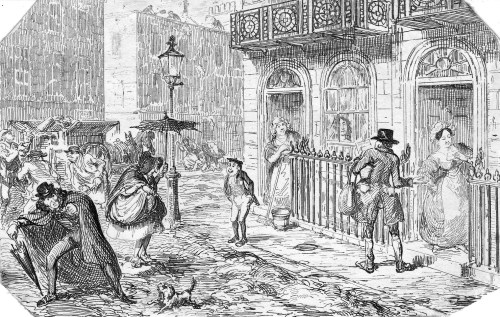
Cruickshank’s delightful series of sketches of various months often show umbrellas. This one (February) has a man using his as a walking aid to negotiate the muddy street while the lady with her skirts hitched up has a far less substantial version.
In this undated sketch (a little earlier than the Cruickshank) both men hold umbrellas, although I suspect that the use of one on horseback may just be part of the joke.
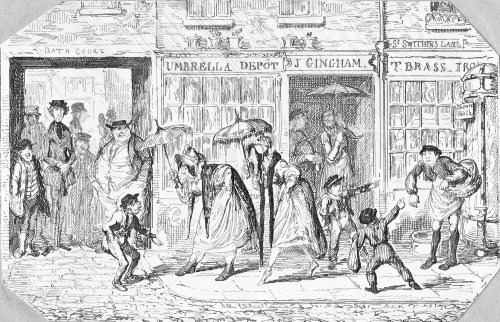
Specialist shops soon started selling umbrellas, as can be seen in another Cruikshank scene which shows one belonging to J. Gingham. The ladies are using what look more like parasols whereas the gentleman inside the shop is having a much more sturdy version demonstrated.
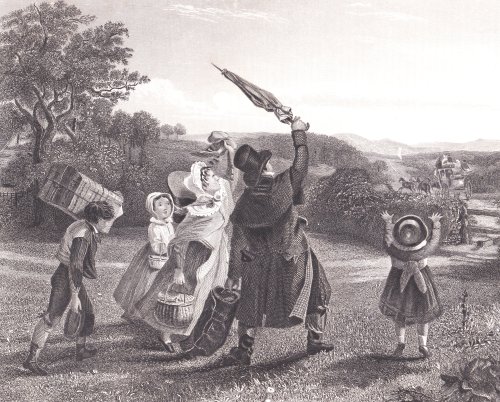
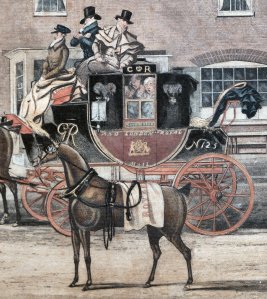
A gentleman travelling by stagecoach might take a umbrella, as can be seen in this image of someone missing the stage –
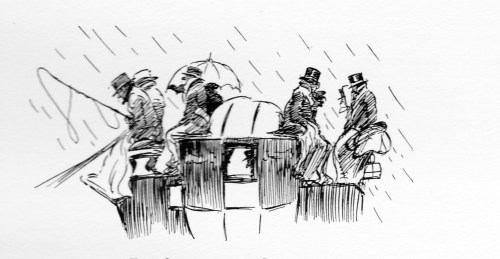
Of course you had to be considerate in how you used your umbrella. In 1822 Stanley Harris recalls sitting in front of a woman with an umbrella who would “shove it below your hat so adroitly as to send a little stream of water down the back of your neck.” This delightful drawing by Cecil Aldin shows the misery of being on top of the stage in the rain, even with a brolly. But even in this downpour, it is only a female passenger who is using one.
Finally here is a print showing a French invention – an umbrella complete with lightening conductor. Somehow I cannot see any English gentleman consenting to be seen with such an inelegant contraption!
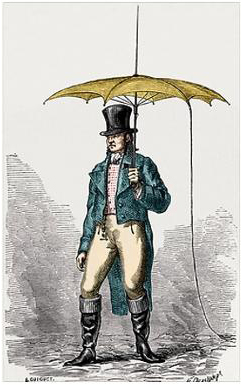
(This is an out of copyright image from Louis Figuier: Les merveilles de la science ou description populaire des inventions modernes (S. 596 ff.) (1867), Furne, Juvet)
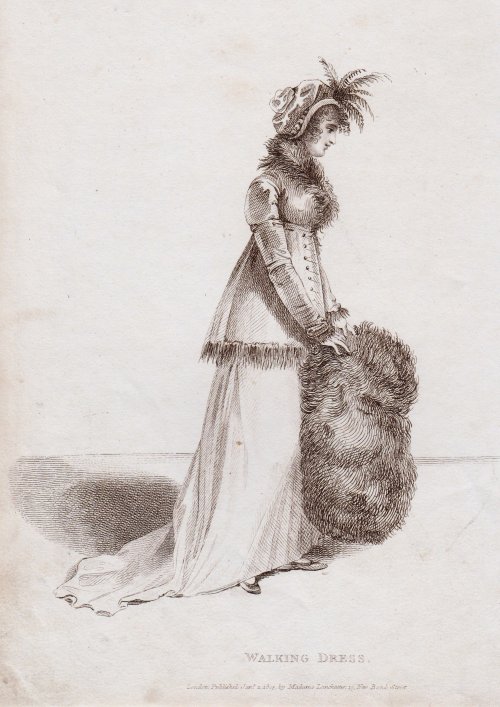
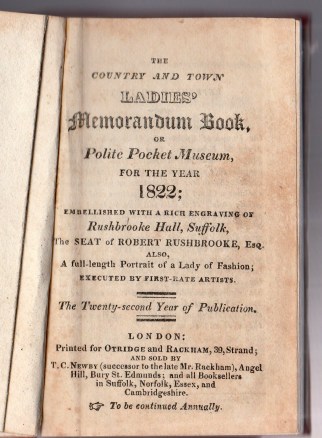
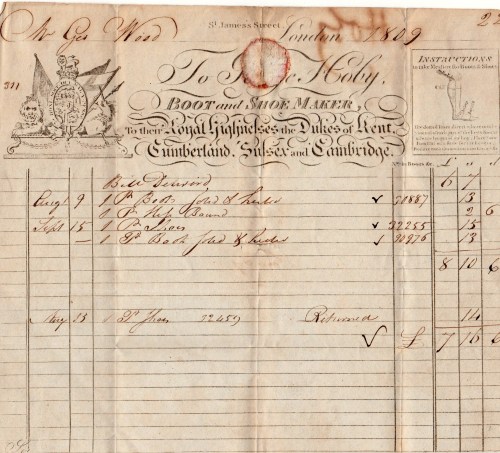
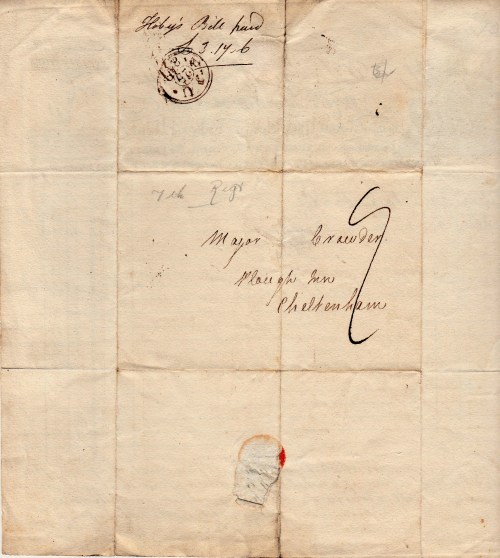
 Mr George Wood lived in Blandford Court which was on the south side of Pall Mall behind Marlborough House which is within a five minute walk of Hoby’s shop which is probably why the invoice appears to have been hand-delivered. I suspect that Mr Wood was a relative of Lieutenant-General Sir George Wood, ” the Royal Bengal Tiger” and his brother Sir Mark Wood, bt. Sir Mark certainly lived in Pall Mall.
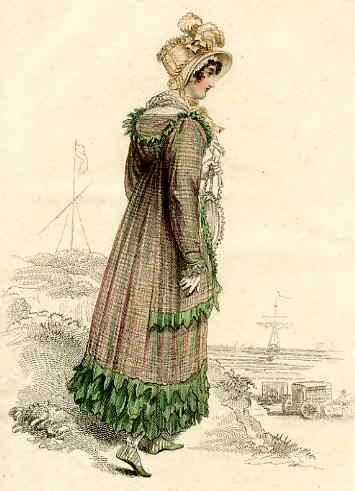 ‘Such a pity green does not suit me.’ They wander on a little, Porrett tongue-tied with love, Emily uncharacteristically silent. Finally she blurts out, ‘You went swimming this morning.’
 ‘We cannot,’ he mumbles with nothing like his normal fluency. ‘You are the granddaughter of an earl. I am…’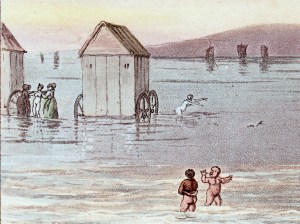
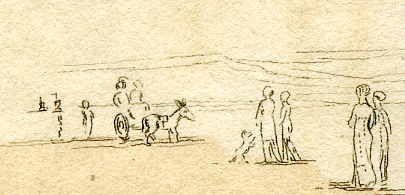
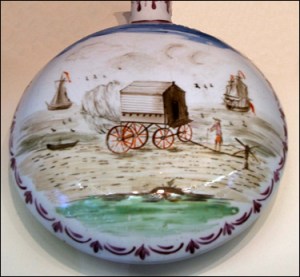 The Earl of Wittering’s extended family have all decided that they will try being ‘dunked’ in the sea in the interests of their health, although their enthusiasm for the exercise varies considerably. Young Arthur is eager to observe jelly fish (although he has the tact not to mention them in front of his female relatives), his father, Viscount Ditherstone, is keen to catch a glimpse of any ladies bathing, while the Viscount’s father, the Earl, is grimly determined to suffer for the sake of his digestion, even if that means drinking sea water too.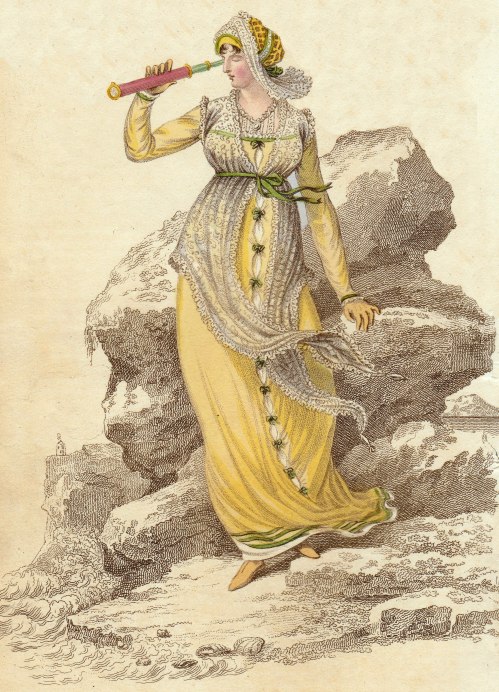
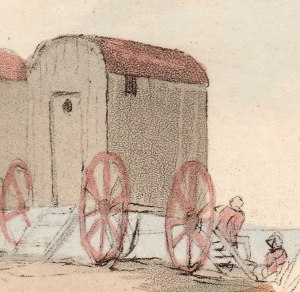 He waves away the guide with some confidence. ‘I can swim, thank you,’ and plunges in, shuddering at the first shock of cold water. He surfaces within the cover but the space it encloses – about 10 by five feet – is too restricting and he ducks underneath and strikes out strongly.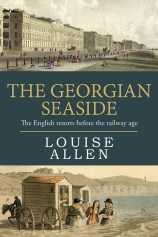
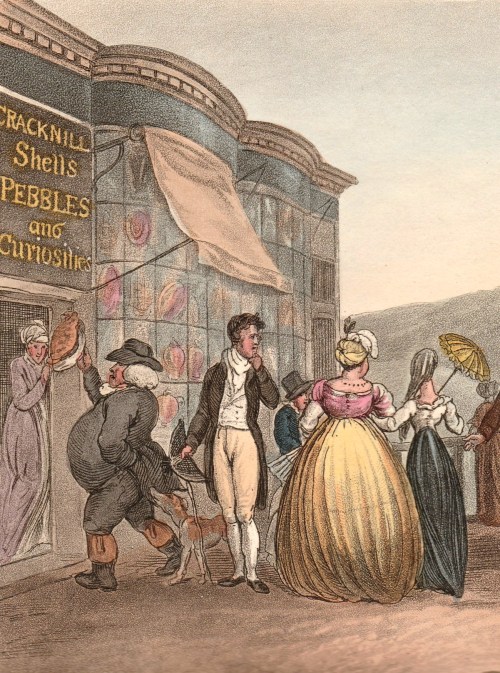
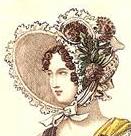 ‘There is a bonnet here I thought might suit you, Miss Gatwick,’ he confesses, remembering to address her properly and not by her given name as he always thinks of her. ‘You see? That one on the stand.’
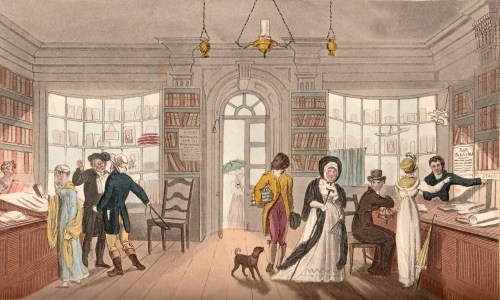
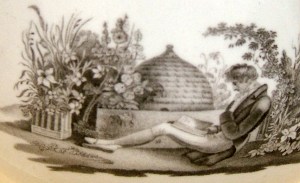 Emily gives him a beaming smile, much restored by thoughts of shopping, as they reach the circulating library. Porrett, having established that the monthly subscription is eight shillings, deals with the business side, taking out a subscription for both senior ladies. He also subscribes for himself, for he has a secret penchant for poetry and intends to take a slim volume off to the garden where he can brood on his heartache in peace. (Above, the artist of a Regency ‘bat print’ bowl has caught Porrett immersed in his poetry next to a beehive.)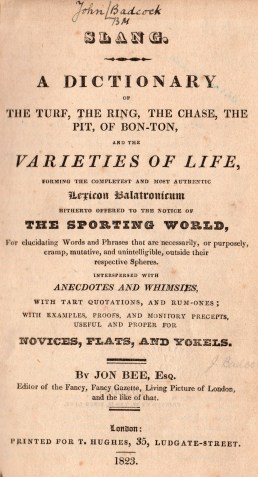
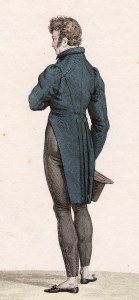
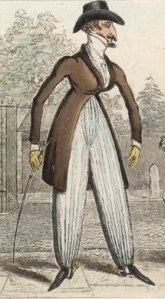 An invention of 1816, and applied to persons whose extravagant dress called forth the sneers of the vulgar; they were mostly young men who had this designation, and they were charged with wearing stays – a mistake easily fallen into, their wide web-belts having that appearance. Men of fashion became dandy soon after; having imported a good deal of French manner in their gait, lispings, wrinkled foreheads, killing king’s English, wearing immense pleated pantaloons, the coat cut away, small waistcoat, with cravat and chitterlings* immense: Hat small; hair frizzled and protruding. If one fell down he could not rise without assistance. Yet they assumed to be a little au militaire, and some wore mustachios. Lord Petersham was at the head of this sect of mannerists.
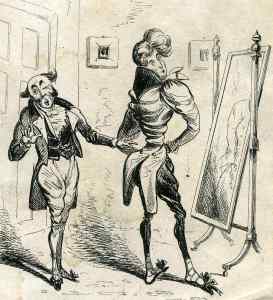 Kid, Kiddy and Kidling implies youth; but an old evergreen chap may be dressed kiddily, i.e. knowingly, with his hat on one side, shirt-collar up on high, coat cut away in the skirts, or outside breast-pockets, a yellow, bird’s-eye-blue , or Belcher fogle*, circling his squeeze**, and a chitterling shirt*** of great magnitude protruding on the sight, and wagging as its wearer walks. These compounded compose the kiddy; and if father and son come it in the same style, the latter is a kidling.

 Jane Austen's London