Category Archives: Buildings

The Earl of Wittering Goes to the Seaside: Part Five The First Day

The Gatwick family are up early this first morning in their rented house on the Esplanade in Weymouth, even the Earl who has been parted from Gaston his chef and his breakfasts for three days, so is eager to get back to his devilled kidneys.

Lady Wittering relies on Porrett, the Earl’s secretary to have researched what the procedure is this first day. ‘But I want to go in the sea,’ complains Emily, making Porrett feel slightly faint – then seriously overheated – for a moment.

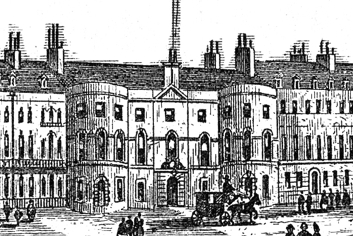
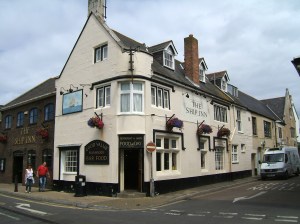
‘It would be advisable for the family to inscribe your names in the Master of Ceremonies’ book at the Assembly Rooms,’ Porrett explains when he has recovered from the mental image of Emily in the sea, breasting the waves… Oh goodness, now he needs a cold dip. ‘He will then call and inform the ladies of all the events planned for the next few weeks, ensure he knows your preferences, offer to perform any introductions you might wish and recommend suitable shops. I would suggest that after the Rooms that the ladies might like to inspect the libraries and see which they wish to subscribe to and call at the bath houses to decide which will have their patronage and view the various facilities available.’ Weymouth had gone through a number of Assembly Rooms and the new ones were at the Royal Hotel, only a few steps away from their lodgings. [The first Assembly Rooms were at the Ship Inn, below and the ones that the Gatwicks would patronise are below that to the right. ]

Pic165

Weymouth ass rooms

‘Facilities?’ Emily turns her large brown eyes on Porrett. ‘I thought it was just bathing machines for hire?’

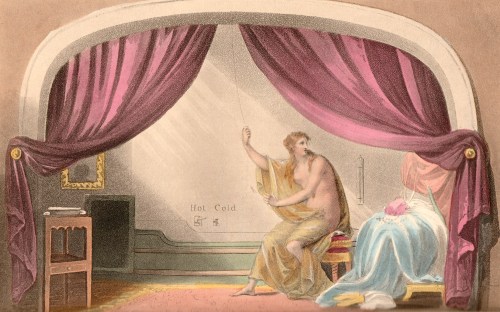
‘Oh no, Miss Gatwick. Shower baths, hot and cold seawater baths, steam rooms…’ Porrett’s brain begins to steam up giving him a vivid picture of Emily in the Warm Bath. He can’t cope with the thought of the Hot Bath… [Image from Political Sketches of Scarborough]


hot baths

‘Will you be accompanying us, Wittering? Ditherstone?’ The Countess studies her husband and son, both of whom have the air of men who would much rather take themselves off into town to locate the best library for the sporting papers, make enquiries about the prospects for some shooting, billiards and cards and generally avoid having to be grovelled to by the Master of Ceremonies.

‘I think not, my dear. I must go to the bank for one thing,’ Witttering emerges from his newspaper, obviously delighted to have found such an unexceptional excuse.

‘So must I,’ his son adds hastily. ‘Why not take Porrett to squire you about?’

Pic172‘I would be honoured, my lady. And, as it is such a pleasant day, perhaps you would care for a stroll along the main shopping streets?’ asks Porrett, in a seventh heaven. ‘I believe that Master Arthur has forgotten his hammer for extracting rock samples, so that could be purchased.’

‘Very well. Almira, Emily, Arthur, we will meet in the drawing room in one hour.’

Porrett makes a mental note to bring a footman along as well. he can hardly offer his arm to the countess (or, blissful thought) Miss Emily, if he is encumbered with a pile of shopping.

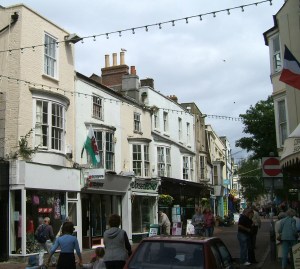
[Porrett will doubtless be taking his party along one of Weymouth’s bustling shopping streets – still full of Georgian buildings today]

The Georgian Seaside Cover_MEDIUM WEB

The Georgian Seaside: the English resorts before the railways came.


7 Comments

Filed under Buildings, Entertainment, Seaside resorts

The Earl of Wittering Plans His Summer

This May morning in 1816 the Gatwick family gather around the breakfast table in the Small Dining Room of their vast Mayfair mansion. It is obvious that the head of the family, the Earl of Wittering, has something on his mind, although the Countess of Wittering supposes it is only his bowels troubling him again. Like most of the upper classes of his age his diet – heavy on meat and alcohol, low on fruit and vegetables – means that his lordship frequently feels liverish, or to put it more bluntly, he’s appallingly constipated. She makes a mental note to send off another order to Savory & Moore, chemists (by Royal Appointment) in New Bond Street. (Shown below) Thomas Field Savory is making his fortune after acquiring the patent for internationally best-selling laxative, Seidlitz powders but, naturally, she does not mention such a subject at the meal table.

028

The Countess would much rather finish her toast and return to her sitting room where she is putting the final touches to a highly imaginative, and exceedingly dramatic, sketch of an Alpine pass. What she would really like would be to paint the sea. Ever since she read Edmund Burke’s tract On the Sublime and the Beautiful and learned that the ocean was “an object of no small terror” she has been fascinated by it.

On either side of the breakfast table sit the Earl’s heir, the Viscount Ditherstone (coughing, as is his irritating habit at breakfast) and his wife, flanked by their children, seventeen year old Emily and twelve year old Arthur. Ditherstone, ever tactless, enquires if there is anything on his father’s mind.

Porrett, the earl’s secretary has, it transpires, been making enquiries about his lordship’s intentions for the summer so that he can begin to put in place the arrangements and, for once, Lord Wittering is undecided. Normally, after the London Season the family embark on a lengthy round of summer visits to the far-flung branches of the family, their travels greatly eased by the splendid condition of the network of turnpike roads across the country. The tour would always culminate in two weeks spent toadying to his elderly, terrifying and exceedingly wealthy aunts. But the aunts had died that winter, their money left, as he had always desired, to their godson, Master Gatwick, the future earl. Now his lordship wonders if he really wants to spend three months travelling about before he can retire to his country estate for the autumn and set about slaughtering anything with fur, feathers or fins. What he would like to do is recover his health in a spa, as his father would have done, but Bath is hopelessly dull these days, quite out of fashion.

“Perhaps we should take a house at a seaside resort,” ventures his daughter-in-law. “I am sure the pure air would be a benefit to Ditherstone’s lungs.” Ever since she read that amusing novel Emma she has not been able to forget the phrase, The truth is, that in London it is always a sickly season. Nobody is healthy in London, nobody can be. And was it not the case that the great Mr Wordsworth was only able to write his beautiful verses “Upon Westminster Bridge” The beauty of the morning; silent, bare, Ships, towers, domes, theatres, and temples lie Open unto the fields, and to the sky; All bright and glittering in the smokeless air… because he was amazed to find, for once, the atmosphere free of polluting smoke?

Ditherstone himself perks up. He rather fancies a dip or two in the briny. He’s heard exciting stories about the ladies bathing and what they might, or might not wear, to say nothing of amorous encounters in bathing rooms. And all kinds of dashers visit the seaside, so his bachelor friends tell him.

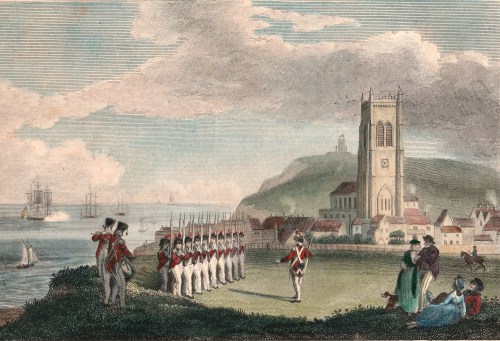
“Oh, Grandpapa,” Emily breathes. “I would love to go to the seaside.” She bats her eyelashes. “The south coast, they say, is so warm and quite delightful.” And, facing the enemy France, as it does, it is stuffed with troops. All those officers in scarlet coats. Oh, the opportunities for flirtation. (Below: tourists admire the militia parading at Cromer in Norfolk)

Cromer militia

Young Arthur extracts his nose from a scientific journal – he is showing an alarming tendency (in his grandfather’s opinion) towards natural philosophy and not manly sports. “The south coast, it said in a paper I was reading the other day, has much of interest to the fossilist and the mineralogist. I would like to go.”

The Earl glowers down the table. He doesn’t like change. On the other The Georgian Seaside Cover_MEDIUM WEBhand the sea-water cure sounds as though it would be helpful for what ails him. His wife keeps leaving prints of craggy cliffs and tossing waves about, so he supposes it would keep her happy and the rest of the family seemed keen enough. He would think on it.

What will the earl decide? Will the Gatwicks go to the seaside and, if so, to which resort? You can follow their summer adventures here over the next few months and read about the vibrant world of the early English seaside holiday (definitely not a Victorian invention!) in  The Georgian Seaside: the English resorts before the railways came.

Meanwhile, now the smog has gone, you can find Savory & Moore’s shop for yourself in Walk 2, Walking Jane vis1Band admire Wordsworth’s view in Walk 6, of Walking Jane Austen’s London

8 Comments

Filed under Buildings, Entertainment, Gentlemen, High Society, Medicine & health, Military, Seaside resorts, Travel

So What Was Wrong With Ranelagh?

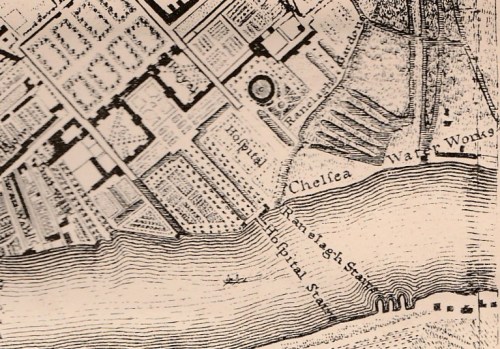
Roque map

Above: Ranelagh Gardens in Roque’s map of London 1741. The Rotunda is the black circular feature and it can be located exactly with modern maps because the outline of the buildings of the main wings of the Royal Hospital have not changed.

Last week, with friends, I attempted to visit the site of Ranelagh Gardens next to the Royal Hospital Chelsea – only to find them off-limits with the marquees of the Chelsea Flower Show being erected there. A helpful Chelsea Pensioner directed us to the lovely scale model of the Hospital and the Gardens that shows them in their heyday and that whetted my interest to discover why they closed so much earlier than their rival, Vauxhall.

Vauxhall Gardens and Ranelagh Gardens were the most famous of the London pleasure gardens and the two whose name many people can still remember. The Ranelagh Gardens today – simply a small park – is of about the right size and in the same position, and so the name lives on.

The first clear reference to the Vauxhall Gardens, or New Spring Gardens as they were at first, was in John Evelyn’s diary on 2 July 1660 – ‘I went to see the new Spring-garden at Lambeth a pretty contriv’d plantation.’ “New” because the old Spring Gardens, dating to the reign of Elizabeth I, were at the eastern end of St James’s Park. Admiralty Arch now sits in the middle of the area.

By the 1690s these early pleasure grounds were being referred to as “Vauxhall” from the proximity of the old manor of Vauxhall. The name comes from the house of the 13th century Falkes de Breuté – Falkes Hall became Fauxhall, Fox Hall and Vauxhall.

In 1729 an ambitious young tradesman from Bermondsey called Jonathan Tyers obtained a sub-lease on “Vauxhall Spring-Gardens” and set about creating the Vauxhall Gardens that became London’s premier attraction until its sad decline during Victoria’s reign. It closed on 25 July 1859, 199 years from Evelyn’s visit.

Pleasure gardens of various sizes and degrees of sophistication were dotted throughout London and its surrounding area in the 18th century. Many were as simple as a landscaped garden or a bowling green next to a good public house. Marylebone Gardens, the main competition to Vauxhall after Ranelagh, was located next to the Rose of Normandy Tavern (in the area bounded today by Marylebone High Street, Marylebone Road, Weymouth Street and Harley Street) and began as a bowling green and gaming house. The fact that Dick Turpin visited in the 1720s may well be reflected in the fact that Gay used it as a haunt of his highwayman Macheath in the Beggar’s Opera (1728). This reflects the early tone of the place and, even after 1738 when the new proprietor of the tavern, Samuel Arnold, improved things – introducing a sixpence entrance fee, shelters, music and fireworks and increasing its size to eight acres – it never entirely shook off its early reputation and became notorious for gambling and card sharping. It closed in 1778.

Ran int

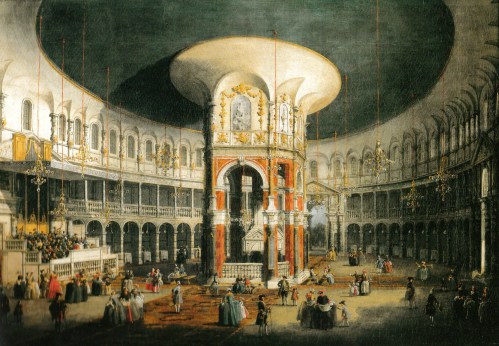
Above: Canaletto. The Interior of the Rotunda at Ranelagh (c1751)

Ranelagh Gardens were set up in 1741 in direct competition to Vauxhall and opened in April 1742. The proprietors, a syndicate of businessmen, had clearly studied Vauxhall, learned from its problems with the weather, and set out to rival, if not surpass it.

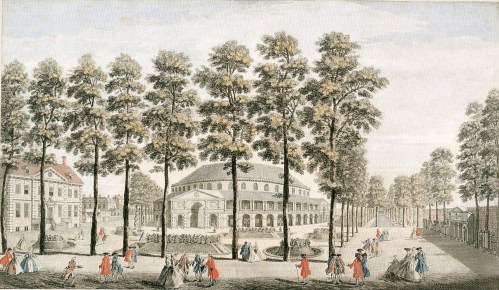
The site was promising, located in the village of Chelsea with direct river access. The centrepiece, from the beginning, was a vast Rotunda, an epic space modelled on the Pantheon in Rome. It measured 185 feet (56.4 metres) in diameter and, with the landscaping, cost £16,000. It became a tourist attraction even while it was being built and at night it looked like a giant lantern, blazing light across the gardens. It was immediately obvious to Tyers at Vauxhall that this was the major competition and he responded by buying up the  field that the Ranelagh proprietors had wanted to buy to expand into.

The Ranelagh lessee, William Crispe, was declared bankrupt in 1744, which must have pleased Tyers, but an issue of shares rescued the project and at first it was a huge success, a fact reflected in falling takings at Vauxhall. So what went wrong? The sad truth was, Ranelagh was just not naughty enough.

Horace Walpole was initially enthusiastic. Shortly after it opened he wrote “It has totally beat Vauxhall… You can’t set your foot without treading on a Prince, or Duke of Cumberland.” Yet the novelty soon waned. In June that year Catherine Talbot wrote to a friend that “…it is quite vexatious at present to see all the pomp and splendour of a Roman amphitheatre devoted to no better use than a twelvepenny entertainment of cold ham and chicken.” It probably didn’t help that the structure in the centre of the Rotunda, intended for the musicians, proved to have dreadful acoustics. Nor were the grounds very exciting, with a well-lit (probably too well-lit) circular walk which soon became monotonous.

There was no strong drink available and no gambling. The admission fee of half a crown kept away the riff-raff, as was intended, but it also created a far less exciting ambiance than at Vauxhall. It was favoured by the older, staider visitor but with the Hospital grounds on one side and the field strategically purchased by Tyers on the other, there was little scope for development and change.

To get to Vauxhall one needed to ‘take boat’ and cross the river. As my fellow author Sophie Weston pointed out to me, at night this must have seemed almost transgressive, an exciting, slightly clandestine, beginning to the evening’s adventures. Once there the walks were a mixture of secluded and well-lit, with plenty of opportunity for promenading – or for getting up to something rather naughtier. Tyers learned from Ranelagh’s strengths and weaknesses and adapted constantly, giving his customers a diet of novelty with an edgy frisson, yet within a safe and familiar setting.

Over at Ranelagh you could enjoy your tea and coffee, a safe and brightly lit gardens and the impressive Rotunda – but these were no attraction for the fashionable or the younger sets, despite the addition of a Chinese Pavilion. Ranelagh found it hard to weather the problems of the 1780s with riots in London and the rather more sober mind-set towards frivolous activities engendered by the war with France. Vauxhall survived this period, but Ranelagh gave up the struggle and finally closed in 1803, after sixty one years of operation. The Rotunda (largely built of wood) was demolished in 1805. The organ was moved to All Saints Church in Evesham, but even that was replaced later. Ranelagh has vanished.

Below: Ranelagh House and Gardens with the Rotunda (1745) T. Bowles after J. Maurer

Ran ext

4 Comments

Filed under Architecture, Buildings, Entertainment, High Society

A Set-to at the Fives Court

Boxing

“FIVES-COURT. A place distinguished (in addition to the game of fives) for sparring matches between the pugilists. The combatants belonging to the prize-ring exhibit the art of self-defence at the Fives-Court with the gloves; and it is frequently at this Court where public challenges are given and accepted by the boxers. The most refined and fastidious person may attend these exhibitions of sparring with pleasure; as they are conducted with all the neatness, elegance and science of FENCING. Admission, 3s. each person. It is situated in St. Martin’s Street, Leicester-fields.”

(Grose’s Classical Dictionary of the Vulgar Tongue, revised and corrected…by Pierce Egan. 1823)

I was comparing the first, 1785, edition of Francis Grose’s Vulgar Tongue with the 1823 edition edited by that aficionado of ‘Boxiana’, pioneer sporting journalist and creator of Tom and Jerry, Pierce Egan, when I came across this reference to the Fives Court, obviously added by Egan.

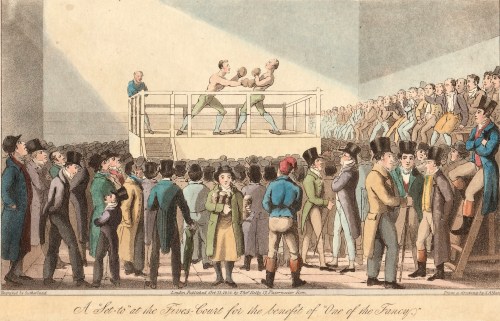
The print at the top of this post is from my collection and I had wondered where the Fives Court was located – it was obviously a very large structure, judging from the light streaming in from a high window. It was built as a court for the game of fives, a sort of hand-ball, or hand-tennis, originally thought to have been played against church buttresses, but then adopted at the public schools of Rugby and Eton and refined. Like Real (Royal) tennis it is played on an indoor court with high walls and various slopes and ledges.

In 1802 a sparring exhibition was held between Mendoza and Bill Warr – two boxing superstars. It was held on the floor of the court, not on a removable platform ring as shown in my much later (1823) print, that was introduced at the suggestion of black pugilist Bill Richmond.

Initially the admission was two shillings or two and six pence up to three and six, but, as Grose states, it was soon standardised at three shillings. Vincent Dowling, another sports writer, noted that there was a small dressing room at one end that had a window looking down on the Court and this was set aside for “…some dozens of noblemen and persons of high rank, whose liberal contributions (many of them giving a guinea for a ticket) added greatly to the receipts of the beneficiary.”

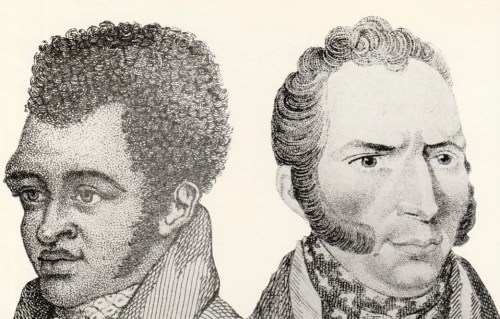
Bill Richmond (left) & Dutch Sam - two boxers whose physique drew artists to the Fives Court

The quote reminds us that most of these exhibition bouts were benefit performances for one of the pugilists who would stand at the door with a collecting box soliciting further donations in advance of the bout. Bill Richmond (shown above, left), like many retired pugilists, owned a pub. His was the Horse and Dolphin, located strategically next to the Fives Court, and tickets for bouts were sold there as well as in other sporting taverns.

The Court could accommodate an audience of up to 1,000 and, if full, admission might raise £200. The chief beneficiary would have to pay a fee for the court and to the referee and Master of Ceremonies. Lesser fighters, who would appear earlier on in the programme as warm-up acts, also got a payment from the takings. The great ‘Gentleman’ Jackson controlled who could have bouts at the Court and appears to have done so with few complaints, although in 1821 he refused the application of his bitter rival, Mendoza.

The bouts were for exhibition purposes, which is why gloves were worn, and Richmond was the first to strip to the waist, sparring without vest or shirt, so that his musculature could be admired by the fans. This display attracted artists including Benjamin Haydon, Joseph Farington (President of the Royal Academy) and John Rossi the sculptor who ‘much admired Dutch Sam’s [shown above, right] figure on account of the symmetry and the parts being expressed.

The 1823 print at the top of the post, ‘ “A Set-to” at the Fives-Court for the benefit of “One of the Fancy”’ is by Samuel Alken. The crowd is orderly and the gentlemen to either side in the foreground are very fashionably dressed. Respectably-dressed tradesmen can also be seen – one in an apron is in the audience sitting up on the right. The central figure facing us wears an apron and his arms are full of what look like giant cream horns. Close inspection shows that the contents are within conical containers stitched up the side – my guess is that these are some kind of bread roll, perhaps with a filling. I’d love to hear any other suggestions.

Fives red

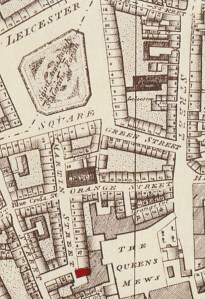
The Fives-Court operated as a boxing venue from 1802 until it closed in 1826 and was demolished as part of the redevelopment of the Royal Mews area into what became Trafalgar Square. The site is now under the northern edge of the Sainsbury Wing of the National Gallery and it is possible to pass this rather dreary location without the slightest inkling that it was once one of the sporting hot-spots of London. It is marked on the map in red.

2 Comments

Filed under Art, Buildings, Entertainment, Gentlemen, Sport

Looking Down on London Bridge

Last week I went up the Shard on the south bank of the Thames and, knees shaking at the height, looked down on London Bridge, 800 feet below. In the photograph you can see its northern end, the Monument to the Great Fire on Fish Hill and the spire of the church of St Magnus the Martyr.

DSCN7278edit

London Bridge is broken down,
Gold is won and bright renown.
Shields sounding,
War-horns sounding,
Hildur shouting in the din!
Arrows singing,
Mailcoats ringing,
Odin makes our Olaf win!

Not quite the cheery little 17th century nursery rhyme we are familiar with but a Norse poet writing of the attempt of Saxon King Ethelred the Unready (who wasn’t really Unready but Unraed-y – suffering from bad councillors) to recapture London from King Cnut (who never really believed he could hold back the tide, but chroniclers don’t seem to have any sense of irony) with the help of King Olaf of Norway in 1014.
This was the wooden London Bridge that had been rebuilt several times since the Romans left and, for centuries, was the only crossing point in London.
(Oddly, despite burning the bridge, Olaf became a popular saint. His church at the southern end of the bridge is now under an office block bearing his name.)
Even without the intervention of marauding Vikings, wooden bridges needed constant repair, so in 1176 work started on a stone bridge, completed in 1209. All the versions of London Bridge for over a thousand years have been more or less on the same spot, but we know exactly where this one, now known as Old London Bridge, was located because it survived, albeit endlessly adapted, until 1830. DSCN7280edit
The bridge had a drawbridge in it to allow taller ships to pass, gatehouses to guard it – and, from the 14th century, to act as convenient places to stick the heads and assorted limbs of traitors – and a chapel. Almost from the beginning houses and shops were built along the bridge, narrowing the roadway to between 12 and 15 feet (3.7 – 4.6 metres). After the Great Fire in 1666 when some were destroyed they were rebuilt hanging further out over the river, but even so it was hideously congested.
From 1722 tolls were charged on vehicles which meant that they tended to stop in Southwark on the southern side and unload their passengers and goods. Numerous inns grew up to deal with this business. In an attempt to control the flow on the bridge three men were employed to try and enforce driving on the left, the first time a ‘keep left’ rule was applied in England. Stonegate at the southern end was rebuilt in 1728 with a wider arch but even so, when there was a major event at Vauxhall gardens, for example, three hour traffic jams were not uncommon.London Bridge Frost Fair
By the time Westminster Bridge opened in 1750 London Bridge was looking decidedly shabby by contrast and drastic modifications were carried out between 1757-62. All the buildings were demolished, a wider central arch was created and the bridge was widened by 26 feet (8 metres) and refaced in Portland stone. Alcoves were added along its length, some with domes, and the lighting was improved. In 1763 the Stonegate was demolished and arches made in the tower of the church of St Magnus the Martyr at the northern end for pedestrians using the widened road. The clock that overhung the roadway is still there, blocked from the river now by an ugly modern office Monument0002building. In the print looking down Fish Hill you can see the tower of St Magnus and the clock.
Even with the renovations the old bridge was failing and the final straw was the damage in the severe winter of 1813-14 when the last Frost Fair was held on the Thames. (The black and white print above shows one of the arches during the Frost Fair). Work began in 1824 on a new bridge, built alongside the old one so that traffic could continue. The new alignment shifted the approach to the bridge westwards from Fish Hill, site of the Monument, and obliterated the waterworks on the upstream side of the old bridge. The works had waterwheels that took 4 million gallons a day from the river to supply 10,000 customers and they can be seen on the far side in this print of 1814.

Monument0003
The new bridge, designed by John Rennie, opened in 1831 and the old bridge was demolished over the next two years. Rennie’s bridge was replaced in 1972 with the present structure.
So what remains of Old London Bridge? Not a lot, considering what an iconic feature of the London landscape it was for so long. One of the 18thc alcoves is in the grounds of Guy’s Hospital, two are in Victoria Park, Hackney and a fourth in the gardens of a block of flats in East Sheen. A stone from an arch is in the churchyard of St Magnus the Martyr where the clock can still be seen and you can walk through the arch in the tower. There is an excellent model of the old bridge with its houses and shops in the church and an even bigger model in the Museum of London.
If you walk into Southwark and find Newcomen Street you’ll see the King’s Arms, a Victorian pub with a fine stone coat of arms on the front. This used to say GIIR, for George II, and was fixed on the Stonegate, the entrance to old London bridge from the Southwark side, in 1728. When the gate was demolished in 1760 it was removed, the inscription changed to 1760 and GIIIR for the current king, and put up on a tavern that stood in Axe Yard.

DSCN7281edit


4 Comments

Filed under Architecture, Buildings, Monuments, Transport and travel

Crossing the Knight’s Bridge

Today if you want to travel from the middle of London to visit the smart shops of Kensington and Chelsea, or the museums of South Kensington, or go to a concert at the Albert Hall, you will travel along Knightsbridge, the road that stretches for a mile from Hyde Park Corner to the east to the Royal Albert Hall in the west (becoming, these days, Kensington Road and the beginnings of Kensington Gore in the process). Are you in London? Of course you are.

When Jane Austen was staying with her brother Henry in his homes in Sloane Street and Hans Place, she was just as clear that Knightsbridge (or Knights Bridge, as it was known almost until the 19th century), was not London. ‘If the Weather permits, Eliza & I walk into London this morng.’ she wrote in April 1809 from 64, Sloane Street.

Roque 1741

(Above: Detail of Roque’s map of London 1741 showing Knight’s Bridge and the beginning of Kensington)

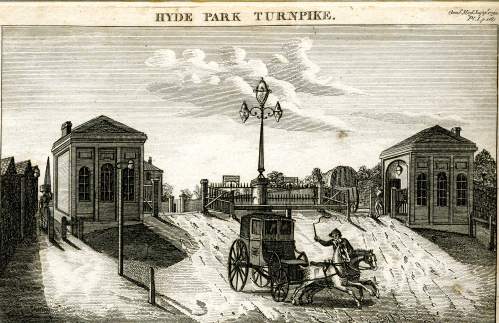
Although the tentacles of development were reaching out from the new Sloane Street, down the Brompton Road and along towards Kensington, London still began at the Hyde Park Turnpike, situated until 1825 just about where Grosvenor Place meets Knightsbridge today. Apsley House, which became the home of the Duke of Wellington, was the first dwelling you came to entering through the gates – Number One, London, in fact.

Knights Bridge was never a parish or a manor, only a locality, known from Saxon times as Kyngesburig, or Knightsbrigg. There are many legends about the origins of the name, but none appear to have any basis in fact. The bridge in question crossed the Westbourne River, one of London’s “lost rivers”, as it left Hyde Park, where it had been turned into the Serpentine. The Westbourne ran on south along a meandering course which marks the boundary of Chelsea and St George’s parishes to meet the Thames in the grounds of Chelsea Hospital. It was finally covered over in 1856/7 and became the unromantically-named Ranelagh Sewer and its outfall can still be seen at low tide. The Albert Gate of Hyde Park marks the point where it went under the road and William Street follows its line southwards.Hyde Park pike0001
If you had ventured this far in the time of the Tudors you would have encountered an appalling road, the “Waye to Reading”, mired so deep in mud that it contributed to the defeat of Sir Thomas Wyatt’s rebel army. They marched against Queen Mary, but arrived so exhausted by the state of the ‘road’ that they were easy prey for the royal troops. Things did not greatly improve for hundreds of years and even as late as 1842 reports were made of pavements ankle-deep in mud.

Worse than the mud were the highwaymen and footpads who infested this road. The last highway robbery on Knightsbridge was as late as 1799, after which a light horse patrol was sent out from the barracks to patrol the road and it was one of the earliest to have street lighting. Mr Davis in his “History of Knightsbridge” (1854) records that even after the armed patrols were instituted, “pedestrians walked to and from Kensington in bands sufficient to ensure mutual protection, starting their journey only at known intervals, of which a bell gave due warning.”

If we are feeling brave we can set out along this perilous mile, guided by the charming little map from Cecil Aldin’s The Romance of the Road (1928). East is at the top and we begin with the Hyde Park Corner tollgate and just before it, at the junction with Grosvenor Place, is St George’s Hospital. That is still there, but is now the Lanesborough Hotel. Behind it was Tattersall’s sale ring until it moved in 1865.
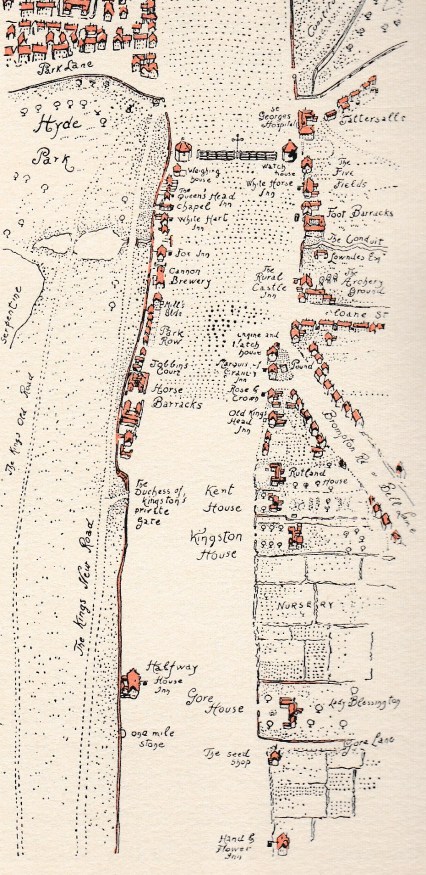
Aldin map 1

Going east we would have passed the White Hart Inn on the north side and a barracks for foot soldiers (demolished 1836) on the south. The narrow entrance to Old Barrack Yard still marks the spot. We cross the Westbourne as we pass William Street and can see today the unlovely round tower of the Sheraton Hotel. Once this was the site of a house owned by a Mr Lowndes and behind it, where Lowndes Square is now, was a rural pleasure garden, Spring Garden (not to be confused with the one of the same name next to what is now Trafalgar Square) at the sign of the “World’s End”. It is referred to in Pepys’s diaries several times, including in the final entry, May 31st 1669: “To the Park, Mary Botelier and a Dutch gentleman, a friend of hers being with us. Thence to the ‘World’s End’ a drinking house by the Park, and there merry, and so home late.”

(Below: Spring Gardens from a Victorian engraving of an earlier drawing.)
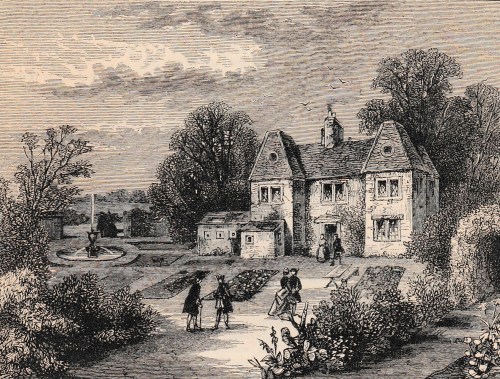
Spring Gardens

More or less opposite was Trinity Chapel which was probably medieval in origin and functioned as a hospital, or lazar house, for the poor. Traditionally it was said to have taken in plague victims in 1665 and the dead were buried opposite under Knightsbridge Green at the present junction of Knightsbridge, Sloane Street and Brompton Road. Eventually the chapel fell into total disrepair and was rebuilt. Its present incarnation is further along the road in Kensington.
For a long time before the passing of Lord Hardwicke’s Marriage Act in 1753 it was the location for irregular, clandestine or runaway marriages and the registers for the chapel contain entries with notes such as “secrecy for life” or “secret for fourteen years” added to them. Possibly the most famous person married there was Sir Robert Walpole who wed a daughter of the Lord Mayor of London. (The chapel is shown below in a view of part of the north side of Knightsbridge in 1820)

cahpel

Now we reach the Albert Gate into Hyde Park, the point where the Westbourne still runs under our feet. On the park side of the bridge was the Fox and Bull Inn (shown as the Fox on Aldin’s map), patronised by artists such as George Morland and Sir Joshua Reynolds, who painted its sign. Less pleasantly it was a receiving house for the Humane Society, founded to assist drowning persons, or deal with their bodies. It was to this inn that the body of Harriet Shelley, the poet’s first wife, was brought after she drowned herself in the Serpentine in 1816. Immediately after the Fox and Bull was the Cannon Brewery, so called from the cannon mounted on its roof. That was surrounded by “low and filthy courts with open cellars” – a far cry from the elegant Kuwaiti and French Embassy buildings which occupy the site now.

Almost opposite is the junction with Sloane Street, developed after 1780 along the old track from the King’s Road in Chelsea. Another old road, the Brompton Road, comes in at an angle at the same point and led to the village of Brompton and on to Fulham. At this junction was Knightsbridge Green with a watch house for the constable, a pound for straying livestock, and possibly the site of Trinity Chapel’s plague pit. This was the point where the granite sets that made up the road surface ceased and the mud really began. It is also close to this point that Tattersall’s moved in 1865.

Just past the brewery were the barracks for the Horse Guards, giving them direct access into Hyde Park, just as they have today. Originally built in 1794/5 the barracks were rebuilt in 1878/9 and then again in the 20th century, slightly further west on Knightsbridge. From here on there were virtually no buildings on the north side, only the brick wall of Hyde Park. The road now becomes Kensington Road.

On the south side of Knightsbridge, following the Brompton Road turning, were the Rose and Crown (the oldest of Knightsbridge’s inns, shown below) and the Old King’s Head and then the floor-cloth manufactory of Messrs. Smith and Barber. It had been established in 1754 and lasted well into the Victorian era.
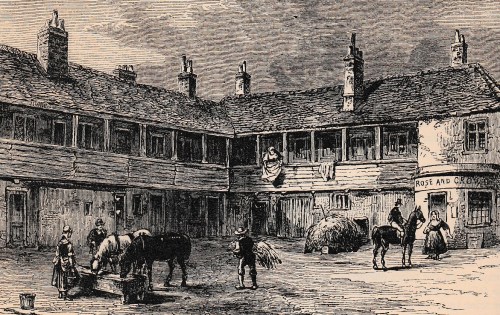
Rose and Crown
Then came three mansions that were, when they were built, true “country houses”. The first was Rutland House, the next Kent House, home for a while of the Duke of Kent, Queen Victoria’s father, and then Kingston House. Kingston House was built in 1769 for the scandalous Elizabeth Chudleigh whose story is so amazing that I will save it for another post. She died in 1796 and it later became the home of the Marquis of Wellesley who died there in 1842. He was the elder brother of the Duke of Wellington.

Half Way House

An area of nursery gardens followed on the south side of the road, part of the great expanse of fruit and vegetable-producing land that surrounded London. Somewhere along this stretch we enter what is now known as Kensington Gore – nothing to do with blood, but named after Gore House which stood on the site of the Royal Albert Hall. It was built in the 1750s, decorated by Robert Adam and was the home in the 1780s of Admiral Lord Rodney. It was acquired in 1808 by William Wilberforce, the great campaigner for the abolition of the slave trade, who lived there until 1821.
Opposite Gore House, a most insalubrious neighbour for a fine mansion, was the Halfway House Inn (shown above). This was where the spies for the highwaymen of Hounslow Heath would congregate to see who was travelling and pass the word on to alert the highwaymen about fine carriages or vulnerable riders. Just beyond it on the park side was the first milestone from the Hyde Park turnpike, the point where we can leave the dangers of Knightsbridge behind us and enter the village of Kensington with a sigh of relief for our arrival safe from the mud and the footpads.

5 Comments

Filed under Buildings, Crime, High Society, London Parks

Discovering Sir Walter Scott – Or, Confessions of an Historical Author

I had better start this post with a confession – I have never read anything by Sir Walter Scott, the Regency’s favourite author and the man who almost single-handed created the historical novel genre as we understand it today. And that is bad of me, because for someone who writes historical novels and who specialises in the Regency, I should have done. And I will read some, just as soon as I’ve met my current deadline.

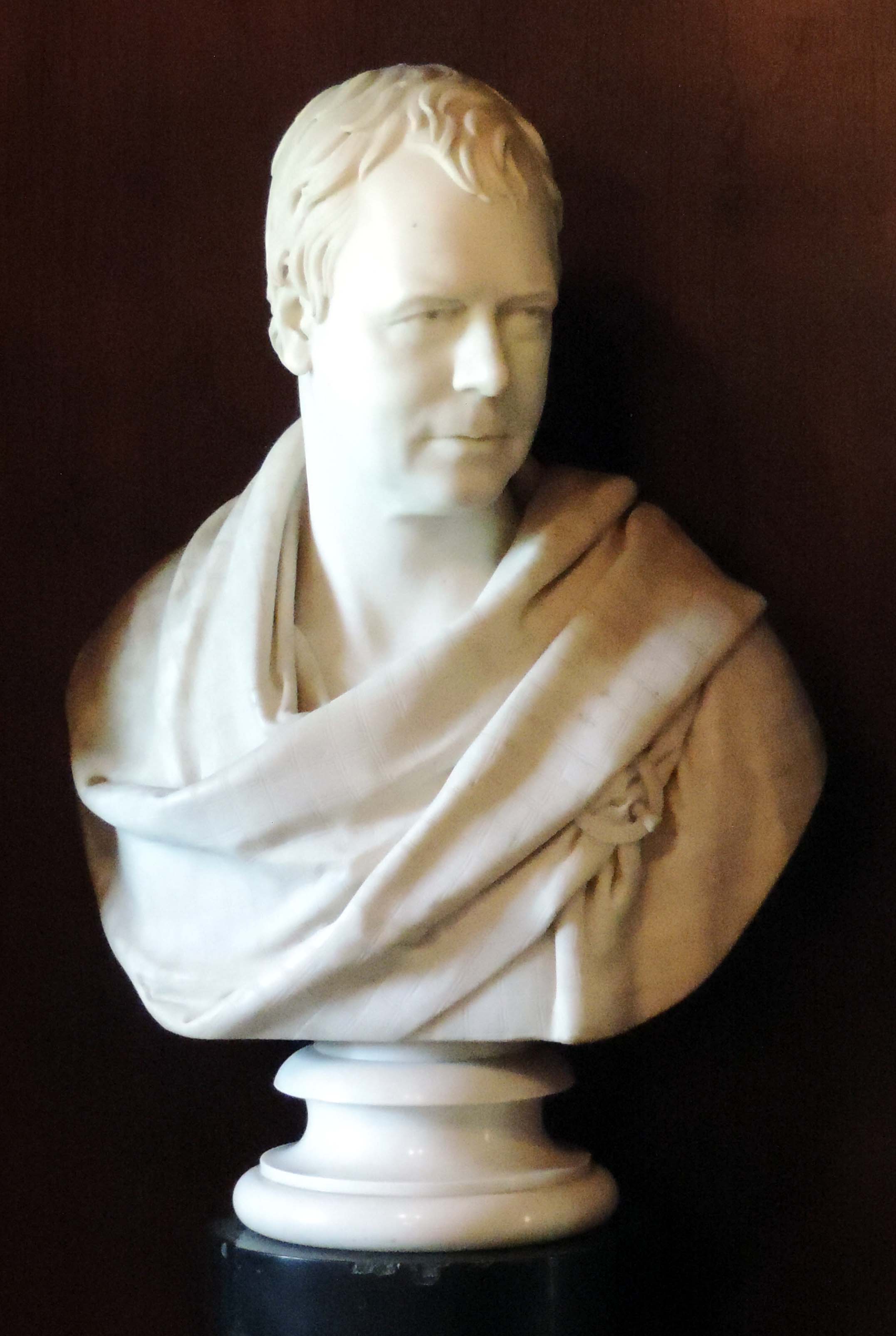
bust
We were driving back from a touring holiday in Scotland in August when I looked at the map and saw Abbotsford marked, dredged in my memory, came up with Scott and suggested we visit.
My husband grumbled that he knew nothing about Scott (he’s a zoologist, so he has an excuse), so I had better fill him in while we were driving there. All I could come up with was that Scott was blamed for the excesses of the “tartan and shortbread” Scottish tourist industry, had been hugely prolific, wildly popular with the reading public and had got himself into vast debt. We had encountered him on numerous occasions when researching for Following the Great North Road (available for Kindle) because he was a constant traveller between Scotland and London, considering the Swan at Ferrybridge to be the best inn on the Great North Road.
He was also kicked in the head by his horse while drilling with the Edinburgh Light Horse at Portobello just outside Edinburgh (and also on the GNR) and finished The Lay of the Last Minstrel while confined to bed recovering.
None of this amounted to much of an introduction, let alone an explanation of why Scott was so popular at the time and still has such a grip that Abbotsford has become a literary shrine.

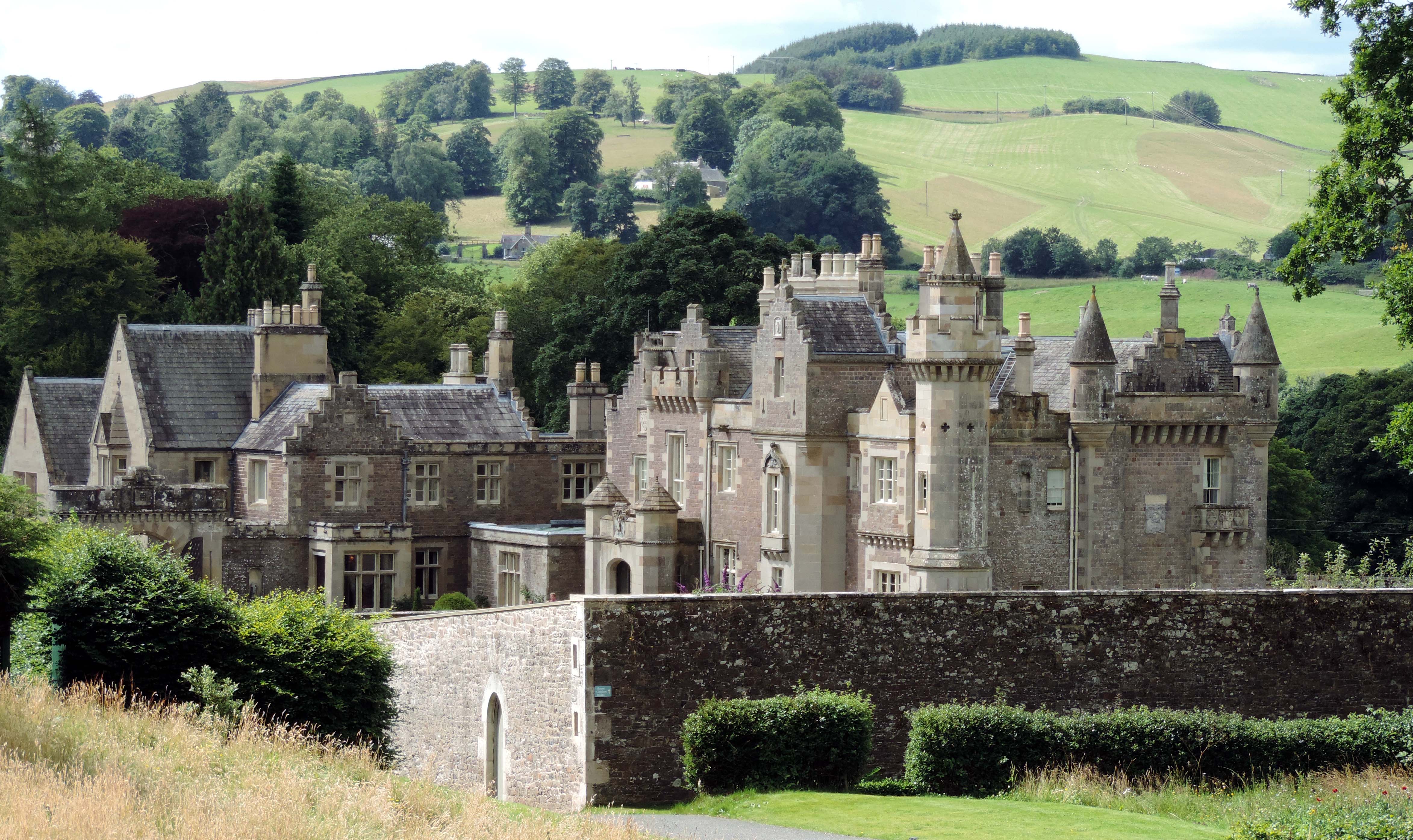
AbbotsfordThe visit to the house was preceded by an excellent exhibition in the visitor centre, so we studied that and got the basic facts straight. Scott was born in 1771 in Edinburgh to a very respectable professional family. (Lawyers, medics, professors). He spent his first four years in Roxburghshire while recovering from the polio that left his left leg permanently affected and this encounter with Borders history apparently fired his precocious imagination.
He returned to Edinburgh for his education, became a rather unsuccessful Advocate and then was appointed Sherriff-Depute of Selkirkshire in 1799. He was already writing poetry and was obsessed with Scottish history and legends, so this new post was ideal, giving him the opportunity to travel widely.
He wrote his vast Minstrelsy of the Scottish Borders (1802), followed by epic poems The Lay of the Last Minstrel (1805), Marmion (1808) and The Lady of the Lake (1810) which proved hugely popular with a reading public whose tastes were embracing the romantic and who were fascinated by wild and rugged landscapes. But poetry was not enough for him, and besides, Byron was beginning to encroach on his territory. He turned to fiction with Waverley (1814), Guy Mannering (1815), The Antiquary (1816), The Heart of Mid-Lothian (1818), The Bride of Lammermoor (1819) and Ivanhoe (1820). He was also writing essays, lyrics, short stories, historical and biographical work and highly-regarded critiques of contemporary fiction – he reviewed both Emma and Frankenstein, for example.
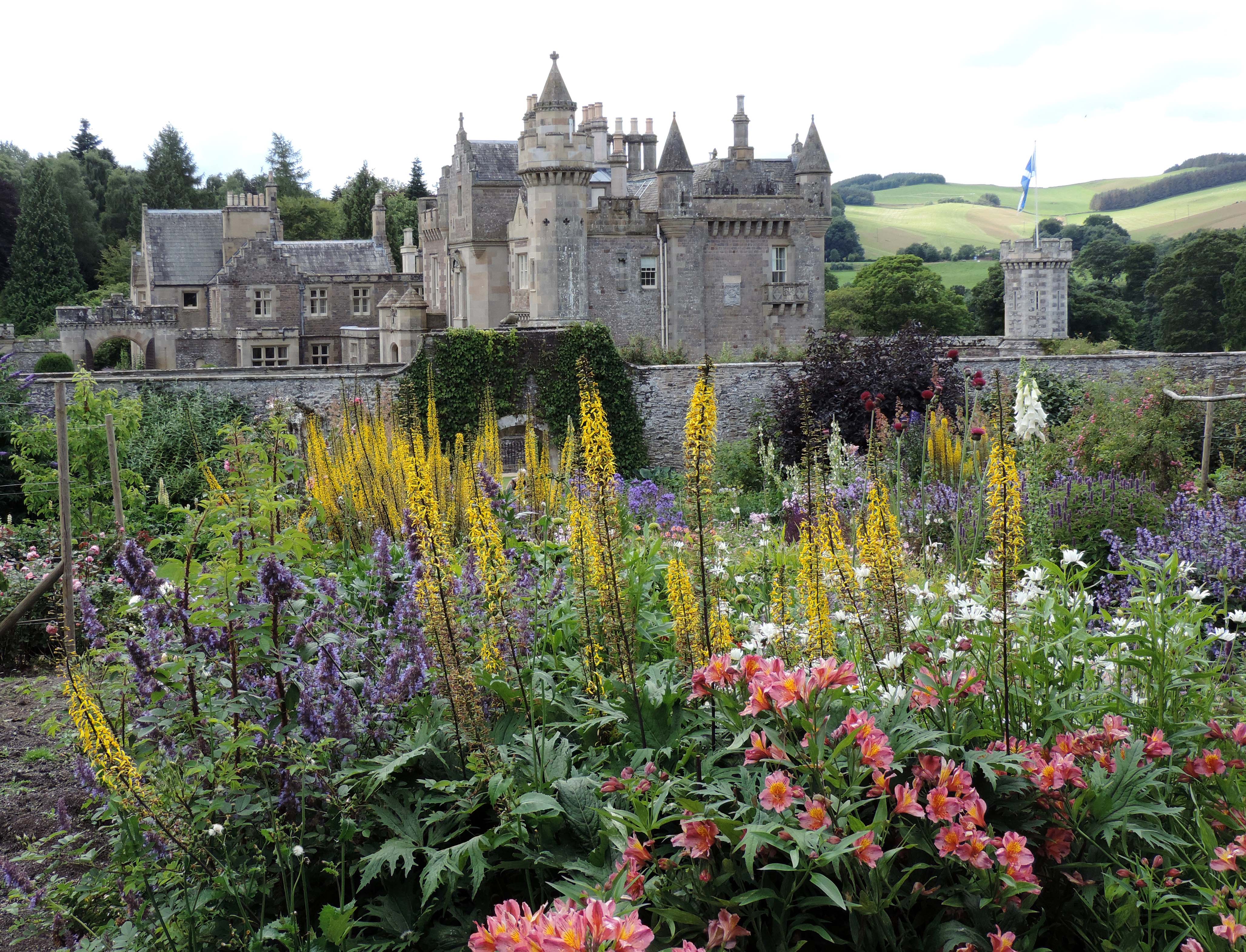
Despite being staggeringly prolific in his writing, Scott was still holding the Sherriff-Depute post and needed a base for his travels that would also accommodate his family. In 1812 he bought Newarthaugh, a farmhouse “on a bare haugh and bleak bank by the side of the Tweed.” It was small for a man with a wife and four childrgardensen, but he started by making only small changes to the house, which he renamed Abbotsford, instead buying land to increase the estate from 110 acres to 1,400.

The house grew in stages almost haphazardly. “I have always had a private dislike to a regular shape of a house…when the cottage enlarges itself and grows out of circumstance, which is the case at Abbotsford, the outs and the inns [sic] afford, without, so much variety and depth of shade, and, within, give such an odd variety of snug accommodation that they far exceed in my estimation the cut-lugged bandbox with four rooms on a floor and two stories rising regularly above the other!”
Money was no object – it was pouring in from his writing – and Scott could afford architects and builders, artists and craftsmen.

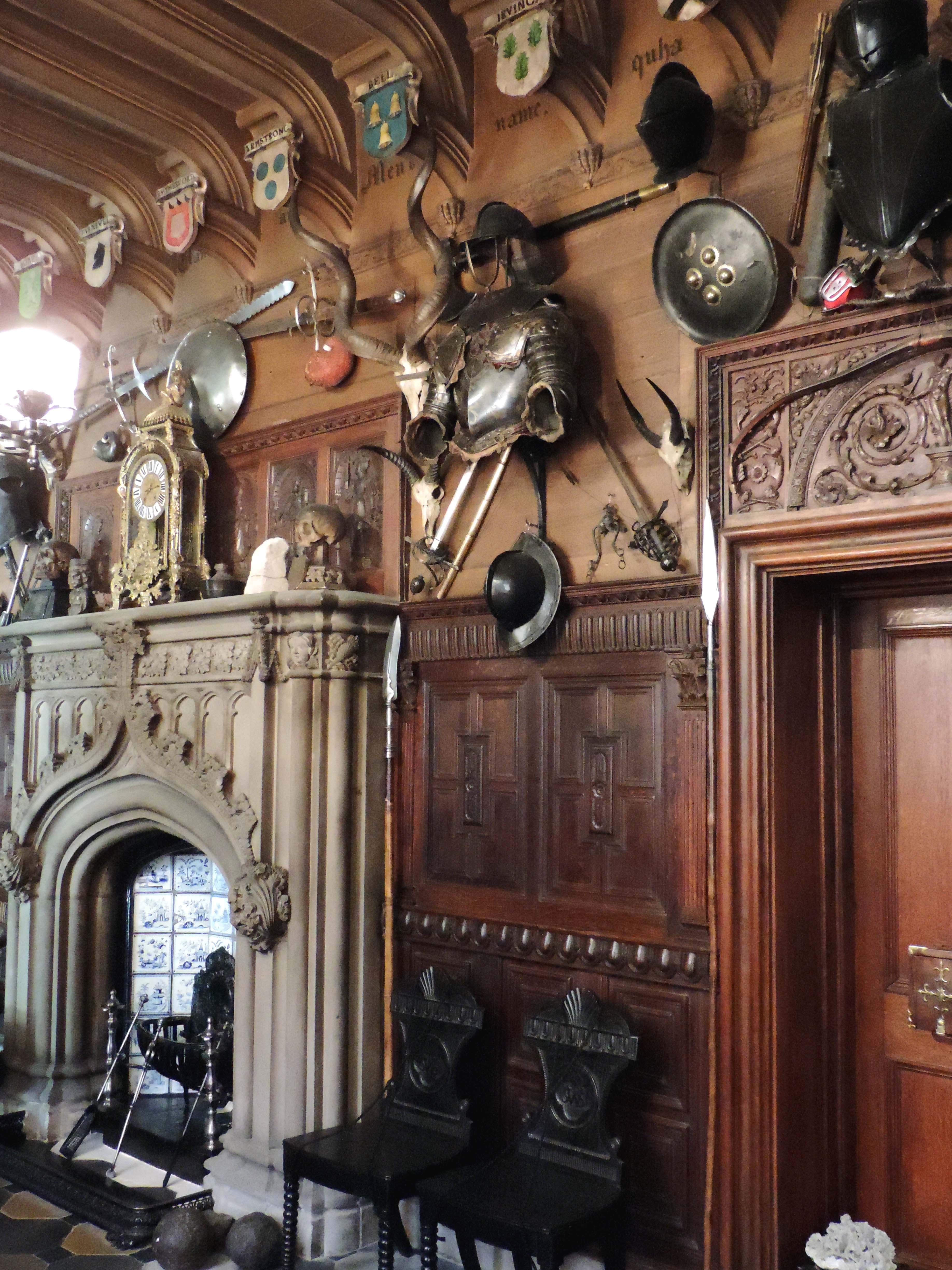
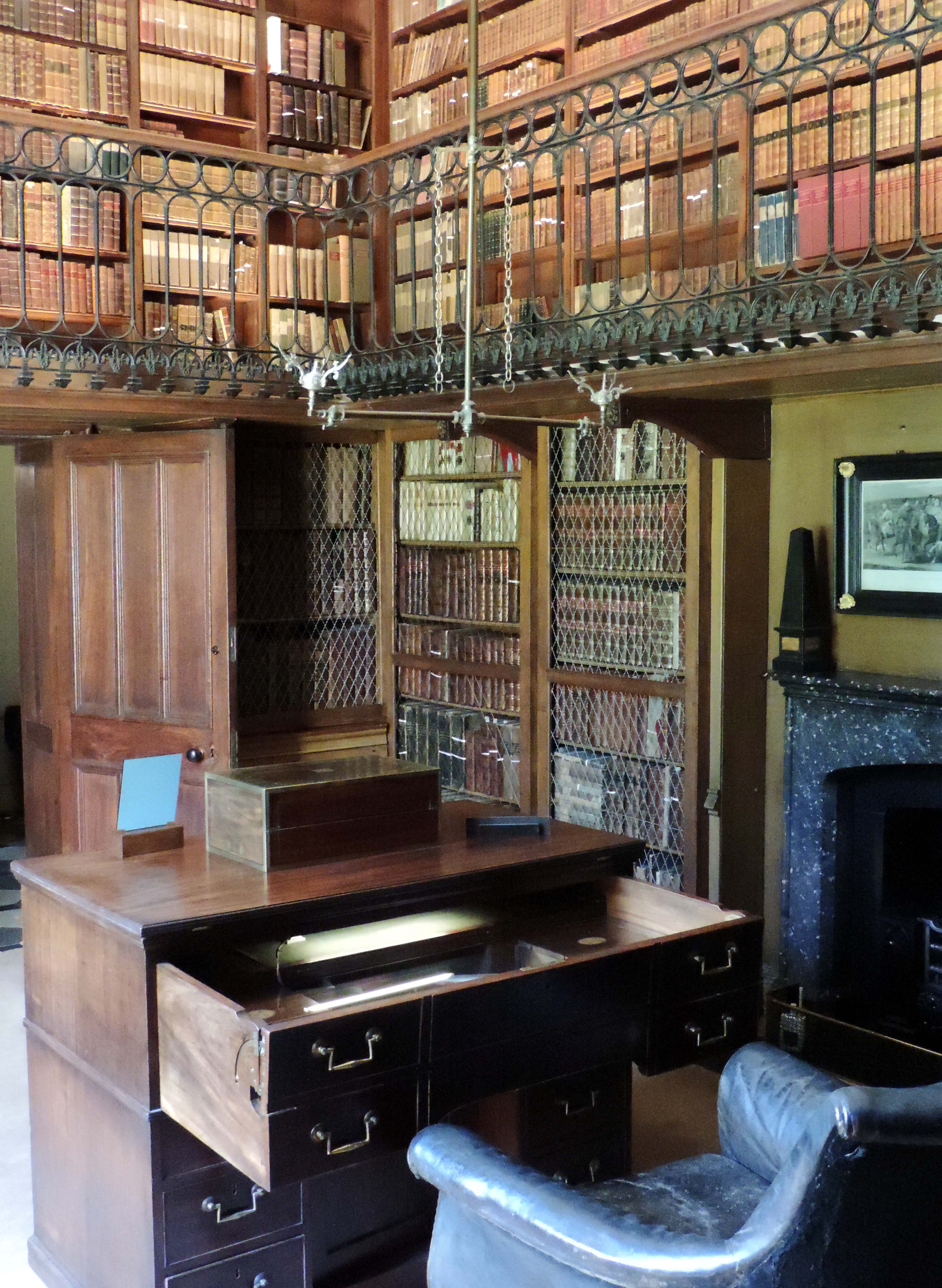
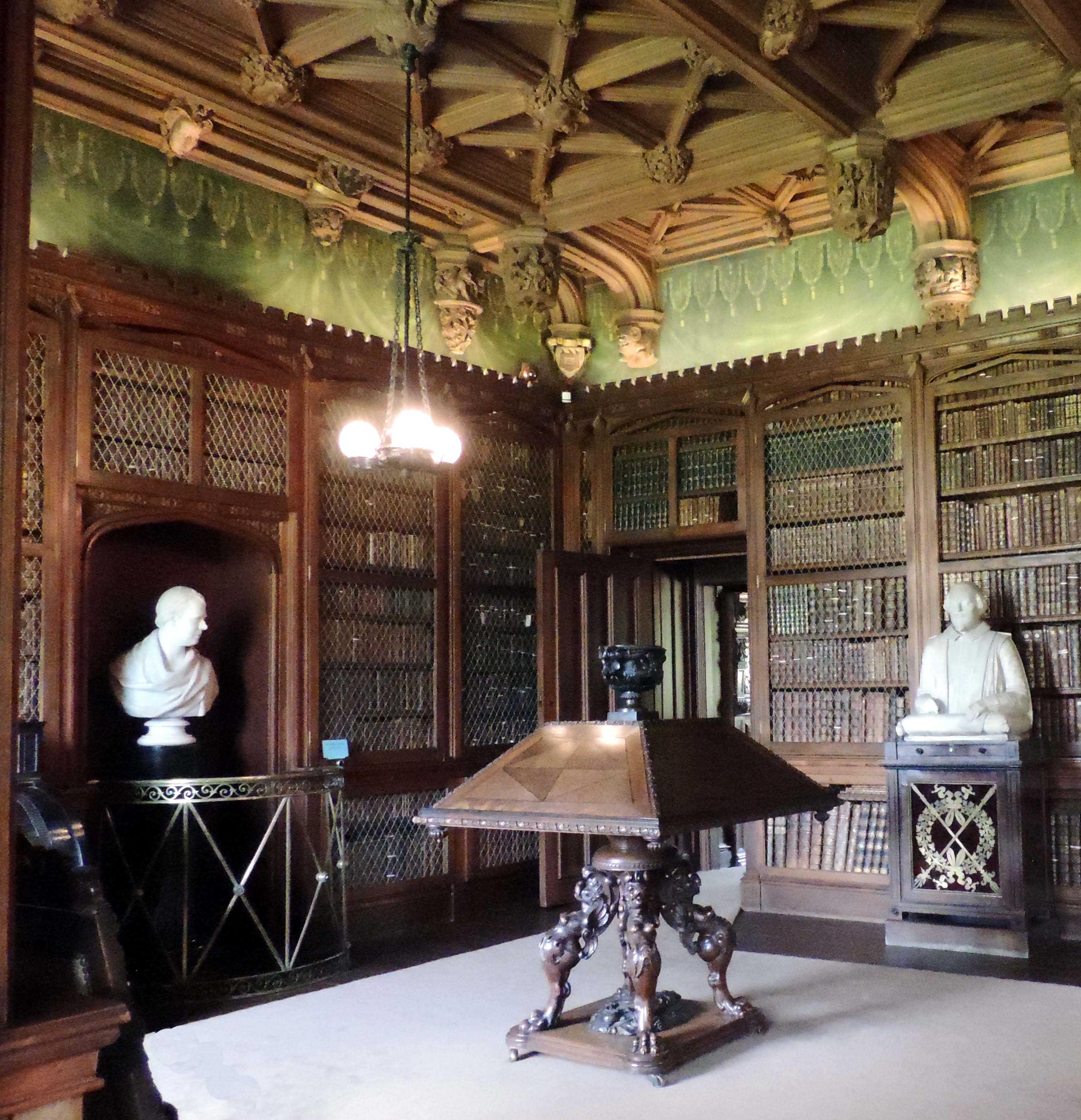
Hall He also collected voraciously, acquiring books for his wonderful working library, which survives intact, and curios and historical pieces. There are too many to do more than just mention a few – a cast of the skull of Robert the Bruce, the original keys to Edinburgh’s Old Tolbooth prison, the gaol door and some of its stonework, oak panelling from Dunfermline Abbey and a piece of oatcake from Culloden battlefield are amongst the wealth of historic, curious and just plain odd items. The great hall, is shown left, Scott’s study is  below, right, and the library, below left.
Scott could afford to indulge himself with his building and collecting until disaster struck in 1826. His publishers, Archibald Constable of Edinburgh, went bankrupt and Scottstudy2 was financially involved through a partnership. There was no limited liability in those days and Scott himself was bankrupted. But in an extraordinary move the creditors allowed him to write himself out of debt. Abbotsford was put in trust and the Scott family permitted to remain there while he worked – “My own right hand shall pay the debt.” From then on he worked relentlessly, despite the death of his wife and his own failing health. By the time he died in September 1832 the debt was virtually cleared.

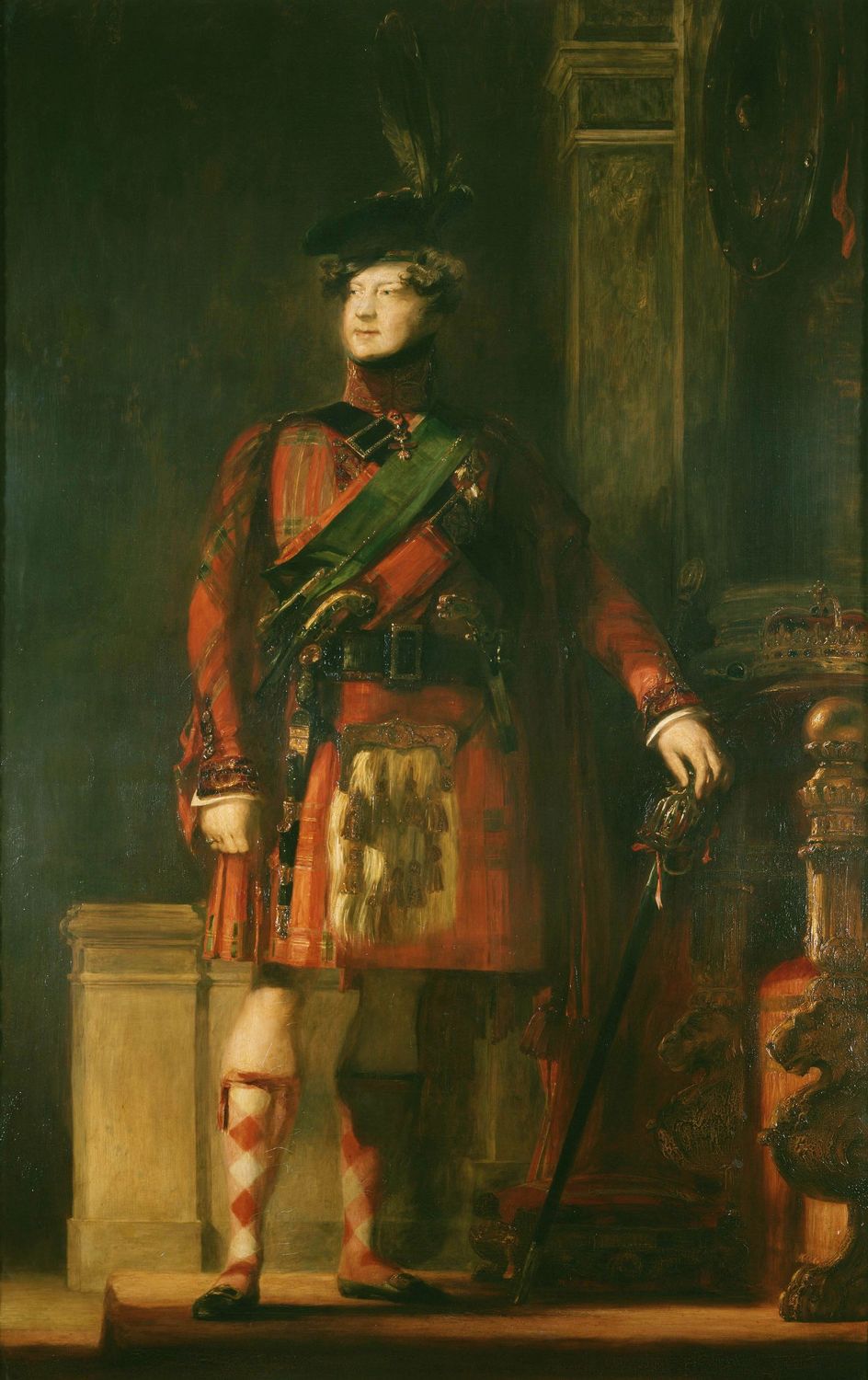
libraryScott is often “blamed” for the outbreak of tartan-itis that culminated in Queen Victoria’s obsessive use of the pattern at Balmoral and the proliferation of tartan tourist goods today, but this stemmed from his efforts to help George IV. George, who was not such a fool as he is often portrayed, wanted to heal the rifts between England and Scotland that led to the Jacobite rebellions. He wanted to throw himself into Scottish history and completely bought into Scott’s romantic vision of the Scottish past. When he visited in 1822 the Edinburgh city council commissioned Scott to stage manage the event and he created a wonderful show, including assisting the king to dress in tartan, which had been outlawed since the 1745 rebellion.
Despite the fact that George managed to create the most ludicrous version of Highland dress that a portly middle-aged man could ever have worn (shown here in a detail of the portrait by Wilkie), this was an important gesture and enthusiasm for tartan as a potent symbol of national identity surged.GIVWilkie
Four years before the royal visit, in 1818, Scott had used the then Prince Regent’s enthusiasm for his work to petition him to allow a search for the “Honours of Scotland” – the Scottish crown jewels.
In 1707, the Act of Union between England and Scotland decreed that they must always remain in Scotland. But there were fears that they might become a symbol of Scottish independence, so they were put into a strongbox in the Crown Room of Edinburgh Castle which was then locked, barred with double doors, and the key conveniently ‘lost’.
George agreed to Scott’s request and the room was broken into, the chest opened and the crown, sword of state and sceptre – the oldest surviving crown jewels in Europe – were found safely inside. They still remain in Scotland today, on display in Edinburgh Castle.
Abbotsford House remains essentially as Scott left it, although with some 1850s extensions at the side. But his study, the library and the wildly eccentric great hall feel as though he has only just walked out to stroll beside his beloved River Tweed for some more inspiration.

6 Comments

Filed under Buildings, Literature

Bell Rock Lighthouse – A Regency Engineering Marvel

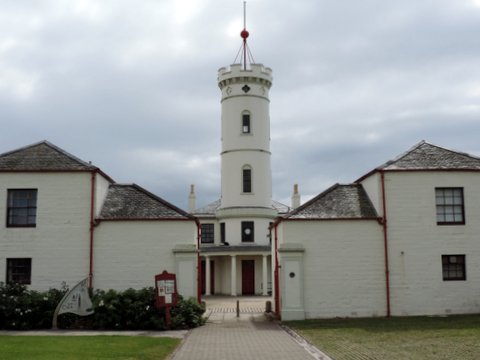
I’m back north of the Border again for today’s blog, visiting an engineering feat by one of Regency Britain’s greatest engineers which, although located in Scottish waters, imust have been a wonder for the entire country. When I was in the delightful little fishing port of Arbroath ( in pursuit of the famous and delicious Arbroath Smokies) I spotted an elegant and unmistakeably Regency building on the shore. It looked like a miniature lighthouse but turned out to be the signalling station for the Bell Rock lighthouse and home to the families of the lighthouse keepers.

04-DSCN9403

Bell Rock is 11 miles (18 km) off the coast at Arbroath and is part of the lethally dangerous Inchcape reef that had proved a major hazard to shipping on this busy coastal route for centuries. In the Middle Ages an abbot had a bell fixed to a floating platform anchored to the reef, which was some warning, but the frequent storms repeatedly destroyed it. The reef is virtually invisible except at low tide when about four foot of it is above the water. Building a lighthouse seemed an almost impossible technical feat, but following the loss of HMS York with all hands in 1806 pressure grew for a solution. In that year a bill was passed through Parliament for a stone tower at a cost of £45,000 to be paid for by a duty on shipping between the ports of Peterhead and Berwick-upon-Tweed.

Two of the greatest engineers of the day were inv12-DSCN9411olved – John Rennie, who as Chief Engineer, was responsible overall for the project, and Robert Stevenson, who as Rennie’s assistant and the resident engineer, risked his life on the reef along with the workmen. On shore the signalling station allowed communication with the lighthouse and provided a home for the keepers’ families and accommodation for them when they were not on duty. Now it is an excellent little museum all about the Bell Rock and its construction.

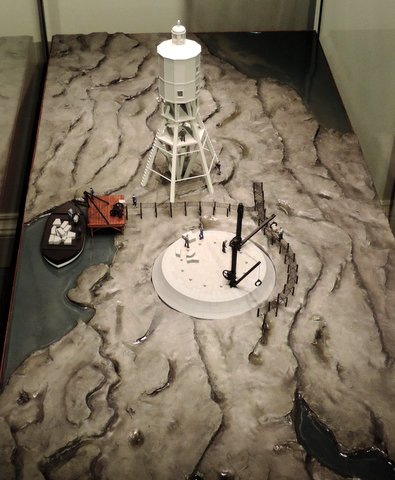
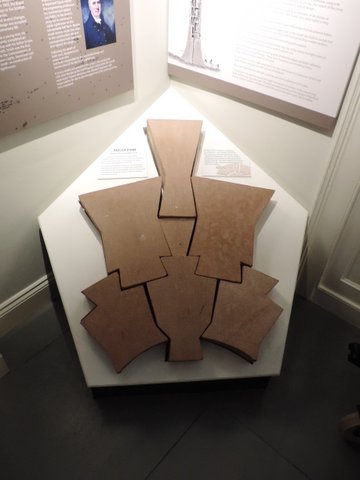
This photograph is of one of the models in the museum showing the difficulties that Stevenson had to overcome to build the lighthouse. First a wooden tower was built to house the men when the tide came in and then, whenever there was low water, they came out onto the exposed reef and worked on the tower itself, building it up with a jigsaw of interlocking stone blocks that had been cut during the winter months when no building could take place on the rock. The ingenious design of the blocks is shown in this model.
11-DSCN9410Despite the dangers and difficulties the tower was completed in only four years and became operational in 1811. It has been in continuous operation ever since, saving innumerable lives. These days the light is fully automated.

Robert Stevenson (1772-1850) was educated at a charity school when the death of his father left the family almost destitute. His future career was determined when he was fifteen and his mother married Thomas Smith, a tinsmith, lamp maker and mechanic who was engineer to the Northern Lighthouse Board. Robert became his assistant and by the age of nineteen had built his first lighthouse on the River Clyde. Bell Rock is considered his masterpiece, but he was responsible for many other lights as well as roads, bridges, harbours, canals, railways, and river navigations. Three of his sons followed in his footsteps as civil engineers and his grandson was the writer Robert Louis Stevenson.


2 Comments

Filed under Architecture, Buildings, Science & technology, Transport and travel

Protecting the Hanoverian Kings From the Jacobites


16-DSCN9509

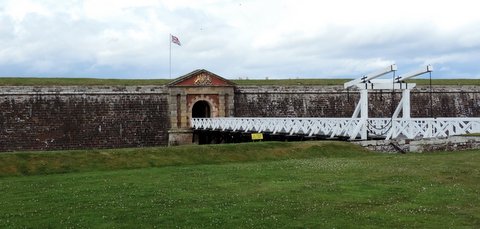
My blog today is set a very long way north of London, but its subject – Fort George on Scotland’s Moray Firth – must have represented a great comfort to Londoners recovering from the shock of the ’45, Prince Charles Edward Stuart’s attempt to regain the throne of his grandfather, James VII of Scotland, II of England.
Charles, known as the Young Pretender or, more romantically as Bonnie Prince Charlie, had led his troops as far south as Derbyshire, causing widespread panic throughout England before he retreated back to Scotland with the realisation that the expected English support was not going to be forthcoming.
The forces of George II in London reacted with brutal force. Charles’s army was slaughtered in the Battle of Culloden in less than an hour on 16th April 1746 and the Young Pretender fled, the hopes of the Stuarts fleeing with him.
The government was not going to take any more chances with Jacobite sympathies in Scotland and put in place an ambitious plan to extend the military roads across the country and to build fortifications that would ensure a rising could never happen again.

14-DSCN9502
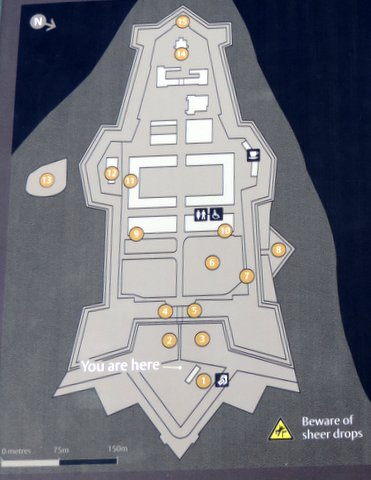
The old Fort George in Inverness had proved inadequate against the Jacobites and the town council was objecting strongly to having two thousand “wild and licentious” soldiery located in the heart of their respectable town, so the new fort was eventually located on a spit of land jutting out into the Moray Firth at Ardesier, a safe eleven miles away from Inverness’s citizens and commanding an excellent strategic position guarding the mouth of the Firth.
Fort George was begun in 1748, planned by Lieutenant-General William Skinner and built under the direction of the architectural dynasty of the Adams family – father William (who had worked on Edinburgh Castle), then son John and eventually even John’s brother Robert Adam, one of Britain’s most famous and fashionable architects.15-DSCN9504
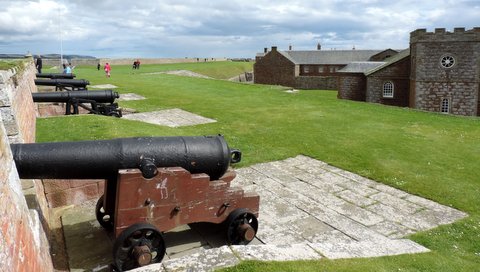
The 42 acre fort cost £200,000, equivalent to £20 million now and more than Scotland’s entire GNP for 1750. It only ever saw one shot fired in anger – and that was by a panicky night-time guard firing on a cow that was approaching the outer defences. As a result the fort appears almost exactly as it did when it was completed and it is one of the most impressive fortifications of the period in Europe. To add to the atmosphere for the modern visitor it is still in use for troops who have been accommodated into the historic fort without adding to, or damaging, the original building.

18-DSCN9513
Today one can view the complex and seemingly impregnable series of outer walls, bastions and moats, designed to put any attacker under withering cross-fire.

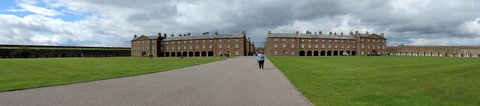
22-DSCN9537Inside the walls the buildings are handsome and impressive, from the Governor’s house to the barracks (still in use for their original purpose, although with fewer men in each large room and more modern heating and plumbing!) to the gunpowder magazine, the stores and the simple chapel.

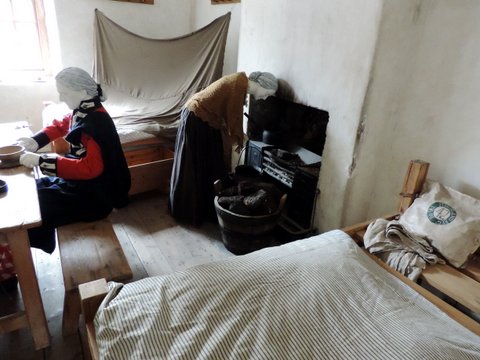
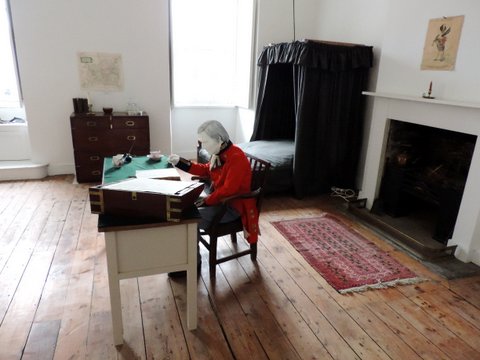
20-DSCN9523The recreated corner of one of the barrack rooms shows the draped blanket that was the only privacy a married couple had in a room sleeping eight men. In contrast one of the senior officers enjoys a room to himself with larger window panes and a smart fireplace. 21-DSCN9525

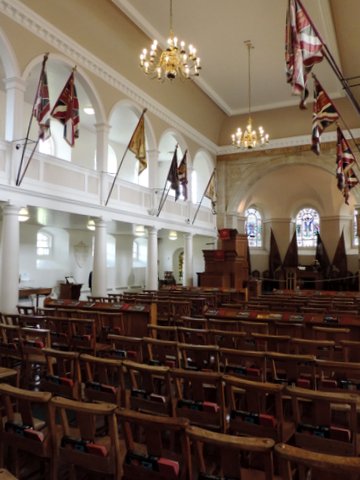
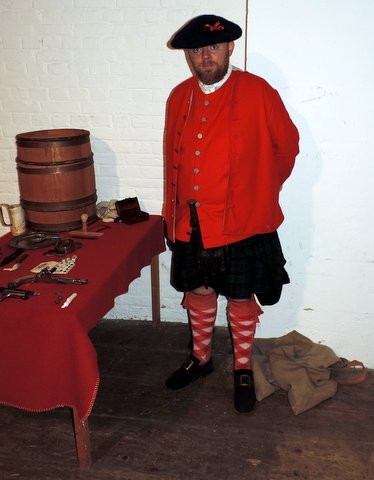
24-DSCN9540 The chapel contains many standards of regiments who have been stationed at Fort George, some of them from the early 19th century. The icing on the cake for me was the re-enactor in the dress of the original Scottish regiments garrisoned there who allowed me to try out all his weapons, including his musket and whose tales of the fort really brought it to life.

19-DSCN9520

5 Comments

Filed under Architecture, Buildings, Military

It’s June and the Pictures Are On the Wall

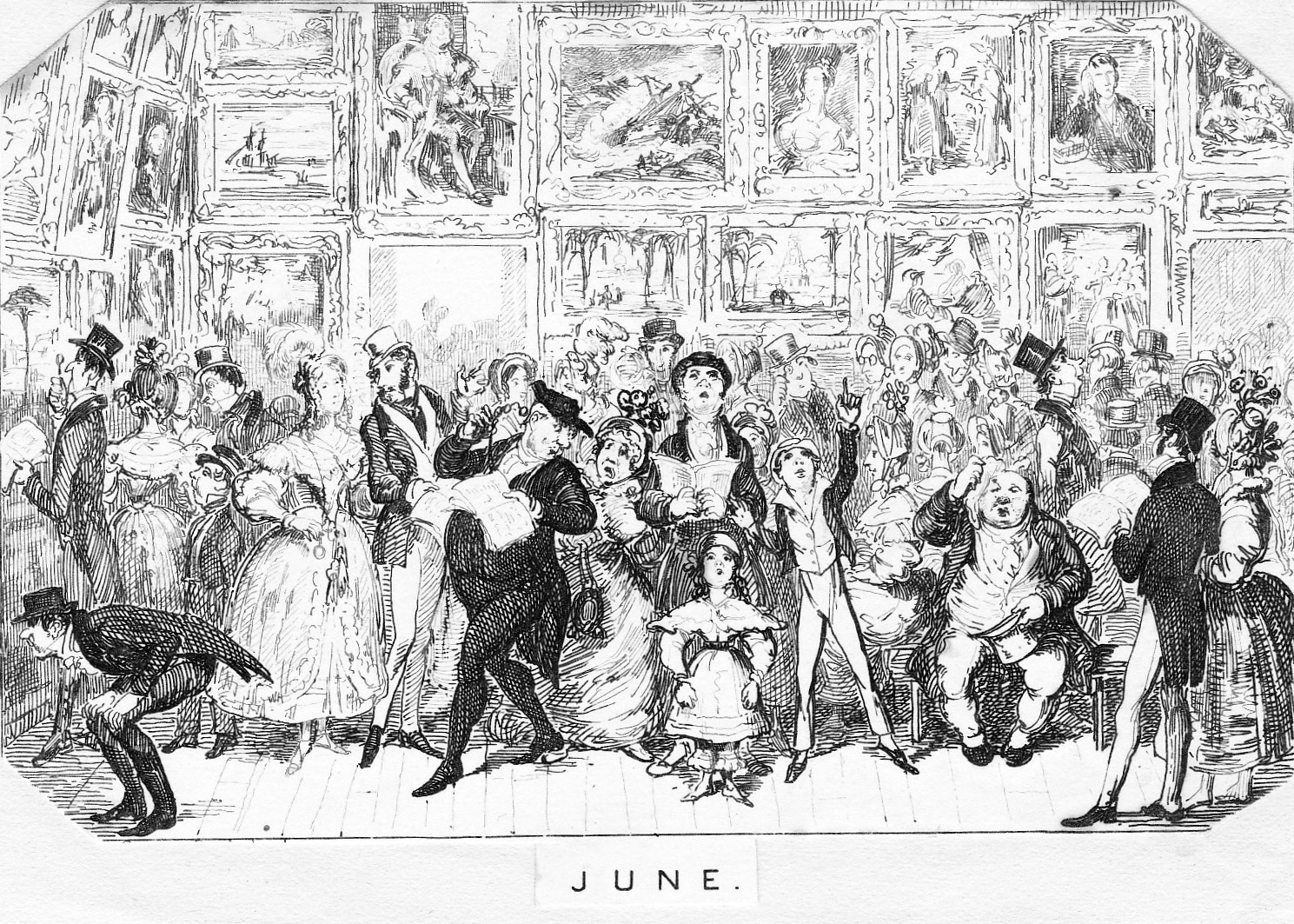
JuneFor the first of June here is another of Cruickshank’s delicious drawings of London life month by month. It shows the Royal Academy’s Summer Show with the gawping crowd of connoisseurs, fashionable types and sightseers, all jammed in to look at the pictures hung floor to ceiling in the fashion of the time. This was one of the major events in the London Season and has been held every year since 1769.

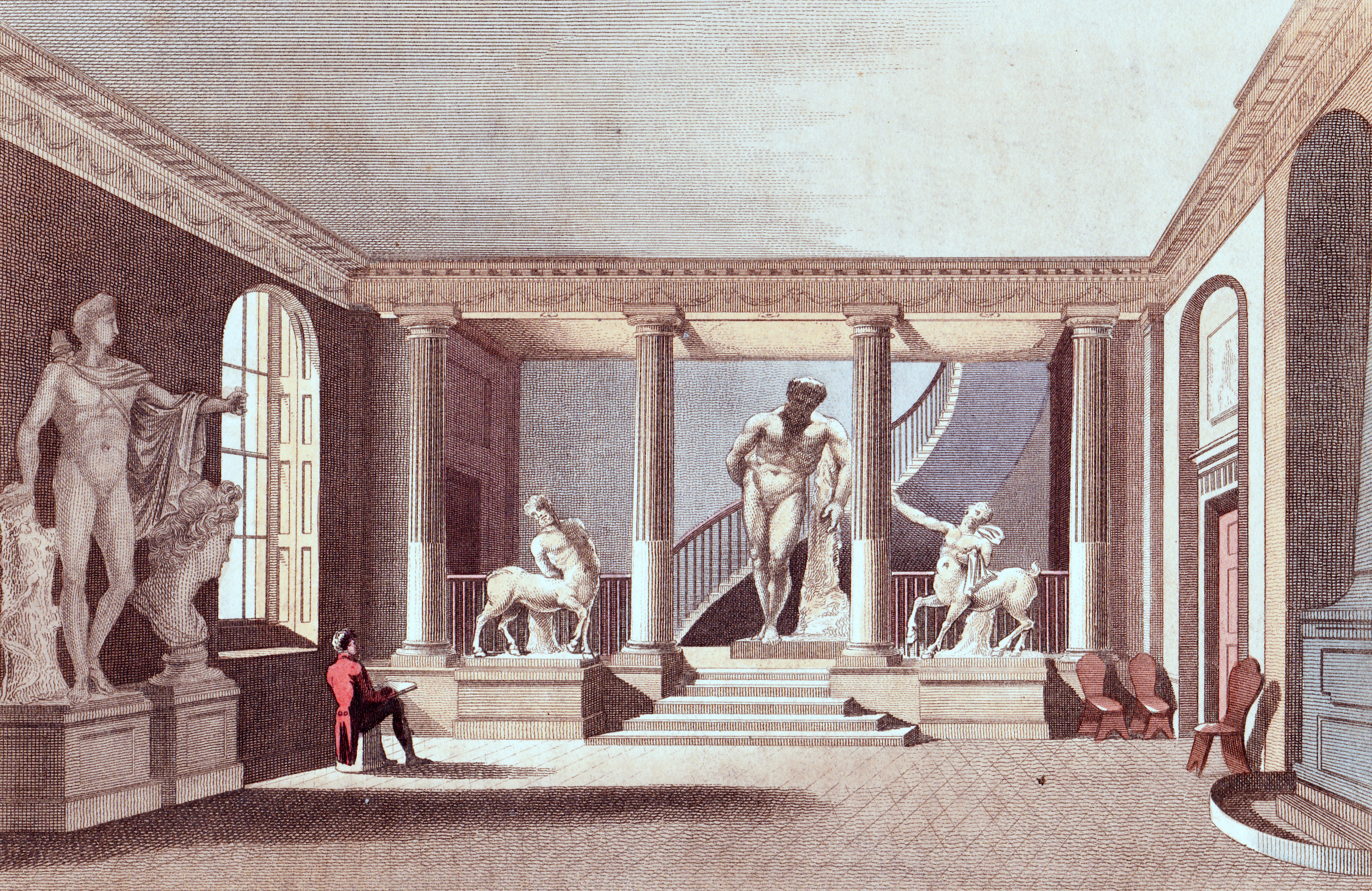
Here is Henry Alken’s view of the same event, drawn in  1821. Summer showThe Royal Academy was initially located in Pall Mall, then moved in 1771 to the first completed wing of New Somerset House, in the Strand. In 1837 it occupied the east wing of the recently completed National Gallery in Trafalgar Square and in 1868 it moved to its present location, Burlington House, Piccadilly. The plate below from Ackermann’s Repository for May 1810 shows the “Hall at the Royal Academy, Somerset House” with an artist sketching one of the plaster casts of Classical statues.

Royal Ac

Leave a comment

Filed under Art, Buildings, Entertainment, High Society