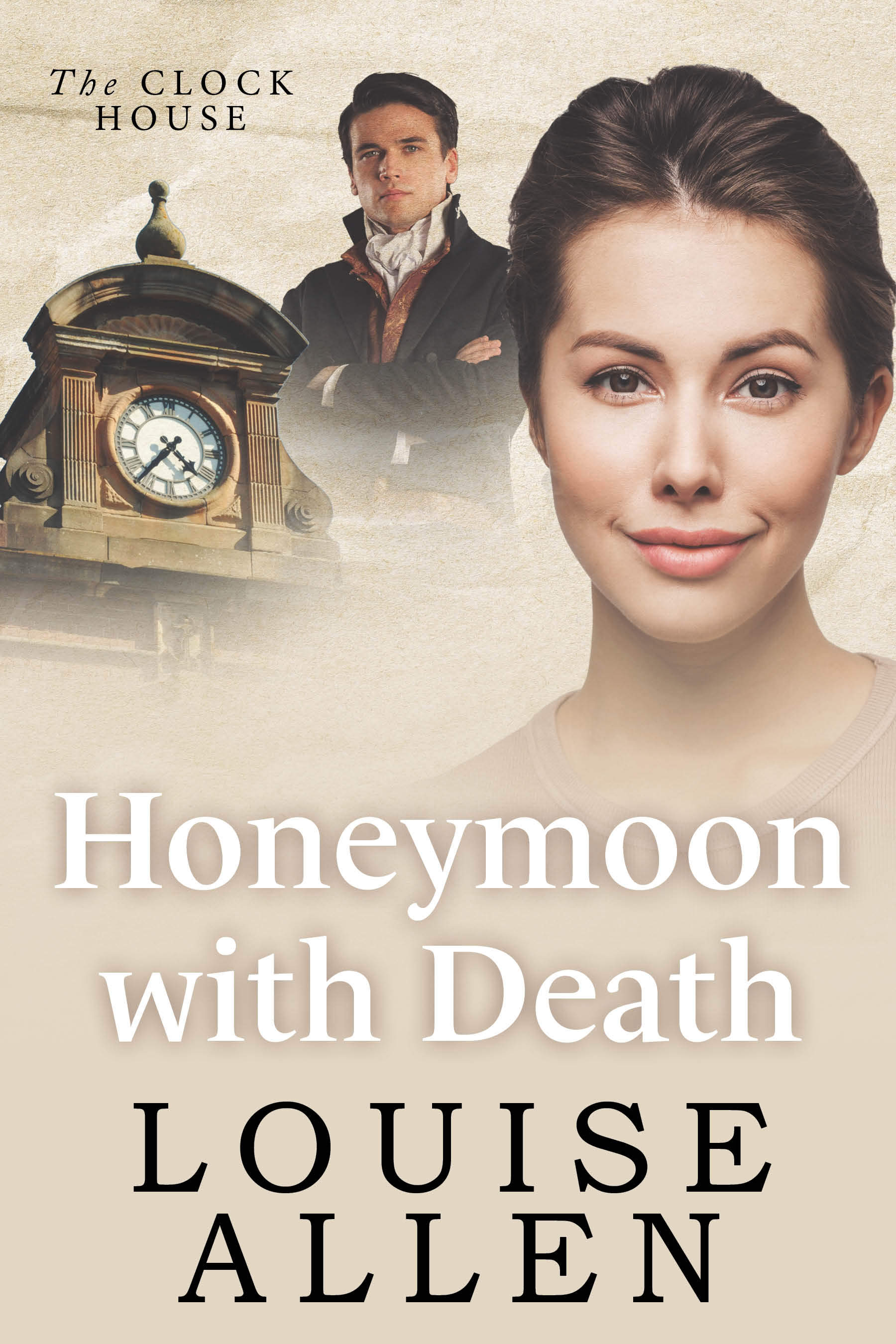
Yearly Archives: 2021

The Perfect Regency Hero? Defender of the Common Man? The Saviour of the Scillies ? Pioneering Plant Collector? Or Sexual Predator? Who was Augustus Smith?

During a recent holiday on the Isles of Scilly I visited Tresco Abbey Gardens and discovered that they had been created by a man whose name was familiar from my childhood. Augustus Smith (1804-72) was the hero who defended the commoners rights in my home town of Berkhamstead when Lord Brownlow attempted to enclose the common land. Lord Brownlow erected steel fences, so Augustus Smith brought in a trainload of navvies who uprooted the barriers, rolled them up and dumped them on his lordship’s front lawn. Berkhamstead Common remains unenclosed to this day.

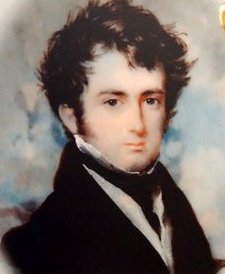
Then I read the quote under the picture of Augustus above – an image where he looks every bit the handsome and sensitive young Regency gentleman. Given that, amongst other things, I write Regency romance, I couldn’t help feeling that Lady Sophia Tower’s description of Augustus Smith sounded almost too good to be true:

A man of good presence, above the middle height, lithe in figure, firm in step, upright in carriage, with well-cut, handsome features closely shaven (it was the English fashion then) and an eye cold, grey, observant; he looked as if he had been accustomed to command, or was born to be a ruler, whilst his gentlemanly address was prepossessing, conversation with him quickly added to the good impression he first made; nature had well moulded him, education and refinement aided him to please and to reform others.”

So, who was this paragon? Augustus was born in 1804 to a wealthy banker, raised in Berkhamstead in Hertfordshire and educated at Harrow and Oxford. He soon developed an interest in social reform and in education and these passions were allowed free rein when, in 1834, he acquired the lease of the Isles of Scilly from the Duchy of Cornwall. The islanders had suffered dreadfully from the neglect of generations of absentee landlords and were without education, support or resources. Agriculture was at a subsistence level and the only industry was the burning of kelp to create soda ash, although by the time Smith took over it has been almost overtaken by industrial processes on the mainland. A niche business supplying the very fine white beach sand for sanding wet ink was also foundering with the use of blotting paper. Most families existed on fishing and scavenging from shipwrecks.

Smith descended like an incoming monarch – his word became law on the islands, regardless of what the islanders had to say. He made education compulsory up to the age of thirteen, built a church and a pier, renovated dwellings and built himself a magnificent house on the island of Tresco next to the ruins of the 12th century abbey.
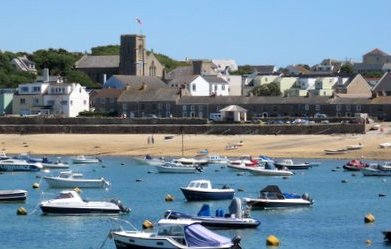
Harbour on St Mary’s with the church that Augustus Smith had built (copyright A J Hilton)

Undoubtedly he raised the living standards of the islanders, but he also created considerable controversy by what the Oxford Dictionary of National Biography calls his “mix of liberalism and authoritarianism….In public life his reputation was for over-persistent and often footling controversy.” Many applauded his approach, but John Stuart Mill described it as “detestable”.

Tresco & Smith’s Abbey (copyright A J Hilton)

He began work on the fabulous gardens on Tresco in 1834, importing plants from all over the world to create what is now an internationally famous collection.

The Abbey Gardens on Tresco (copyright A J Hilton)

Smith certainly expected high standards from everyone else, but I wondered about his own character. He never married, but he had two children by islander Mary Pender who was twenty years younger than Smith and whose first child was born when she was seventeen. He is also reputed to have fathered children on his domestic servants. How consensual were those relationships, given that Mary was a shop girl and the servants probably had no other employment prospects? How do you say No to the King of the Islands?

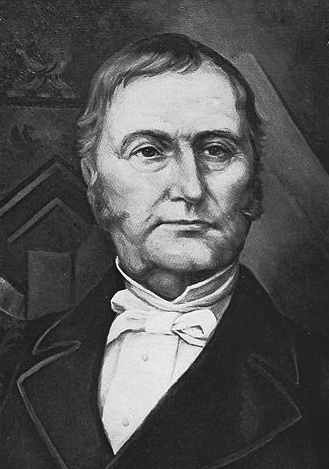
So, not the perfect hero, certainly deeply flawed, but also the man who rescued the Isles of Scilly when their inhabitants were virtually starving. The image below (unknown artist or date) seems to show a man who had no doubts about his own rightness!
After my last visit to The Isles of Scilly I wrote a trio of books linked by the shipwreck of an East Indiaman: you can find the Danger and Desire series here.

2 Comments

Filed under Employment, Gardening, Gentlemen, Historical Romance, Uncategorized

Smithfield – Horror, Slaughter, Revelry, Fire, the Oldest Hospital in London and Pocahontas

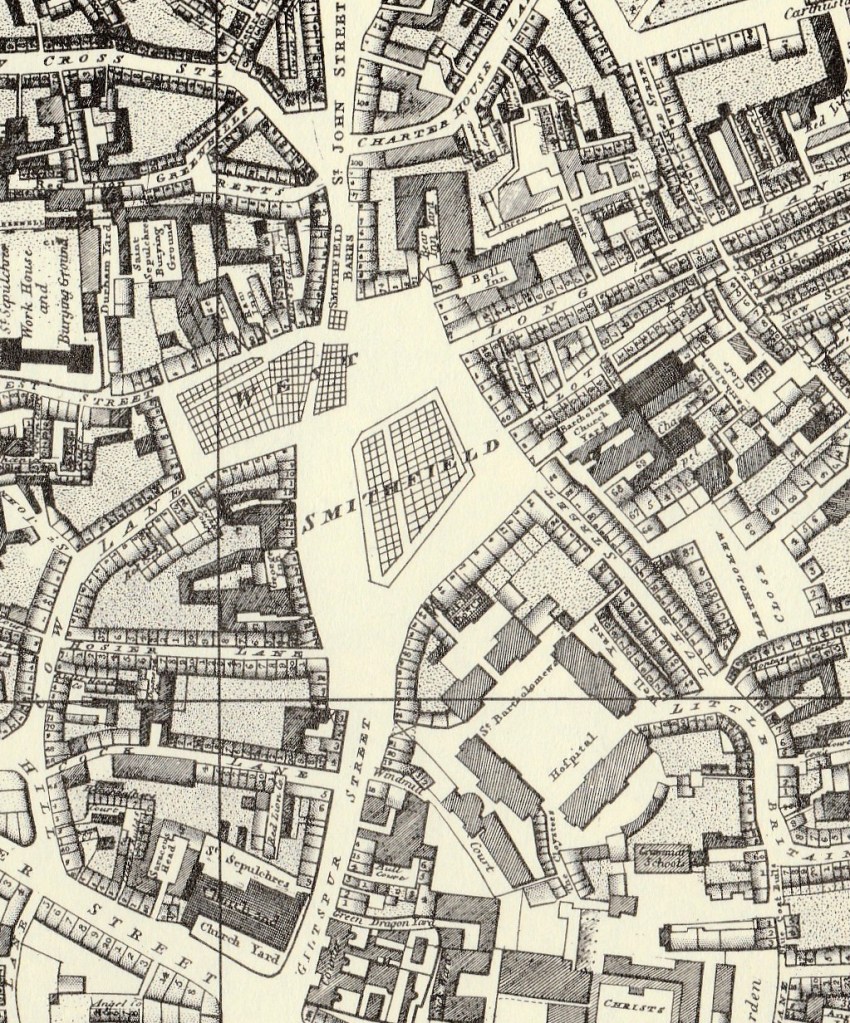
Smithfield 1682 from William Morgan’s map

I am keeping my fingers crossed that I will be able to stay in one of the Landmark Trust’s properties in Cloth Fair, Smithfield, this summer. You can see Cloth Fair running off from the north-east side of Smithfield, just below Long Lane, in this map of 1682. The little street gets it name from Bartholomew Fair, founded by royal charter in 1133 for the benefit of the adjacent St Bartholomew’s Hospital. It became the greatest cloth fair in England and the Corporation of London held a cattle fair at the same time. Eventually it became one of the highlights of London life, running for three days in August and, by the 17th century, an entertainment, rather than a market. I wrote about it here in all its rowdy glory. By 1855 it was finally suppressed and Smithfield Market was built in the area at the top of Smithfield, covering the sheep pens and the open space to the east of them that you can see in the 1682 map.

Smithfield was originally the Smooth Field, an area for grazing horses outside the City walls. – you can see the Town Ditch in the lower right hand corner of the map above. It became a weekly horse market by 1173 and then sheep, pigs and cattle were added. Such a large open space outside the walls was convenient for tournaments and also for executions, allowing a large crowd to gather. The gallows was moved to Tyburn in the early 15th century but burnings of heretics and of women accused of witchcraft continued. Whereas a man might be beheaded or hanged, horrifyingly, women were also burned to death there for a number of offences termed treasonous, including forging currency and killing their husbands (seen as petty treason against authority). In 1652 the diarist John Evelyn recorded witnessing the burning of a woman for poisoning her husband.

The area was a rough one, notorious for duelling and less formalised fighting, but gradually the City authorities began to bring it under control. The area was paved and a cattle market established. The print below shows St Bartholomew’s Hospital in 1750 with the gatehouse and the church of St Bartholomew the Less and, in front, loose cattle, sheep and horses.

The view is of the south-east edge of Smithfield and the gate can still be seen today, although all the houses and shops on either side have been replaced.

By the time of Horwood’s map of London in the early 19th century (below) there were proper pens set out, but the market was still a chaotic, stinking, noisy and dangerous place, despite the development of the area all around with shops and houses. Animals were driven through the streets, even on Sundays, and beasts were slaughtered so that the gutters ran with blood or were blocked with entrails. In Oliver Twist Dickens wrote, “The ground was covered, nearly ankle-deep, with filth and mire; a thick steam perpetually rising from the reeking bodies of the cattle… the unwashed, unshaven, squalid and dirty figures running to and fro… rendered it a stunning and bewildering scene…”

Where that central diamond of pens was is now the “Rotunda garden” a patch of green sitting on top of the circular entrance to the underground carpark and the rectangular northern area is the London Central Meat Market built between 1851 and 1899. To the west is the Poultry Market, rebuilt in 1963 after a fire. The Museum of London is planning to take over the entire range of market buildings – what will happen to the current lively weekly market, I have no idea.

Probably the only parts of Smithfield that the pre-Victorian visitor would recognize today are the churches of St Bartholomew the Great and Lesser. In 1123 Rahere, an Augustinian, founded a priory and its church, St Bartholomew’s the Great, was built in stages, completed in 1240 with a long nave that was demolished in the 1540s after the Reformation. The choir was left as the parish church and the monastic buildings sold off. Now, the half-timbered entrance just to the south of Cloth Fair stands on the site of the original west door.

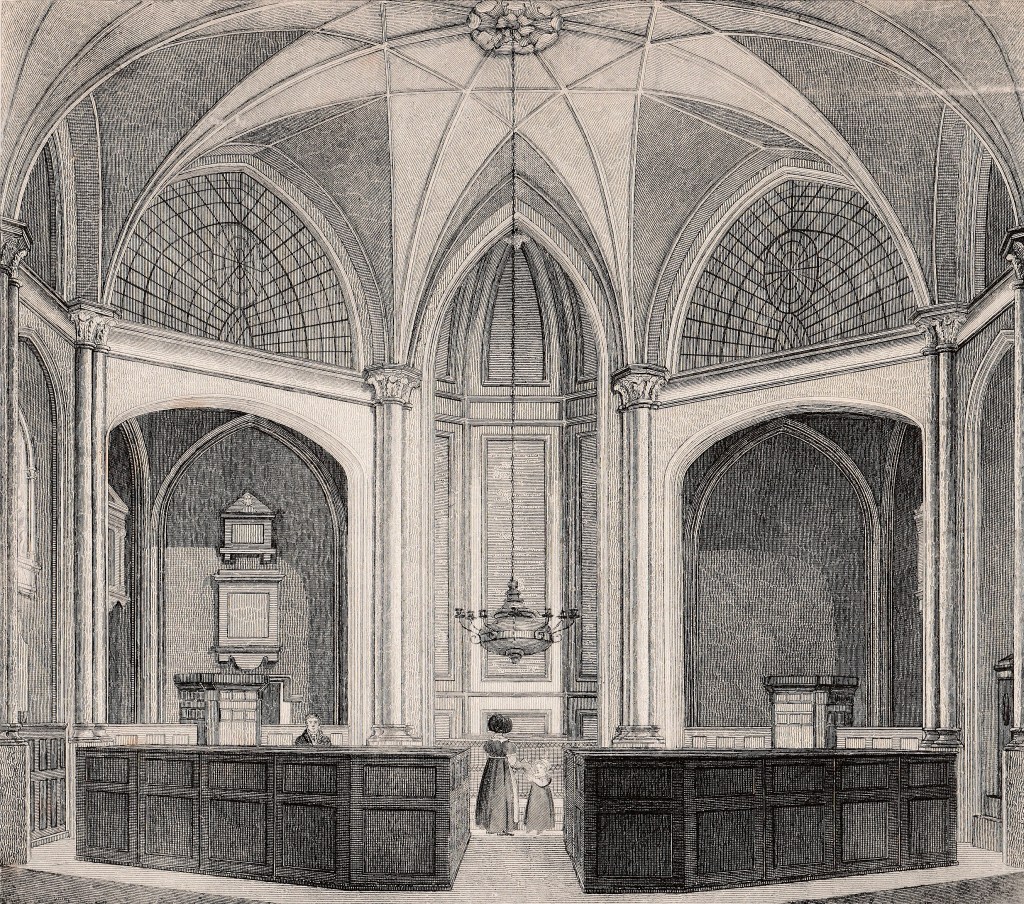
St Bartholomew the Less was a chapel for the priory, built in about 1154. Although ancient, it has had a chequered history. The print below shows the interior as remodeled by Charles Dance the Younger in 1789: the box pews have been replaced. It was heavily restored after bomb damage in the Second World War.

St Bartholomew the Less, looking towards the altar. From Wilkinson’s Londina Illustra (1834)

Rahere’s priory had a chequered life after the Dissolution. The crypt of St Bartholomew the Great became a coal store, the Lady Chapel was converted into houses plus a printer’s business where Benjamin Franklin was employed in 1725, the surrounding area held a blacksmith’s forge, a hop store, a carpenter’s workshop and stables. The Victorians restored it in 1864-56 and 1884-96 and it is difficult to imagine the state it must once have been in.

Despite the Dissolution of the Monasteries Rahere’s great work, his hospital, survives to this day. It almost closed after the Dissolution through lack of funds, but somehow kept going until Sir Richard Gresham persuaded Henry VIII to re-found it in 1544 and it has been continuously rebuilt and developed since. Known as “Bart’s” it remains on site as a specialist cancer and cardiology hospital.

One curious feature of Smithfield is the Golden Boy of Pye Corner. On the map above you can see where Giltspur Street enters at the southern end of Smithfield and to the west is an angle known as Pie, or Pye, Corner. This is where the flames of the Great Fire of London (1666) finally flickered and died out. The fact that it began in Pudding Lane and ended in Pie Corner was taken to be a warning that it had been caused by Londoner’s sinful gluttony. Actually the name derives from the Magpie Inn that once stood here and has nothing to do with pastry!

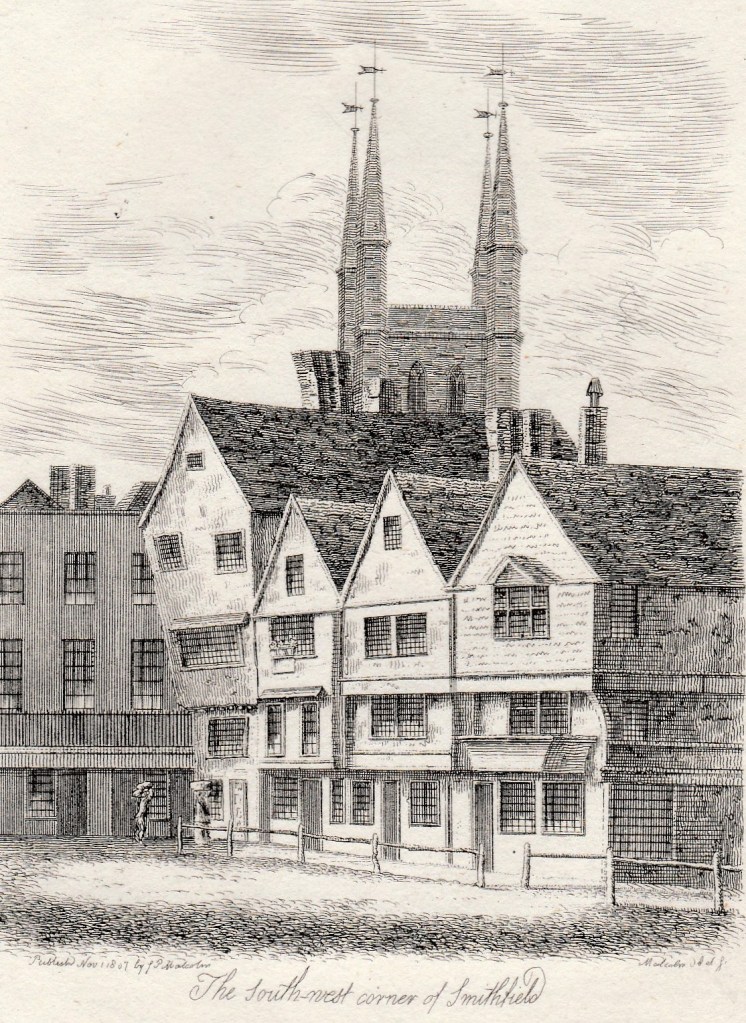
Pie Corner in 1804 with the church of St Sepulchre’s behind.

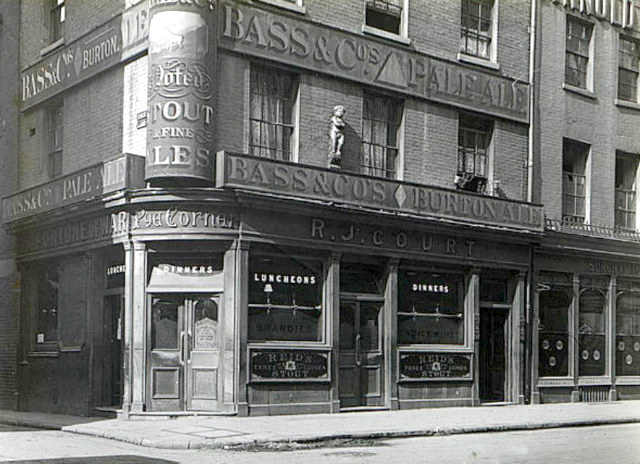
Just south of Pie Corner, on the northern corner of Giltspur Street and Cock Lane, stood The Fortune of War inn. it was demolished in 1910 but had a particularly lurid history. The photograph below shows it just before demolition.

As well as being a ‘receiving house’, appointed by the Royal Humane Society as the location to bring bodies of those drowned in the Thames, it was also the chief hang-out for resurrectionists, or body-snatchers, providing bodies to the surgeons of Bart’s Hospital. It seems that many of the drowned found their way into the dissecting rooms along with corpses stolen from churchyards.

In the photograph you can see the small statue of a chubby child – The Golden Boy of Pye Corner. He was rescued when the pub was demolished and is now on the corner of the new building on the site. His inscription reads:

This Boy is in Memory put up for the late Fire of London
Occasion’d by the Sin of Gluttony.

And finally, the church of St Sepulchre’s, which can be seen in the background of the print of Pie Corner, was another of Rahere’s foundations and contains the tomb of Captain John Smith, one of the founders of Jamestown and of the State of Virginia, and famous for his relationship with Pocahontas of the Powhatan tribe.

1 Comment

Filed under Animals, Architecture, Buildings, Crime, Entertainment, Food & drink, Medicine & health, Religion

‘Happily Adapted to Grace’: The Regency Lady Performs

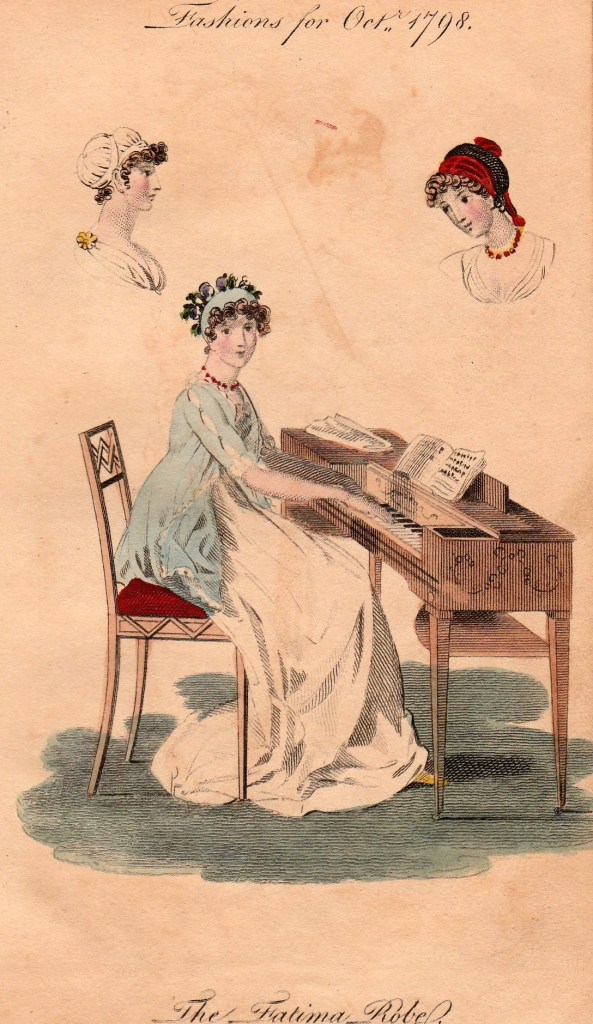
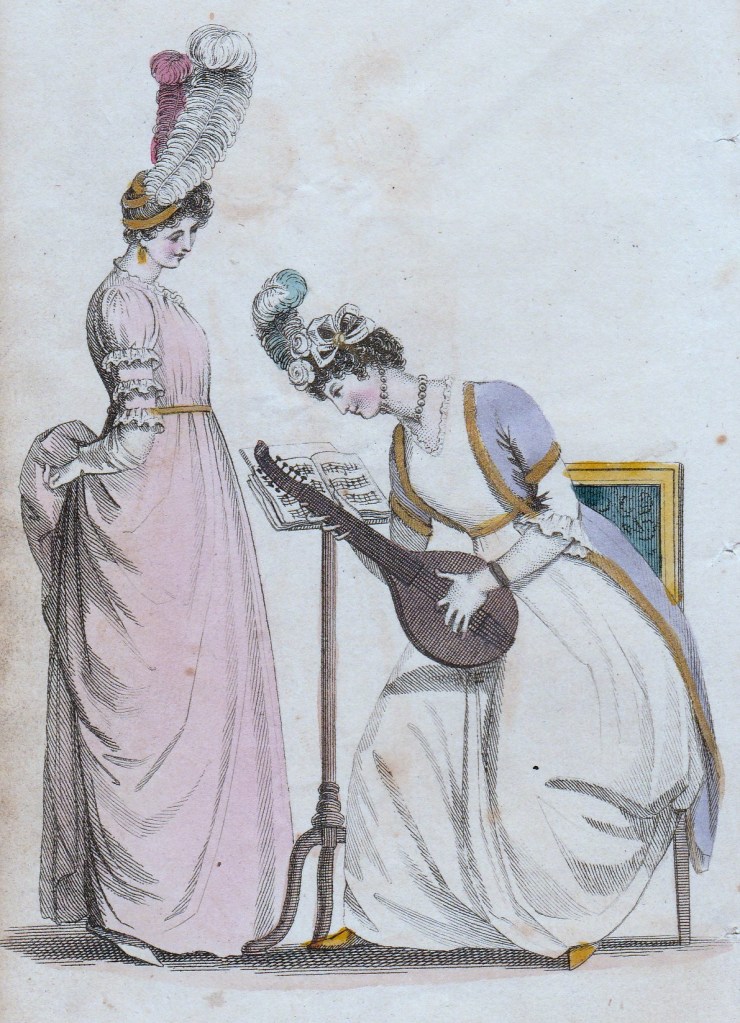
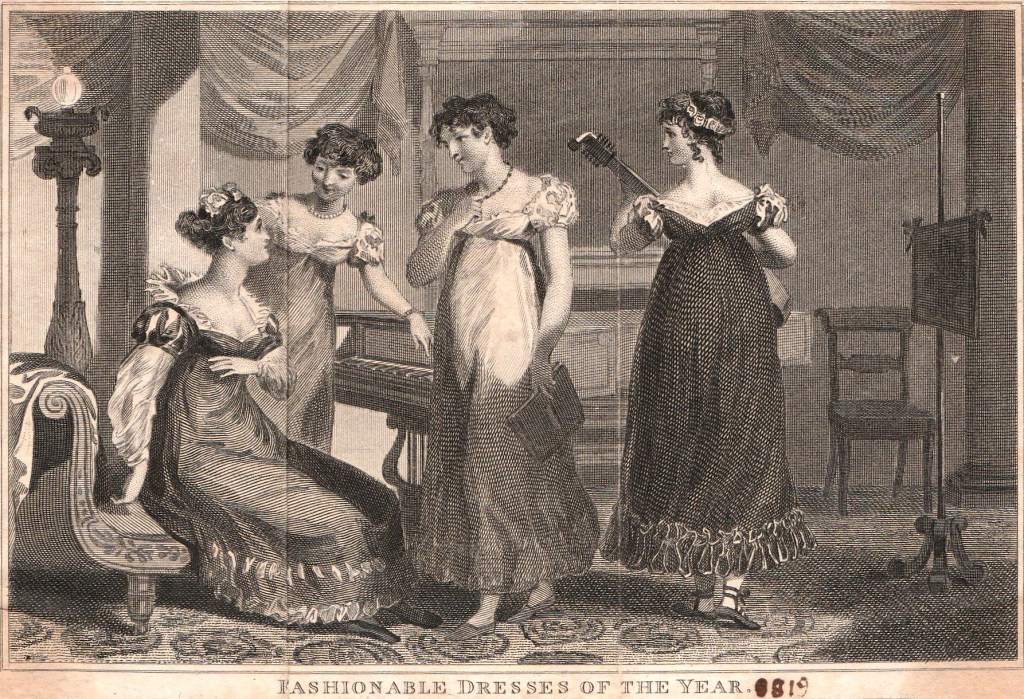
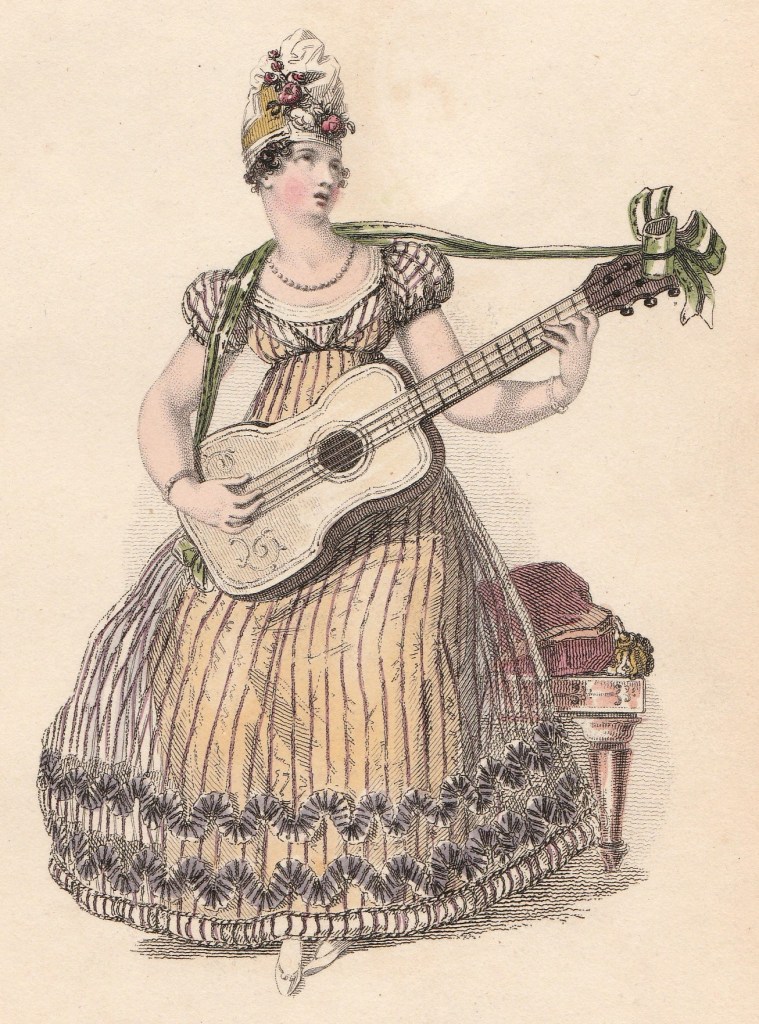
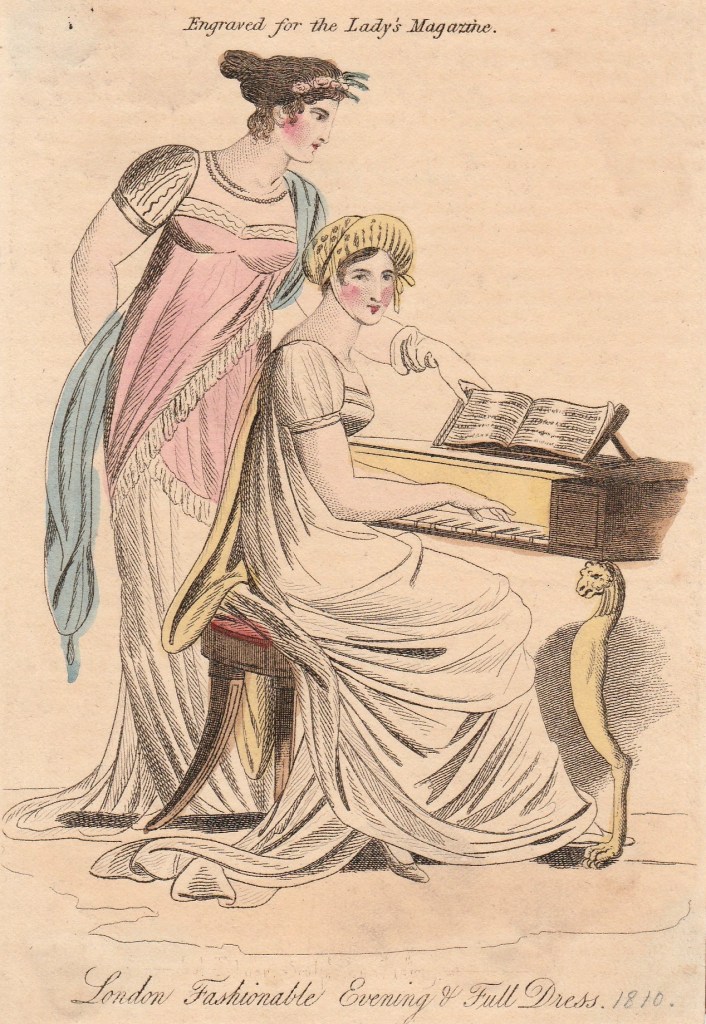
My most recent novel has a pianoforte teacher as its heroine and this prompted me to look through my collection of Regency prints to find those showing musical instruments. I have reproduced some of them here, ranging in date from 1798 to the 1820s and from the clumsy, but charming, style of The Ladies’ Monthly Museum to the beautifully detailed prints from Ackermann’s Repository.

Young lady wearing ‘The Fatima robe’ , October 1798, from an unidentified journal.

The first is a very charming print of a rather young lady playing, I believe, a harpsichord. She looks informal and yet elegant, which reflects the strictures of ‘A Lady of Distinction’, author of The Mirror of the Graces (1811). This gave advice on ‘The English Lady’s Costume’ and also ‘Female Accomplishments, Politeness and Manners.’

On the subject of playing musical instruments it is clear that no opportunity must be lost to display the performer in the best possible light.

“Let their attitude at the piano, or the harp, be easy and graceful. I strongly exhort them to avoid a stiff, awkward, elbowing position at either; but they must observe an elegant flow of figure at both.”

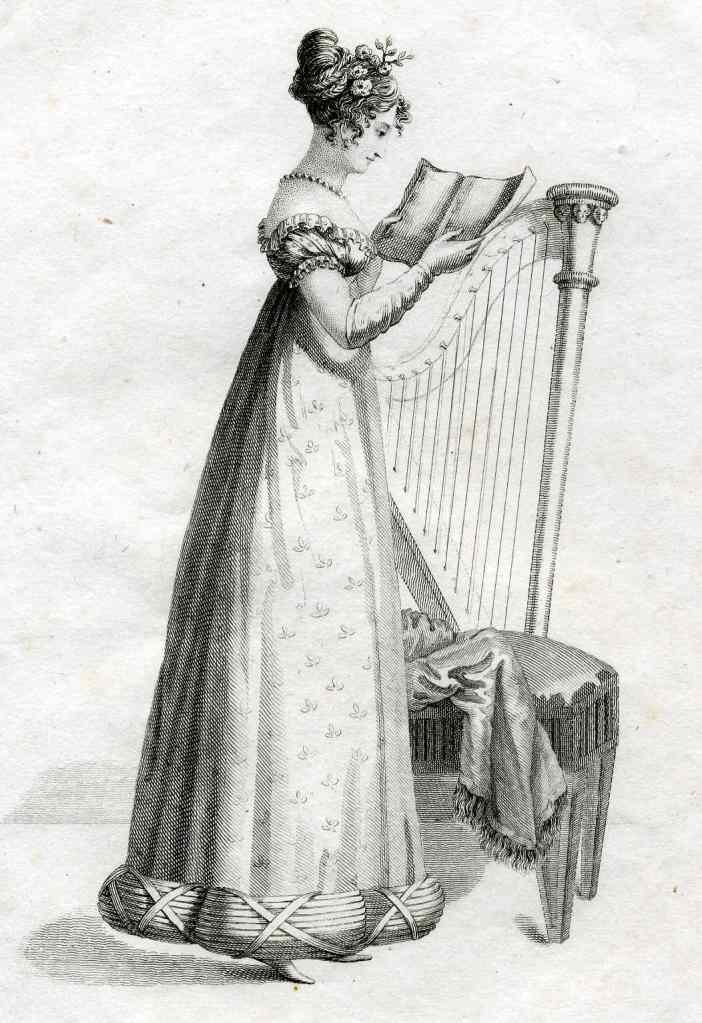
Playing an instrument and singing were basic accomplishments for any young lady and she was expected to help provide the entertainment at family gatherings and social occasions. Not only was this (hopefully) pleasant for the listeners, but it demonstrated her taste and allowed her to be viewed at her best by potential suitors. The ‘Lady of Distinction’ makes this display function exceedingly clear. She considered the harp showed “a fine figure to advantage. The contour of the whole form, the turn and polish of a beautiful hand and arm, the richly-slippered and well-made foot on the pedal stops, the gentle motion of a lovely neck, and above all, the sweetly-tempered expression of an intelligent countenance; these are shown at a glance, when the fair performer is seated unaffectedly, yet gracefully, at the harp.”

Lady with harp. Unidentified print

A pianoforte or harpsichord, “is not so happily adapted to grace. From the shape of the instrument the performer must sit directly in front of a line of keys; and her own posture being correspondingly erect and square, it is hardly possible that it should not appear rather inelegant.” The performer is urged to hold her head elegantly and to move her hands gracefully over the keyboard.

Ladies’ Monthly Museum

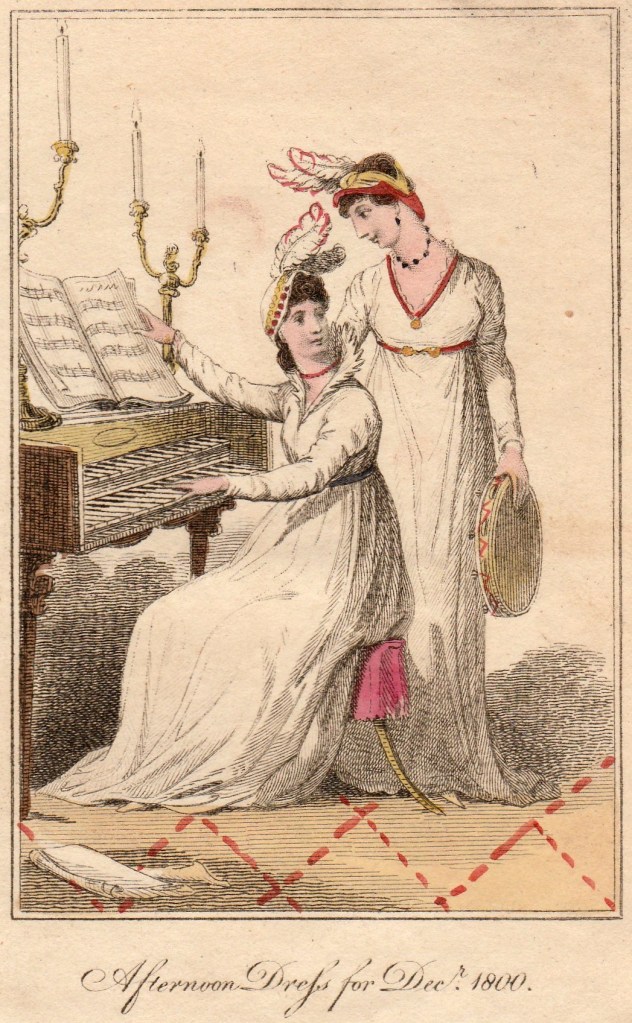
The lady about to play the harpsichord (above) turns gracefully (or, at least, as gracefully as anyone ever does in these early Ladies’ Monthly Museum prints!) to display her gown and figure. Quite how her friend will manage to look elegant shaking the vast tambourine is not clear.

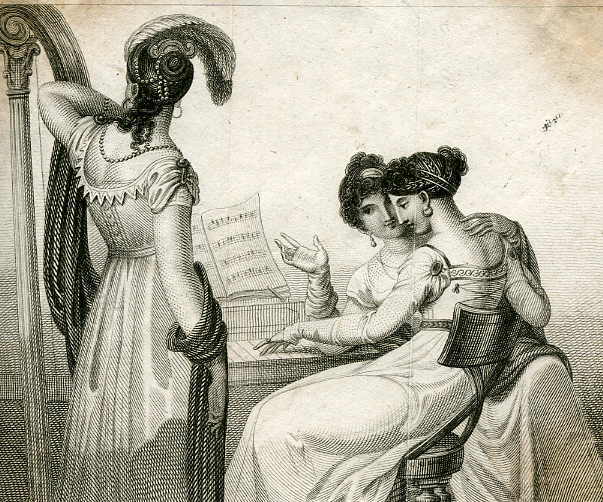
A harp and a keyboard instrument are shown in this print from a ladies’ memorandum book of 1809:

The Lady of Distinction also considers that “Similar beauty of position may be seen in a lady’s management of a lute, a guittar [sic], a mandolin or a lyre,” and fashion prints also illustrate those. In the next image, from The Lady’s Monthly Museum of 1800, the elegance is somewhat lost in the awkwardness of the drawing.

More successful is this charming scene from a memorandum book of 1819.

And Ackermann’s Repository has this from 1819. The guitar-player has a wonderful gauze overskirt and a very soulful expression.

And finally a very flowing print and a very elegant instrument from the Lady’s Magazine – I love the paw feet!

My piano teacher heroine in The Earl’s Reluctant Proposal can be found here.

2 Comments

Filed under Entertainment, Fashions, Women

The Story of a Square 10: Portman Square

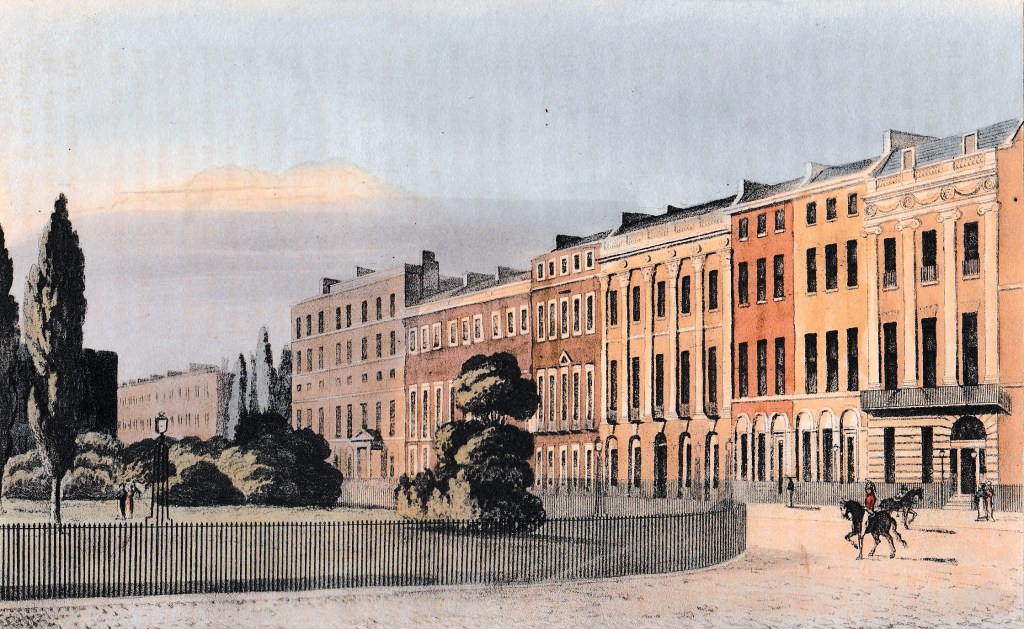
“This square is esteemed the next in beauty, as it is in extent, to Grosvenor-square. It is built with more regularity than the latter: but the very uniformity of the houses, and the small projection of the cornices, are not favourable to grandeur and picturesque effect.”

This modified rapture comes from the beginning of the article in Ackermann’s Repository of August 1813 accompanying this print of the north side of Portman Square.

The square was begun in 1764 as a speculative development by John Berkely Portman, MP, for whom it is named. It rapidly became one of the most fashionable addresses in London and ‘The residence of luxurious opulence,’ according to Priscilla Wakefield, the Quaker philanthropist and writer of children’s non-fiction books.

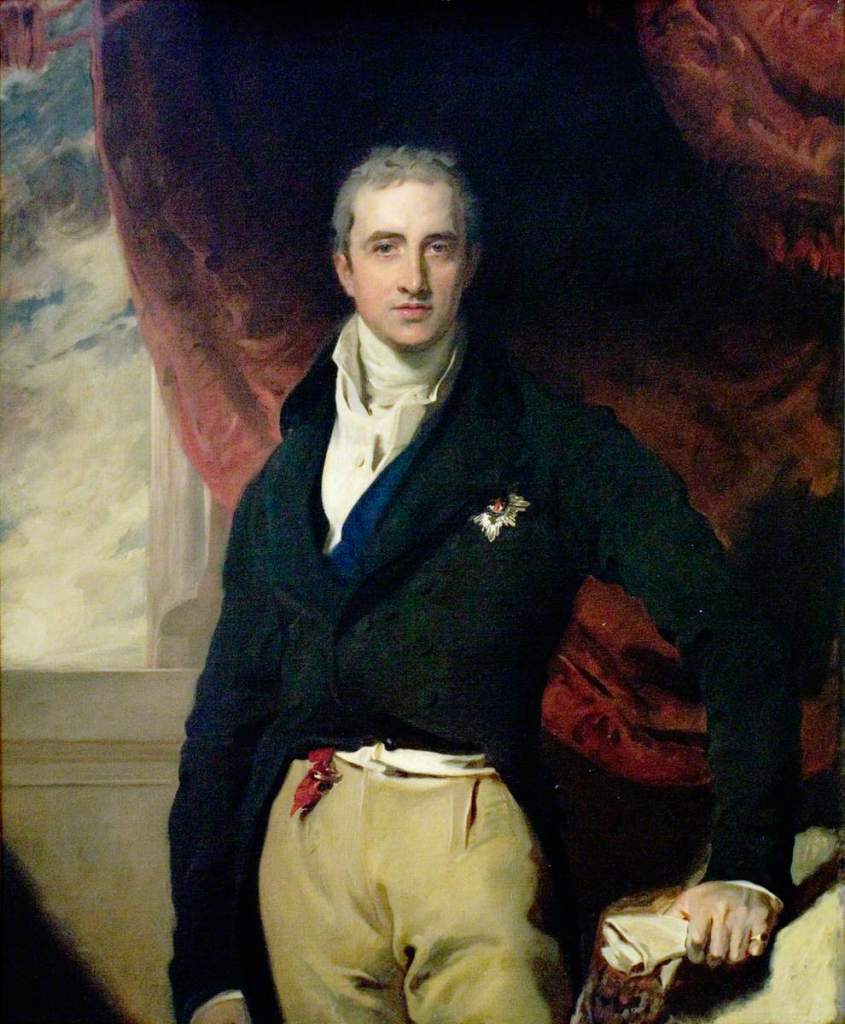
Amongst its residents was Lord Castlereagh, 2nd Marquess of Londonderry, closely associated with Lord Liverpool’s repressive government. The portrait below is after the original by Lawrence. Shelley wrote of him in The Mask of Anarchy,

‘I met Murder in the way –

He had a mask like Castlereagh.’

At the time of the Peterloo Massacre in 1819 a furious mob attacked his house and smashed the windows.

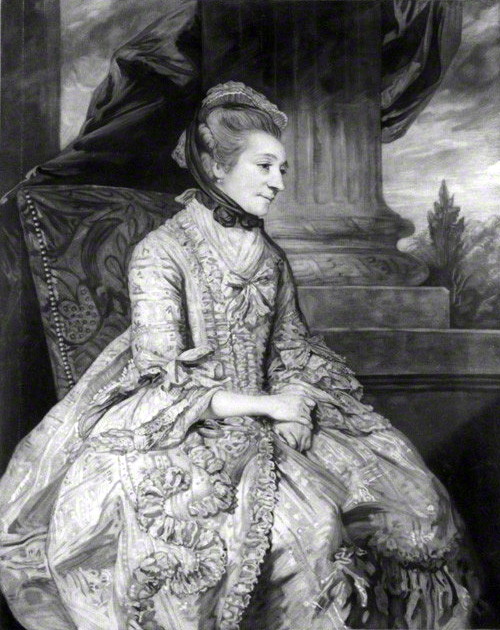
Considerably more liberal was Mrs Elizabeth Montagu who lived in the house built for her 1777-82 on the north-west corner, now replaced by the massive block of the Radisson Blu hotel. Mrs Montagu was an intellectual – a ‘blue stocking’ – and philanthropist.

Elizabeth Montagu. Print after the portrait by Joshua Reynolds.

Every May Day she gave a roast beef and plum pudding dinner to chimney sweeps and their apprentices, the unfortunate ‘climbing boys’.

As the Ackermann article reports, these were children “doomed to a trade at once dangerous, disagreeable, and proverbially contemptible, the chimney-sweepers.”

May Day appears to have particular significance for chimney sweeps. In Brand’s “Observations on Popular Antiquities…Vulgar Customs, Ceremonies and Superstitions.” (1813) he notes “The young chimney-sweepers, some of whom are fantastically dressed in girls’ clothes, with a great profusion of brick dust by way of paint, gilt paper etc, making a noise with their shovels and brushes, are now the most striking objects in the celebration of May Day in the streets of London.” The little lad holding his brush in the centre foreground of this print by Cruickshank certainly seems cheerful enough.

At Mrs Montague’s feast tables were set out in the gardens and “servants in livery [waited on] the sooty guests, with the greatest formality and attention.” Great crowds watched the gathering, “highly diverted with the many insolent airs assumed on the joyful occasion by the gentlemen of the brush, who, bedizened in their May-day paraphernalia, would rush through the crowd of spectators with all the arrogance of foreign princes.”  

The reality of their everyday lives is more honestly seen in another Cruickshank print which shows how a boy trapped and suffocated in a chimney was removed. (The Chimney-Sweeper’s Friend, and Climbing-Boy’s Album. Arranged by James Montgomery. Illustrations by George Cruickshank (1824)).

In the south-west corner was the residence of Monsieur Otto, negotiator for the French of the Peace of Amiens, signed 27 March 1802. He displayed illuminations in the square to mark the event and they can be seen in a print in the British Museum collection.

Ackermann’s also records that the residence of the Ottoman ambassador to the British court was on the west side of the square and, “Whilst the ambassador continued here, this square was the resort of all the beauty and fashion of this district of the metropolis.”

The square has suffered from bombing and redevelopment but number 20, Home House designed by Robert Adam, survives. In the print of the square above it is the tallest block.

Orchard Street leads southwards out of the square in the south-east corner. This is where Jane Austen’s aunt Mrs Hancock and her cousin Eliza were living in August 1788 when Jane dined with them during her first recorded visit to London.

Going east from the same corner was Edwards Street, now included in Wigmore Street, the location of Society caterer Parmentier.

From the north east corner Baker Street runs north. In the guide book The Picture of London, Baker Street was described as “perhaps the handsomest street in London.” It can no longer be said to be of much interest, except to record that it led to the Hindoostanee Coffee House in Baker Street, the site of the first Indian restaurant in London. It was opened in 1810 by Sake Dean Mohammed who became famous in Margate for his lavish bath house. The coffee house was less successful and closed within the year. You can read more about him here.

The area around Portman Square forms Walk Two in my Walking Jane Austen’s London.

Leave a comment

Filed under Architecture, Buildings, Food & drink, Street life, working life

Secrets Worth Knowing, The Bleeding Nun and the Fatal Marriage – Drama in a Provincial Playhouse

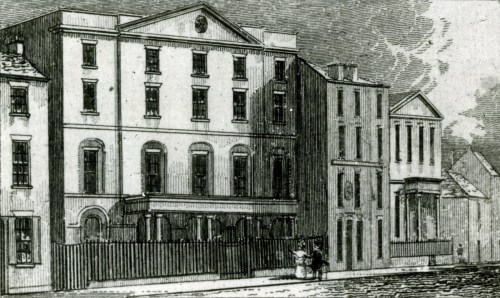
This rather undistinguished-looking building is Hull’s third theatre, and second Theatre Royal, in Humber Street, built in 1810 to replace the original of 1769, situated in Finkle Street.

The Finkle Street building had a ‘piazza’ at the front and separate entrances for each section of the house. Inside, the  boxes were fenced off from the pit, and linked by a gallery

The season ran from October to January, which was longer than most, but no summer season was attempted because most of the likely customers moved out of town and, as the then manager Tate Wilkinson recalled,  ‘seafaring persons, who are keen supporters are abroad’. The actors were mainly provincials but occasionally London stars would appear. In 1786 Mrs. Siddons took to the boards in Hull for a week, but the cost of promoting her season was so great that from the gross receipts of £450 the profit was only £130.

In 1803 John Wilkinson succeeded his father as manager and was soon in financial difficulty.  There were complaints of the narrowness of the street and the dangers of fire and the stage was too shallow for the elaborate melodramas then in fashion. Critics called the theatre ‘dirty, ill-lighted, and incommodious’.

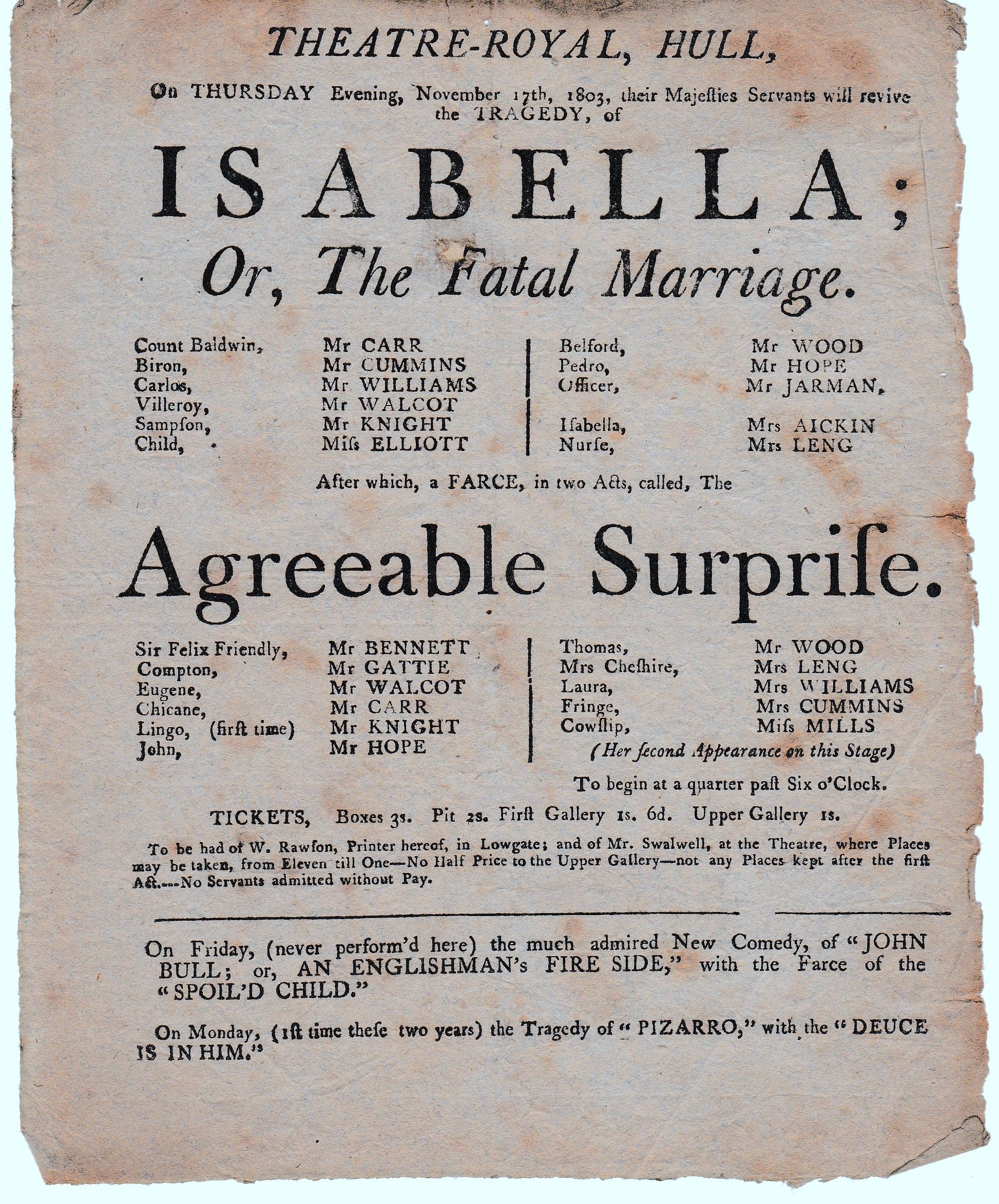
The oldest playbills I have are for November 1803, the period of these complaints. By 1808 John Wilkinson was planning a new theatre.

The prices range from 3 shillings for a box to one shilling in the upper gallery. A place in the pit (the area immediately in front of the stage) costs one shilling. In 1809 there were riots at Covent Garden Theatre when the price of pit tickets was raised to half that – 6 pence – so this seems expensive. For the same money you could buy 20 pounds of potatoes. The note about the admission of servants probably refers to the habit of theatre-goers of sending their servants along to occupy seats until such time as they decided to arrive.

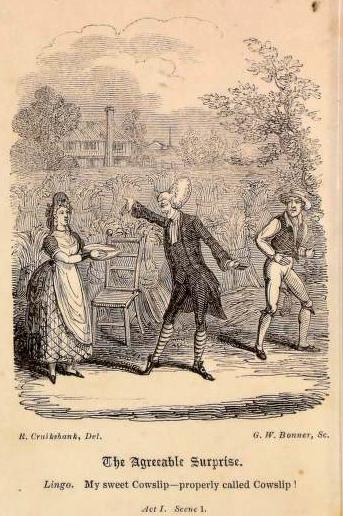
The tragedy, Isabella, or, the Fatal Marriage was an immensely popular work by Thomas Southerne, first performed in 1694. Isabella, mourning her dead husband Biron, is ravished and marries Villeroy. Then Biron reappears, is murdered and Isabella kills herself. To cheer the audience up after that is The Agreeable Surprise, a farce by John O’Keefe. The image below is from a later edition illustrated by Cruickshank and shows the dairy maid Buttercup with the character of Lingo in the centre.

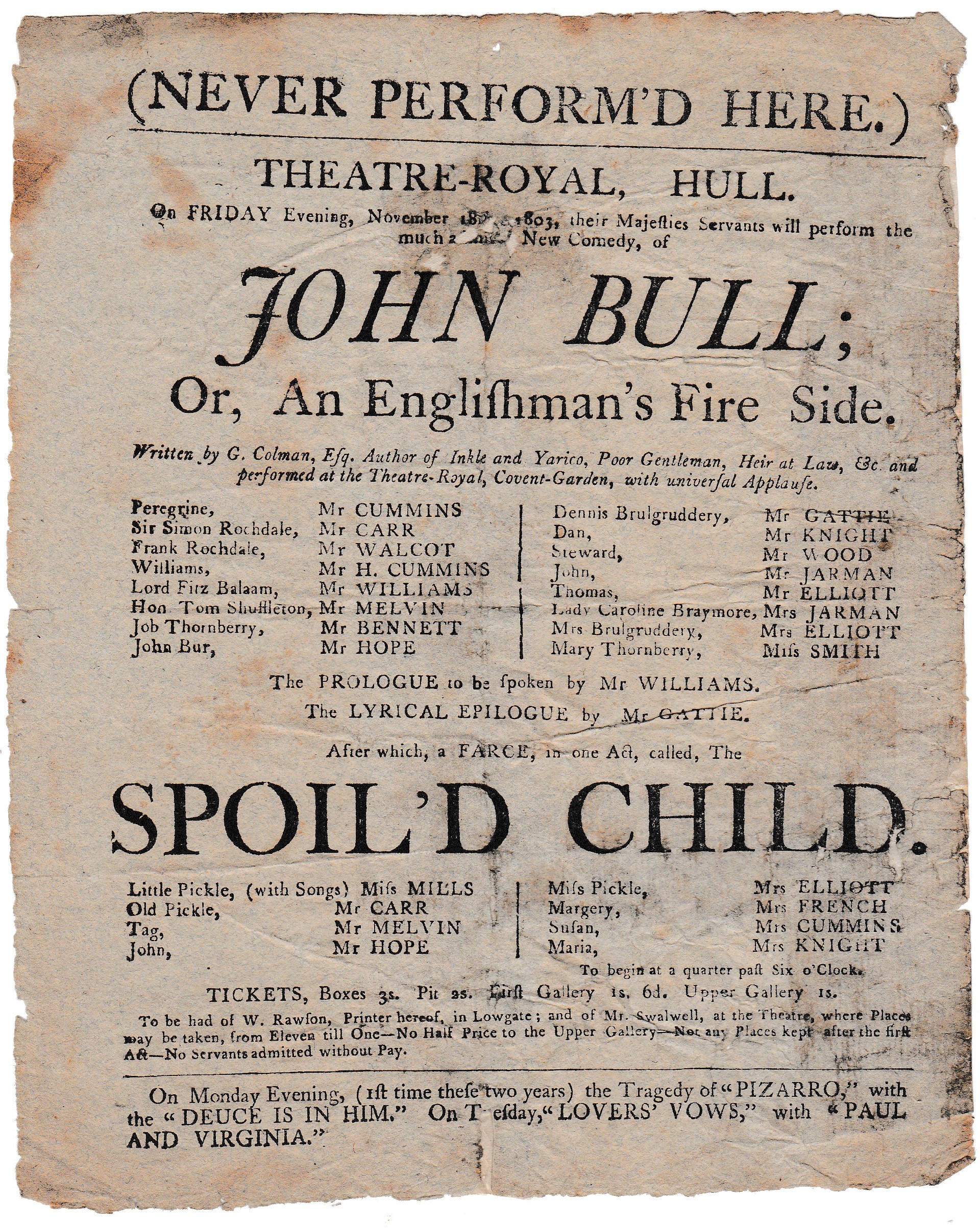
The next evening many of the same actors were appearing in a comedy followed by a one-act farce.

John Bull was a five act comedy by John Colman the Younger. Here’s the opening few lines. I feel sorry for the poor pig with the measles.

ACT THE FIRST.

SCENE I.

A Public House on a Heath: over the Door the Sign of the Red Cow;——and the Name of “Dennis Brulgruddery.”

Enter Dennis Brulgruddery and Danfrom the House. Dan opening the outward Shutters of the House.

Dennis. A pretty blustratious night we have had! and the sun peeps through the fog this morning, like the copper pot in my kitchen.—Devil a traveller do I see coming to the Red Cow.

Dan. Na, measter!—nowt do pass by here, I do think, but the carrion crows.

Dennis. Dan;—think you, will I be ruin’d?

Dan. Ees; past all condemption. We be the undonestest family in all Cornwall. Your ale be as dead as my grandmother; mistress do set by the fire, and sputter like an apple a-roasting; the pigs ha’ gotten the measles; I be grown thinner nor an old sixpence; and thee hast drank up all the spirity liquors.

Dennis. By my soul, I believe my setting up the Red Cow, a week ago, was a bit of a Bull!—but that’s no odds. Haven’t I been married these three months?—and who did I marry?

Dan. Why, a waddling woman, wi’ a mulberry feace.

The farce, The Spoil’d Child was a popular piece that crops up in several of the big London theatres.

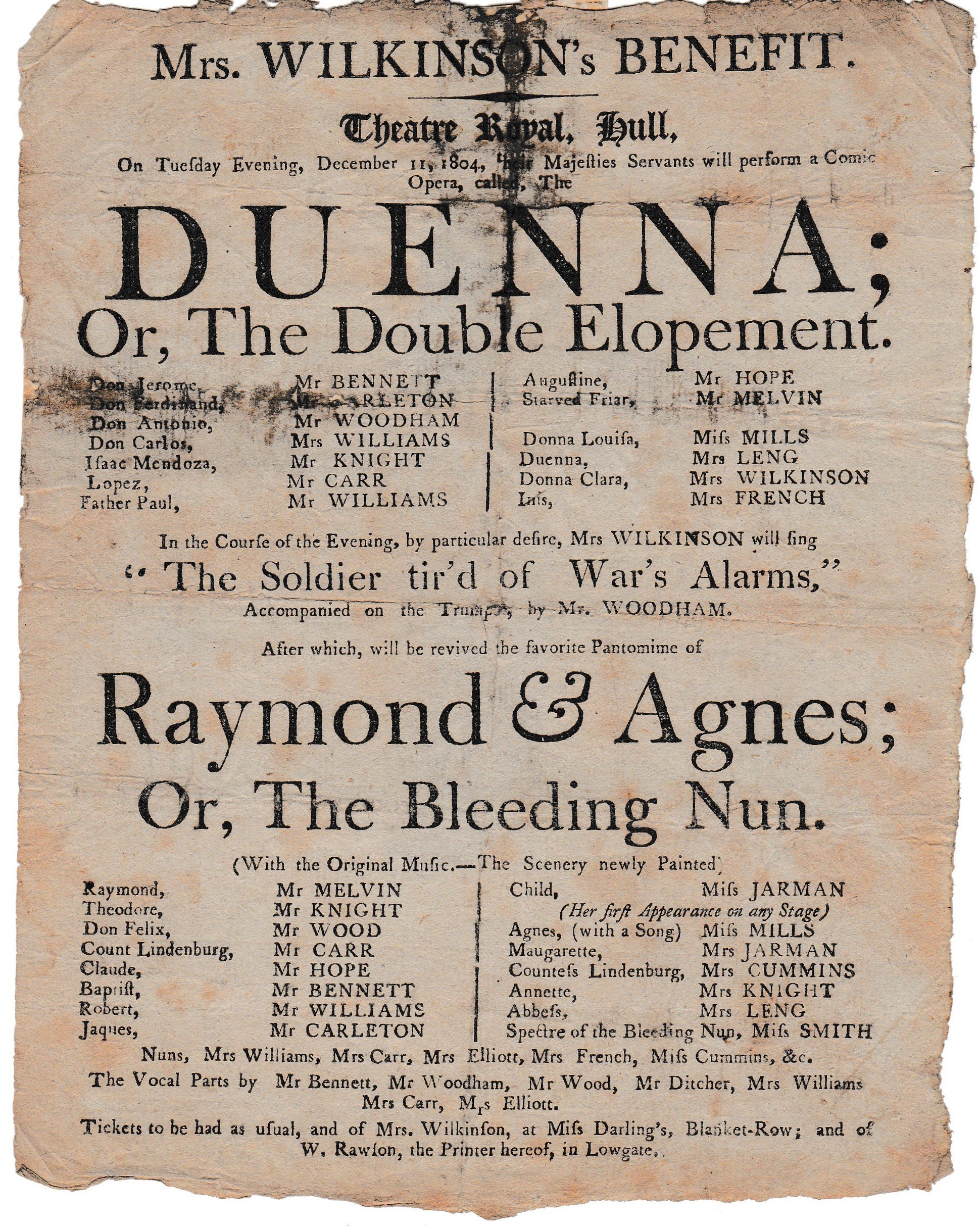
My next playbill is for December 1804, the next season and, irritatingly, it does not give prices for tickets – I was hoping to see if Mr Wilkinson was reducing them in the face of criticism. It is, however, a benefit performance in aid of Mrs Wilkinson, one of the actors and, I assume, John’s wife.

The comic opera is followed by a song by Thomas Arne, performed by Mrs Wilkinson with another of the cast on the trumpet.

The soldier tir’d
of war’s alarms
for swears the clang of hostile arms
and scorns the spear and shield

But if the brazen trumpet sound
he burns with conquest to be crown’d
and dares again the field

The Duenna was written by Richard Brisley Sheridan in 1794. The pantomime, Raymond & Agnes seems to derive from a Gothick tale of haunting by a bleeding nun in a German castle. I can’t find any of the script unfortunately, but the song, The Bleeding Nun, begins:

On each fifth day of each fifth year

The Bleeding Nun she doth appear

And slowly walks the castle round with steps that mark the trembling ground…

The Theatre Royal was renowned for its pantomimes and, in true pantomime tradition, often included local references.

In February 1804 the double bill was a comedy (Lovers’ Vows; Or, the Natural Son) “to which will be added a Melo Drame” [sic] A Tale of Mystery. The second act was enlivened by a garland dance.

To quote British History On-Line:

“The new theatre was completed by 1810 to the designs of Charles Mountain, the younger. It contained three tiers of boxes, two galleries, and a pit, with accommodation for 1,700. The stage was 54 feet deep. There was a domed ceiling over the pit and orchestra, connected to the sides of the building by a circle of groined arches, and an elliptical ceiling over the proscenium. The house was decorated in pink, yellow, white, and grey, and the boxes were lined with scarlet cloth. The cost of building aggravated Wilkinson’s financial difficulties, and summer seasons in 1810, 1812, and 1813 were expensive failures. He retired from the management in 1814 but his successors fared no better. When a fire destroyed the theatre in 1859 it was noted that ‘latterly the managements have changed almost yearly’ and that ‘the prestige of the property has lamentably decreased’.”

I have one more playbill, for 1812, one of those disastrous seasons.

As well as the comedy there are five comic songs – all with mentions of the Theatre Royal, Haymarket, as if to add lustre to the programme – and a musical farce: The Farmer; Or, The Macaroni Staymaker.  The name of the stay (or corset) maker is Jemmy Jumps and for an explanation of stays, corsets and jumps, please see the post immediately preceding this one. Unfortunately I cannot locate any of the script of that one – I would love to see some corset jokes!


10 Comments

Filed under Buildings, Entertainment