
I live in Norfolk, one of the major centres in the 18th and 19th centuries for rearing geese and turkeys for the London market. Both were favourites for eating at Christmas and in the weeks before the roads to the Capital were full of flocks of geese being walked slowly to their doom, their feet protected by being dipped in tar and then sand. The arrival of the stagecoaches made transporting birds much faster and they could be slaughtered in Norfolk, then loaded onto the coaches and arrive without having walked off a good part of their condition.
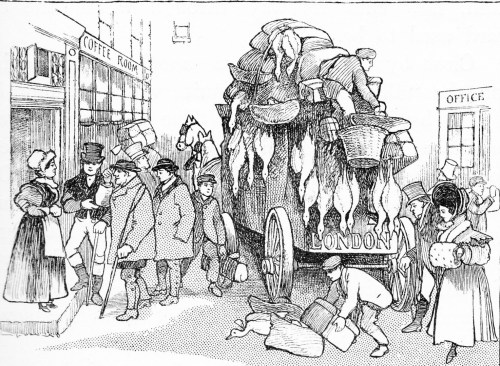
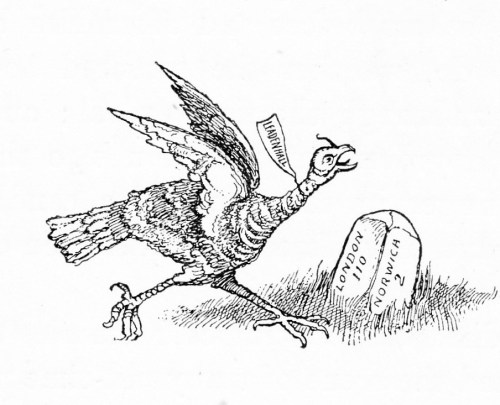
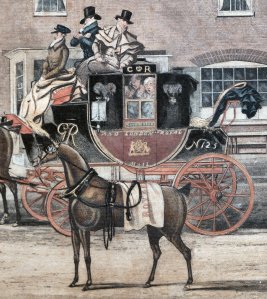
The image above shows the Norwich stage arriving at the Bull Inn in London hung about with geese, but turkeys were transported in the same way. Not all were dead, as Cecil Aldin’s marvellous little sketch of an escaping bird at the top of this post illustrates. the label around his neck says, ‘Leadenhall Market’ and he’s wisely heading back to Norfolk as fast as he can!
 Turkey was not just food for the well-off and middle classes as I discovered when researching for Regency Slang Revealed The slang for all kinds of poultry was hollow, presumably because birds were cooked hollow inside. A turkey was a Bubbly Jock or a Gobbler, references to the sounds they make, or a Cobble Colter. A roast turkey garnished with a string of sausages was an Alderman, a reference to the chain of office. Not much was wasted at this level of society – the part of a chicken we call the parson’s nose was the Pope’s Nose to the Regency underworld and The Devil was a dish comprising the gizzard of the bird, scored, peppered until it was very hot to the taste and then broiled.
A New System of Domestic Cookery; formed upon principles of economy by A Lady (various editions in the early 19thc, mine is 1829) has advice for the prudent housewife on selecting your turkey:
“A Turkey Cock – If young, it has a smooth black leg with a short spur. If fresh, the eyes full and bright and the feet supple and moist. If stale the eyes will be sunk, and the feet dry. Hen-Turkey is known by the same rules; but if old, her legs will be red and rough.”
This book contains a number of recipes for turkey including a version of the Devil, mentioned above:
“An Incomparable Relish, or Devil, of Turkey
On the rump, gizzard , and a drum-stick, put salt, pepper and Cayenne. Let them be broiled, and brought back as hot as possible; cut them in small pieces, pour over a ladle of mustard, ditto of melted butter, a spoonful of soy, ditto of lemon-juice, and some of the gravy out of the dish; mix quickly, and hand round.”
The instructions for roast turkey give the traditional accompaniments still served today. The stuffing is sausage meat with chopped shallots, breadcrumbs and a beaten egg. Sausages and bread sauce are served separately along with the gravy.
When I transcribed the receipt book of Regency housewife Mrs Jean Mills for Mock Oyster Sauce and a Cure for Corns I found only one turkey recipe, for Turkey Pie, which involved leaving the meat seasoned with pepper, salt, nutmeg, pounded clove and mace overnight before baking it in a rich gravy.
However Mrs Mills does include the instructions for Plum Pudding, that other staple of the Christmas dinner. She often gives the name of the person who gave her a particular recipe and she attributes this one to her late first husband, Captain Ryan of the East India Company. Like all the recipes for plum cake and plum puddings that I can find in Georgian recipe books this does not include plums!
Captain Ryan’s Receipt for Plum Pudding
12 Eggs, 1 lb Suet, 1 lb Raisins, 1 lb Currants, 3 Table Spoons Grated Biscuits, 3 of Sugar, 1 Nutmeg, 1 Tea Spoon grated ginger, a little sweetmeat, 1 Glass Brandy. This pudding takes 4 hours to Boil.
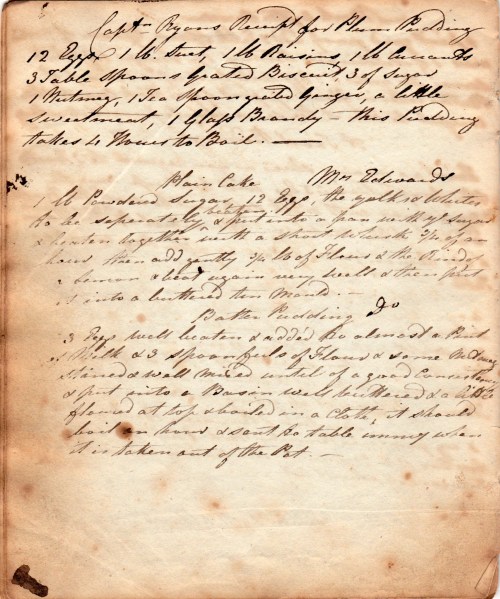
If you want to try this with modern weights and measures, 1 lb = 453.5 grams.
On the same page you can see Mrs Edwards’ Plain Cake and Batter Pudding. The ‘do’ – ditto – makes me think Mrs Edwards contributed that too.
Have fun planning your Christmas dinner!
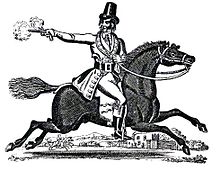 But the highwayman was a popular figure (at least, if you weren’t one of his victims). The crowd loved a villain, especially one who robbed those better off than themselves, carried out daring raids and escapes and, when almost inevitably brought to justice, “died game” on the gallows. Reality was less romantic – even the famous Dick Turpin, shown here on Black Bess, was a violent thug who tortured victims and inn keepers. The dashing Frenchman, Claude du Vall was hanged at Tyburn January 1670 despite (according to legend) gallantly sparing the possessions of any pretty lady who was prepared to dance with him. Presumably the plain ones just got robbed. The Victorians loved him and he was immortalized in a painting by Frith.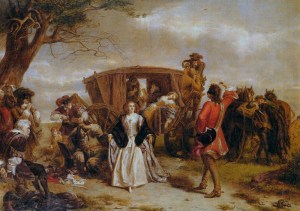
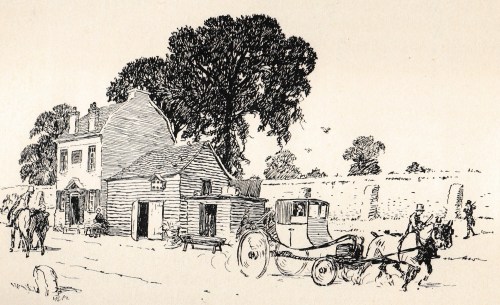
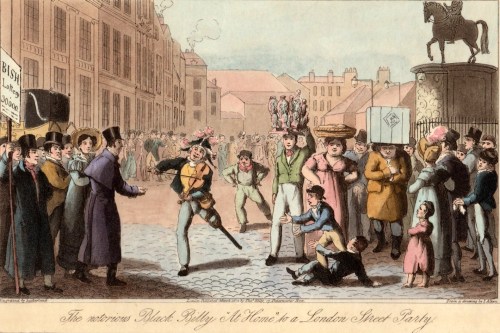
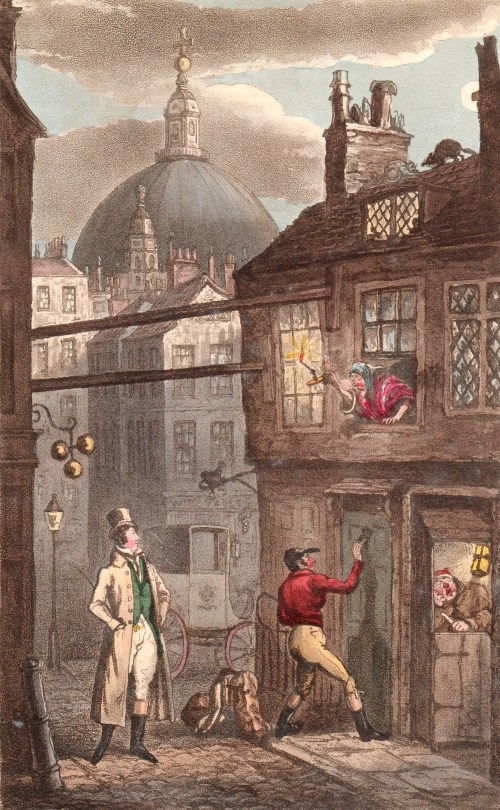 You are slumming it in Regency London – perhaps you’re in cheap lodgings avoiding your creditors, or dodging a furious father armed with a shotgun or your gambling habit has got the better of you and you are seriously out of pocket. You have found your cheap lodgings – a miserable, unheated room that you share with bedbugs, fleas, mice and the other inhabitants of your straw pallet – now you need to find something to eat. [The print above is of Logic’s lodgings in one of the Tom & Jerry tales by Pierce Egan. Note the dome of St Paul’s behind and the pawnbroker’s shop with its three gold balls on the left.]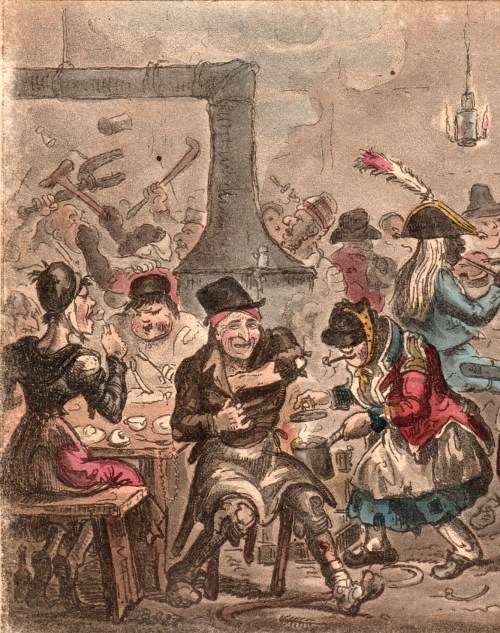
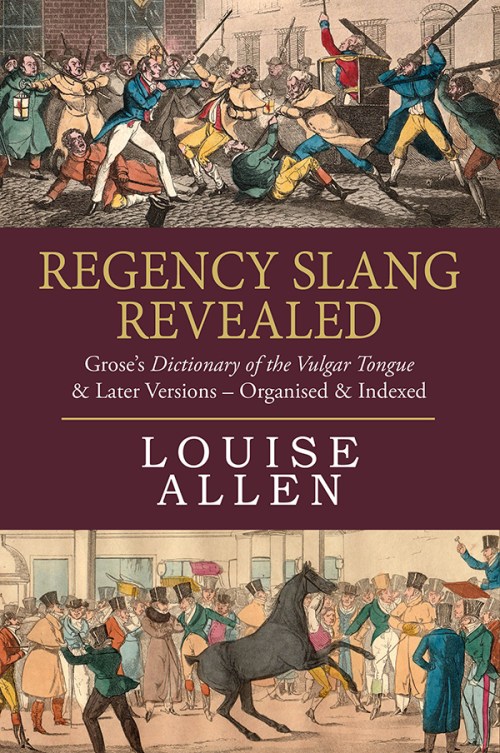
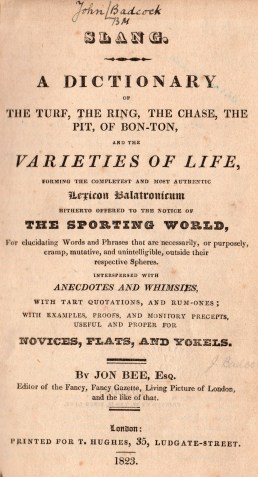
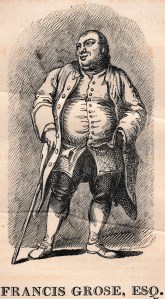 Francis Grose toured the back-slums and the rookeries of London in the 1780s collecting cant and slang terms for his Dictionary of the Vulgar Tongue, assisted (or possibly supported) by his servant Batch. Judging by his portrait Grose had sampled plenty of naked boys, aldermen and Bloody Jemmys himself. He inspired a number of imitators (and downright plagiarists) but all these late Georgian slang dictionaries are arranged in alphabetical order of the terms defined.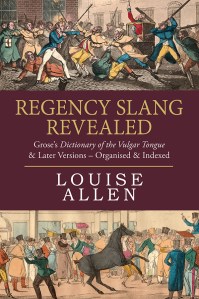
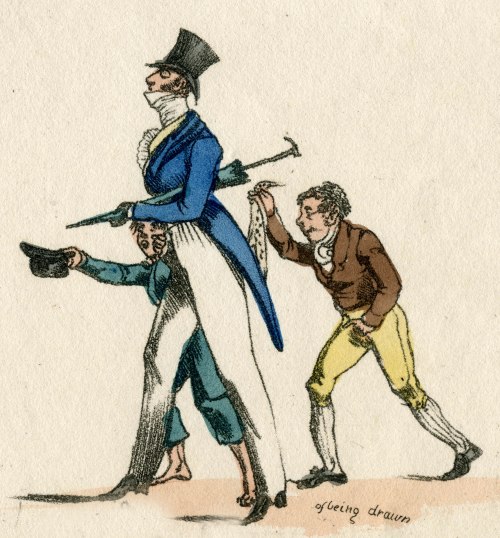
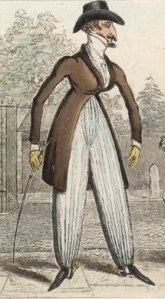 An invention of 1816, and applied to persons whose extravagant dress called forth the sneers of the vulgar; they were mostly young men who had this designation, and they were charged with wearing stays – a mistake easily fallen into, their wide web-belts having that appearance. Men of fashion became dandy soon after; having imported a good deal of French manner in their gait, lispings, wrinkled foreheads, killing king’s English, wearing immense pleated pantaloons, the coat cut away, small waistcoat, with cravat and chitterlings* immense: Hat small; hair frizzled and protruding. If one fell down he could not rise without assistance. Yet they assumed to be a little au militaire, and some wore mustachios. Lord Petersham was at the head of this sect of mannerists.
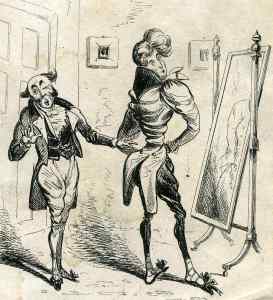 Kid, Kiddy and Kidling implies youth; but an old evergreen chap may be dressed kiddily, i.e. knowingly, with his hat on one side, shirt-collar up on high, coat cut away in the skirts, or outside breast-pockets, a yellow, bird’s-eye-blue , or Belcher fogle*, circling his squeeze**, and a chitterling shirt*** of great magnitude protruding on the sight, and wagging as its wearer walks. These compounded compose the kiddy; and if father and son come it in the same style, the latter is a kidling.
 Jane Austen's London