The ‘Romance’ of Duelling?

Duelling was very much a feature of the Georgian and early Regency period, the outcome of the code of honour that meant that a gentleman must defend his name and reputation (or that of a lady) against any slur or be branded a coward.
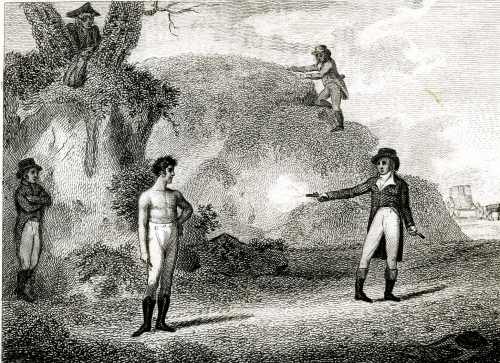
Duel


The rules were strict and a gentleman was supposed to know them and to possess a set of duelling pistols, just in case. It all seems very romantic and heroic with images of misty dawn meadows, the seconds standing by while the duellists, with stiff upper lips, casually make their preparations and discuss with their friends where to take breakfast later.

The print above, mysteriously captioned ‘Something Like It’, is from The Sporting Magazine, 1806 and shows a duellist displaying the correct degree of sang froid: having made his shot he stands waiting calmly for his opponent to take his. He has prudently removed all his upper clothing to prevent cloth being carried into any wound. The only information the magazine gives is that the meeting arose from, ‘a recent dispute in the sporting world…’

Even prominent politicians took part in duels. Canning (Foreign Secretary) versus Castlereagh (Secretary of War) in 1809, over Canning’s potting to have Castlereagh replaced, resulted in Canning being wounded in the thigh. In 1829 the Duke of Wellington met Lord Winchelsea following a dispute over the Catholic Emancipation Act. Winchelsea fired wide, Wellington shot a hole through his coat – whether deliberately or not is not recorded.

But duelling could have very serious consequences. Estimates of fatalities in England are about 15%, but they may very well have been higher, for the consequences of killing your man could be a trial for murder so duelling deaths may have been concealed as accidents. Even quite highly placed men found themselves taking an enforced holiday on the continent while their relatives exerted influence to allow them to return safely.

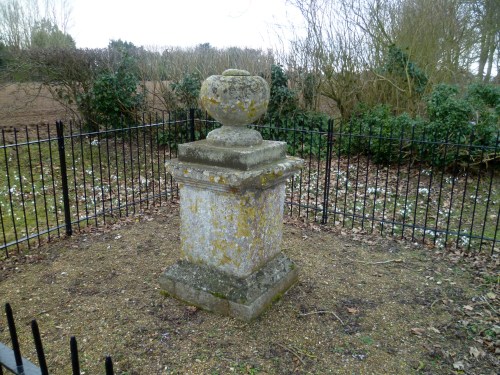
In Norfolk, on the B1149 near Aylsham, just south of its junction with the B1145, is what must be one of the National Trust’s tiniest sites, a little railed enclosure with an urn at the centre. This commemorates the last duel fought in Norfolk, a political affair. On 20th August 1698 Sir Henry Hobart MP of Blickling Hall, the leader of the Norfolk Whigs, met Oliver le Neve, a popular Norfolk Tory squire. Hobart had just lost his seat in the election of 1698 and accused le Neve of spreading rumours to the effect that Hobart was a coward and had behaved as such when he was Gentleman of the Horse for William III on campaign in Ireland. le Neve denied saying any such thing, making the counter-accusation that Hobart had fabricated it.

They met at what was then Cawston Heath, apparently without seconds, and fought with swords. le Neve was wounded in the arm but then stabbed Hobart in the stomach. Hobart died the next day at Blickling Hall. le Neve fled to Holland but became a Tory hero and the influence of his supporters allowed him to return to England in 1700, when he stood trial at Thetford Assizes and was acquitted. The memorial urn was erected by Sir Henry’s widow.
P1010193

I had accepted duelling pretty much at face value and have even written duels into novels, but the true human cost of this highly sensitive sense of honour really came home to me while I was researching Driving Through Georgian Britain: the great coaching routes for the modern traveller. (Due out in July 2019). Tracing the route of the Great North Road, I explored the old churchyard of Sawtry St Andrews, Huntingdonshire.

The church had been pulled down in the Victorian period and the churchyard now is a patch of overgrown scrub and trees with gravestones leaning drunkenly at all angles.
 

Sawtry St A

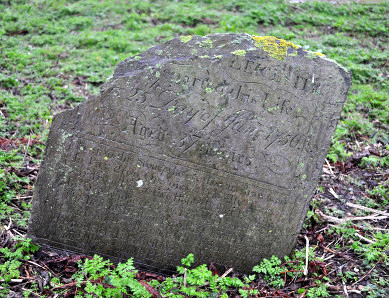
I don’t know what made me clean the weeds away from one, a slate slab with the top broken off, but what I could read was:

[…] Leicester

[…] departed this Life

25th Day of June 1756

Aged 37 Years.

Near to this Stone Who’ere thou art draw near.

In Pity drop one pious friendly Tear;

Far from his Native Home, he lost His Life,

By One who seem’d his Friend; Ill timed strife.

The best of Husbands; to his Children dear

Courteous to all, and to his Friend Sincere.

Remorceless Fate, well may the Wretch feel woe,

While he in endless Bliss, and Pleasures flow.

I was so moved by this that I was determined to find the name of this man who, it seemed, was the victim of a duel between friends. The local Records Office supplied his name – James Ratford of Wotherington – and the confirmation that he was killed in a duel. So far I cannot find out anything more about the circumstances or about James himself – not helped by the fact that whoever made the entry in the burial register must have misheard the place name, because I can’t locate Wotherington anywhere. But the thought of that sorrowing widow and fatherless children and the wreck of his friend’s life has made me think twice about the romance of duelling!
3 Comments

Filed under Gentlemen, Monuments

Respectfully Inscribed?

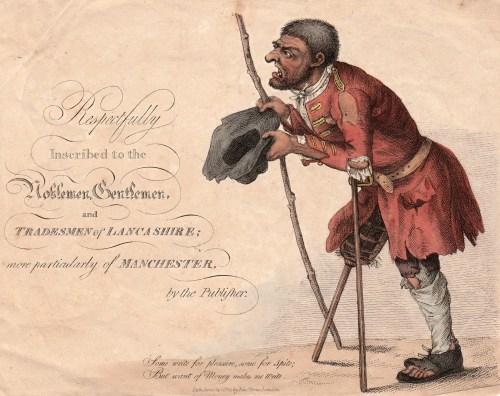
This striking image was amongst a mixed lot of prints that I bought at auction and it struck me immediately as a strange choice for a dedications frontispiece!

The crippled ex-soldier begging looks angry to me – and who can blame him? He has lost a leg in the service of his country and has ended up in rags on the street having to beg for a living. The details are fascinating – the straw padding for his stump, the remains of his uniform jacket, the layers of clothing his torn stocking reveals.

I was also intrigued by the verse at the bottom –

Some write for pleasure, some for spite;

But want of Money makes me Write.

What was the book – and why the almost pointed dedication to the ‘Tradesmen of Lancashire; More Particularly of Manchester.’ Was it debts to these tradesmen that made the author write?

By searching for the inscription I found a British Museum entry for an uncoloured version from “Edward Orme’s “The passions humorously delineated…” (based on John Collier [pseud.: Tim Bobbins]’s “Human Passions delineated”, 1773).” With that I was able to find the whole book on-line in the Wellcome Library, including the twenty-five plates which show a range of emotions – anger, grief, contentment etc.

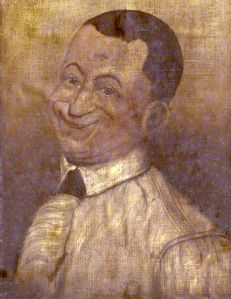
But who was Tim Bobbin, other than , apparently, John Collier? This is his self-portrait – an extraordinary, self-mocking, image that does not seem at first glance

John Collier by himself.

to be an 18th century man at all, until you realise that his close-cropped hair was to go under a wig.

John Collier, who liked to style himself ‘the Lancashire Hogarth’ – presumably with tongue in cheek – was born in Urmstone in Lancashire in 1708 and became a schoolteacher in Milnrow in Rochdale. He married, had nine children, and unsurprisingly needed extra money, so he began to write satirical poetry in Lancashire dialect. A View of the Lancashire Dialect, or, Tummus and Mary, published in 1746, is considered to be the first significant example of the dialect in print.

Human Passions Delineated came out in 1773 and my plate is from the colourised version which was published by Edward Orme in 1810.

Collier died in 1786 and was buried in St Chad’s churchyard, Rochdale. His own epitaph, written twenty minutes before he died, “Jack of all trades…left to lie i’th dark” joined other humorous inscriptions that he had written for stones in the churchyard – I assume as commissions. He certainly must have been interesting, to put it politely, as a teacher, a parent and a husband!

Sir Walter Scott led a campaign to have his grave restored in 1792. He was held in such esteem that a thousand people donated one pound each and a stone and iron railing were installed.

3 Comments

Filed under Art, Books

Just A Dip in the Street? One of London’s Lost Rivers

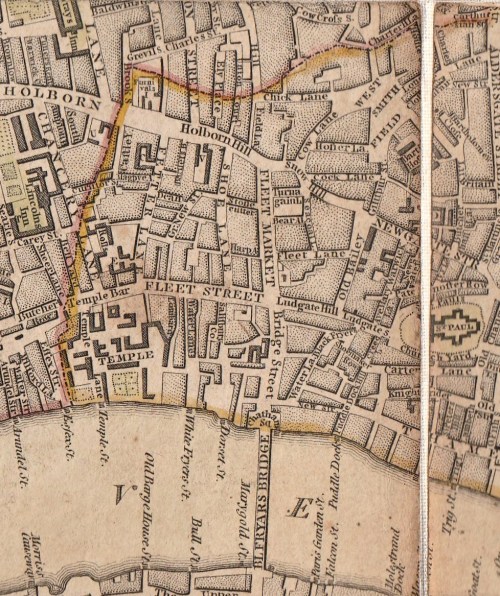
Last week, on a visit to London, I got off a bus on Ludgate Hill, walked down to Ludgate Circus and turned left down New Bridge Street towards the Thames, ignoring Fleet Street rising up straight ahead. It is something that workers and tourists do in their thousands every day of the week, but I wonder how many of us think about why there is such a steep hill and dip in the street just there. The clue is in Fleet Street and the valley was, of course, caused by the River Fleet, now flowing under New Bridge Street in the guise of a sewer to its virtually invisible outfall in the Thames.

The map below is a section of Cary’s New Plan of London (1784)

Blackfriars

Travelling about London one tends not to notice its dips and hills. I have posted in the past about taking the 23 bus and experiencing the dip not only of the Fleet but also the Tyburn Brook in Oxford Street. On the map above the streets with ‘hill’ names help us map the course of the Fleet. At the top of Fleet Market, formed when the river was covered over in 1733, Holborn Hill and Snow Hill dip down from west and east and the course of the river continues northwards under Saffron Hill.

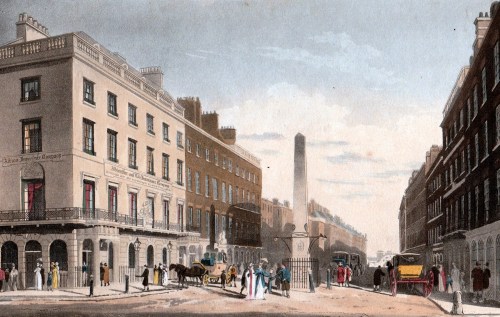
New Bridge Streetfull size

The image above is from Ackermann’s Repository May 1812, “from a drawing by that eminent artist in water-colour painting, Mr Frederick Nash.” The artist shows the scene as though he is standing in the middle of Ludgate Circus (although the maps of the time do not give the junction a specific name). The bump of Blackfriars Bridge is just visible in the far distance, Fleet Street is to the right and Ludgate Hill to the left.

“The obelisk at the north end of this street, as shewn in the view, was erected to give safety to the public crossing, in the year 1775, during the mayoralty of the celebrated John Wilkes.” (Wilkes (1725 – 1797) was a  radical, journalist, libertine and Member of Parliament. He was also an enthusiastic supporter of American independence although he grew increasingly conservative with age.) The obelisk has long gone, unfortunately.

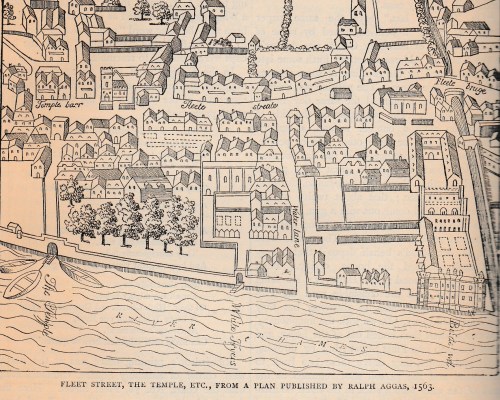
The Fleet rises on Hampstead Heath, as does the Tyburn, but there is no trace these days other than the three swimming ponds on the Heath. In the Middle Ages it was still navigable by barges as far as Holborn Bridge, to the north of the section in this map of 1563. Fleet Bridge is named and below it was the Bridewell Bridge , “said to resemble to Rialto at Venice” according to Ackermann’s – it  certainly seems to be covered. Before the Great Fire it was made of wood, but was replaced in stone with two arches.

Blackfriars 1563

Bridewell, which has now vanished, began as a palace and rapidly deteriorated into a prison. I traced its history here.

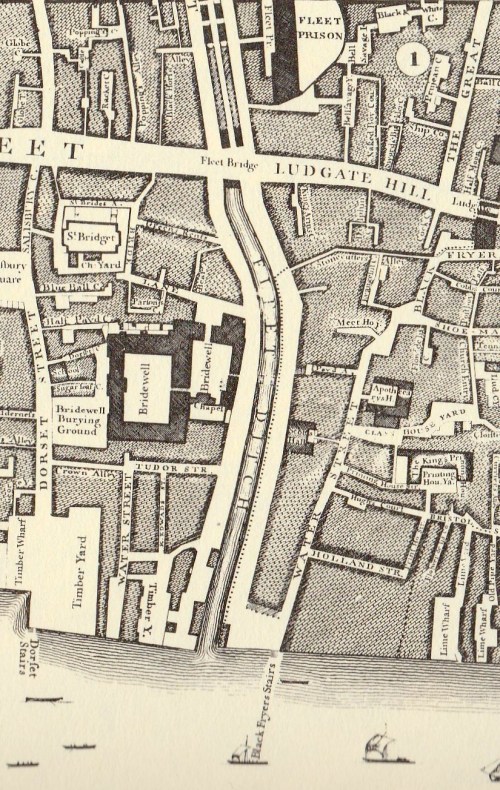
In 1733 the length between the Holborn and Ludgate bridges was covered and became Fleet Market – the double row of stalls can be seen in Roque’s map of 1738/47 (below). The Fleet Prison shows clearly, middle top, – the curve of the wall is still reflected in the building line today.

Below Fleet Bridge the  Bridewell Bridge has disappeared and the Fleet itself is labelled ‘Fleet Ditch’, an apt name by then – it was a stinking mass of refuse. Pope in his Dunciad writes of it:

Fleet Ditch, with disemboguing streams,

Rolls the large tribute of dead dogs to Thames;

The King of Dykes! than whom no sluice of mud,

With deeper sable blots the silver flow.

Or, to quote Ackermann’s rather more prosaic description, “…in the state of a muddy and loathsome ditch, until the building of Blackfriars-Bridge in the year 1768. In the place of this ditch, which had become a serious public nuisance, has sprung up the noble street, exhibited in this view [ie the print above], called New Bridge-street.”

Blackfriars Roque

The original Blackfriars Bridge was begun in 1760 and was finally completed in 1769, although it was open to pedestrians in 1766 and to riders in 1768. It was intended to name it for the Prime Minister, William Pitt, as the remaining inscription still confusingly explains, but popular usage soon had it named for the area, the site of the old Black Friars’ monastery. Repairs took place in 1832, but the bridge deteriorated to such an extent that a new one was proposed. It took years, the building of the Thames Embankment and the demands of the railways, but in 1869 and new bridge was opened. (The parallel railway bridge, just downstream, opened in 1864).

After exploring the area, the marvellous Art Nouveau Blackfriar pub just before the bridge is an excellent place to have lunch and to admire the depiction of the monks who once inhabited the area. (Get there early – it is very popular!)


Leave a comment

Filed under Architecture, Buildings, Maps, Rivers, Transport and travel, Walks

Fishy Business – And A Moral

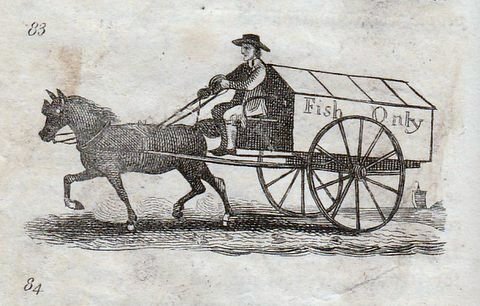
In my last blog I posted about a charming children’s book I had discovered and mentioned the Fish Machine – so here it is –

fish machine

It seems to be a ‘machine’ in the same way that any vehicle with a specific purpose was called a machine, even if it had no engine other than the horse – bathing machines, for example. As well as describing the purpose of the vehicle Jane and Ann Taylor, authors of Rural Scenes; or, A Peep Into the Country for Good Children (this version 1813), point up a moral about co-operation in business and make a passing reference to the importance of fresh fish for the benefit of future housewives. I have seen lorries on Japanese harboursides for just the same purpose.

“This man is driving to some great town, to sell his fish to the inhabitants. he not only serves them, but also the fishermen and himself. Indeed, they find a mutual help in each other; for it would be very difficult always to find a market on he sea-coast, and equally inconvenient to the townspeople to go there for them. If he carries fish only, he pays no turnpikes.”

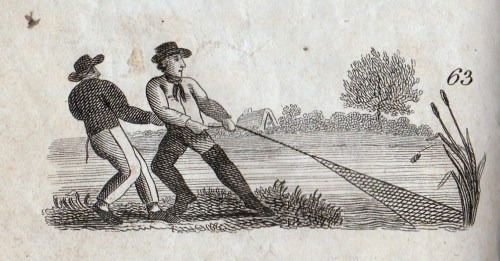
The authors also use every opportunity throughout the book to encourage children to be kind to animals while, at the same time, being very up-front about the use of animals as food, including being quite positive that the human position of power over other creatures was divinely ordained, as in the text that accompanies the two fishermen hauling in their net of river fish.

fishermen

“These two men are labouring very hard to get an honest livelihood, and are, therefore, very commendable. Dominion was given to man over the birds of the air, the fishes of the sea, and the beasts of the field, which, with vegetables and fruit, were appointed for his food. As it is necessary to kill animals for our support, it is our duty to do it in the most humane methods we can invent, so as to give them as little pain as possible; therefore it is better to take fish with a net, than with a hook and line. I have read of a boy who was endeavouring to reach a plate off a shelf, to put some fish in which he had caught when, just in the same manner as he caught the fish, a sharp meat-hook that hung close by, did catch him in the chin.”

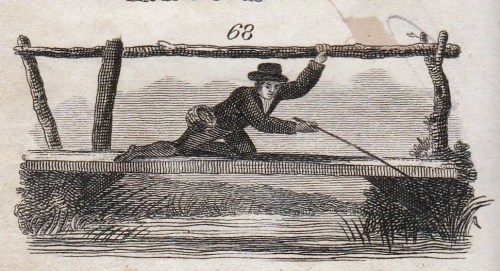
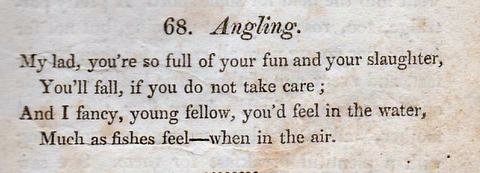
And here is the fisherman with road and line, rather uncomfortably perched on a bridge with the moral of the tale in verse below.

rod & line

moral

Leave a comment

Filed under Animals, Books, Education, Food & drink

Water, Water…

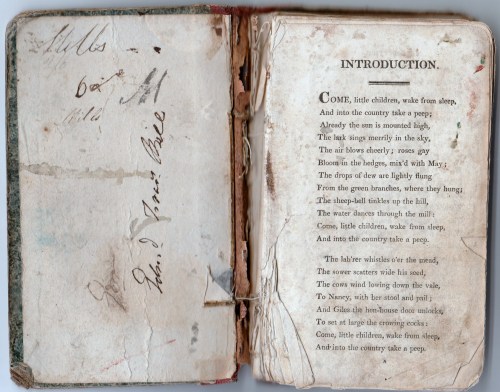
Some time ago I bought a charming book for children which unfortunately is missing its title page and front matter. I tracked it down from the introductory poem and found that it is a version of  Rural Scenes; or, A Peep Into the Country for Good Children, originally published in 1805 by Harvey, Darton & Company, Gracechurch Street, London. The authors were sisters Jane and Ann Taylor. Jane was the author of ‘Twinkle, Twinkle, Little Star.’

IMG_20190309_0001

The only one I can find on sale is a first edition bound with the companion A Peep Into London… and that was $3,250! Mine has different and fewer images, although in exactly the same style, and was published in 1813. I think I paid £10 for it – but I have to admit, mine is rather more battered.

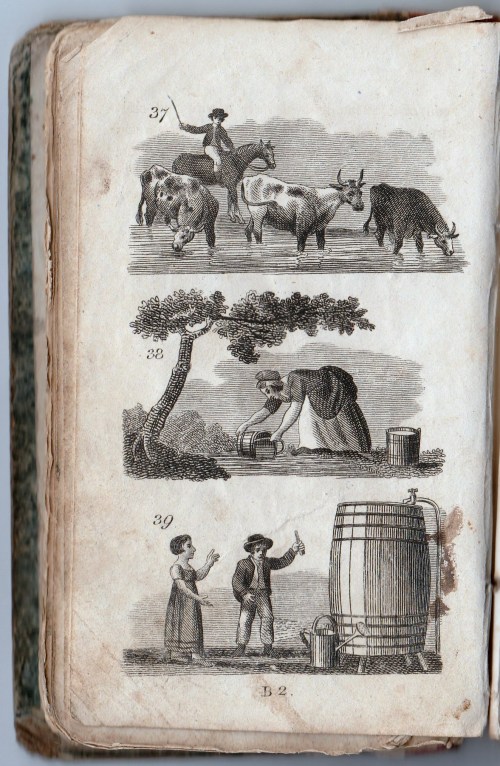
With the rain lashing down outside I thought the text accompanying a scene of a woman dipping water from a stream was rather apt. The book groups similar subjects together and this is from a set all to do with water.

water

38: Dipping Water.

Morning and night, with cleanly pails,

Comes Mary to the spring,

And to her cottage never fails

The Cooling draught to bring.

With some she scours the dressers smart,

or mops the kitchen bricks; And in the kettle sings a part,

Above the crackling sticks.

The text following it reads, ‘Without water, man, woman, and child; birds, beasts, and fishes; trees, plants, and flowers, must all die! Do not let us be so angry, then, with a shower of rain, even if it should spoil our walk; for what should we do without it? We often overlook the comforts we possess, nor are we sensible of their great value, until we are deprived of them. For want of water and fresh air, many English people died in a dungeon, at Calcutta, in the East Indies. And how much to be valued is fresh water on shipboard; as all water in the sea is salt, and not fit for men to drink, except as a medicine, in some disorders, for people on shore.’

In a very few lines it packs in a lecture on housekeeping – clean pails required, daily scrubbing of the kitchen – a passing reference to history with the Black Hole of Calcutta, moralising on being aware of the blessings we possess and a mention of saline draughts in medicine!

The image above is a lecture on the value of the cows which John is taking to drink. Betty will make cheese, butter and cream and sells the butter milk ‘to the poor people’. But when the cows are killed they provide food, leather, fat for candles, hoofs for glue, horns to make lanterns and combs, bones for carving like ivory, ‘the blood makes a beautiful blue colour’ and ‘even the bowels are not thrown away.’ Luckily we aren’t informed what happens to those. No sentimentality about farm animals here!

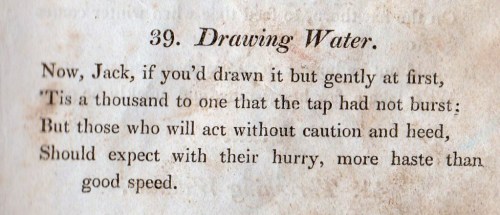
As for the bottom image, that provides us with a neat little moral lesson:

tap

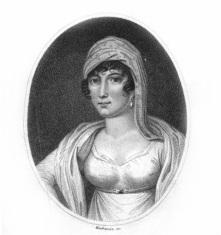
Jane Taylor, shown below, lived 1783 – 1824. She was born in London, lived for much of her childhood in Lavenham and died and is buried at Ongar in Essex. Jane Taylor

I may well return to this delightful book in the future – I’m eager to share the ingenious ‘Fish Machine’.


2 Comments

Filed under Agriculture, Animals, Books, Domestic life, Education, Weather, working life

A Valentine Gift?

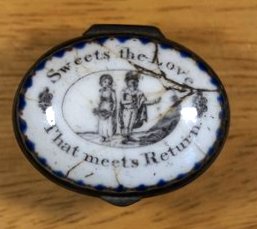
I have a tiny enamel box, just 4cm by 2cm high, that was surely given as a love-token, perhaps for Valentine’s Day.

Bilston 1

It is almost certainly a Bilston enamel patch box and, although the lid has suffered some damage a long time ago, the two lovers on the lid and the inscription are still clear.

 Sweets the Love That meets Return

reads the caption and a dashing chap with a curling feather in his hat and a dramatic cloak makes lingering eye contact with a fair maiden carrying flowers.

Bilston 2

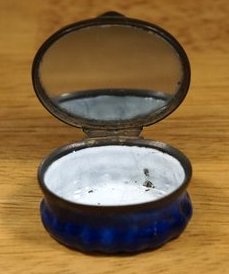
You can tell it is a box for patches, or beauty spots, and not for tiny sweets or snuff because of the mirror inside. It is a pleasure to hold – the waisted design means that it fits securely between the fingers of one hand to hold it steady while the patch was applied with the help of the mirror.

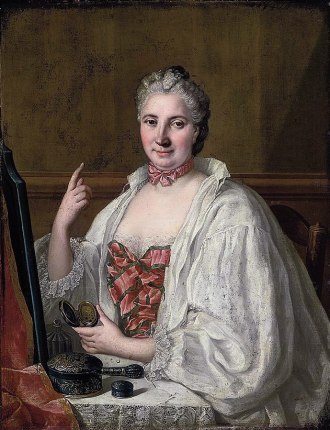
The box itself probably dates for the 1770s or 80s when the fashion for patches was at its height. They served to cover up skin blemishes or to draw attention to a pretty dimple or to the eyes. In this portrait the lady is seated at her dressing table, about to apply a beauty spot. The patch box she holds has a mirror inside the lid and on the table is another box, much the same size as mine.

689px-Anne_de_La_Grange-Trianon_by_Circle_of_François-Hubert_Drouais

Circle of Francois-Hubert Drouais (1727-65). Via Wikimedia

Craftsmen in the small town of Bilston, just to the South-East of Wolverhampton, began to make enamelled items in about 1745 when Huguenot refugees settled there bringing the technique with them.  The industry was still flourishing in the early 1800s producing snuff boxes, trinket boxes and similar items, but by the 1820s it was in decline with the reduction in snuff-taking and the improvement in manufacturing techniques for fine bone china objects. Bilston enamellers had vanished by the 1850s.

Today Bilston enamels fetch hundreds of pounds. Mine, with its damage, was a very cheap auction bargain!

2 Comments

Filed under courtship & marriage, Fashions, Love and Marriage

From India to Fulham – On the Track of a Love Story

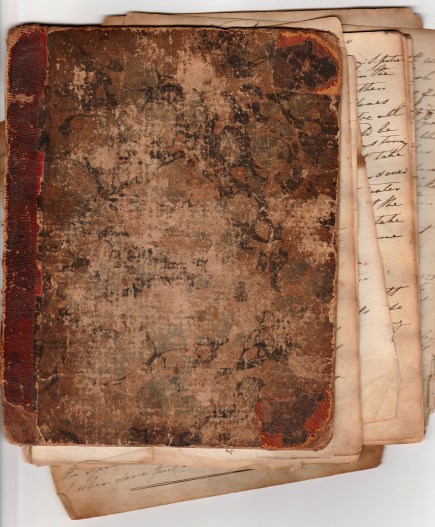
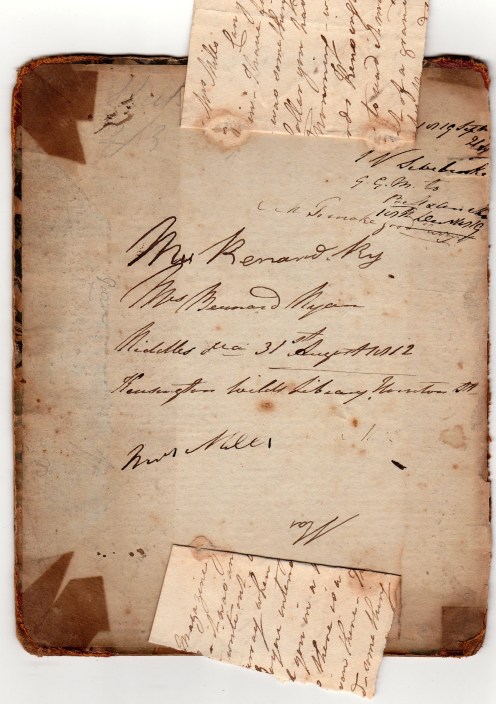
Some time ago I bought a battered little book from an on-line auction site for a few pounds. It measures approximately 8 x 6.5 inches (10 x 6 cm), the cover was battered and the thin spine had given way completely. The pages inside were loose and covered in handwriting in ink that, in places, had faded badly.

whole thing

Many pages were difficult to read but I saw at a glance that it was what I had hoped – a book of household recipes and hints  that some careful 19th century housewife had collected. But who was she and when did she keep her notebook?

Inside one cover was “9, High Row 60£” and “G.G.Mills Esq, North End Terrace, Fulham”.  Somehow I didn’t think that Mr Mills himself was carefully collecting recipes for raspberry vinegar or fish sauce. The other cover, amidst various scribbled notes, had, “Mrs Bernard Ryan”, the date 31st August 1812 and “Kensington Wilds Library Hornton St.” There was also a strip that had been torn from a letter and stuck in with instructions for restoring the lustre to silverware written on it. The letter had been addressed to Mrs Mills. The glue obscures the notes in the top left hand corner of the inside cover but it is possible to read “1819 Sept 21st”, “G.G.M 10th Dec 1819” and very faintly below that “To make good curry.”

inside cover

So, I had a Regency housewife’s notebook – but if this belonged to Mrs Mills, who was Mrs Bernard Ryan? And why had someone apparently tried to copy Mrs Bernard Ryan’s name in wobbly handwriting above it as “Mrs Renard Ry”? A child, perhaps?

I began with the library by digging in on-line newspaper indexes and soon found that F. P. Wild’s Library at 8, Hornton Street, Kensington appears in newspaper advertisements for newly-published books  between 1816 and 1825. It seemed I was definitely dealing with someone living in London

Then I turned to genealogy websites and discovered that a George Gillam Mills was resident at North End Terrace, Fulham when he died in May 1844 aged 74. He was buried in the District Chapel of the Parish of St Mary’s, North End, Fulham on 17th May. I tried to find North End Terrace on maps but could not pin-point it but but North End Road joins Hammersmith Road just where St Mary’s Chapel, now a church, stands. It seems likely that it was at the northern end of the road that Jean and George lived. Until the late 19th century North End was a scattered hamlet of houses along North End Road surrounded by fields and market gardens and included many substantial properties and villas owned by prosperous middle class and aristocratic families.

Now I knew Mr Mills’ first names I could chase him further and found that on the 15th May 1815 he had married Jean Ryan, a widow, at St Luke’s, Chelsea. They had married by licence and on the bond which he signed to obtain the licence George stated that he was over twenty one years of age, unmarried and living in the parish. It seemed highly likely that Jean Ryan was the Mrs Bernard Ryan named on the inside cover of the book.

I was able to find George’s christening record at St Alfege’s church in Greenwich on 24th November 1771 with the note that he had been born that month. His parents were Samuel Gillam Mills, a surgeon, and Catherine. So George was from a middle class home and was forty four when he married Jean Ryan.

Could I find ‘Jean’ marrying a Barnard Ryan? To my delight I found that on 26 August 1805 Lieutenant Bernard Ryan married Miss Jean Forbes in Secunderabad in British controlled India. But sadly the marriage lasted only six years. He died, a Captain in the 12th Regiment of Native Infantry of the Honourable East India Company, aged twenty eight and was buried 17th October 1811 at Fort William in Calcutta (now Kolkata). His will leaves everything to his wife Jean.

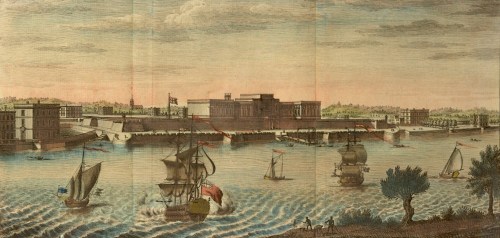
This image of the fort is from 1754, but it must have looked very much like this when the Ryans knew it, and having seen it when in Kolkata myself, it is still recognisable today.

Fort_William 1754

In September 1812 the records of the Lord Clive Military Fund Pensions Committee in the Madras (now Chennai) Presidency show that a pension of two shillings and four pence a day was granted to Mrs Jean Ryan, widow. Soon after this she must have set sail for England, a voyage of perhaps a year unless she was very lucky with the weather.

How did the widowed Mrs Ryan meet Mr Mills? How old was she? That at least I could answer because her burial record for 19th March 1825 gives her age as only forty. She had been twenty when she married Bernard and thirty when she married George. But her second marriage to a man fourteen years her senior seems to have been a happy one  because below a recipe for stewing flounders she wrote: “13th April 1820 – recd. a New Crown Piece from Darling Husband. Keep Sake.”

What happened to George? He was a prosperous businessman and civil servant, it seems. In 1815 he was Cashier of Half-Pay at the Army Pay Office in Whitehall and in 1819 had been promoted two steps up to Ledger Keeper. The Royal Kalendar and Court and City Register for 1817 and 1819 lists him as one of the directors and an auditor of the British Fire Office, “for assuring Houses, Goods and Ships” located at Cornhill in the City. How did he pass the nineteen years of widowerhood? I hope he had a good housekeeper who cooked him some of the familiar recipes from Jean’s notebook.

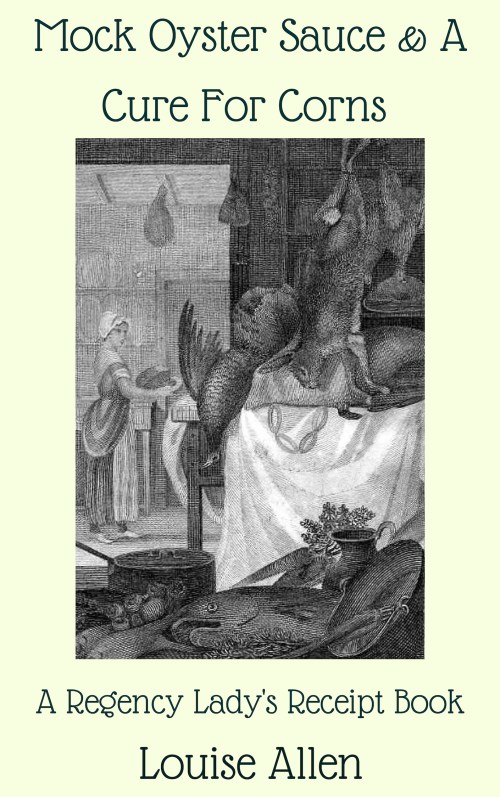
The notebook itself has a wide selection of recipes with notes on who gave them to her, a good selection of curries – not surprisingly perhaps – and notes on everything from making mistletoe grow to polishing a mahogany table. I transcribed the whole book and Mock Oyster Sauce and a Cure For Corns: A Regency Lady’s Receipt Book is out in April but available to pre-order now.

Cover 2


12 Comments

Filed under Domestic life, Food & drink, Military

A Splendid Pew and an Encounter With an 18th Century Lady

Some time ago I wrote about the organisation of space inside churches in the Georgian period. Social stratification became very clear in the way seating was organised and splendid box pews were built and were bought and sold or rented out. “To be SOLD, A PEW, in the West Gallery of the Parish Church, at Leeds, well situated for both Hearing and Seeing, and containing Sittings for Five People,” read the advertisement in the Leeds Intelligencer in October 1789.

I was reminded that as well as private pews in the body of the church it was possible to construct even more exclusive accommodation if you had the status and the position in the parish.

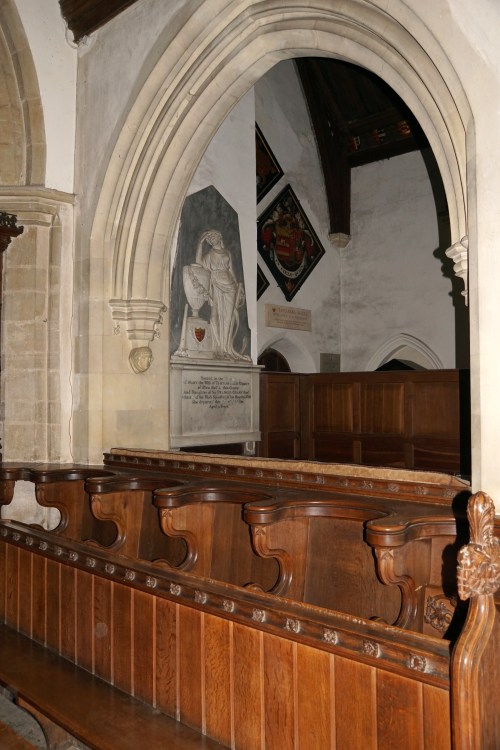
I had travelled to the Norfolk church of Holy Trinity, Stow Bardolf, to the south of King’s Lynn, in pursuit of one particular (and startling) memorial – of which more later – and was struck by the family pew of the lords of the manor which is situated like nothing so much as a theatre box next to the choir.

Stow Hall, which was sited within sight of the church, was the home of the Hare family who acquired the estate in 1553. In 1641 they were created baronets and this is probably what prompted them to construct a family chapel on the north side of the chancel with its own exterior door. It has a number of imposing monuments including Sir Thomas Hare who died in 1693 and is shown reclining in full Roman armour but, ludicrously, wearing his wig.

At some point someone had the bright idea of knocking through the wall behind the north choir stall to create the open front of a large family pew, enclosed in wood panelling and with a door into the family chapel. The Hares could therefore walk or drive to the churchyard gate nearest the Hall and enter through their own private door without having to mingle with the lesser folk of the parish.

family pew

Above is the view from the altar steps. Once seated in their pew, high enough to look down on the heads of the choristers below, the family were almost completely private. Behind the pew you can glimpse some funeral hatchments and below them the outside door.

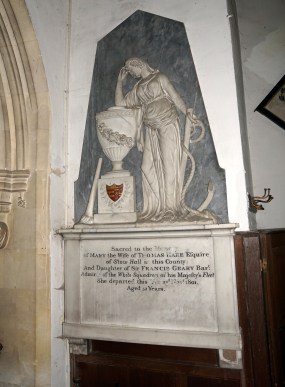
mary hareThe 19th century family would have worshipped under the gaze of the figure of Hope on the memorial to Mary Hare who died in November 1801. Hope is leaning on an anchor (her symbol) which also serves as a reminder that Mrs Hare’s father, Sir Francis Geary, Bart., was an Admiral of the White. The upside-down torch leaning against the urn is a symbol of a life snuffed out. Usually the length of the torch is an indication of the length of the life of the deceased.
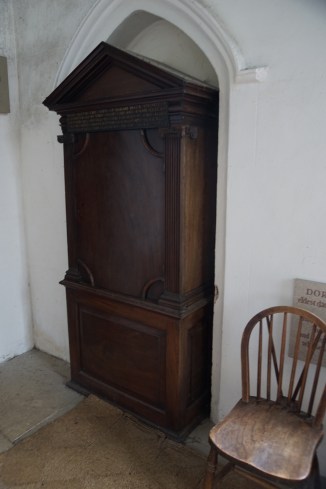
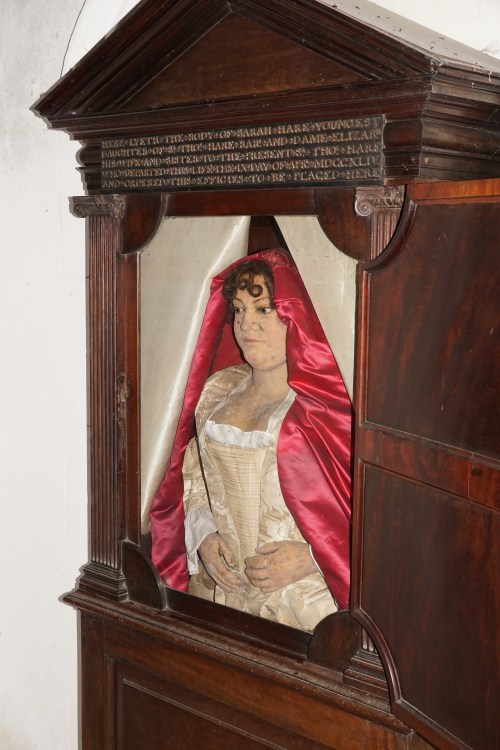
In the photograph of the pew you can just see the pointed top of something wooden and that is what I had come to Stow Bardolf to see. At first sight it appears to be a cupboard, almost like a small, rather shallow mahogany wardrobe.dsc09570

Over the door is an inscription which reads:

Here Lyeth the Body of Sarah Hare Youngest Daughter of Sr Thomas Hare Bart. And Dame Elizabth. His Wife And Sister To The Present Sir Thos Hare Who Departed This Life The IX Day Of Apr MDCCXLIV [1743] And Ordered This Effigies [sic] To Be Placed Here.

That is all the warning the unwary visitor has before they open the door and come face to face with Sarah Hare.

dsc09569

She is life-sized, the only wax funerary effigy in the UK outside Westminster Abbey and she died aged eighteen from blood poisoning after pricking her finger with a needle while doing embroidery. Poor Sarah lived long enough to realise that she must make her will and in it she left very specific instructions.

She was to be buried by six poor men of the parish who were to be paid five shillings each. “I desire to have my face and hands made in wax with a piece of crimson satin thrown like a garment in a picture, hair upon my head and put in a case of Mahogany with a glass before.” Her grieving family carried out her instructions to the letter. After the first shock on opening the cabinet it is very moving to come face to face with a woman of the 18th century shown just as she was, without any attempt to make her look ‘perfect’. Sarah has a double chin, a rather severe mouth and a mole on her right cheek and she looks beyond the viewer as though failing to notice that we are there. Her right hand looks swollen – perhaps a result of the infection that killed her.

An unsettling, but fascinating, encounter with a real woman.

6 Comments

Filed under Architecture, Buildings, Monuments, Women

Spice Up the New Year

I’ve been trying out gingerbread and spice cake recipes as warming treats so here are some genuine 19th century recipes for you to try (Warning! I haven’t tried these as they are, so it is at your own risk!).

DSCN0184

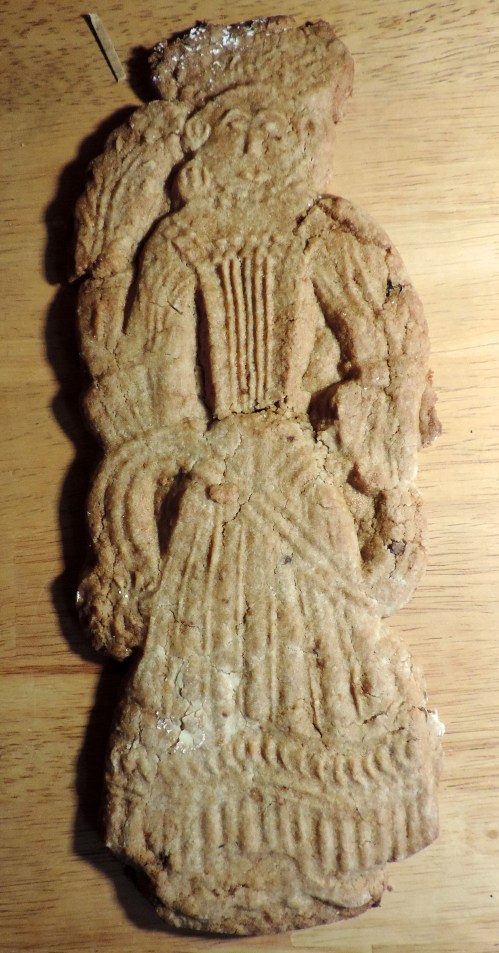
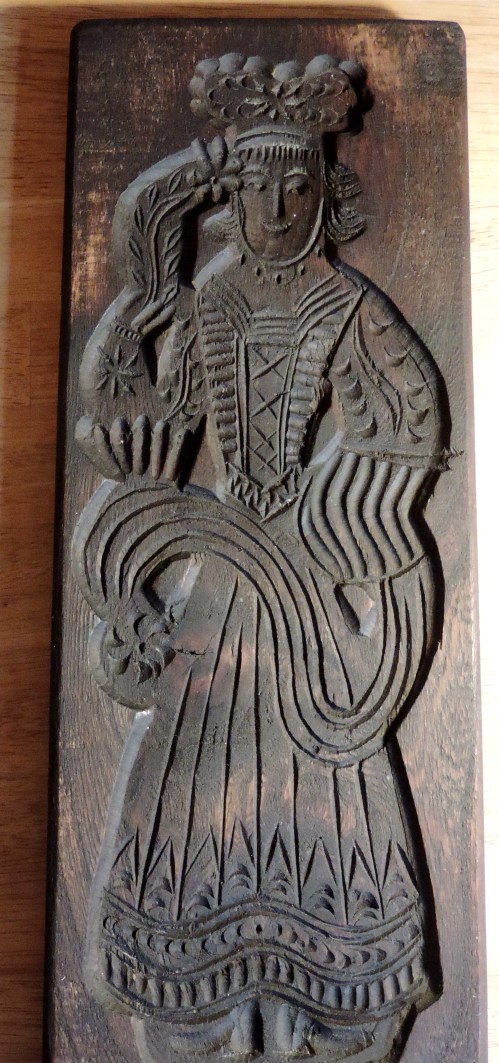
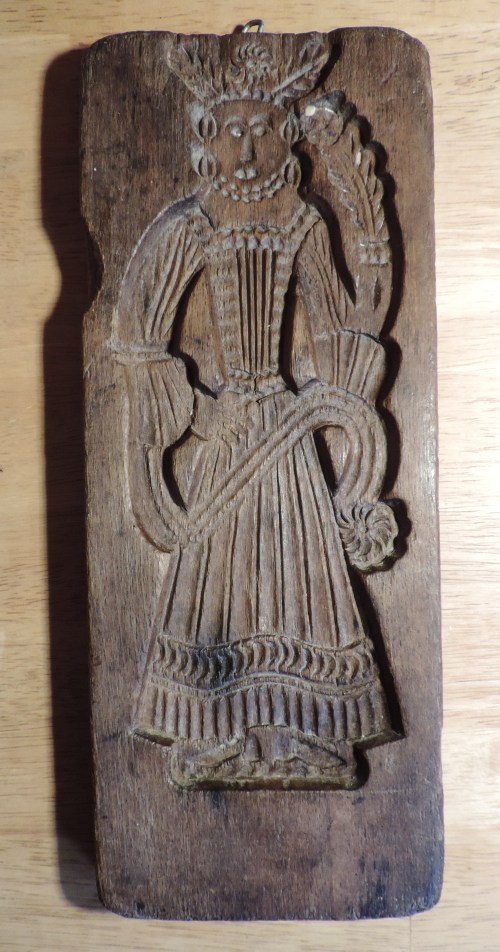
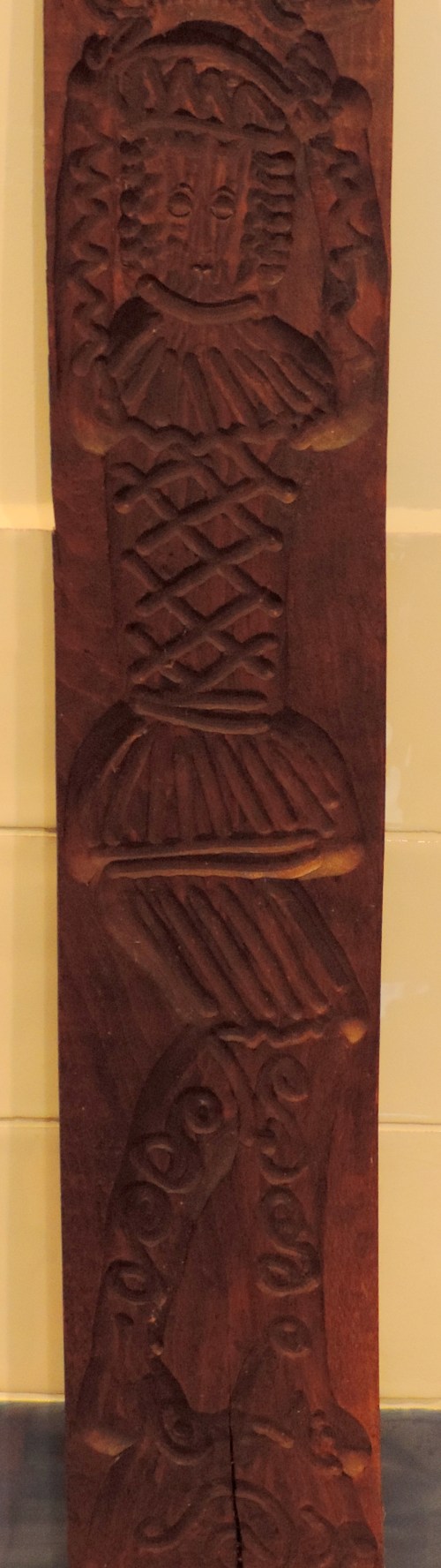
I made mine using the smaller of the the three antique biscuit moulds that I own – the only one that will produce a biscuit small enough for a modern oven.  This is the result – not quite firm enough, I think, it has lost definition so more experimentation needed. It tastes great though.

gingerbread

First here are Gingerbread Cakes, a simple recipe from The Housekeeper’s Instructor; or Universal Family Cook (1807). Given the amount of nutmeg these might be quite hallucinogenic!

Take three pounds of flour, a pound of sugar, the same quantity of butter rolled in very fine, two ounces of beaten ginger, and a large nutmeg grated. Then take a pound of treacle, a quarter of a pint of cream, and make them warm together. Work up the bread stiff, roll it out and make it into thin cakes. Cut them out with a tea-cup or small glass, or roll them round like nuts, and bake them in a slack oven on tin plates.

DSCN0188There’s a very similar recipe in The Complete Confectioner (1815) by Fredrick Nutt with the note: N.B. These are very good for the stomach in cold weather.
Mr Nutt has a more elaborate recipe for Spice Biscuits. It uses Lisbon sugar – cane sugar imported from the West Indies and double-refined in Portugal leaving it an off-white colour. A third refining was necessary to make it pure white, which would be more expensive.

Take three pounds of flour, and three pounds of sweet almonds cut in half, and put them with the flower [sic] and three ounces of spice, such as cinnamon and mace pounded, and one pound of powdered sugar, and mix them together on your dresser; then take three pounds of Lisbon sugar, and put it in a saucepan with some water, and just boil it, then mix it with the other ingredients on the dresser; when it is all mixed to a paste, heat your oven very hot, and put three papers next your plate; then roll your paste to the size of a large rolling-pin; then put it on your paper and flat it down with your hand about three inches wide, but higher in the middle than at the ends, then put them in the oven; when they are baked take them out, while hot, cut them with a sharp knife about the eighth part of an inch thick, in the form of a rusk, and you will see the almonds very well in them.

The third of my moulds is so long that it wouldn’t fit in any modern domestic oven – and it is a pig to photograph, but here goes!

DSCN0186

2 Comments

Filed under Domestic life, Food & drink

Time For A Pudding

The evenings are drawing in, there’s a nip in the air – what better time to think about making a warming pudding?

Recipes0001

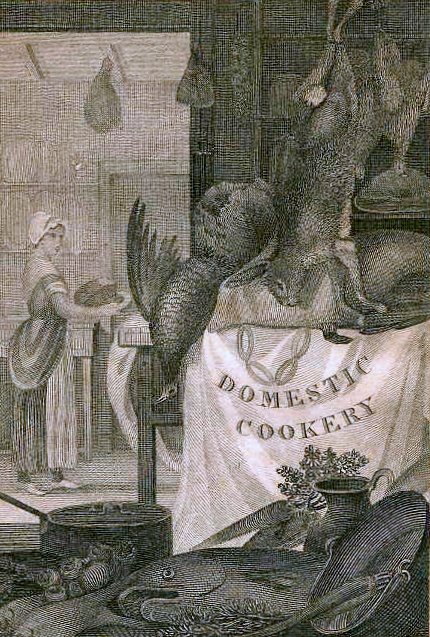
I’ve been consulting A New System of Domestic Cookery formed upon Principles of Economy and Adapted to the Use of Private Families by A Lady. It was published in 1829 by John Murray (Jane Austen and Byron’s publisher) and cost seven shillings and six pence.

Some of the recipes certainly would have been very economical, using up left-overs in a way that resonates with today’s concern about food waste. There are a number of recipes using bread such as this one:

A Rich Boiled Bread Pudding

Over half a pint of crumbs (from a previous recipes I think these must be stale white bread crumbs) pour half a pint of scalding milk; cover for an hour. Beat up four eggs, and when strained, add to the bread, with a tea-spoonful of flour, an ounce of butter, two ounces of sugar, half a pound of currants, an ounce of almonds beaten (I assume these would be ground almonds), with orange-flower water, half an ounce of orange, ditto lemon, ditto citron (juice??). Butter a basin that will exactly hold it, flour the cloth and tie tight over and boil one hour.

I rather like the sound of this savoury pudding although I’d add  more cheese myself. I imagine it would be baked in a pie dish:

A Cheese Pudding

Grate three ounces of cheese and five of bread (stale, I assume); and having warmed one ounce of butter in a pint of new milk (making this today I would use full fat milk), mix it with the above; add two well-beaten eggs and a little salt. Bake it half an hour.

Another one that I’d like to try is:

An Exceedingly Good Orange Pudding

On half a pound of crumbs of bread pour a pint of milk; let it boil up; stir in two ounces of butter and one of marrow (I think I might give the marrow a miss and add a bit more butter!), keeping the pan over the fire until all is incorporated. Let it become cold then mix in two eggs, two ounces of sugar, the same of orange marmalade, and a spoonful of orange flower water. Choose a basin that will exactly hold it, and tie over with a floured cloth very closely. Boil it an hour and a quarter. For sauce, melted butter, sugar, a little lemon-juice, and a spoonful of brandy.

Finally here’s a real novelty. I’m trying to persuade the cook in our household to try it to see if it lives up to its name. If I succeed, I will let you know!

Transparent Pudding

Beat eight eggs very well; put them into a stew-pan with half a pound of sugar pounded fine, the same quantity of butter, and some nutmeg grated. Set it on the fire and keep stirring it until it thickens.  Then set it in a basin to cool; put a rich puff pastry round the edge of the dish; pour in your pudding, and bake it in a moderate oven. It will cut light and clear. You may add candied orange and citron, if you like.

I haven’t tried any of these – so if you do, it is at your own risk! Happy baking.

7 Comments

Filed under Books, Domestic life, Food & drink